




Alabaster Classical Statue
An alabaster classical statue brings the quiet dignity of antiquity and turn-of-the-century European workshops directly into your interior.
Alabaster Classical Statue
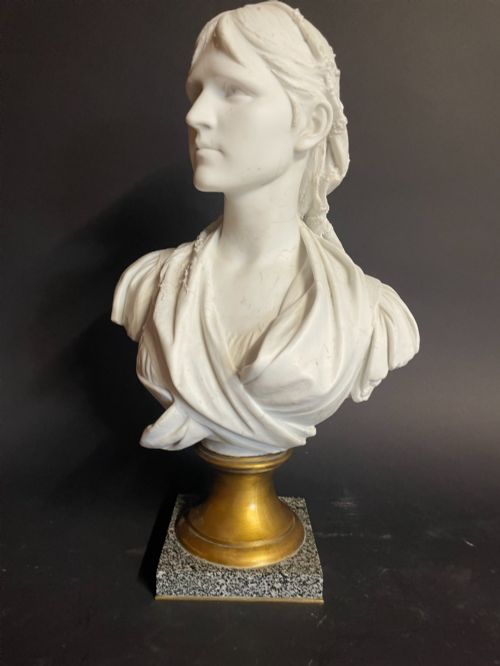
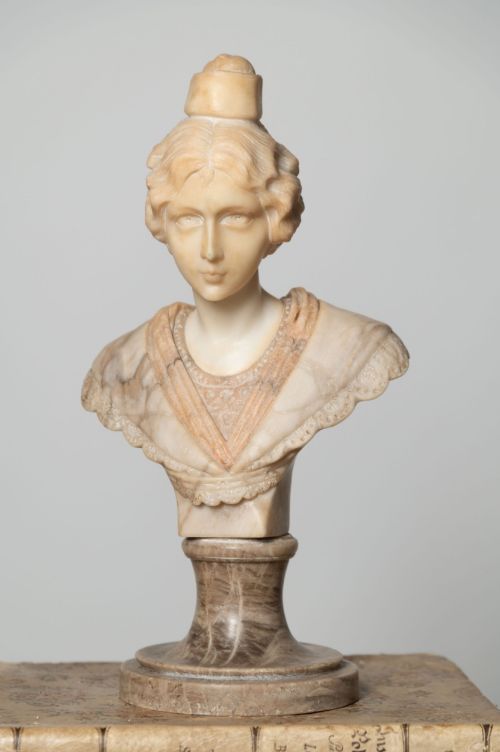
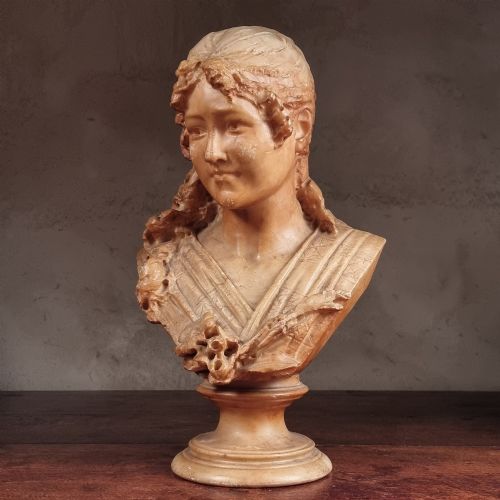
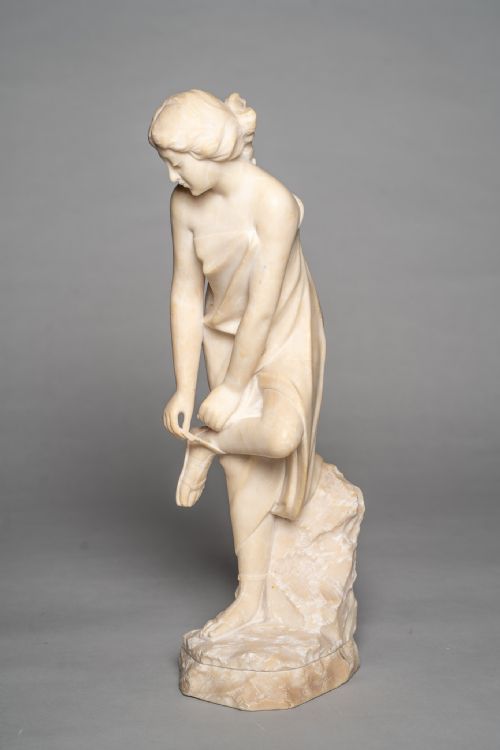
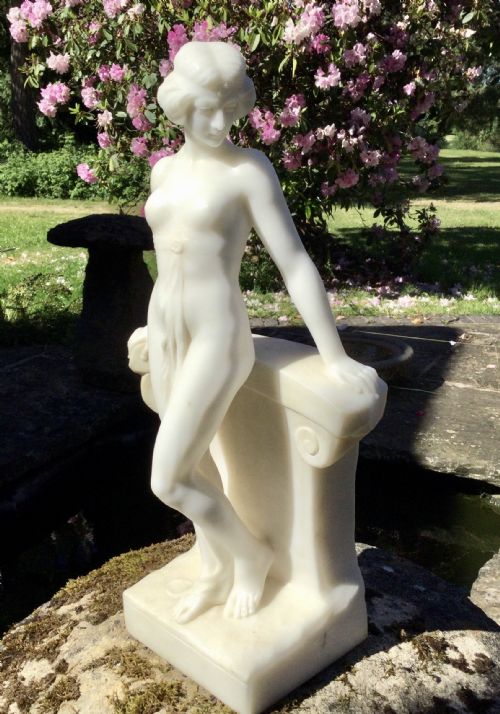
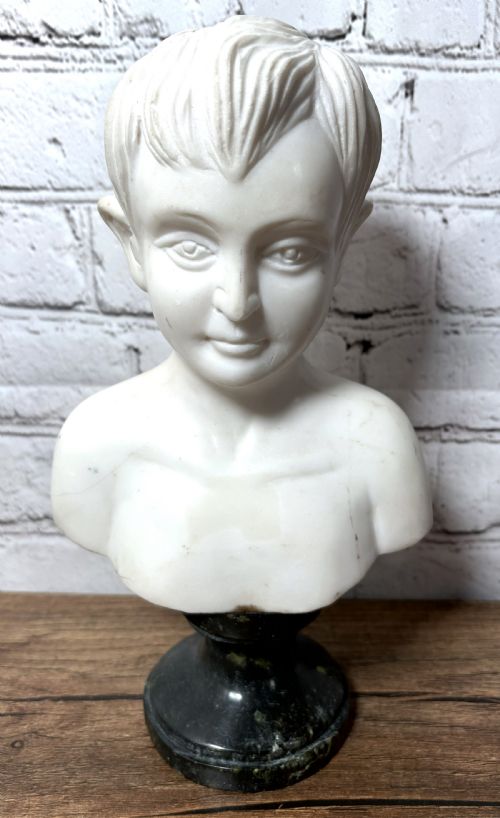
When you search for an alabaster classical statue, you are examining carved representations of human figures, mythological deities, and philosophical subjects produced primarily across the nineteenth and early twentieth centuries. These works draw heavily upon neoclassical principles, French and Italian sculptural traditions, and Grand Tour souvenirs that brought classical antiquity into nineteenth-century drawing rooms. The selection available to you centres heavily on portrait busts of women, mythological figures such as Diana and Hestia, and figural groups carved in Italy and France.
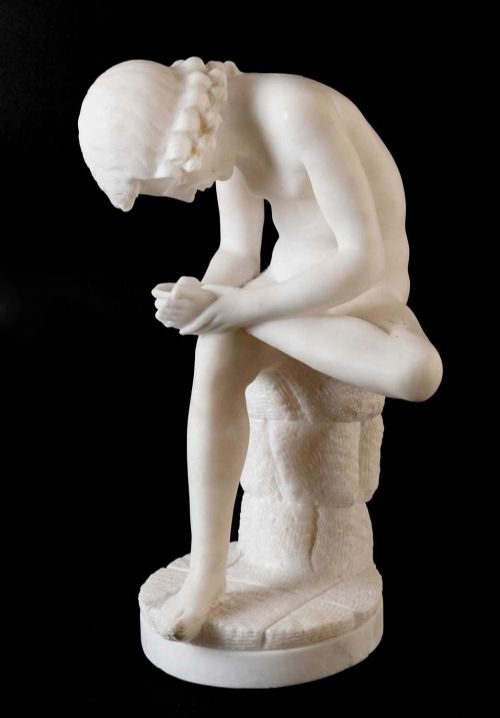
The objects span from cabinet-sized portrait busts to large floor-standing sculptures and library figures, frequently dated between eighteen-eighty and nineteen-ten. You will encounter subjects ranging from classical heroes and Spinario figures to Art Nouveau studies of young women bathing or holding wheatsheaves. Many carry the signatures of notable European workshops and sculptors who mastered the manipulation of soft stone.
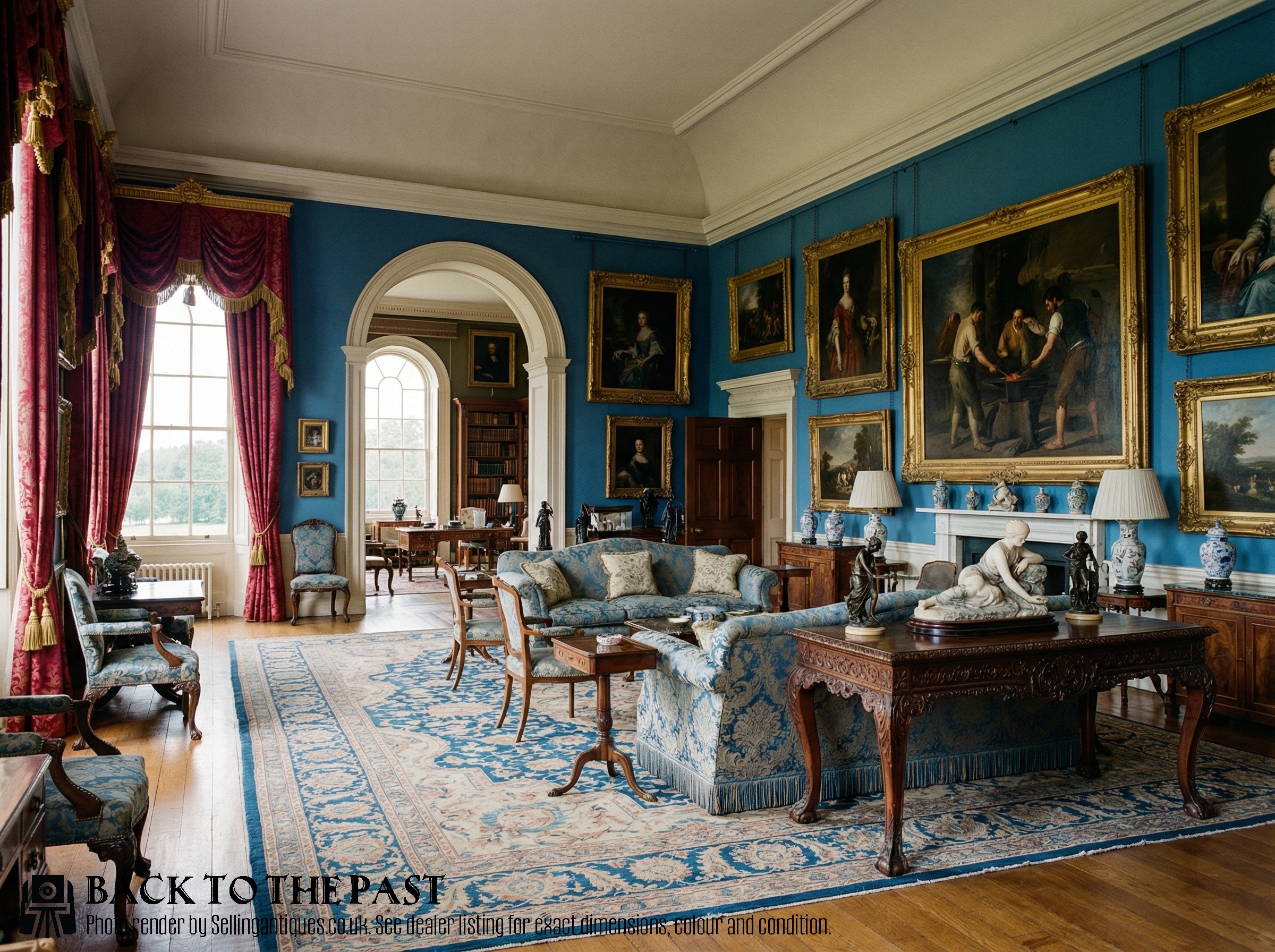
While marble and mixed media such as bronze, brass, and ormolu frequently appear alongside the primary mineral, alabaster remains the defining medium for these classical forms. The pieces reflect the Victorian and Edwardian fascination with antiquity, interpreted through the romantic lens of nineteenth-century European carving studios. Each figure demonstrates how nineteenth-century carvers adapted ancient Greek and Roman models for contemporary domestic display.
How they were made
Carvers shaped these pieces primarily from translucent gypsum alabaster and fine-grained white marble, relying on hand chisels, rasps, and abrasive powders to achieve smooth surfaces. The stone was frequently sourced from Italian and French quarries, prized for its ability to accept fine detail in drapery, hair, and facial expression. Sculptors often combined carved alabaster with contrasting elements such as brass, ormolu mounts, or veined Carrara marble bases.
Studio production in Italy and France during the late nineteenth century combined traditional pointing machines with meticulous hand finishing. Signed works by prominent makers indicate a multi-stage process where rough blocking gave way to delicate undercut drapery and polished flesh tones. The resulting sculptures capture light beneath the surface of the stone in a manner unique to alabaster.
Materials represented include white marble, Carrara marble, veined stone, and alabaster, frequently paired with brass and ormolu mounts.
What varies in quality
Signature and attribution strongly influence the standing of a piece, separating workshop output from master carvers whose studios supplied international exhibitions. The integration of secondary materials, such as finely chased ormolu mounts or multi-coloured stone bases, further distinguishes ambitious sculptural groups from standard decorative items.
A. Gamay·Fritz Kochendorfer·Antonio Frilli·Pugi·Mieczyslaw Leon Zawiejski·Gugielmo Pugi·P. Emilio Fiaschi·Joseph Gott·R. Lusili
The Alabaster Classical Statue Glossary
- Alabaster
- A fine-grained, translucent form of gypsum used historically for detailed sculptural carving because it is softer and easier to work than marble.
- Neoclassical
- A Western cultural movement drawing on the art and culture of classical antiquity, which heavily influenced nineteenth-century sculpture.
- Grand Tour
- A traditional trip through Europe undertaken by upper-class young men in the eighteenth and nineteenth centuries, resulting in the acquisition of classical art and souvenirs.
- Spinario
- A Hellenistic bronze sculpture of a boy withdrawing a thorn from his foot, which was frequently copied by later European carvers.
- Ormolu
- Gilded bronze mounted onto furniture or sculptures, popular in nineteenth-century decorative arts to accent marble and alabaster figures.
Alabaster Classical Statue: Frequently Asked Questions
Where were these statues made?
The majority of these sculptures originated in Italian workshops, particularly around Florence and Carrara, as well as in French studios during the nineteenth and early twentieth centuries.
These centres produced both ambitious exhibition pieces and refined domestic ornaments destined for drawing rooms across Europe.
How do I clean alabaster?
Alabaster is a soft and water-soluble mineral that requires gentle dusting with a dry, soft brush rather than liquid cleaners.
Moisture can permanently damage the polished surface and dissolve the gypsum, so professional conservation advice should be sought for deeper cleaning.
What is the Grand Tour?
The Grand Tour was an extended journey through Italy undertaken by collectors to acquire classical antiquities and skilled replicas.
Sculptures from this tradition often reproduce famous ancient statues found in Roman collections for display in British and European homes.