



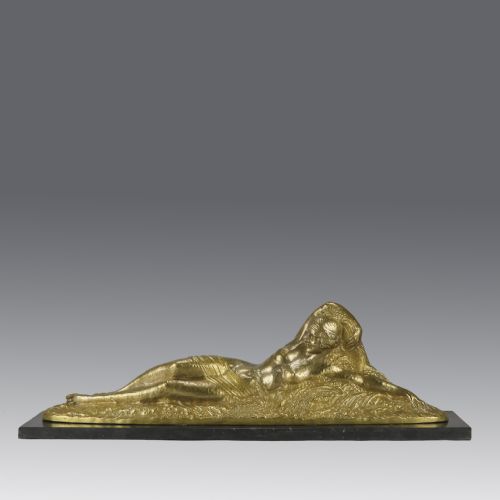

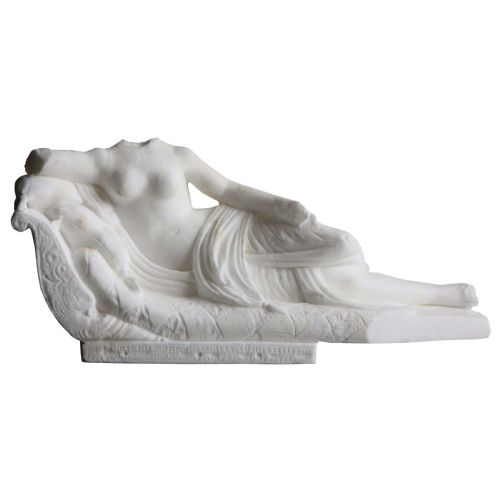



Reclining Female Sculpture
A reclining female sculpture brings classical grace and modernist line to a room, offering enduring elegance in bronze, marble, and alabaster.
Reclining Female Sculpture
A reclining female sculpture captures the human form at rest through classical, Neoclassical, and Art Deco interpretations. Buyers seeking a reclining female sculpture encounter works spanning the eighteenth to the early twentieth centuries, rendered in metal and stone.
The selections on this page range from nineteenth-century French bronzes to Art Deco figures cast in spelter and patinated bronze. Forms include single reclining nudes, mythological subjects like Ariadne, and functional bookends.
Origins stretch from France and Italy to workshops producing Anglo-Indian staghorn carvings. The most frequent encounters on this page are twentieth-century Art Deco pieces and nineteenth-century French bronzes.
Materials and Construction
Foundry-cast metals such as bronze, gilt bronze, patinated bronze, and spelter provide the foundation for the metallic figures in these listings. These metals allow for intricate surface detail and varied patination.
Carved stones including marble, Carrara marble, onyx, and alabaster offer smooth surfaces and subtle veining for classical and turn-of-the-century nudes. Staghorn provides an alternative organic medium for carved pieces.
Reclining Female Sculpture Retail Price Guide 2026
Typical asking prices for reclining female sculpture among the pieces listed under this phrase on Sellingantiques today, from the lower quarter to the upper quarter. They describe what is for sale here now, not the wider market.
Ariadne shares her reclining moment with a panther.
Assessing Quality
The refinement of the casting and the crispness of the chiselling determine the success of a metal figure. Superior patination and surface finish separate skilled foundry work from simpler production.
In stone works, the depth and precision of the hand-carving define the quality of the piece. The harmonious integration of mixed materials, such as bronze mounted on marble bases, also influences the overall standard.
Demetre Chiparus·Josef Lorenzl·Sibylle May·Antonio Canova·Edmond Leveque·James Pradier·Susse Freres·Ugo Cipriani·Gugielmo Pugi
The Reclining Female Sculpture Glossary
- Spelter
- A zinc alloy used as a less costly alternative to bronze for decorative figures. It often receives a bronze-like patination to mimic higher-value metalwork.
- Patinated Bronze
- Bronze treated with chemical solutions to produce a specific surface colour and finish. This technique enhances depth and highlights sculptural contours.
- Alabaster
- A soft, fine-grained stone used for detailed carving and sculptural figures. Its translucent quality allows light to penetrate the surface.
- Gilt Bronze
- Bronze coated with a thin layer of gold or gold leaf. This finish adds a luminous decorative surface to the metal structure.
Reclining Female Sculpture: Frequently Asked Questions
What periods do these sculptures cover?
The pieces span from the mid-eighteenth century through the nineteenth century and into the early twentieth century. Art Deco and Neoclassical styles predominate.
Specific dates range from seventeen-fifty through to nineteen-thirty, capturing both classical revival and modernist movements.
How were these figures displayed originally?
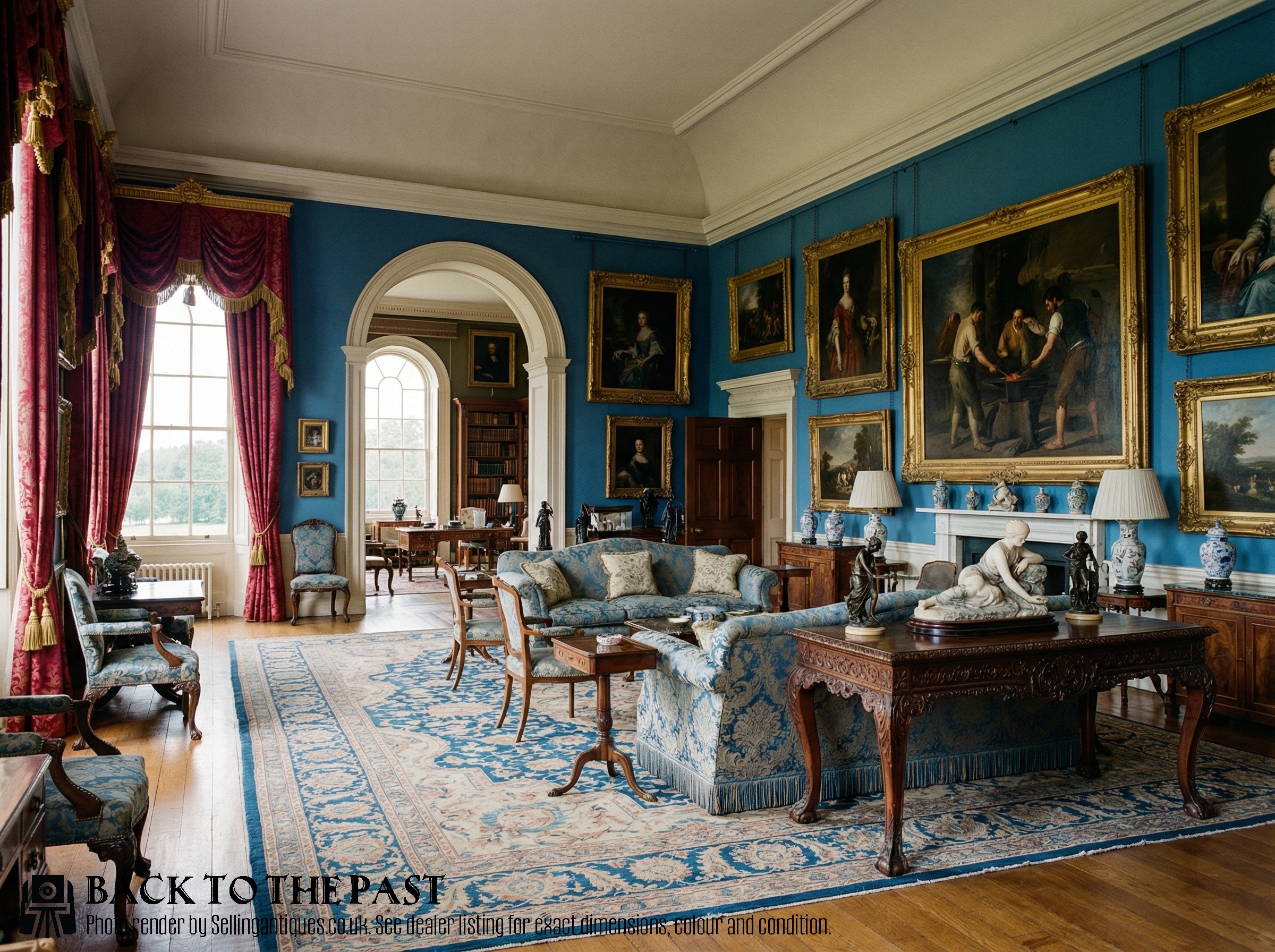
Many stood as independent table sculptures or mantelpiece ornaments in domestic interiors. Others served functional roles, such as bookends.
Larger stone carvings required dedicated pedestals or sturdy surfaces to support their weight.
How do I identify Art Deco examples?
Art Deco pieces typically date from around nineteen-thirty and feature stylized human forms. They often combine patinated bronze with marble bases.
Artists like Demetre Chiparus and Josef Lorenzl defined this geometric and streamlined aesthetic.
What is the difference between bronze and spelter?
Bronze is a durable copper alloy capable of holding fine foundry detail and deep patination. Spelter is a softer zinc alloy used for more accessible decorative figures.
Both materials received surface treatments to imitate aged metal finishes.