

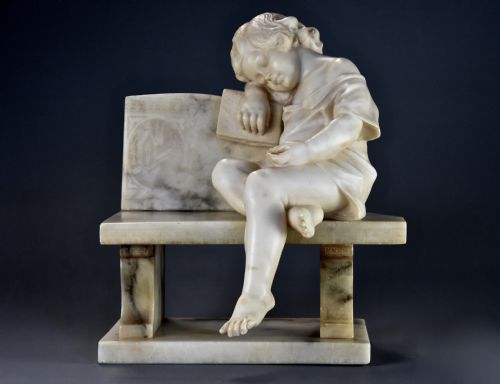
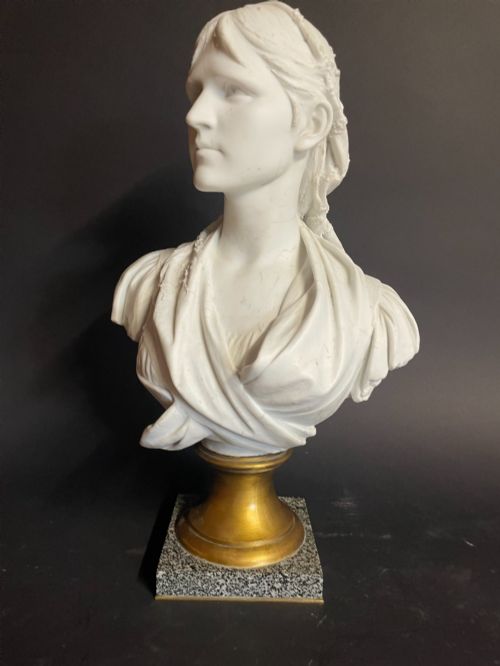
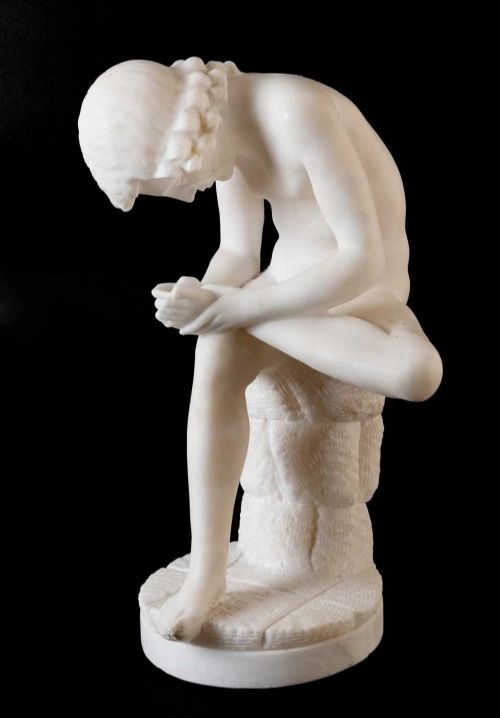


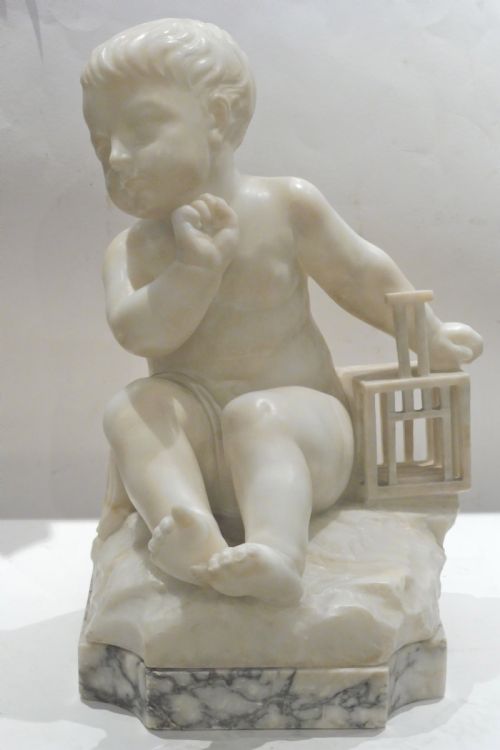

Italian Marble Alabaster Figure
An italian marble alabaster figure brings the carved weight of the grand tour and neoclassical studios straight to a mantelpiece.
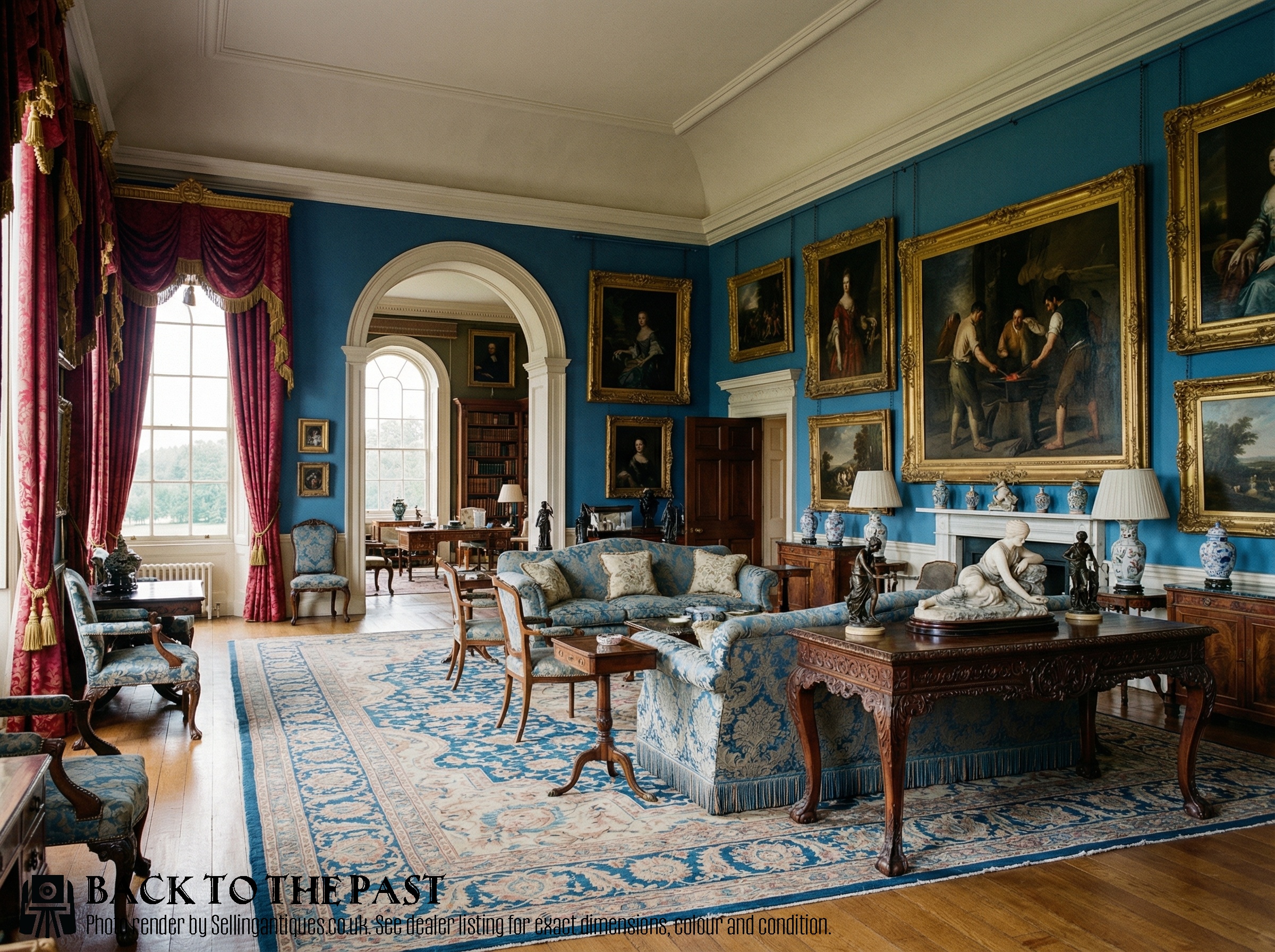
Italian Marble Alabaster Figure
An italian marble alabaster figure encompasses carved studies of female subjects, dancers, classical deities, and animals created across the nineteenth and early twentieth centuries. These works range from small souvenir tazze and animal groups to substantial figures of classical inspiration.
Buyers will most frequently encounter nineteenth-century pieces alongside later Art Deco and early twentieth-century examples. The selection spans neoclassical subjects and figures modelled after the antique, produced by Italian workshops for domestic and international collectors.
How They Were Made
Sculptors carved these pieces primarily from white marble, veined Carrara marble, and softer alabaster, frequently mounting them upon contrasting black marble bases or granite plinths. Certain decorative forms integrate metal and brass components to support or frame the stone elements.
The working of the stone combines hand-chasing with detailed surface finishing to render drapery, hair, and anatomical forms. Figures display varying tones within the alabaster itself, utilising the natural variations of the material to create depth in robes and skin.
Italian Marble Alabaster Figure Retail Price Guide 2026
Typical asking prices for italian marble alabaster figure among the pieces listed under this phrase on Sellingantiques today, from the lower quarter to the upper quarter. They describe what is for sale here now, not the wider market.
Listings span across the nineteenth and twentieth centuries, recording periods from 1870 through to the 1930s.
What Varies in Quality
The distinction between standard commercial output and superior studio work lies in the sharpness of the carving and the subtlety of the surface finish. Finer pieces demonstrate precise anatomical articulation in human and animal subjects, whereas simpler carvings lose definition in hands, hair, and drapery.
Selection of the stone heavily influences the character of each piece, with highly figured alabaster and evenly veined Carrara marble commanding greater visual presence. The integration of complementary bases, such as solid black marble or polished metal elements, further separates accomplished studio pieces from basic decorative objects.
Antonio Frilli·Pugi·Gugielmo Pugi·P. Emilio Fiaschi·Cipriani
The Italian Marble Alabaster Figure Glossary
- Grand tour
- A nineteenth-century tradition of travelling through continental Europe for cultural education, inspiring the acquisition of miniature architectural models and carved stone sculptures. These souvenirs were typically purchased in Italy by affluent travellers.
- Carrara marble
- A type of white or blue-grey marble quarried in the city of Carrara in Tuscany, widely utilised for classical sculpture and architectural monuments. It is prized for its fine, uniform grain and subtle veining.
- Alabastro egiziano
- A dense, highly figured variety of stone historically utilised in Italian decorative arts for small-scale vessels and architectural ornaments. The material displays rich colour banding and natural translucency.
- Neoclassical
- An artistic movement drawing inspiration from the classical art and culture of ancient Greece and Rome. In sculpture, this translates to balanced proportions, idealized subjects, and restraint in expression.
- Tazza
- A shallow cup or bowl mounted upon a stem and foot, frequently carved from decorative stone during the nineteenth century. These objects served primarily as decorative table pieces or display items.
Italian Marble Alabaster Figure: Frequently Asked Questions
How do I clean alabaster?
Alabaster is a soft and water-soluble stone that requires dry dusting with a soft brush rather than liquid cleaners. Moisture can permanently dull the polished surface and dissolve the fine gypsum details.
Keep these sculptures away from humid environments and direct sources of heat to prevent cracking or surface deterioration over time.
Where were these sculptures made?
The majority of these pieces originated in Italian studios, particularly in artistic centres such as Florence and Carrara where master carvers operated. Workshops catered heavily to international visitors seeking souvenirs of their travels.
Local artisans utilised regionally quarried stones, combining traditional neoclassical techniques with popular nineteenth-century subjects to satisfy the European and American art markets.
How do I identify the stone type?
Alabaster possesses a natural translucency that allows light to penetrate slightly beneath the surface, unlike the opaque nature of standard marble. It also feels noticeably softer and can be scratched more easily than harder stones like granite.
Veined Carrara marble displays characteristic grey streaks through a white body, while granite exhibits a speckled, crystalline composition from quartz and feldspar.
Are these figures signed?
Certain pieces bear incised signatures or workshop stamps along the base or lower edge, typically naming the sculptor or the producing studio. Signatures are more common on exhibition-grade works rather than smaller tourist souvenirs.
Unsigned pieces remain frequent, as many decorative sculptures were produced in larger quantities by anonymous workshop carvers following classical models.