


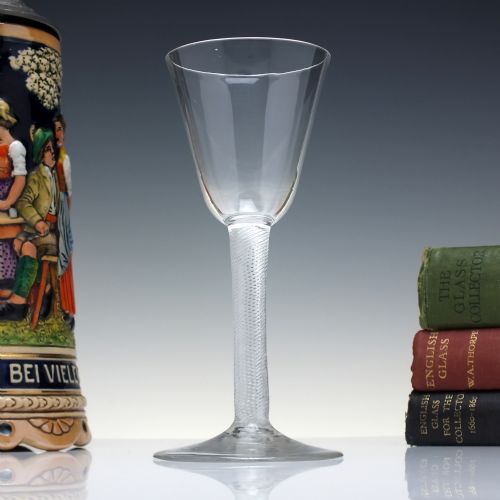
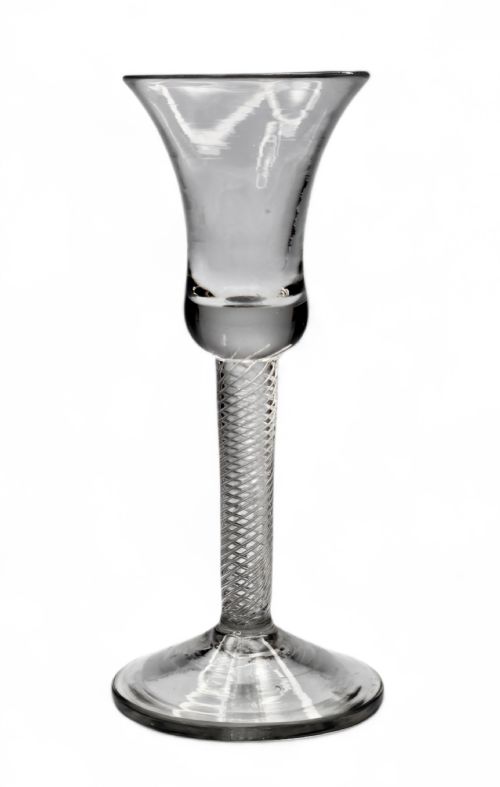
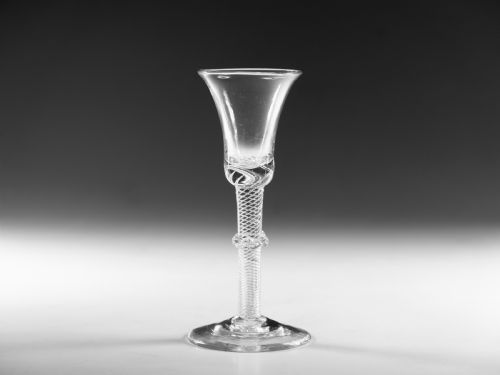


Air Twist Stem
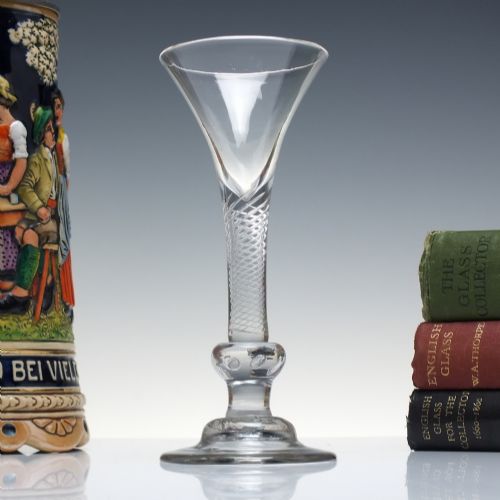
An air twist stem brings the delicate, optical magic of trapped air threads right into your hand.
Air Twist Stem
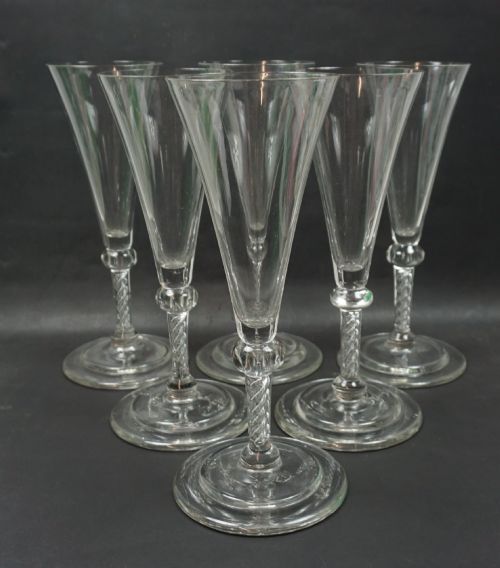
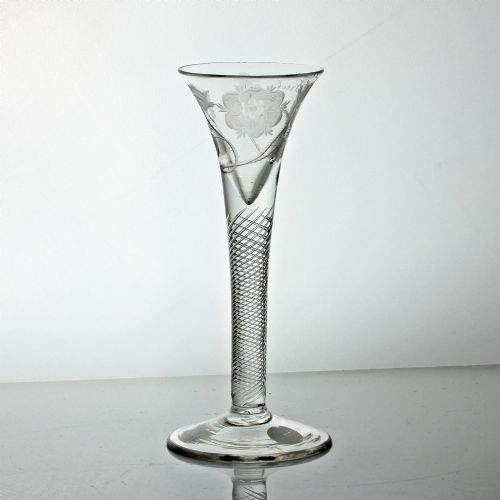
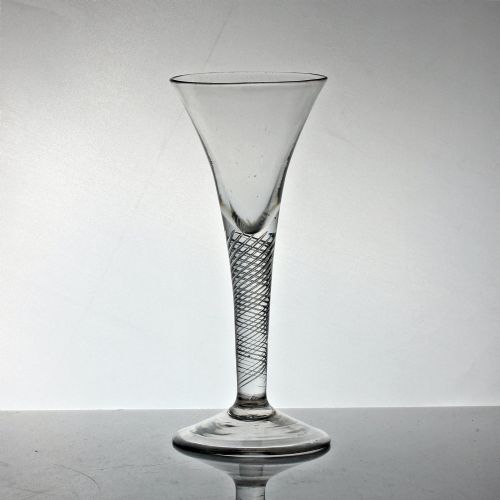
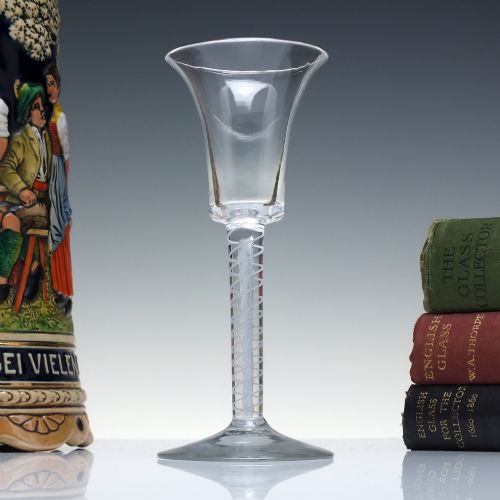
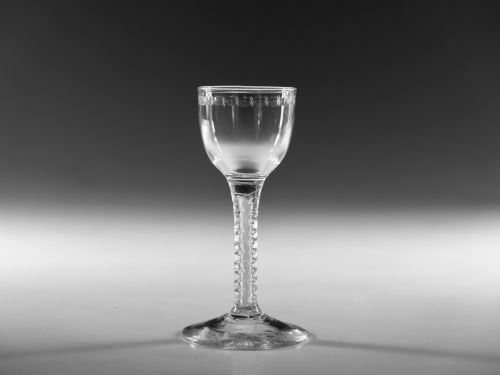
When you search for an air twist stem, you are looking at drinking vessels defined by fine, spiralling threads of air enclosed within the clear glass leg. The pieces you are most likely to meet on this page hail from the eighteenth century, particularly the Georgian era, alongside later twentieth-century revivals.
The dominant forms in this inventory are wine glasses, flutes, and ale glasses, often featuring trumpet, bell, or bucket bowls. These drinking vessels bridge the gap between simple utilitarian objects and masterworks of glass manipulation.
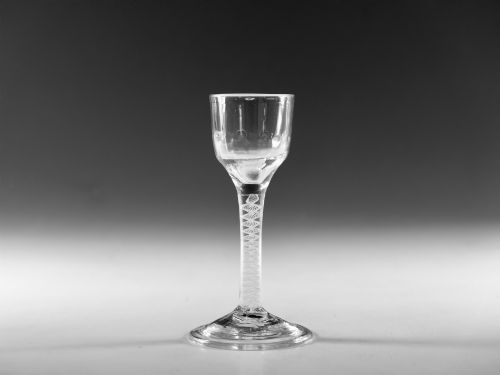
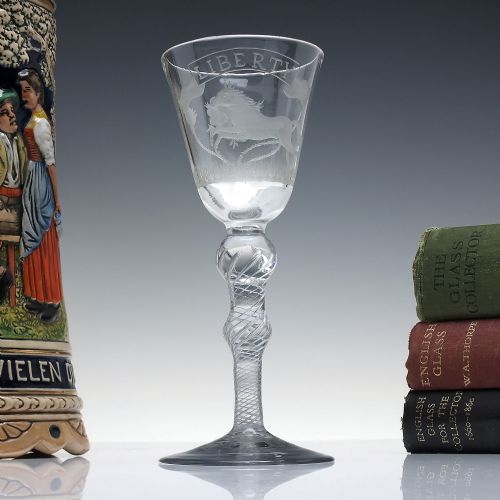
While many examples rely on pure Georgian manufacture, some pieces display complex engineering such as multiple spirals, composite stems, or opaque twists. You will find that these variations change the visual weight and refraction of the glass entirely.
Materials and construction
The makers of these items relied heavily on lead glass, lead crystal, and flint glass to achieve the exceptional clarity required for the internal air threads to show. This heavy glass composition allowed artisans to pull, twist, and elongate the metal while hot without clouding the material.
Craftsmen created the characteristic twists by drawing bubbles within the molten glass into capillaries before braiding or spinning the stem into shape. Additional techniques involved combining air twists with opaque white enamel threads or mercury elements to form mixed twists.
Listings for this phrase feature pieces produced across the eighteenth century, the Georgian era, and the nineteen-thirties, utilising clear lead glass and enamel.
Assessing quality and refinement
The upper tier of these glasses is defined by the absolute clarity of the metal and the precision of the internal spiral thread. A superior stem shows crisp, regular rotations of air without distortion, cloudiness, or heavy surface wear.
Proportion and foot formation dictate much of the desirability, with domed feet, knops, and tall flutes commanding particular attention. The relationship between the delicate stem and the weight of the bowl determines the overall harmony of the piece.
The Air Twist Stem Glossary
- Air twist
- A stem containing spiralling threads of air trapped inside the clear glass. This optical effect was achieved by manipulating bubbles within the molten metal during the pulling process.
- Multi spiral
- A stem featuring numerous fine air threads rather than a single dominant spiral. These complex formations create a dense, shimmering interior pattern when held to the light.
- Mixed twist
- A stem combining air twist elements with opaque white enamel threads. This hybrid technique produced striking visual contrast within eighteenth-century drinking vessels.
- Composite stem
- A glass leg constructed from multiple distinct sections, such as a plain baluster joined to an air twist portion. These variations showcase the playful ingenuity of period glasshouses.
- Ale glass
- A tall, slender vessel specifically designed for malt beverages, frequently ornamented with hop and barley engravings. They often utilise air twist or mixed twist stems to elevate their height.
Air Twist Stem: Frequently Asked Questions
Can I drink wine from an 18th century glass?
These vessels were originally made for dining and imbibing, so they remain fully capable of holding wine today.
Exercise caution when handling such fragile antique lead glass to preserve its structural integrity for future generations.
What is the difference between air and opaque twists?
Air twists contain actual threads of trapped air enclosed within the transparent body of the glass stem.
Opaque twists incorporate solid white or coloured enamel glass rods into the molten metal to achieve a similar spiralling pattern.
How can I tell a Georgian air twist from a later copy?
Examine the foot of the vessel for tool marks, pontil scars, and the soft wear patterns characteristic of age.
Georgian lead glass also exhibits a distinctive greyish-blue refraction and exceptional material weight compared to modern reproductions.