


Afghan Village Carpet
When choosing an Afghan village carpet, you select a tribal wool floor covering defined by deep red dyes and historic nomadic weaving traditions.
Afghan Village Carpet
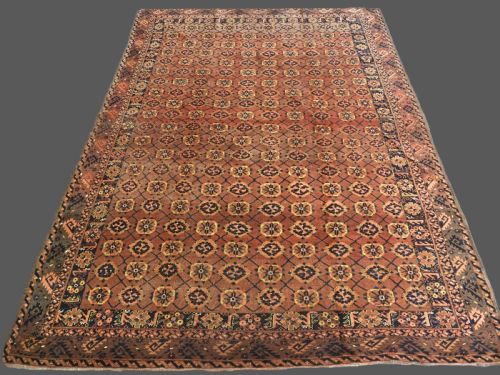
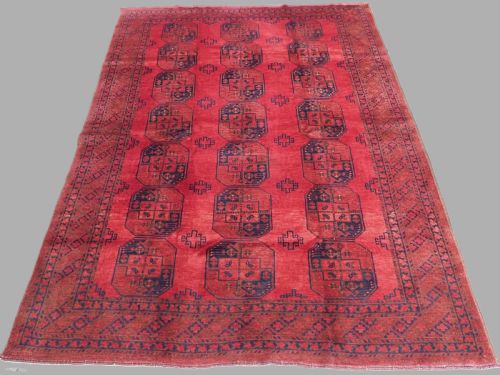
An Afghan village carpet represents the hand-woven textile output of tribal weavers across northern regions, encompassing both large room-size formats and smaller formats such as area rugs and prayer rugs.
The pieces available on this page typically date from the early decades of the twentieth century, specifically around nineteen hundred to nineteen thirty.
These floor coverings display distinct regional characteristics associated with tribal groups including the Ersari, Kizil Ayak, and Pashtun weavers.
How They Were Made
The construction relies fundamentally on hand-spun wool, chosen for its durability and softness, which is then dyed utilising natural colouring agents.
Weavers employ traditional tribal knotting and weaving techniques, frequently incorporating long kilim ends at the terminal borders of prayer rugs and carpets.
The listings show pieces dated between nineteen hundred and nineteen thirty, utilising hand-spun wool and natural dyes.
What Varies in Quality
Quality differences emerge in the depth and saturation of the red and burnt orange colour palette, alongside the tactile quality of the glossy wool pile.
Structural integrity also separates examples, with tension consistency and the preservation of original dimensions determining the overall standard of the piece.
The Afghan Village Carpet Glossary
- Mihrab
- The niche design found on prayer rugs, pointing towards Mecca. Examples on this page include single, three mihrab, and seh mihrab variations.
- Kilim end
- The flat-woven section extending beyond the knotted pile at the ends of a rug. These provide structural protection and often feature geometric bands.
- Gul
- A medallion motif repeated across tribal carpets, such as the traditional Salor gul or Chuval gul seen in Ersari weaving traditions.
- Natural dyes
- Colouring substances derived from plant and mineral sources rather than synthetic chemicals. They yield the warm reds and old gold tones characteristic of these pieces.
- Beshir
- A Turkmen sub-group known for distinctive border designs and large-scale format carpets produced in regional workshops and villages.
Afghan Village Carpet: Frequently Asked Questions
What is an afghan village carpet?
An afghan village carpet is a hand-knotted tribal floor covering originating from northern regions, woven by communities such as the Ersari and Pashtun.
These pieces typically date from the early twentieth century and are recognised by their predominant red colour schemes and traditional geometric patterns.
How do I identify a prayer rug?
Prayer rugs are distinguished by the mihrab niche woven into the design, which directs the placement of the rug during daily worship.
Many variants on this page exhibit multiple arches, such as the seh mihrab or three mihrab layouts, accompanied by long kilim ends.
What colours do these rugs feature?
The palette relies heavily on deep rich reds, warm red tones, burnt orange, and occasional old gold accents produced through natural dyes.
Over decades of ageing, the hand-spun wool develops a soft glossy appearance that enhances these traditional hues.
Where were these carpets made?
They were produced in tribal villages and regional centres across northern Afghanistan, including areas like Andkhoy.
Different tribal groups, such as the Kizil Ayak and Ersari, contributed their own distinct border designs and gul motifs to the local weaving tradition.