




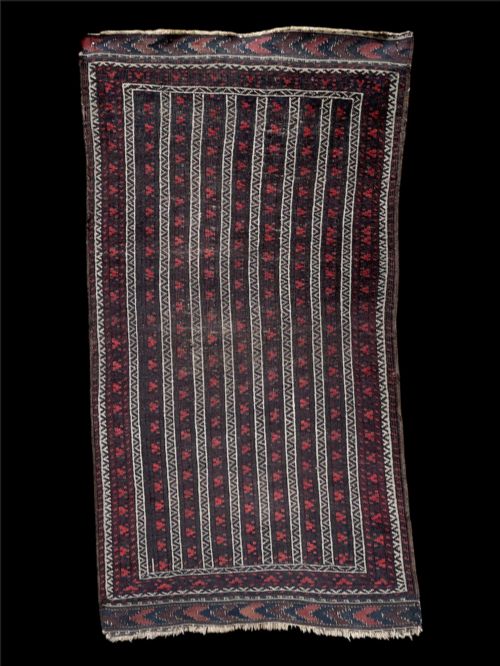


Afghan Runner Rug
When you seek an afghan runner rug, you examine tribal textiles woven by hand in wool, cotton, and camel hair across regional villages and nomadic encampments.
Afghan Runner Rug
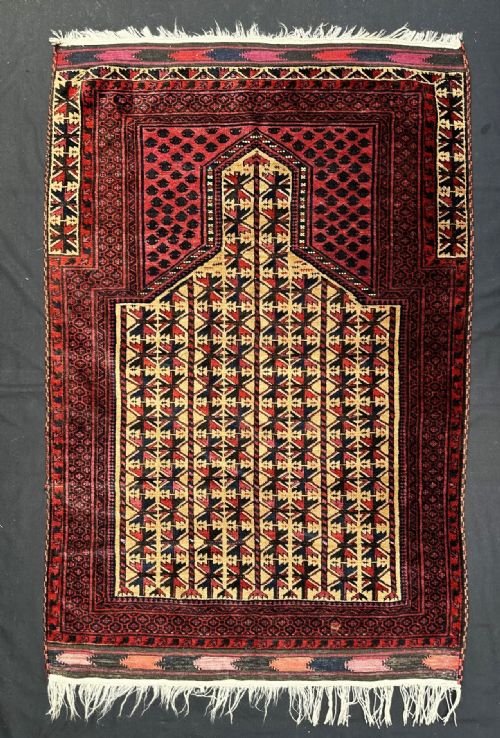
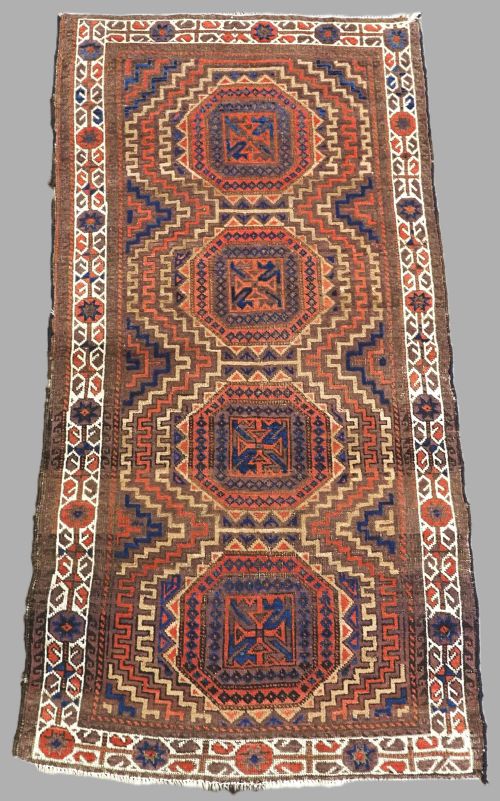
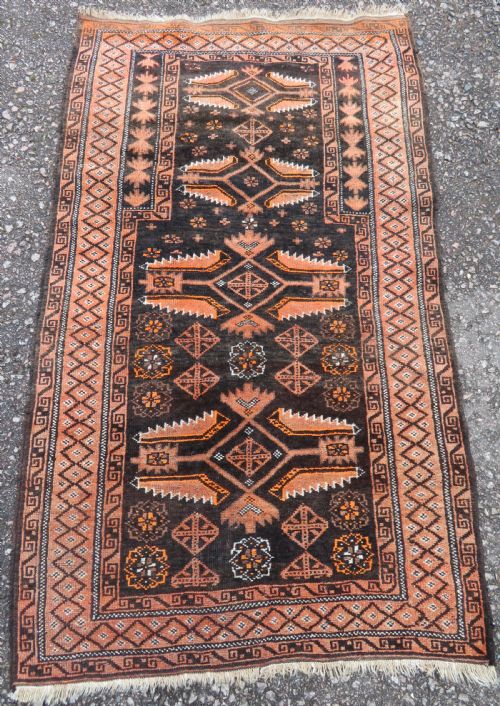
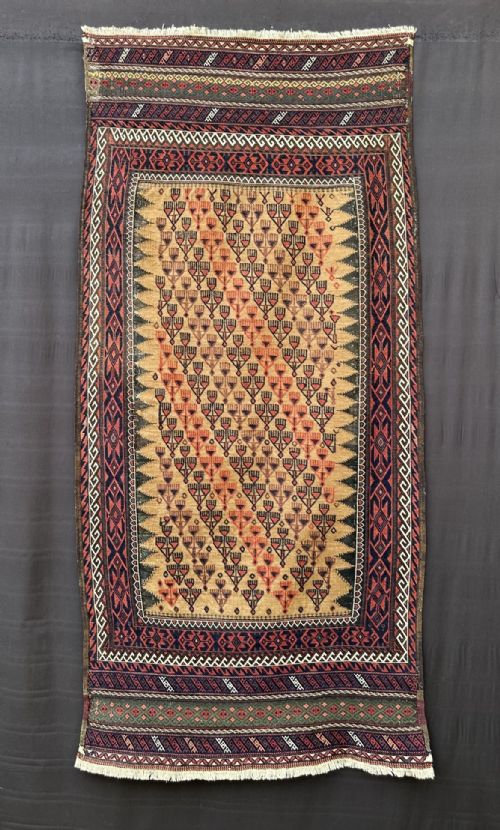
An afghan runner rug encompasses long, narrow floor coverings and flatweaves produced across Afghanistan by tribal groups such as the Baluch, Ersari, Timuri, and Mushwani. These textiles frequently display repeating guls, prayer mihrabs, or geometric bands that reflect nomadic heritage.
Examples on this page span from the nineteenth century through the early twentieth century, showing village and tribal workmanship. Buyers encounter formats ranging from prayer rugs and kilims to extended hall runners featuring natural dyes.
Regional variations connect specific tribes to borderlands, including Timuri and Djhan Beghi pieces from the frontiers of Persia and Afghanistan. These pieces serve as functional floor coverings or decorative wall textiles with deep historical roots.
What Varies in Quality
Quality rests in the fineness of the knotting, the crispness of geometric drawing, and the depth achieved through natural dyes. Tightly packed pile and secure structural integrity distinguish finer examples from standard village output.
The choice of materials also dictates calibre, with hand-spun wool and soft camel hair yielding a more supple handle. Preservation of original kilim ends and crisp borders elevates the standing of an individual runner.
Afghan Runner Rug Retail Price Guide 2026
Typical asking prices for afghan runner rug among the pieces listed under this phrase on Sellingantiques today, from the lower quarter to the upper quarter. They describe what is for sale here now, not the wider market.
Some nineteenth-century weavers secretly added a stray tuft of goat hair to ward off bad luck, creating tiny, tactile surprises in the pile.
The Afghan Runner Rug Glossary
- Gul
- A repeating medallion or octagonal motif found frequently on Turkmen and Baluch tribal carpets. These motifs often act as tribal signatures.
- Mihrab
- A niche design mirroring the prayer halls of mosques, frequently pointed towards Mecca. Prayer rugs display one, two, or three of these arches.
- Kilim
- A flatwoven textile produced without a raised pile by tightly interweaving warp and weft threads. These pieces often feature sharp geometric bands.
- Sofreh
- A dining or food spread cloth woven by tribal groups for domestic use. They share weaving techniques with standard rugs.
- Weftwork
- Decorative bands of supplementary weft threads woven into flatweaves for added texture and pattern. This technique appears across regional kilims.
Afghan Runner Rug: Frequently Asked Questions
What is an afghan runner rug?
An afghan runner rug is a long, narrow tribal textile hand-knotted or flatwoven in wool by makers across Afghanistan and its borderlands. These pieces utilise traditional village designs including geometric guls and prayer niches.
Historically produced by nomadic and village tribes such as the Baluch and Ersari, these runners served practical functions in domestic tents and homes. Today, they are prized for their rich natural dyes and durable construction.
How do I care for an antique rug?
Protect your runner by placing it in low-moisture areas out of direct, harsh sunlight to preserve the natural plant and insect dyes. Gentle vacuuming without a rotating beater bar prevents fibre degradation.
Professional cleaning by specialists familiar with antique tribal textiles is recommended every few years. Avoid harsh chemical spot treatments on wool and cotton foundations.
How can I tell tribal groups apart?
Tribal attribution relies on distinctive design vocabularies, structural materials, and colour palettes unique to specific weaving groups. Baluch pieces often display deep indigo and madder red tones with camel hair details, while Ersari carpets feature large elephant-foot guls.
Examining the weave structure, fringe finishing, and side cord wrappings provides further clues to regional origins. Borderland pieces often blend Persian and Afghan motifs.
Where were these textiles used?
Nomadic weavers and villagers utilised these runners and long carpets inside tents, communal structures, and homes as floor coverings. Narrow formats suited long hallways and tent interiors.
Prayer rugs specifically designated clean spaces for daily worship rituals. Sofreh cloths functioned primarily during meals for food preparation and serving.