


Aesthetic Movement Umbrella Stand
An aesthetic movement umbrella stand is a striking hall piece offering both utility and distinct nineteenth-century design.
Aesthetic Movement Umbrella Stand
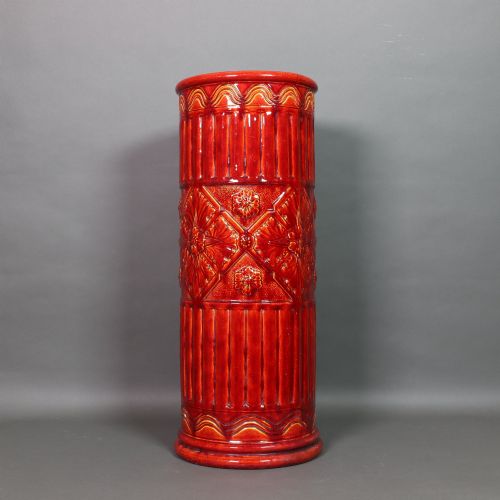
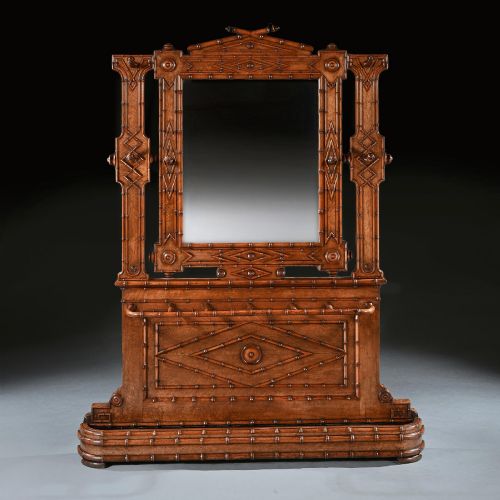
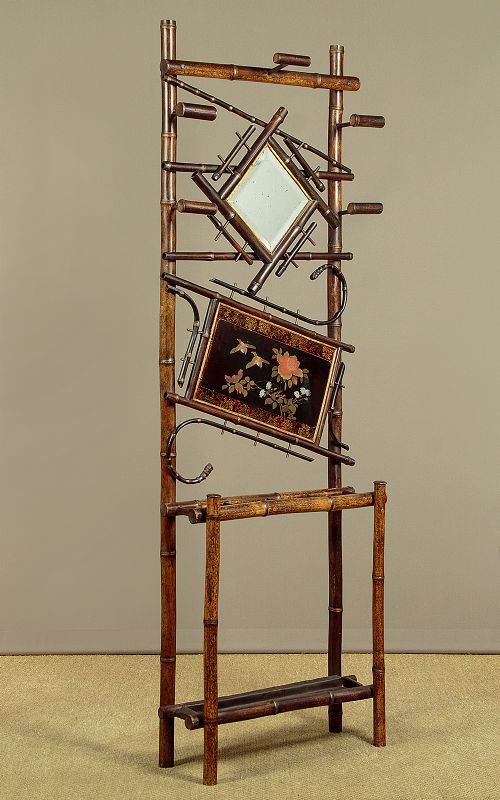
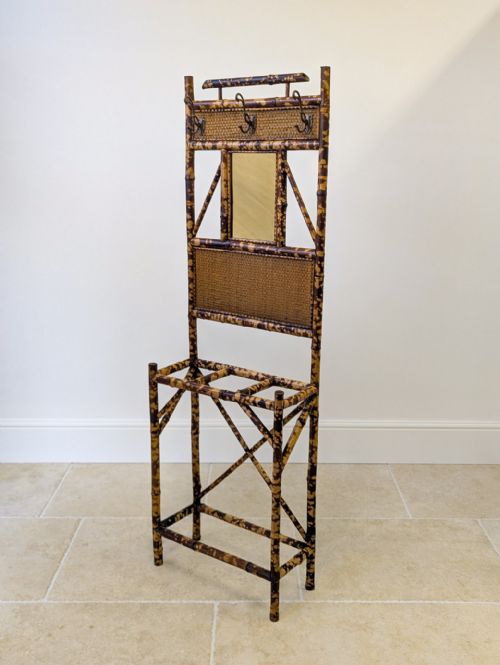
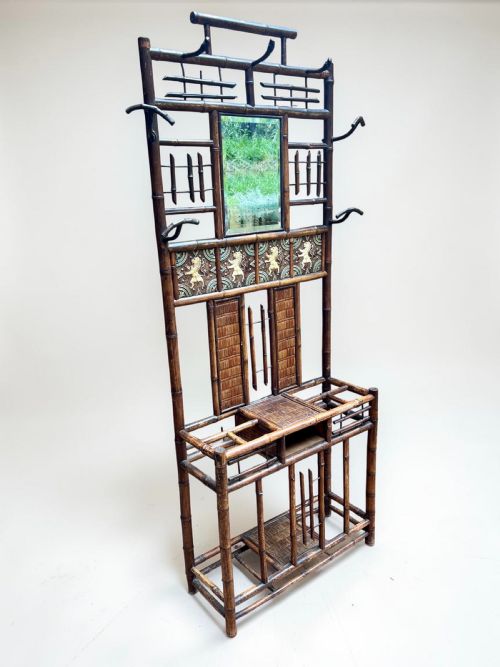
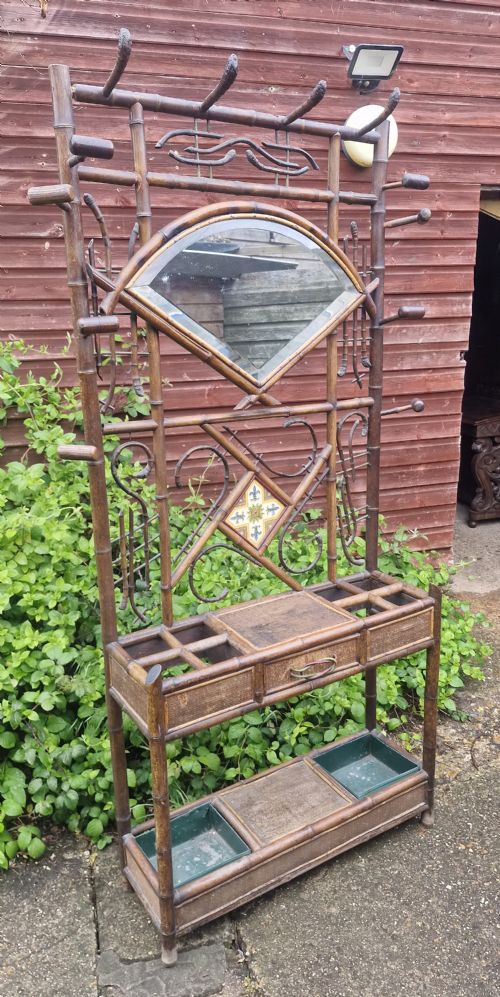
An aesthetic movement umbrella stand brings together practical hallway storage and the artistic reform ideals of the late nineteenth century. These items appear in various forms, from dedicated stick stands to larger hall stands incorporating mirrors, coat hooks, and lacquered panels.
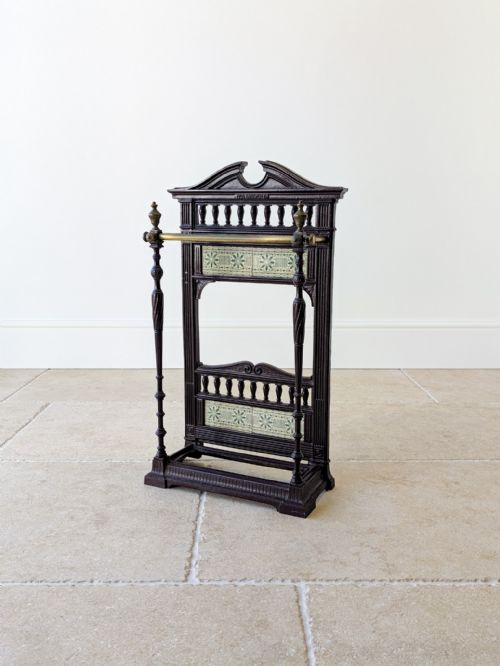
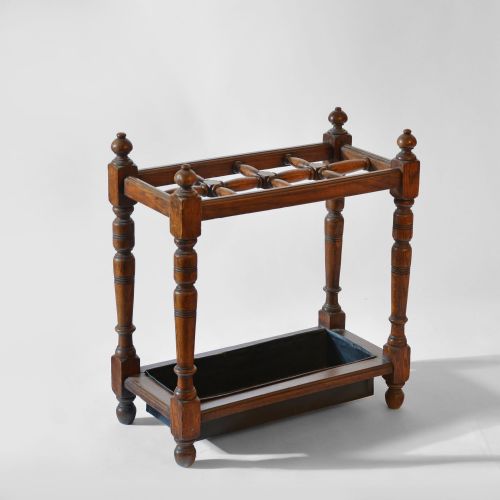
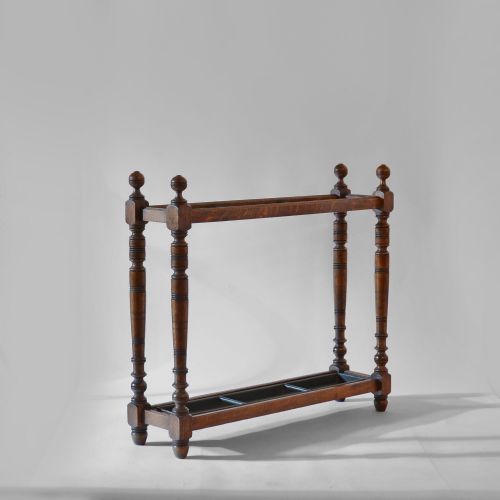
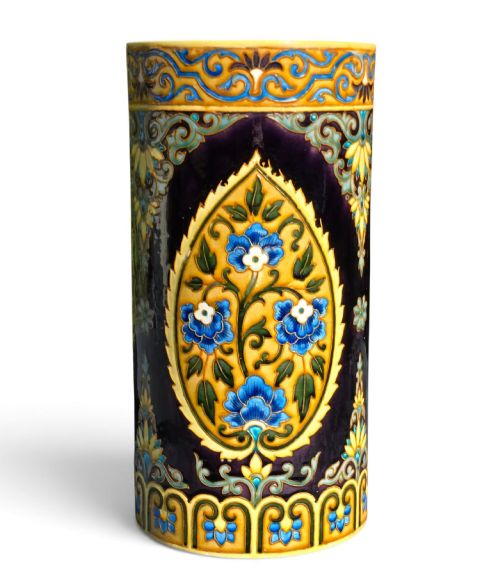
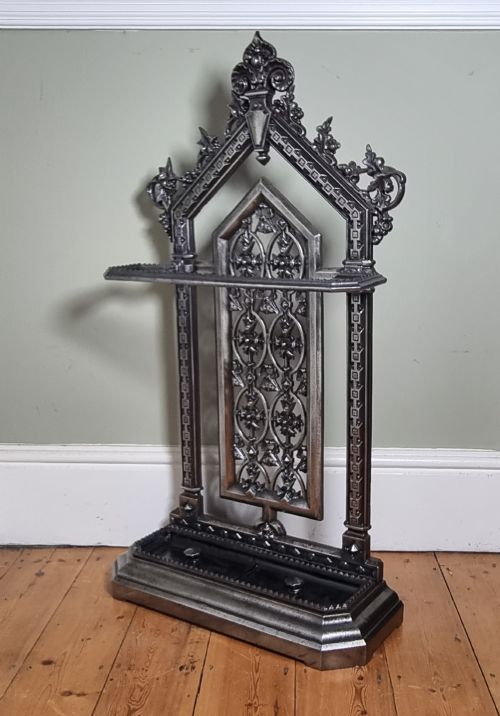
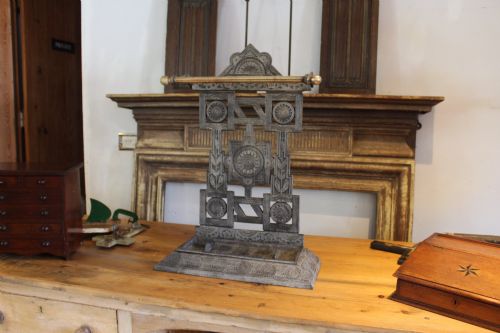
The pieces on this page span the Victorian and Edwardian eras, with notable examples originating from the 1870s up to the early twentieth century. Buyers will frequently encounter designs rendered in bamboo, faux bamboo, cast iron, and oak, often reflecting broader styles such as the Iznik Revival or Arts and Crafts.
Originating both domestically and from continental makers, these stands serve as functional furniture that displays the characteristic linear emphasis and ornament of the period. Whether configured as a standalone vessel or part of a larger hallstand, each piece provides a tangible connection to nineteenth-century domestic interiors.
What varies in quality
Design sophistication and the reputation of the maker or foundry heavily influence the standing of an individual piece. Works associated with notable designers or specific manufacturers demonstrate superior casting precision and joinery.
The integration of artistic details, such as hand-painted ceramic tiles or specialised metalwork, separates standard utilitarian examples from more ambitious artistic furnishings. Preservation of original surfaces, mirrors, and drip pans also contributes to the standing of any given stand.
Some stands keep your walking sticks company with built-in mirrors for a final hat check.
Coalbrookdale·Thomas Jeckyll·Falkirk Ironworks·Gillows·Minton
The Aesthetic Movement Umbrella Stand Glossary
- Aesthetic Movement
- A late nineteenth-century design reform movement emphasising art for art's sake and drawing inspiration from Japanese and continental decorative arts. This style prioritized visual harmony and form over rigid historicism.
- Faux Bamboo
- Simulated bamboo created by carving or moulding wood and metal to mimic the natural joints and texture of the plant. It was widely used in Victorian and Edwardian furniture to achieve an exotic appearance.
- Iznik Revival
- A ceramic style imitating the vibrant colours and floral motifs of sixteenth-century Turkish pottery. Pieces featuring this influence often incorporate decorated tiles within a larger furniture framework.
Aesthetic Movement Umbrella Stand: Frequently Asked Questions
What is an aesthetic movement umbrella stand?
An aesthetic movement umbrella stand is a nineteenth-century hallway furnishing designed to hold walking sticks and umbrellas whilst displaying the artistic motifs of the period. These items range from cast iron vessels to bamboo hall stands.
They reflect the era's shift toward decorative reform, incorporating materials like ceramic tiles, brass, and oak to elevate a purely practical item into an artistic statement.
How do I care for bamboo furniture?
Bamboo and faux bamboo stands require protection from excessive moisture and direct sunlight to prevent the material from drying out or splitting. Regular dusting with a dry cloth keeps the surface clean without damaging the finish.
Ensure that any internal metal or ceramic drip trays are regularly emptied and dried to protect the surrounding framework from water damage.
Where were these stands placed?
These pieces were historically positioned in the entrance hall or vestibule of a home to catch dripping rain from umbrellas and coats upon arrival. Their placement immediately inside the front door made them the first decorative element visitors encountered.
Larger versions featuring mirrors and coat hooks served as central organizational hubs for daily outdoor wear.
How can I tell the period of a stand?
Dating relies on examining the construction materials, stylistic markers, and any maker's marks or registration stamps present on the metal or ceramic components. Pieces from the 1870s often feature distinct aesthetic or gothic ironwork, whilst later examples lean into Edwardian interpretations.
Comparing the specific use of bamboo, oak, or cast iron against recorded manufacturing periods helps narrow down the date of production.