


Aesthetic Movement Brass
These aesthetic movement brass pieces combine disciplined historicism with metallic utility, offering collectors an entry into late nineteenth-century design.
Aesthetic Movement Brass
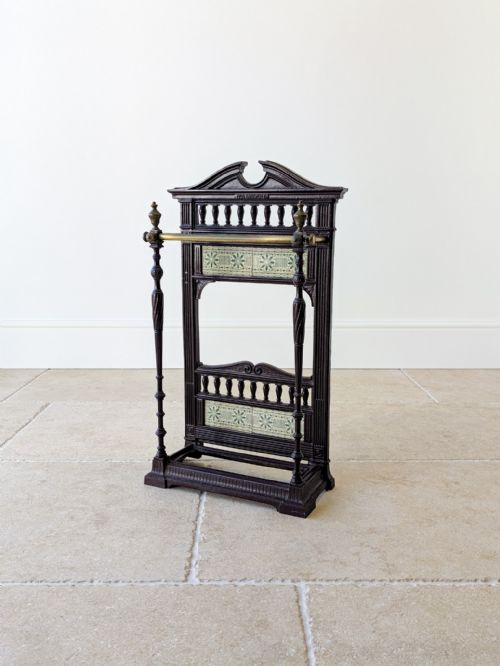
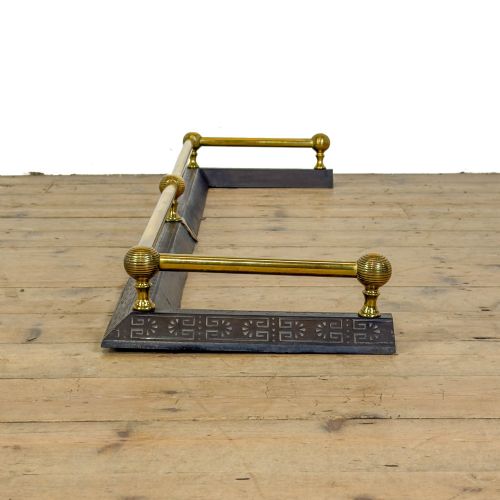
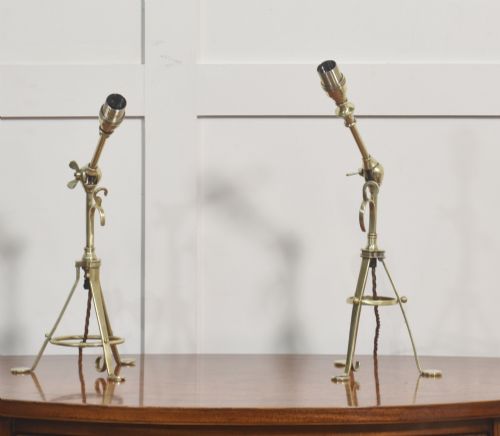
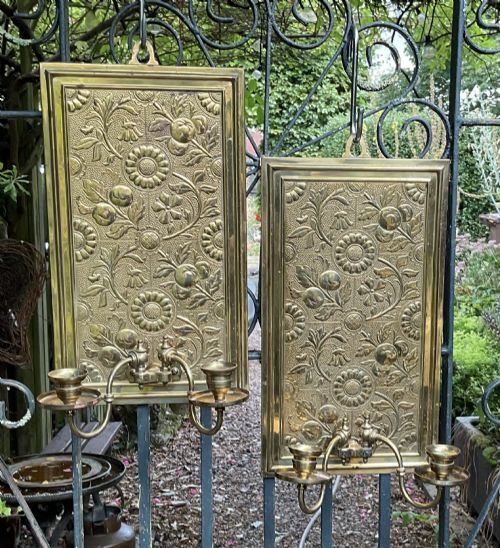
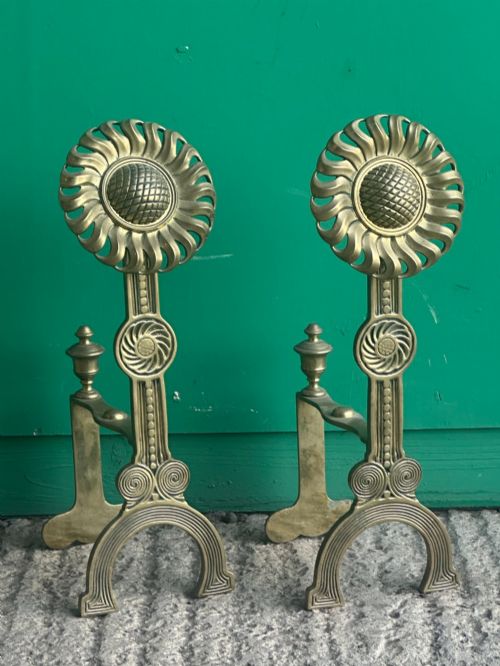
When you search for aesthetic movement brass, you encounter functional items ranging from domestic lighting to hearth hardware produced during the Victorian and Edwardian eras. The surviving examples on this page focus heavily on lighting, wall sconces, candlesticks, and structural fixtures like fire dogs and andirons.
The objects frequently merge raw utility with refined decorative motifs drawn from Anglo-Japanese and Gothic Revival sensibilities. Candlesticks, wall gongs, and desk accessories dominate the selection, often pairing solid brass with porcelain, copper, or ebonised wood.
Most items originate from the final decades of the nineteenth century, reflecting a period when metalwork shifted away from heavy industrial casting toward stylised plant forms and geometric relief patterns. These domestic pieces served both a practical purpose in period homes and an artistic statement aligned with contemporary interior reform.
Materials and Manufacture
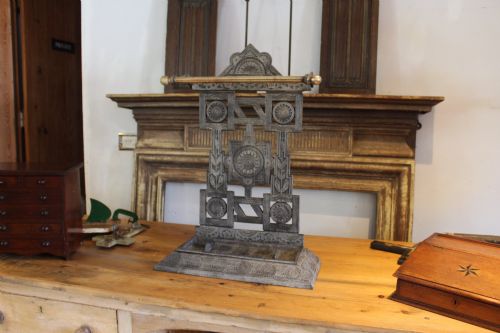
The physical objects rely on cast and sheet brass frequently combined with contrasting materials such as copper, ceramic insets, and ebonised wood. Workshops employed sand-casting for heavy structural components like andirons and stick stands, whilst lighter items such as wall pockets and wall lights utilised pressed or beaten sheet metal.
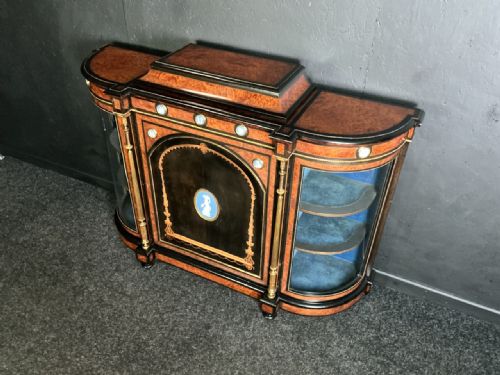
Surface treatments range from polished finishes to dark patination, sometimes incorporating incised linear engraving or contrasting japanned details. Makers integrated ceramic cabochons and Jasperware directly into the metal armature, binding disparate media through mechanical fixings rather than adhesive.
Listings feature brass combined with ebonised wood, oak, porcelain, and glass across domestic forms.
Evaluating the Metalwork
Superior quality in these pieces rests upon the crispness of the original casting and the precision of surface chasing. Finer examples display sharp definition in floral motifs such as sunflowers and leaves, whilst lesser productions show softened edges and superficial surface stamping.
Construction integrity similarly divides the range, distinguishing items held together by robust threaded brass fasteners from those relying on simple solder or weak joins. The integration of secondary materials like leaded glass or porcelain separates standard production pieces from studio-level commissions.
W.A.S. Benson·Bruce Talbert·Thomas Jeckyll·William Tonks·James Shoolbred·Henry Ogden·John Moyr Smith·Christopher Dresser·Benham and Froud
The Aesthetic Movement Brass Glossary
- Andirons
- Iron or brass fire dogs used to support logs in an open fireplace. They often featured prominent decorative cast brass fronts during the late nineteenth century.
- Jardiniere
- An ornamental pot or stand for holding plants or flowers. These items appeared in metal, ceramic, and wood across domestic interiors.
- Japanning
- A type of European finish that imitated Japanese lacquer work. The technique involved applying layers of heat-cured varnishes, frequently onto ebonised wood surfaces.
- Girandole
- An ornamental branched candlestick or wall sconce with a reflective backplate. They directed candlelight outwards while adding decorative metalwork to panelled walls.
Aesthetic Movement Brass: Frequently Asked Questions
What is aesthetic movement brass?
It encompasses domestic metalware produced in the late nineteenth century that prioritised artistic design over strict historical revivalism. These items drew heavily on Japanese and nature-inspired motifs.
The pieces range from everyday lighting fixtures to decorative hearth furniture, designed to integrate harmoniously into reform-style interiors of the Victorian period.
How do I clean antique brass?
Cleaning antique brass requires caution to preserve the historic patination that collectors value. Gentle dusting and mild soap solutions are generally preferred over abrasive chemical polishes.
Aggressive cleaning strips the aged surface layers, diminishing the visual character and historical evidence embedded in the metal over decades of use.
Were these items mass produced?
Production methods varied considerably, encompassing both factory-led output from firms like Benham and Froud and specialised commissions from individual designers. Many domestic objects were manufactured in moderate quantities for middle-class homes.
Whilst workshops utilised standard casting techniques, the finishing, chasing, and assembly often involved significant hand labour by skilled artisans.
How do I date these metal objects?
Dating relies on stylistic markers, manufacturing techniques, and occasional maker's marks or registration numbers stamped into the metal. The transition from Gothic Revival to Anglo-Japanese motifs helps narrow the timeframe to specific decades.
Physical clues such as fastener types, construction methods, and associated materials like ebonised wood or leaded glass provide additional chronological context.