

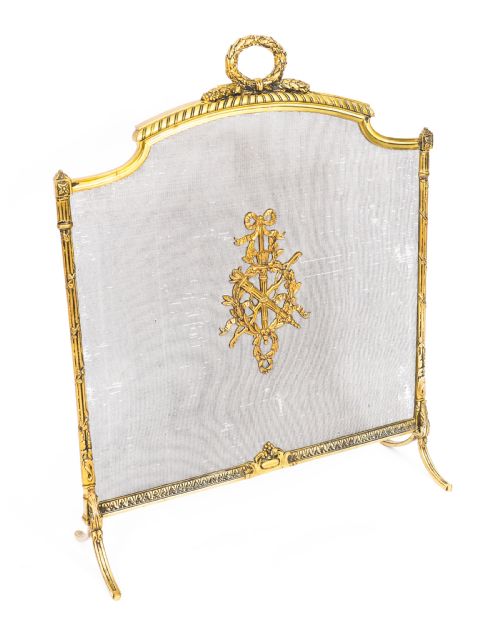


Brass Fire Stands
Brass fire stands encompass the metal companion sets, tool rests, and trivets that organise the hearth.
Brass Fire Stands
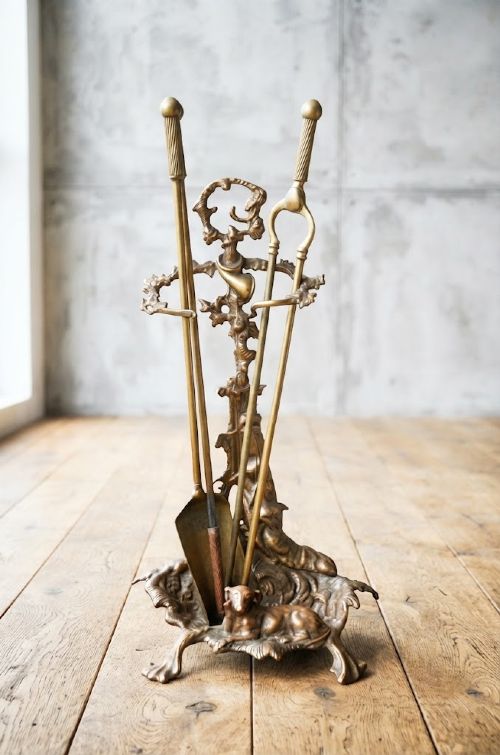
Brass fire stands include companion sets, tool rests, kettle stands, and footmen designed to serve the hearth. The pieces span periods from the Georgian era through the Victorian period and into the twentieth century.
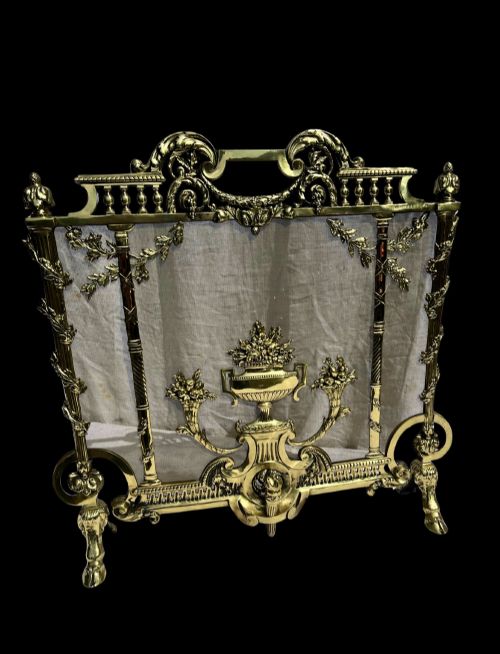
The most common examples on this page are Victorian and Edwardian companion sets, fire dogs, and screens made from brass, cast iron, and steel. Forms range from simple tool rests to elaborate French Rococo revival guards and poles with needlework panels.
Buyers also encounter Georgian cast brass trivets and Regency pole screens alongside later twentieth-century items like Art Deco companion sets and painted metal figures.
How they were made
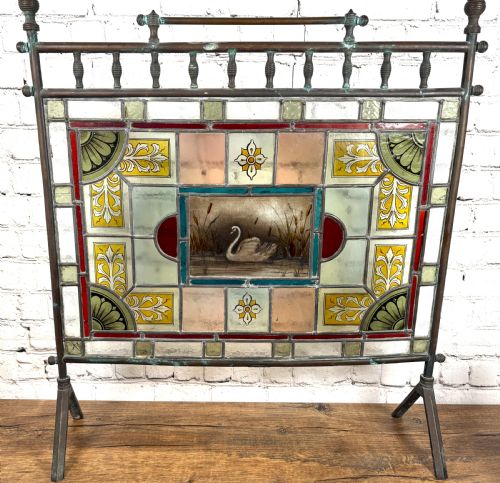
Metalworking techniques rely on casting brass and iron, often producing solid components combined with steel tools or copper finishes. Heavier items feature finely cast details, while others incorporate applied ornamentation such as stained glass, needlework panels, or embroidered fabric.
Makers utilised traditional foundry methods, resulting in sturdy freestanding frames, articulated screens, and paired tool rests. Secondary materials like rosewood appear in pole screens, while painted finishes and gilding modify the metal surfaces.
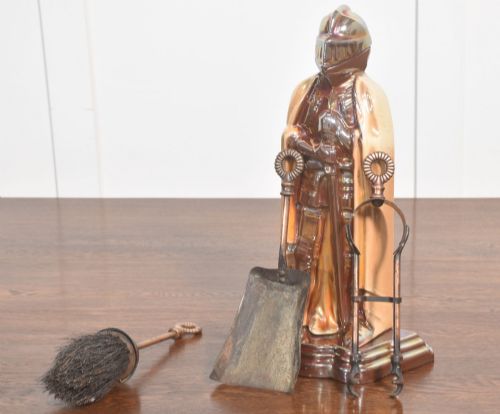
Some fireside sets feature knights, crinoline ladies, or children with lambs, keeping watch by the grate.
What varies in quality
Quality rests on the weight of the metal and the crispness of the casting. Substantial pieces with heavy gauge brass and deeply defined ornamentation sit at the top of the range, whereas lighter stamped or plated items represent simpler production.
The integrity of the construction, from the stability of the base to the precision of assembled tool rests and companion sets, dictates the standard of manufacture. Finer examples maintain original surface finishes and secure decorative panels without excessive wear.
The Birmingham Guild
The Brass Fire Stands Glossary
- Trivet
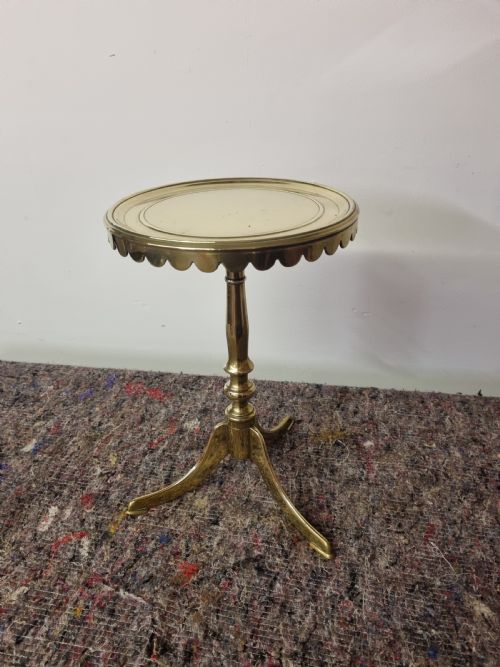
- A small metal stand with legs used to hold kettles or pots near the fire. Georgian examples often feature pierced tops and cabriole legs.
- Andirons
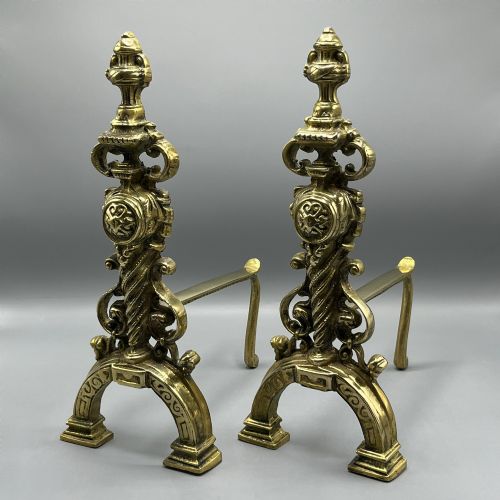
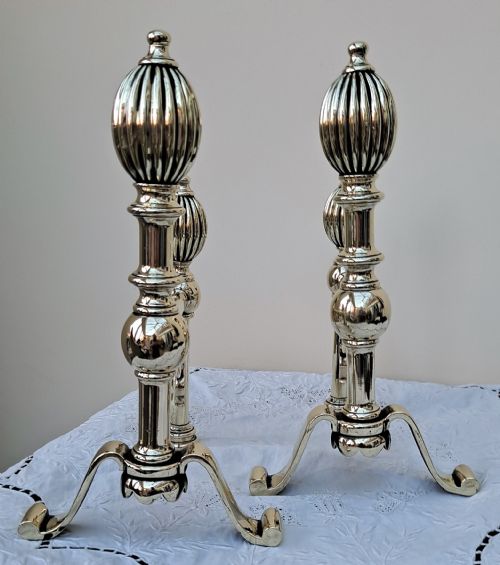
- Supports placed on the hearth to hold logs, frequently paired with matching tool stands. They are also known as fire dogs.
- Pole screen
- An adjustable vertical screen mounted on a pole with a tripod base, used to shield the face from radiant heat. Panels typically display needlework, embroidery, or poker work.
- Companion set
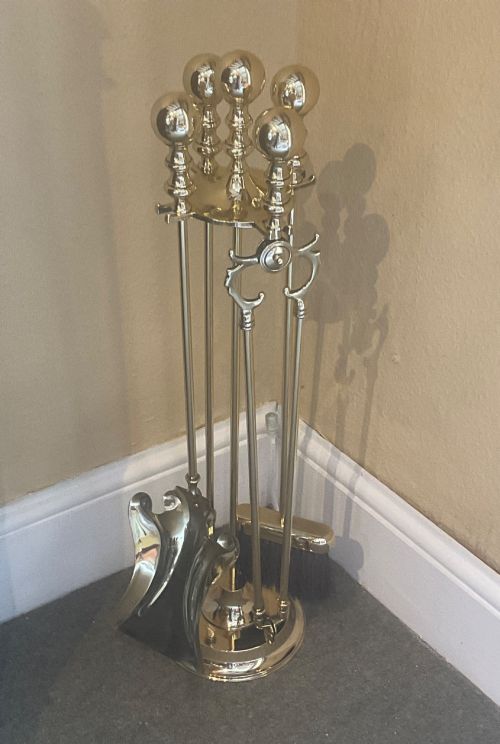
- A matching collection of fireside tools, such as pokers, tongs, and shovels, organised on a dedicated stand or rack.
- Footman
- A metal stool placed before the hearth to keep food warm. These pieces frequently employ cast brass and iron construction.
Brass Fire Stands: Frequently Asked Questions
What is a brass fire stand used for?
These pieces serve practical and decorative functions around the fireplace, holding tools, kettles, or screens. They organise hearth equipment while adding metallic warmth to the room.
Different forms address specific tasks, such as supporting logs, suspending utensils, or blocking radiant heat with adjustable panels.
How do I date a brass fire stand?
Dating relies on stylistic clues like Regency curves, Victorian ornamentation, or Art Deco geometric lines. Materials and manufacturing marks also help place an object in a specific era.
Heavier cast brass and specific revival styles often point to nineteenth-century production, whereas cleaner lines suggest twentieth-century origins.
Can I use these items with a modern fireplace?
Many companion sets, tool rests, and guards function effectively with modern hearths. Their standard sizes and durable metal construction suit contemporary settings.
Care should be taken to match the scale of the stand to the fireplace opening and surrounding room proportions.
How do I clean antique brass?
Maintenance typically involves dusting and occasional gentle cleaning with a soft cloth to preserve the patina. Abrasive cleaners should be avoided to protect the original finish.
Heavier tarnish responds to mild soapy water, provided the metal is dried thoroughly afterwards.