



Fire Iron Rests
Fire iron rests are hearth accessories designed to keep pokers and tongs tidy beside the grate, bringing practical order to open fires.
Fire Iron Rests
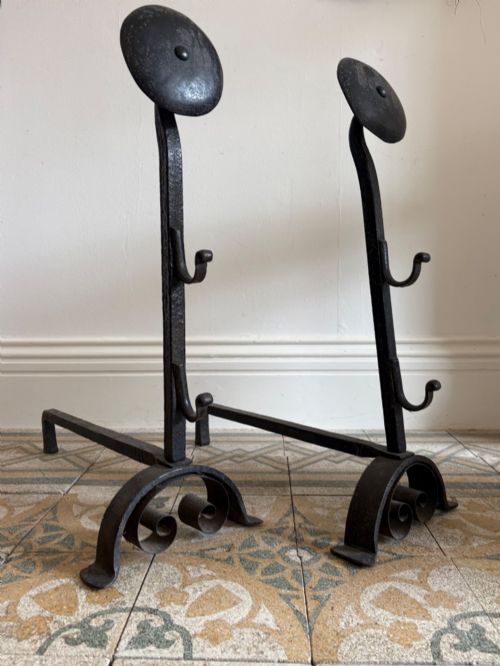
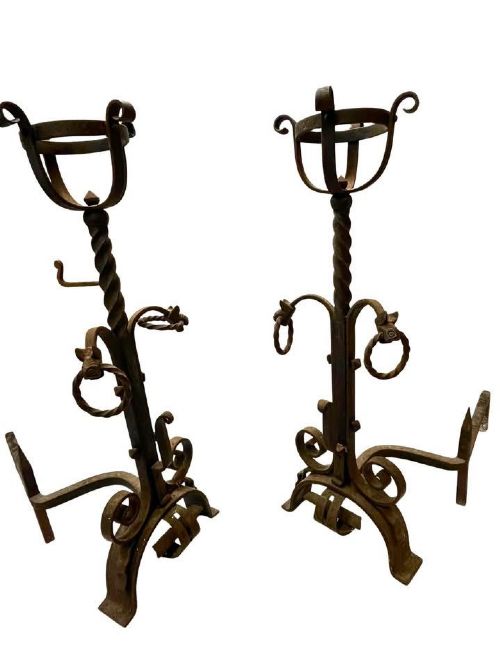
Fire iron rests serve as dedicated supports for hearth tools, keeping pokers, tongs and shovels elevated near the fireplace. When you search for fire iron rests, you encounter paired metal supports often integrated into andirons, fire dogs or independent hearth stands.
The Victorian period dominates the selections, alongside Edwardian, Georgian and nineteenth-century examples. Wrought iron, cast iron and brass appear most frequently, shaped into forms ranging from utilitarian utilitarian floor stands to decorative French Rococo and Arts and Crafts designs.
Makers and designers produced these rests in various configurations, including companion sets that incorporate tool holders directly onto the fire dog bases. The forms span simple heavy iron bars to elaborate gilt brass neoclassical structures.
How they were made
Blacksmiths and founders shaped these pieces primarily from cast iron, wrought iron, steel and brass, frequently combining metals within a single hearth set. Hand-forged iron provided sturdy weight for handling heavy fuel and tools.
Brass and gilt brass components were cast and polished to create bright ornamental surfaces that reflected hearth light. Makers also utilised copper accents on Victorian neoclassical and aesthetic movement rests.
Listings feature brass, cast iron, wrought iron, steel and copper across Victorian, Edwardian and Georgian periods.
What varies in quality
Substance and weight separate robust hearth furniture from lighter commercial pieces, as heavier gauge metals ensure stability beside active fires. The integrity of the casting or hand-forging defines the durability of the structure.
Detailing in the decorative motifs, from gothic revival patterns to art nouveau curves, indicates the care taken by the original maker. Well-preserved original surfaces and complete matching sets elevate the desirability of the resting units.
James Cartland & Sons
The Fire Iron Rests Glossary
- Fire dog
- A horizontal metal support for logs inside a hearth, often incorporating hooks or rests for companion tools.
- Andiron
- An alternative term for fire dogs, supporting wood fuel above the hearth floor.
- Chenet
- The French term for an andiron or fire dog, frequently associated with rococo or ornate classical styling.
- Companion set
- A collection of fireplace tools, such as tongs, pokers and shovels, displayed together with a stand or rests.
- Fender
- A low metal guard placed around the hearth opening to contain sparks and ash.
Fire Iron Rests: Frequently Asked Questions
How do I use fire iron rests?
Place the rests on the hearth floor beside your fireplace, positioning them to hold the shafts of your pokers, tongs and shovels off the ground.
This keeps your tools accessible and stops soot from marking the hearth stones while organising the fireside area.
What is the difference between fire dogs and rests?
Fire dogs are larger iron structures designed primarily to hold logs off the hearth floor for better air circulation.
Many fire dogs include built-in hooks or rests specifically to hold fire irons alongside the burning wood.
How do I date a set of brass rests?
Examine the weight, casting style and decorative motifs, such as Victorian neoclassical urns or art nouveau flowing lines.
Victorian and Edwardian pieces often display registration marks or specific maker attributions stamped into the metal.
Are iron and brass rests cleaned differently?
Wrought and cast iron require gentle dusting and occasional protection with oil or wax to prevent surface rust.
Brass and gilt brass surfaces respond to mild cleaning to maintain their metallic lustre without stripping the aged patina.