

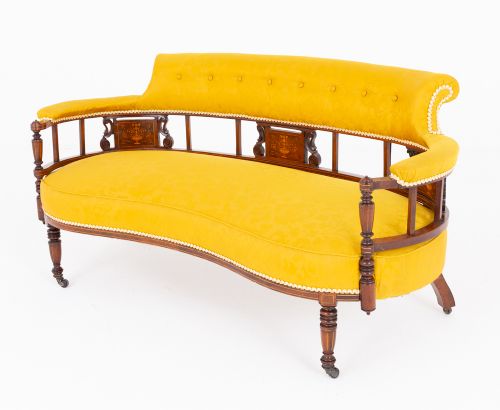

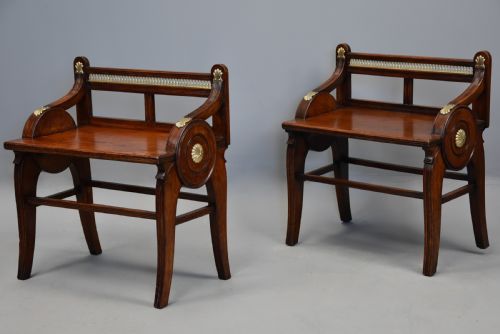
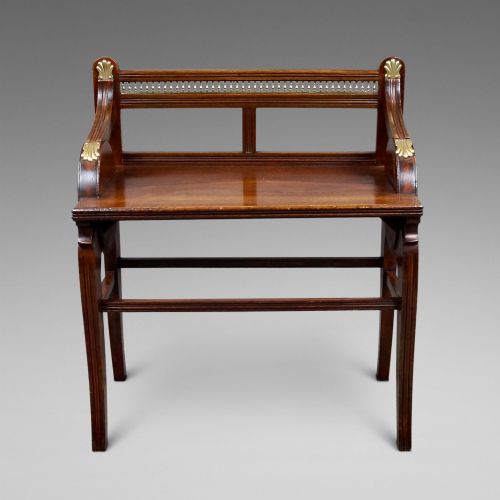


Aesthetic Movement Bench
An aesthetic movement bench brings purposeful design and striking Victorian lines to a hall or window seat.
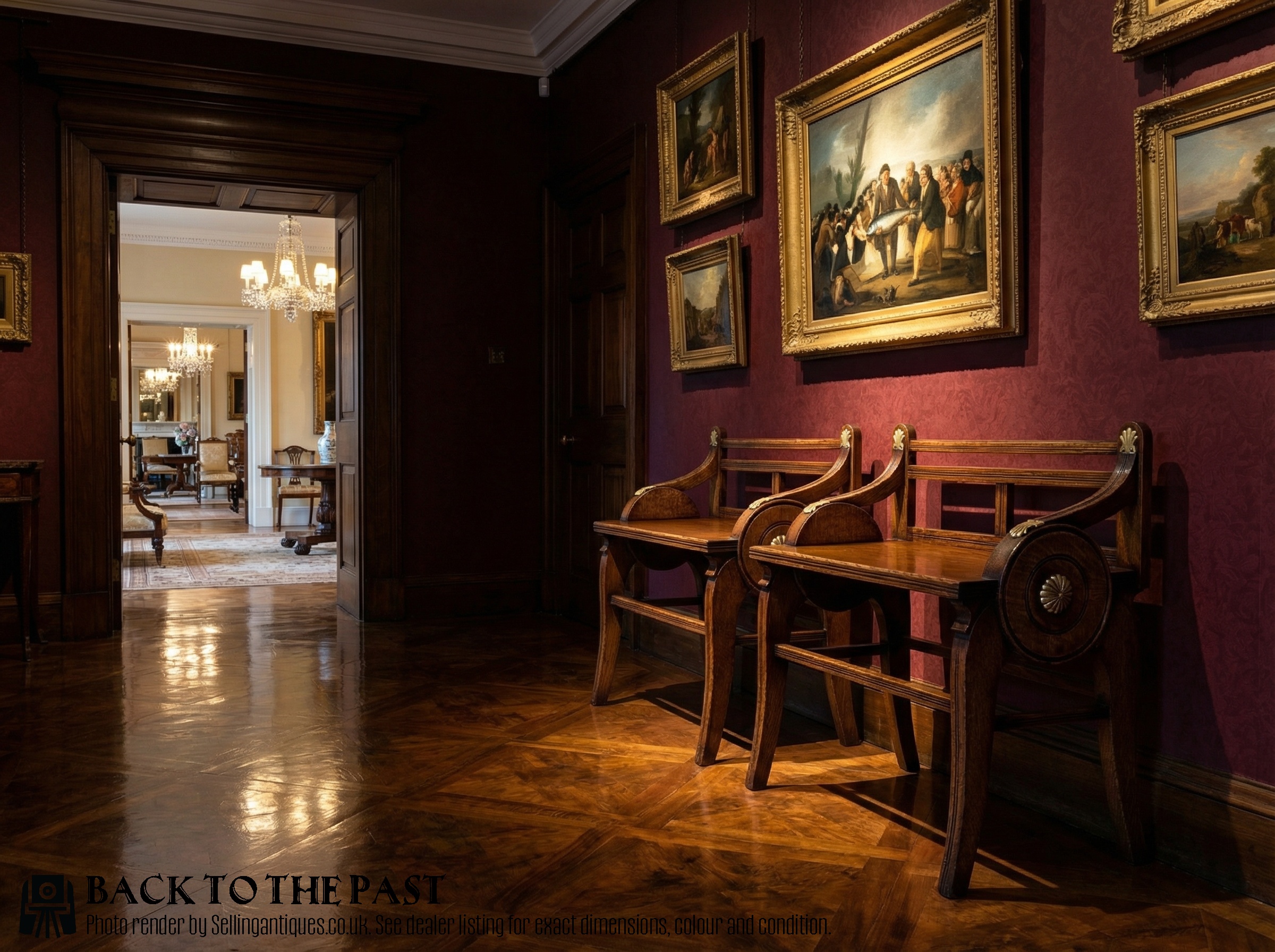
Aesthetic Movement Bench
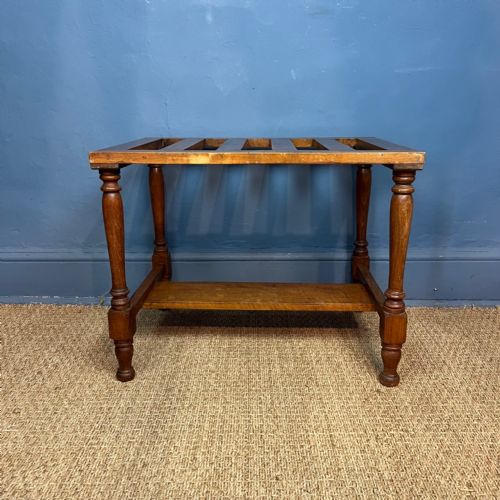
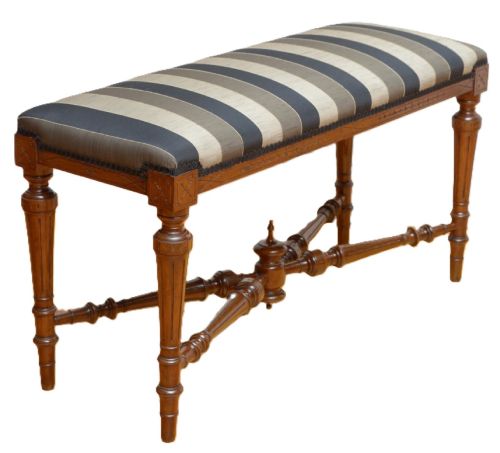
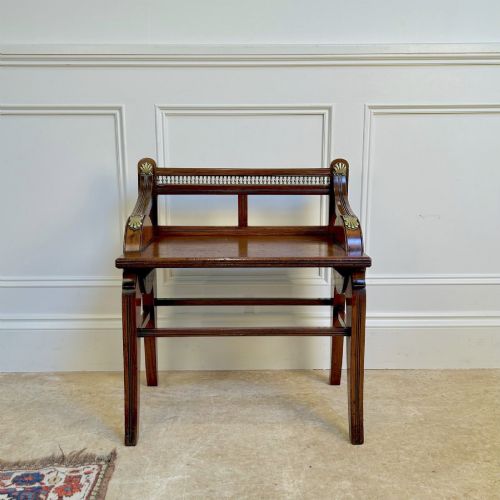
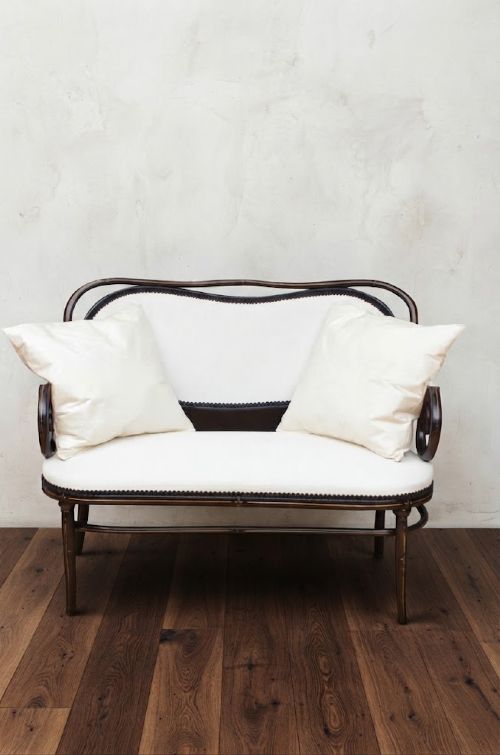
An aesthetic movement bench represents a distinct shift in late nineteenth century design towards stylised forms and clean geometry. When searching for an aesthetic movement bench, buyers encounter versatile seating options including window seats, hall benches and compact stools. These pieces typically originate from the eighteen eighties and eighteen nineties within the Victorian era.
The selections available on this page encompass both single seating items and matched pairs designed for entrance halls or drawing rooms. Makers and designers of the period favoured functional yet decorative forms that departed from heavy Victorian clutter. Oak, walnut and ebonised wood provide the structural foundation for these domestic furnishings.
How They Were Made
Cabinet makers constructed these benches using solid timbers such as oak, mahogany, walnut and pollard oak, often pairing them with ebonised finishes for dramatic contrast. Brass mounts and decorative metalwork frequently accent the woodwork, reflecting the meticulous attention to detail characteristic of late nineteenth century workshops.
Upholstery plays a significant role in the construction of these window seats and benches, utilising traditional textiles and fabrics to provide comfortable seating. Skilled artisans combined robust joinery with refined surface treatments to ensure both structural durability and aesthetic appeal.
Aesthetic Movement Bench Retail Price Guide 2026
Typical asking prices for aesthetic movement bench among the pieces listed under this phrase on Sellingantiques today, from the lower quarter to the upper quarter. They describe what is for sale here now, not the wider market.
Listings feature oak, walnut, mahogany, brass and ebonised wood across items dated to eighteen eighty and eighteen ninety.
What Varies in Quality
The distinction between standard production and superior craftsmanship rests in the selection of timbers and the precision of the joinery. Pieces featuring figured woods like pollard oak or intricate brass mounting demonstrate a higher tier of workmanship from this period.
Attribution to documented firms elevates the standing of a bench, distinguishing commercial items from bespoke workshop commissions. The integrity of the original ebonised finish and the condition of structural upholstery further separate exceptional examples from ordinary survivals.
Jas Shoolbred·James Shoolbred And Co·James Lamb·George Faulkner Armitage
The Aesthetic Movement Bench Glossary
- Ebonised Wood
- Timber treated with a dark stain or finish to resemble ebony. This technique was widely utilised during the Victorian era to create high contrast decorative effects.
- Pollard Oak
- Timber harvested from trees that have been pollarded, producing a highly figured and knotted grain pattern. Cabinet makers valued this wood for its distinctive decorative surface.
- Hall Bench
- A rigid wooden seat traditionally placed in entrance halls. These practical pieces often incorporated storage or architectural backrests.
- Window Seat
- A low, elongated seat designed specifically for placement beneath a window recess. They combine comfort with compact proportions suited to domestic interiors.
Aesthetic Movement Bench: Frequently Asked Questions
Where did these benches go in the house?
These pieces found their natural home in entrance halls, corridors and beneath drawing room windows where extra seating was required without obstructing light.
Their narrow proportions made them particularly suitable for transitional spaces rather than central living areas.
How do I identify this style?
Look for clean structural lines, dark ebonised finishes and understated decorative motifs that separate these pieces from ornate high Victorian furniture.
Designers of this period prioritised craftsmanship and simplified geometry over excessive surface carving.
Are pairs common?
Matched pairs frequently appear in the record, intended originally to balance symmetrical spaces like grand entrance halls or long corridors.
Finding a matching pair of nineteenth century benches remains a distinct advantage for interior placement.
What woods were used?
Oak, walnut and mahogany form the structural backbone of these furnishings, often enhanced by ebonised surfaces or decorative pollard oak veneers.
Brass hardware frequently provides structural and visual contrast against the dark timber.