



Adjustable Sheet Music Stand
These adjustable sheet music stand pieces are timber and brass supports designed to hold scores at a reading height, offering both mechanical utility and period presence.
Adjustable Sheet Music Stand
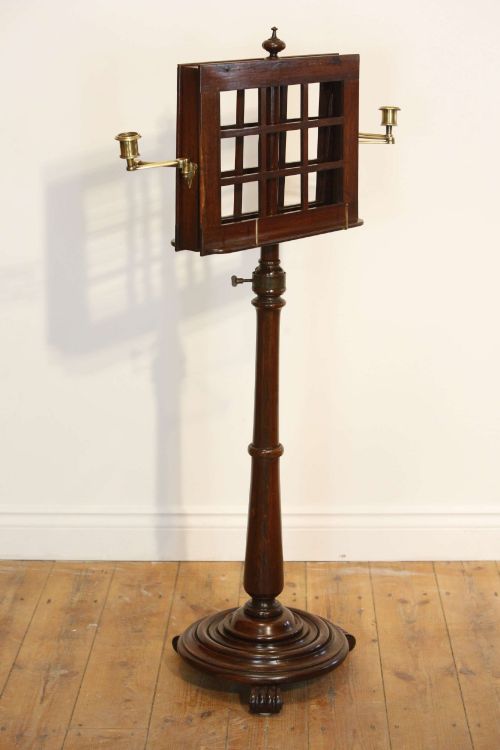
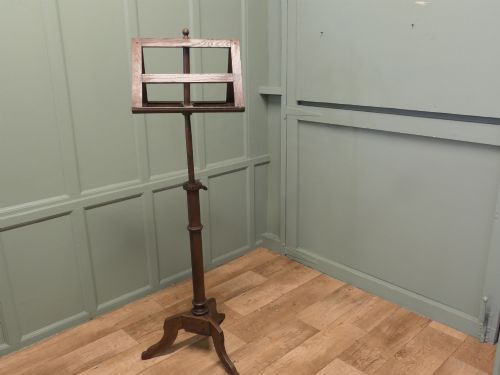
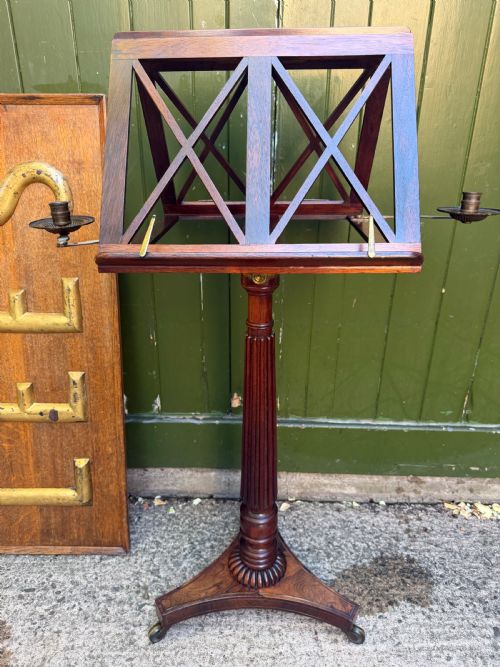
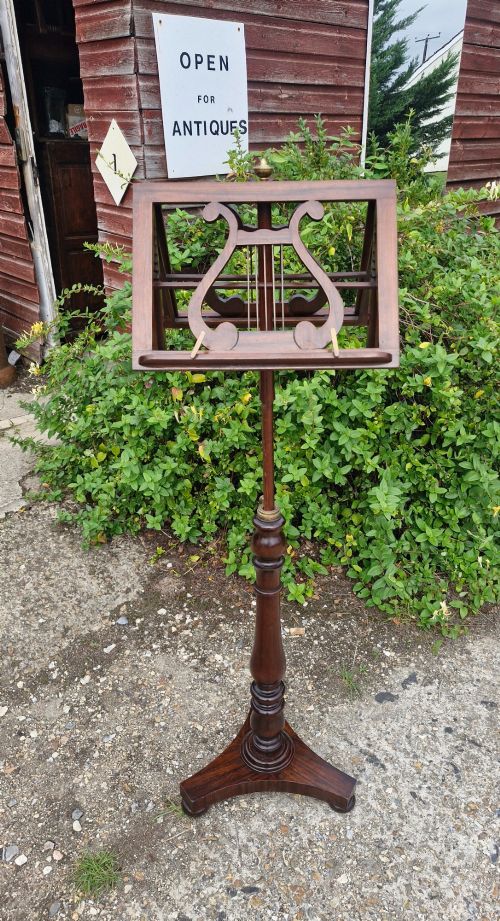
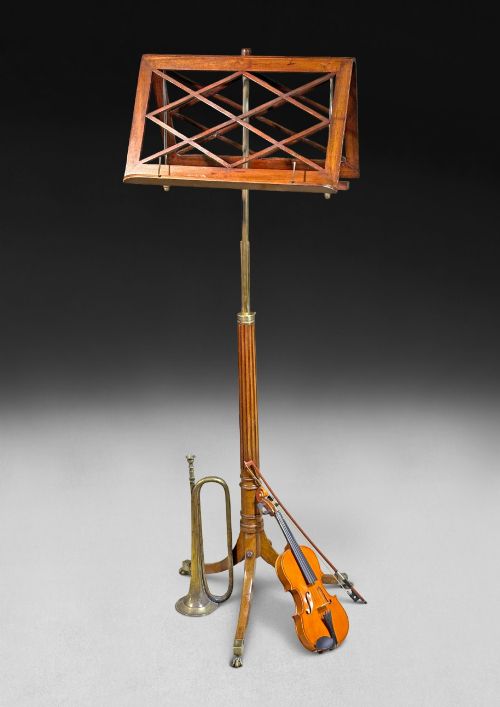
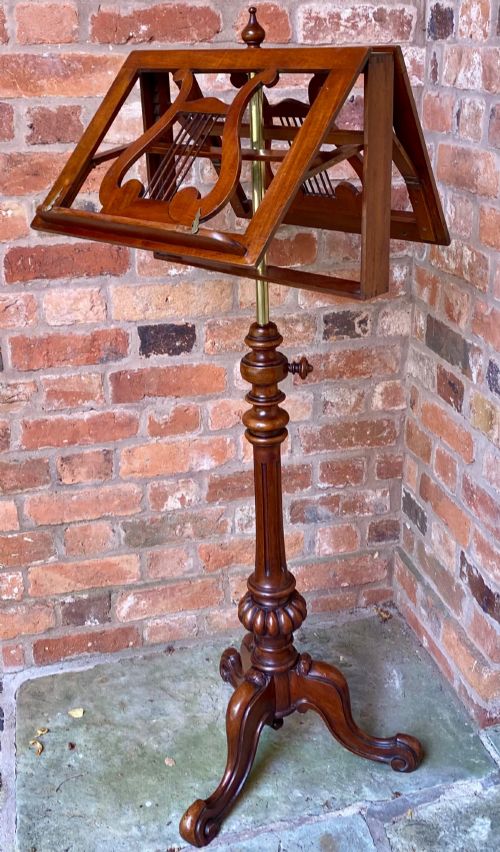
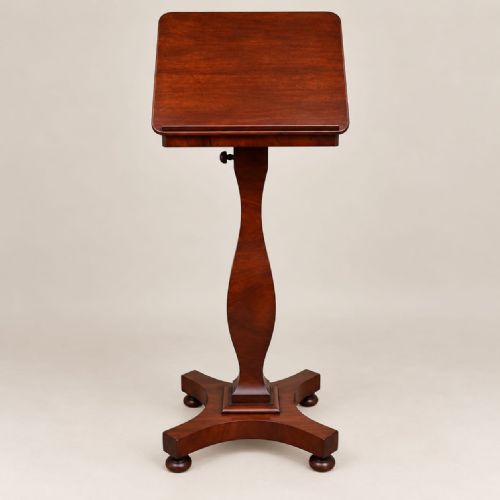
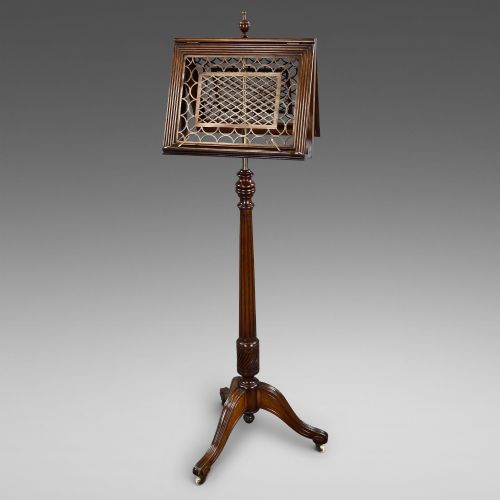
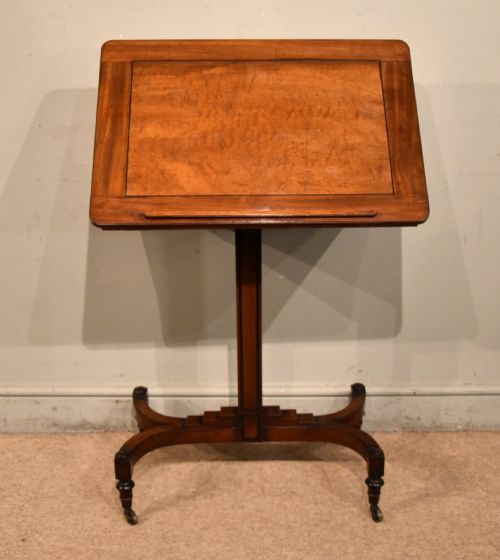
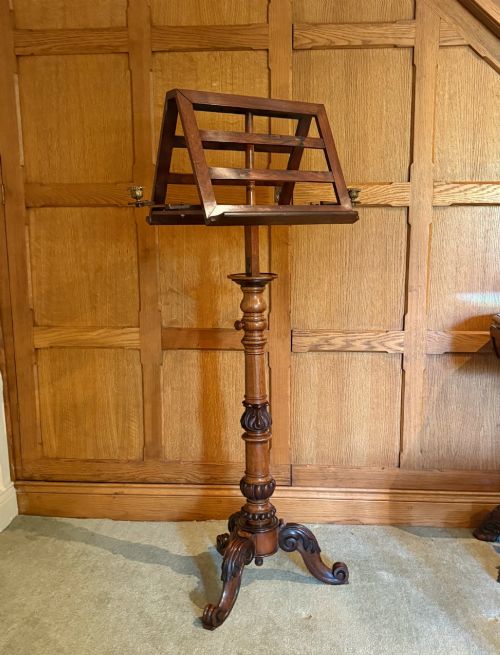
When you examine an adjustable sheet music stand, you encounter a specialised piece of furniture built to hold scores upright for performers. The versions most commonly met across these listings take the form of freestanding tripod bases or reading tables from the Regency, Georgian, and Victorian periods.
How they were made
Cabinetmakers utilised dense timbers such as mahogany, rosewood, walnut, and oak to construct the columns, tripod bases, and adjustable reading desks. Burr walnut and satinwood inlay appear on more decorative examples, providing contrasting grain patterns and surface ornamentation.
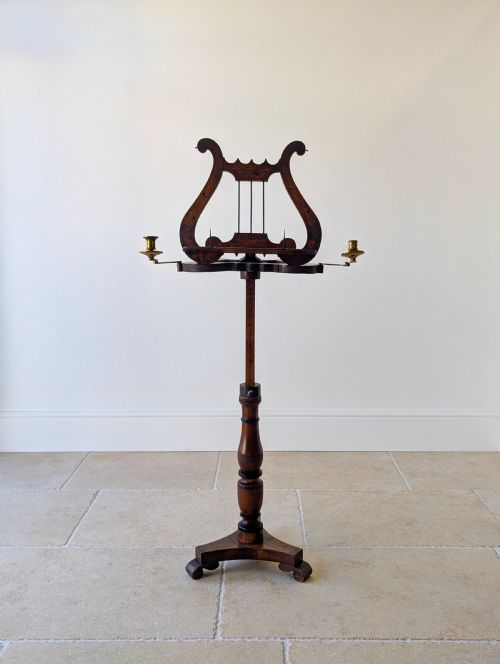
Brass fittings formed the core of the mechanical height adjustment, allowing the vertical shafts to rise and secure with thumbscrews or ratchets. Carved details, such as lyre-form music rests and fretwork panels, were worked directly into the solid wood by hand.
Adjustable Sheet Music Stand Retail Price Guide 2026
Typical asking prices for adjustable sheet music stand among the pieces listed under this phrase on Sellingantiques today, from the lower quarter to the upper quarter. They describe what is for sale here now, not the wider market.
Listings feature adjustable music stands spanning the Georgian, Regency, William IV, and Victorian eras, constructed from mahogany, walnut, rosewood, and oak.
What varies in quality
The sophistication of the mechanism and the stability of the adjustable column dictate the primary tier of craftsmanship in these pieces. Smoother adjustments, heavier cast brass fittings, and more robust tripod bases separate standard utilitarian items from finer examples.
Timber selection and decorative ambition create the next distinction, moving from plain mahogany and oak to burr walnut, rosewood, and detailed satinwood inlay. The finesse of the carving on the reading desk and the inclusion of dual-player duet formats elevate the piece further.
GILLOWS·Harrods
The Adjustable Sheet Music Stand Glossary
- Duet stand
- A music stand featuring a wider reading desk or two parallel ledges designed to accommodate two musicians sharing a single score.
- Lyre-form
- A decorative motif shaped like an ancient stringed instrument, frequently carved into the central wooden support or music rest of the stand.
- Lectern
- A heavy reading stand designed to hold books or large sheets at an inclined angle, often sharing forms with music stands.
- Tripod base
- A three-legged support system utilised on freestanding music stands to provide stability on uneven floors.
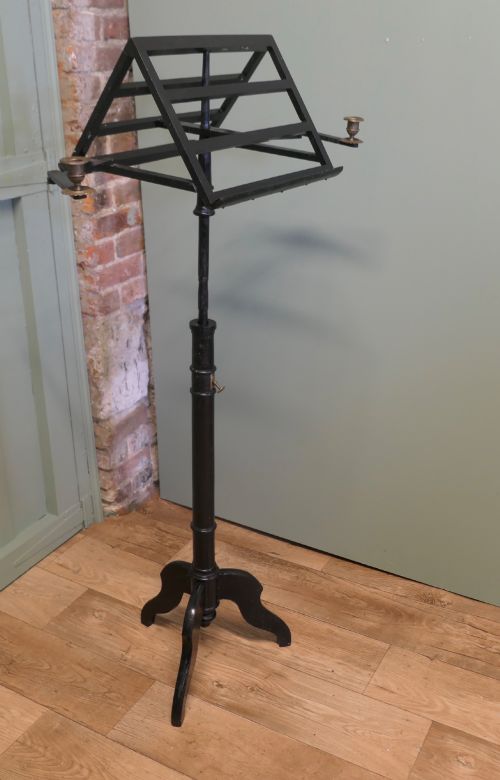
- Ebonised
- Wood finished with a dark coating to imitate the appearance of expensive ebony.
Adjustable Sheet Music Stand: Frequently Asked Questions
How do you adjust the height?
The vertical column houses a sliding inner shaft that moves up and down to alter the elevation of the desk. A brass thumbscrew or collar tightens against the shaft to lock the stand at the chosen height.
Heavier Victorian and Regency models rely on robust metal ratchets or screw mechanisms concealed within the column to bear the weight of large scores.
What is a duet stand?
A duet stand is designed with a broader desk surface or dual reading ledges so two musicians can read music side by side. These pieces often feature hinged components that fold or tilt independently.
Cabinetmakers built these larger formats in mahogany, rosewood, and walnut to serve as functional furniture in musical households.
Where should I place it?
These stands suit a corner of a music room, beside a piano, or functioning as a book display in a study. Their compact tripod bases allow them to sit neatly without dominating the floor space.
Keep them away from direct heat sources and strong sunlight to protect the polished wood surfaces and brass fittings.
How do I date a stand?
Dating relies on observing the timber choice, construction methods, and stylistic cues such as Regency brass mounts or Victorian carved walnut. Regency and Georgian pieces display lighter proportions and classical reeded columns, while later Victorian examples often show heavier carving and burr walnut veneers.
Mechanical components also offer clues, as hand-turned brass screws and forged iron ratchets differ from later mass-produced hardware.