


19th Century Sheet Music Rack
These 19th century sheet music rack designs, commonly called canterburys or music stands, keep scores orderly while anchoring a room with period timber.
19th Century Sheet Music Rack
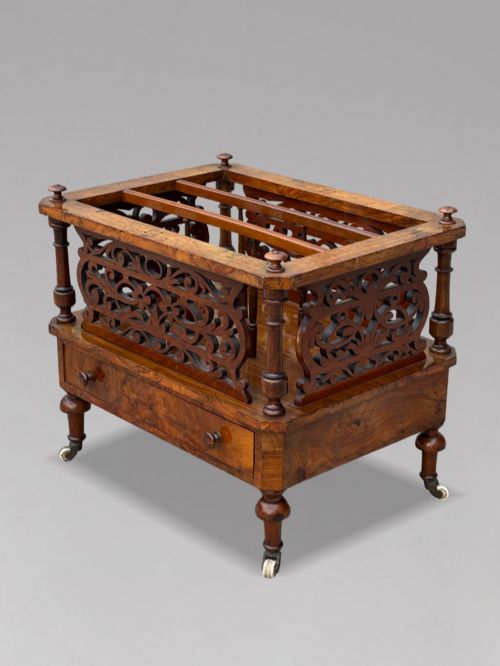
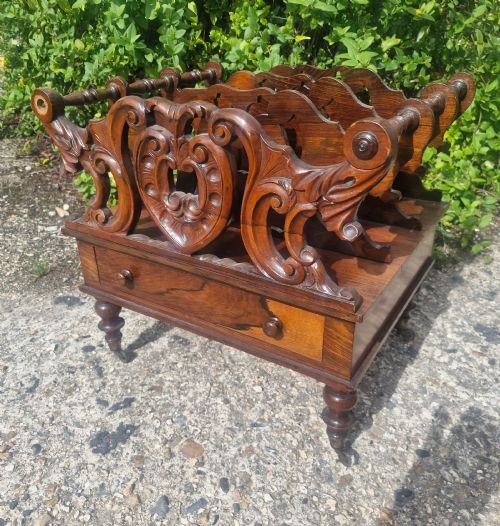
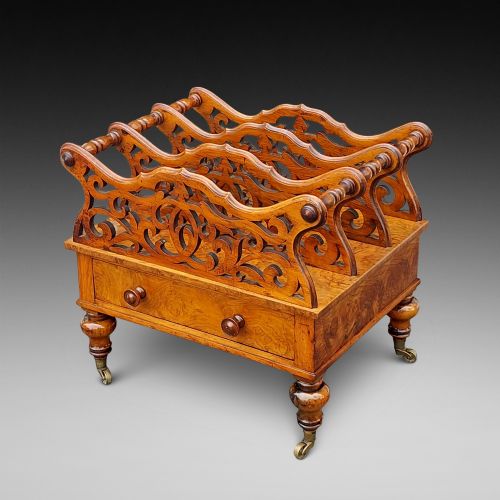
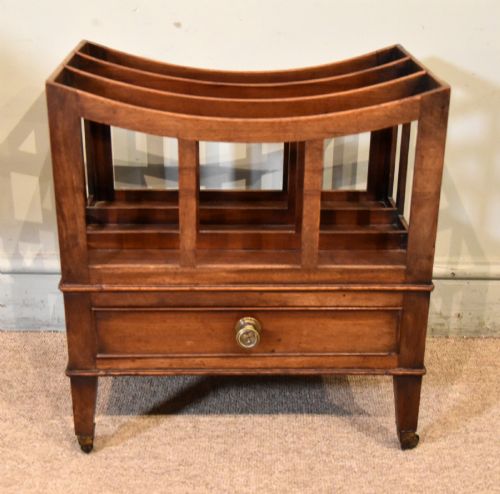
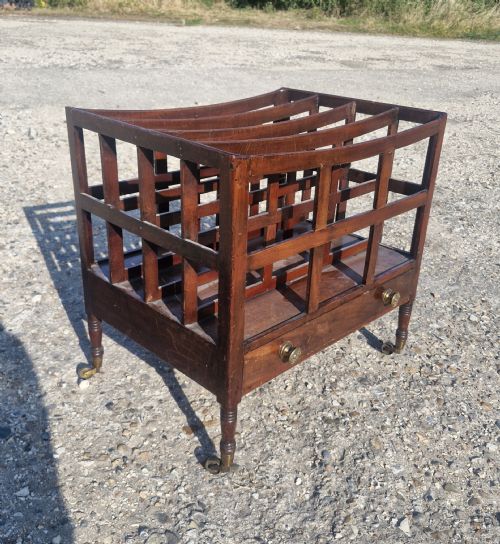
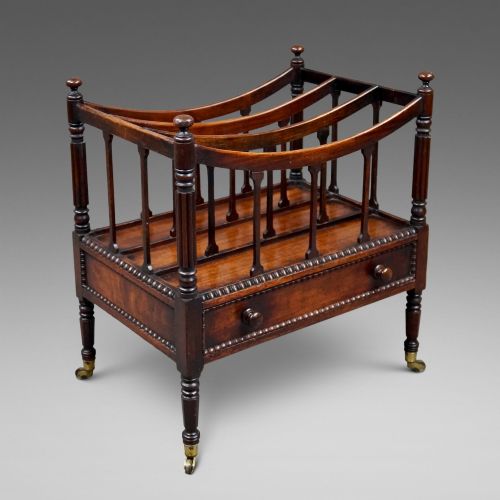
A 19th century sheet music rack typically takes the form of a canterbury, featuring partitioned vertical dividers designed to hold unbound scores and folios upright. These pieces often include a low drawer beneath the slatted section and stand on short legs with castors for easy movement around a drawing room.
The selections on this page span several distinct eras, with Victorian and Regency examples dominating the inventory alongside earlier Georgian and William IV pieces. Formats vary from simple open racks to elaborate whatnot tables that combine music storage with display shelves or work tops.
Makers of the period also produced specialised music stands and duet stands designed for use near a piano or music stool. These utilitarian yet decorative furnishings reflect the central place of domestic music-making in nineteenth-century homes.
Materials and Construction
Cabinetmakers relied heavily on rich timbers such as rosewood, mahogany, and walnut, frequently utilising figured veneers like burr walnut to create visually striking surfaces on tabletops and drawer fronts. Secondary woods provided structural stability to the upright slats and internal framing.
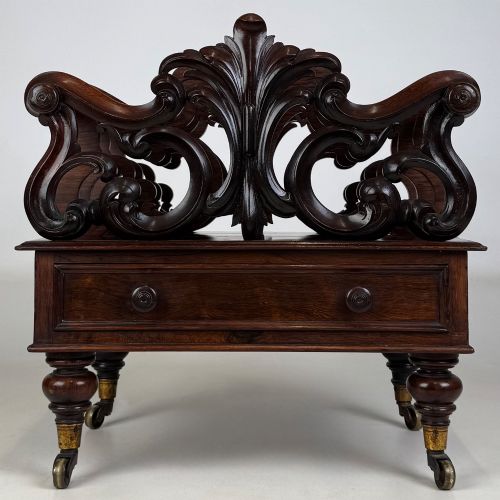
Joinery methods involved traditional techniques suited to portable furniture, with sturdy tenons securing the vertical partitions and dovetailed construction strengthening the small base drawers. Carved details, such as prince of wales feathers or Gothic revival motifs, were applied by hand to define the prevailing style of the piece.
Some models hide a tiny drawer underneath for pencils, keeping the house pianist fully equipped for impromptu score annotations.
Assessing Craftsmanship and Proportion
The distinction between standard production pieces and finer examples rests largely on the choice of timber and the depth of figure in the grain. High-grade items utilise carefully matched rosewood or figured walnut, whereas simpler pieces rely on plain mahogany or standard finishes.
Proportion and detail dictate the overall merit of a canterbury, with superior pieces exhibiting crisp turning on the spindle supports and harmonious spacing between the partitions. The integration of auxiliary functions, such as an adjustable music rest or an incorporated work top, signals a more ambitious commission from the workshop.
The 19th Century Sheet Music Rack Glossary
- Canterbury
- A low, open-partitioned stand used for holding sheet music, folios, and newspapers. The name derives from the Archbishop of Canterbury, who is said to have commissioned the first such piece.
- Whatnot
- An open set of multi-tiered shelves used for displaying ornaments or holding books and papers. When combined with a canterbury, it forms a versatile multi-functional piece of furniture.
- Regency
- A style period spanning roughly from the early nineteenth century through the eighteen-twenties, characterised by classical revival motifs and clean architectural lines. Pieces from this era often utilise dark tropical hardwoods.
- Aesthetic Movement
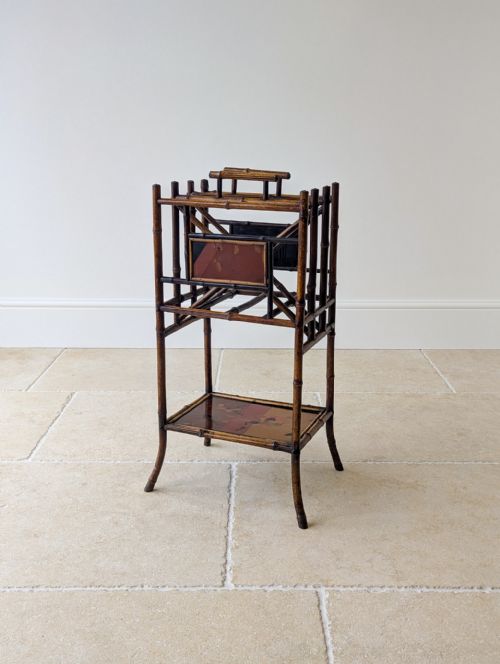
- A late nineteenth-century design style that rejected heavy industrial ornamentation in favour of artistic simplicity and Japanese-inspired motifs. Bamboo and lighter woods frequently appear in these items.
- Duet stand
- A specialised music stand designed to hold scores for two musicians playing side by side. These often feature adjustable height mechanisms and pivoting wooden rests.
19th Century Sheet Music Rack: Frequently Asked Questions
What is a 19th century canterbury used for?
These pieces served as dedicated storage for sheet music, folios, and periodicals near the piano or sitting area. The vertical slats kept fragile paper scores upright and separated for easy selection during musical evenings.
Today, they function just as well beside a modern sofa or armchair for organising magazines, books, and daily newspapers without cluttering table surfaces.
How do I tell a Regency canterbury apart from a Victorian one?
Regency models, dating from the early decades of the nineteenth century, generally favor clean classical lines, dark rosewood or mahogany timbers, and restrained brass or turned wood details. Their proportions tend to be crisp and architectural.
Victorian pieces, produced from the eighteen-fifties onward, often display more ornate carving, figured walnut veneers, and complex combinations with whatnot shelving or work tops. Late Victorian versions may also incorporate bamboo or draw on Aesthetic movement ideals.
Can these stands support heavy books?
While the sturdy timber partitions easily accommodate standard music folios and magazines, they were engineered primarily for paper rather than heavy folio volumes. Overloading the compartments with dense books can strain the delicate spindle joints and turned supports.
It is best to use them for their intended purpose of holding sheet music, periodicals, and lighter reading materials to preserve their structural integrity.
Where should I place a music rack in a room?
A music rack sits comfortably beside a piano, writing desk, or main seating group where its profile can be appreciated from multiple angles. Because many examples feature finished backs and delicate castor wheels, they adapt well to freestanding positions in the middle of a room rather than being pushed hard against a wall.
Keeping them away from direct heat sources and strong sunlight protects the polished timber and delicate veneer work from drying out.