

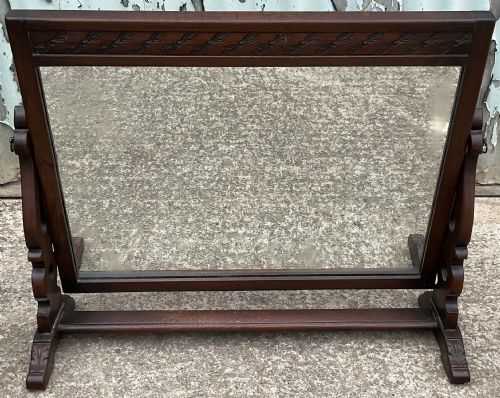


Adjustable Shaving Mirror
An adjustable shaving mirror brings period utility to a dressing space, offering flexible positioning for grooming.
Adjustable Shaving Mirror
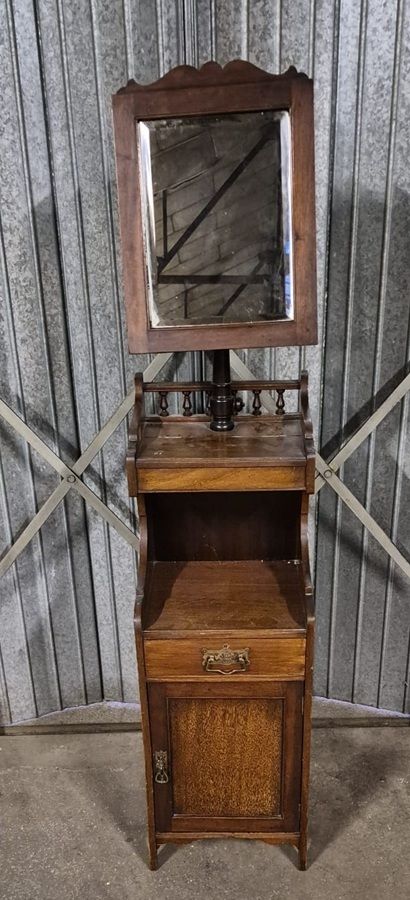
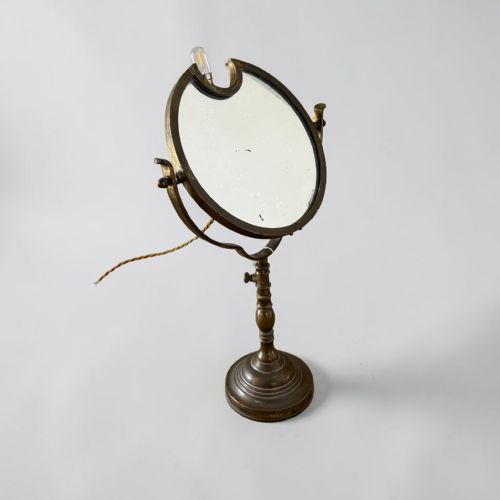
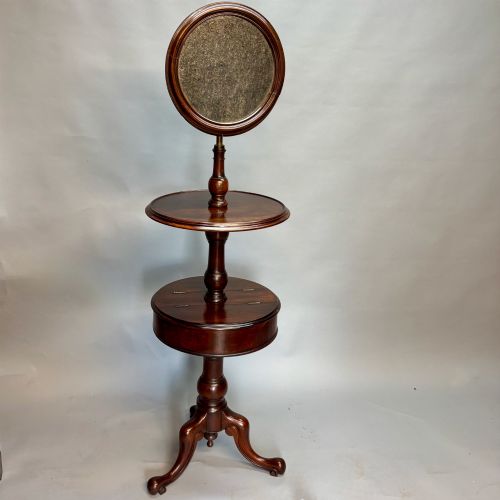
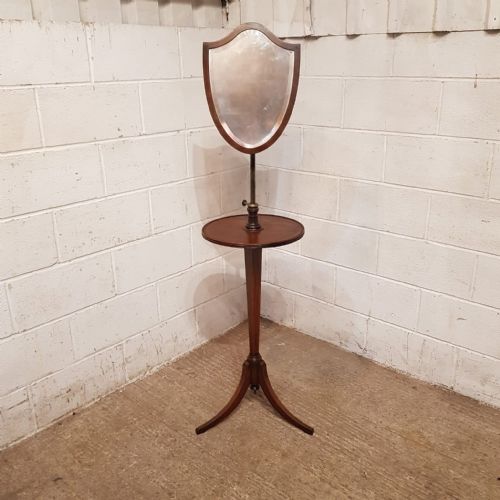
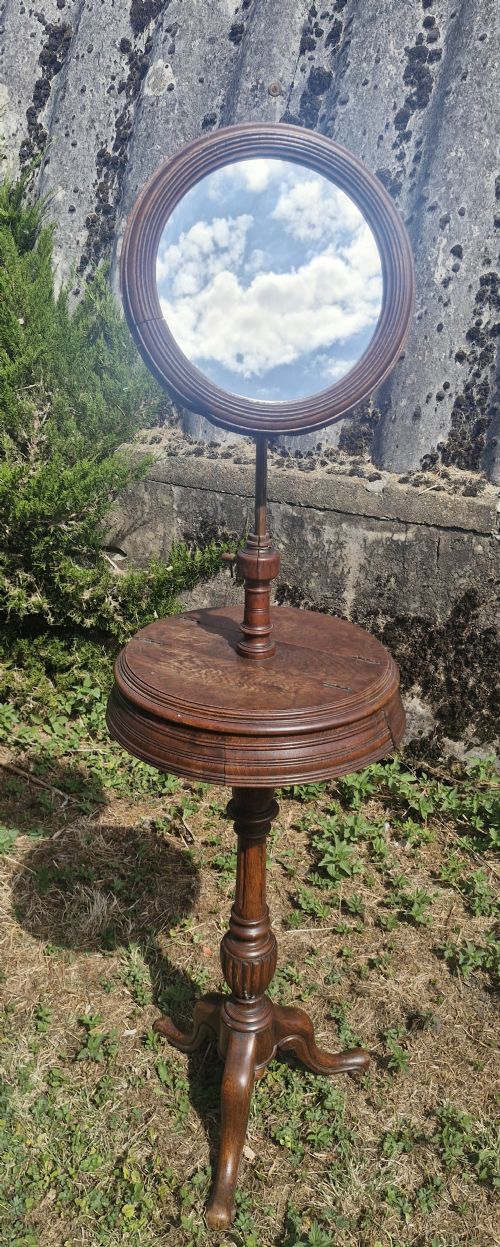
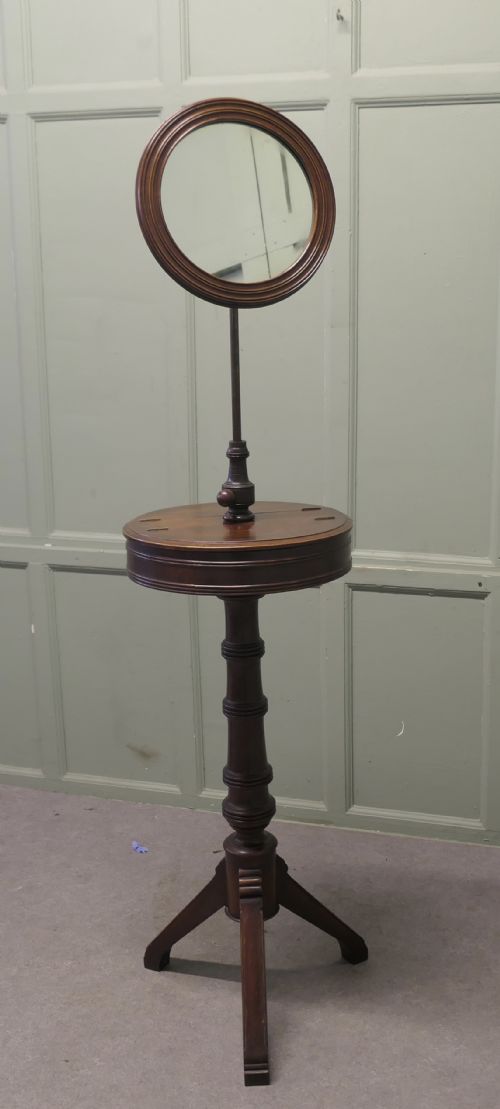
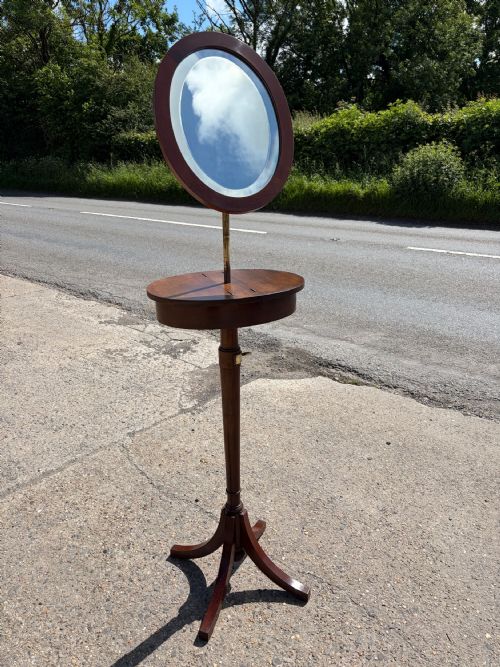
An adjustable shaving mirror is a specialised piece designed for close grooming, appearing in forms ranging from tall floor-standing stands to compact table models. The pieces seen most frequently are Victorian mahogany and walnut stands featuring telescopic stems or pivoting frames.
Beyond standard floor stands, listings include wall-mounted versions and combination shaving cupboards. These objects bridge utilitarian function and fine furniture design, serving both bedrooms and dressing rooms across the nineteenth and early twentieth centuries.
Materials and Construction
Timbers such as mahogany, walnut, oak and ash form the primary structures, often paired with brass or copper fittings to allow pivoting and height adjustment. Makers utilised sturdy tripod bases, heavy circular platforms, or wall brackets to support the weight of the mirror glass.
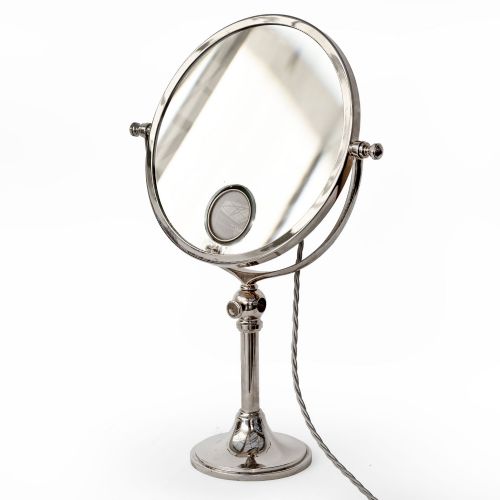
Metal and chrome versions emerge in later twentieth-century pieces, reflecting shifts toward industrial materials. Glass components include standard mirror glass and specialised circular bevelled plates secured within wooden shields or metal frames.
Adjustable Shaving Mirror Retail Price Guide 2026
Typical asking prices for adjustable shaving mirror among the pieces listed under this phrase on Sellingantiques today, from the lower quarter to the upper quarter. They describe what is for sale here now, not the wider market.
Periods range from Regency and Victorian eras through to Edwardian and 1930s designs.
Assessing Quality
Quality rests in the precision of the mechanical adjustments and the integrity of the timber framing. Telescopic mechanisms that hold their height securely and brass fittings that pivot smoothly without sagging separate superior examples from basic utilitarian pieces.
The choice of cabinet timber and secondary woods indicates workshop standards. Richly figured mahogany, subtle inlay work, and robust joinery on tripod bases distinguish pieces intended for high-status interiors from ordinary workshop output.
J. Shoolbred
The Adjustable Shaving Mirror Glossary
- Telescopic
- Describing a stem or column designed to slide vertically to adjust height. This mechanism relies on internal collars or thumb screws to lock the mirror at the desired level.
- Shield Mirror
- A mirror glass shaped like a heraldic shield, popular in nineteenth-century dressing and shaving stands. It hangs or pivots within a supportive wooden frame.
- Tripod Base
- A three-legged support providing stability for tall standing mirrors on uneven floors. These often terminate in pad feet or scroll details.
- Bevelled
- A glass edge cut and polished at an acute angle to catch the light. This finish adds a decorative border to the reflective surface.
Adjustable Shaving Mirror: Frequently Asked Questions
How do I adjust the height?
Most period examples use a telescopic brass column that slides up and down within a wooden or metal base. Tightening a central collar or screw fixes the mirror in place.
Simpler designs rely on pivoting friction hinges mounted to the frame itself, allowing the glass to tilt toward the user.
Where should I place this mirror?
Floor-standing models suit bedrooms and dressing rooms as freestanding statement pieces that require adequate clearance around the base. Tabletop or wall-mounted versions fit neatly onto existing dressing tables or washstands.
Ensure the location receives good natural or artificial light to make the most of the adjustable angles.
How do I date an adjustable shaving mirror?
Stylistic clues such as heavy Victorian mahogany woodwork, Edwardian inlay, or Art Deco chrome point to specific eras of production. Timber choice and construction methods also help narrow down the decade.
Makers' stamps or patent marks on the brass fittings provide the most reliable chronological evidence.
Were these strictly for shaving?
While originally designed for gentlemen's morning routines, these mirrors served broader grooming purposes in period households. They functioned equally well as makeup or dressing mirrors.
The flexible angles made them practical for detailed personal care tasks.