


Adjustable Mirror Stand
An adjustable mirror stand brings functional movement and period charm to a dressing space, offering tilting glass for daily grooming.
Adjustable Mirror Stand
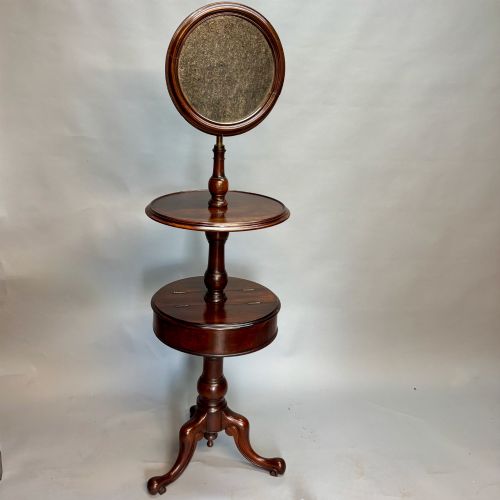
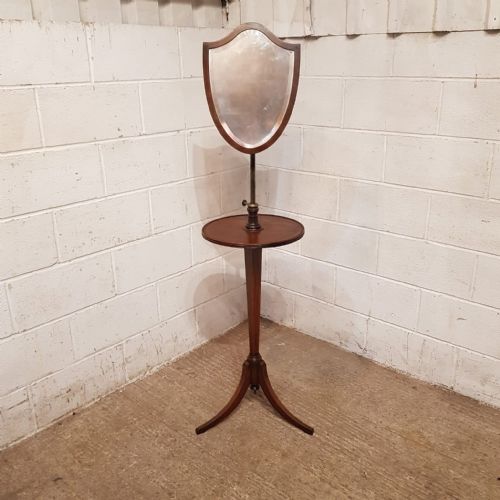
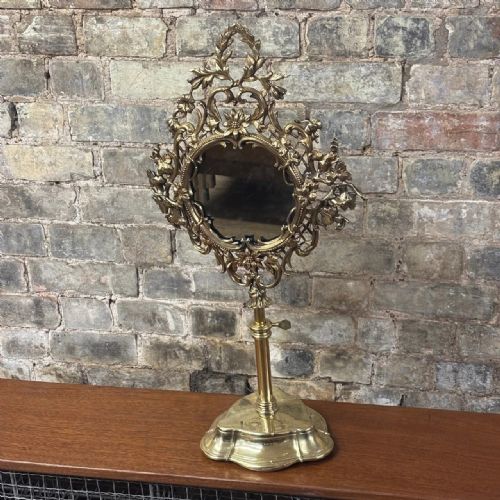
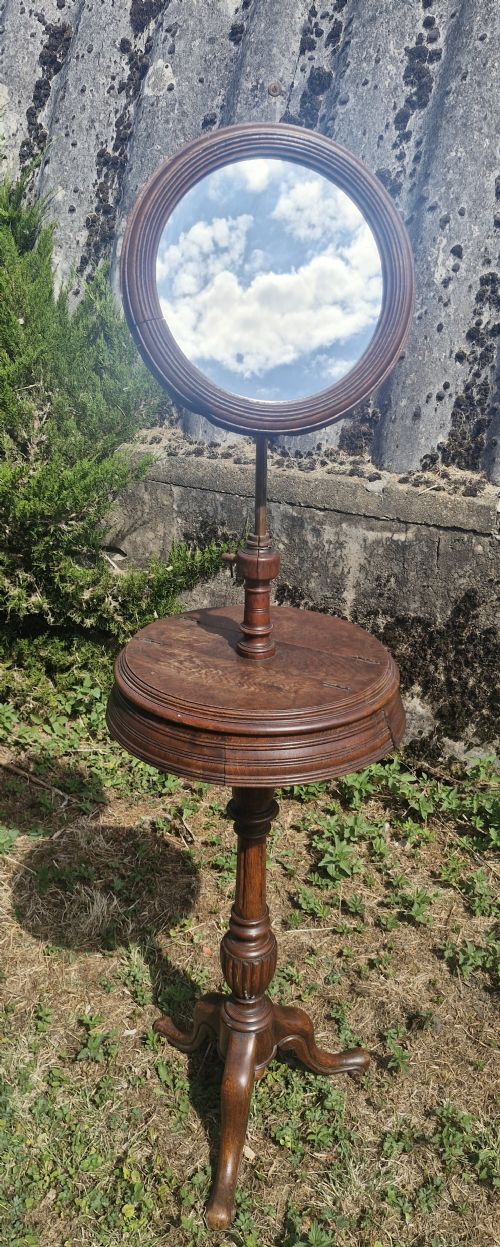
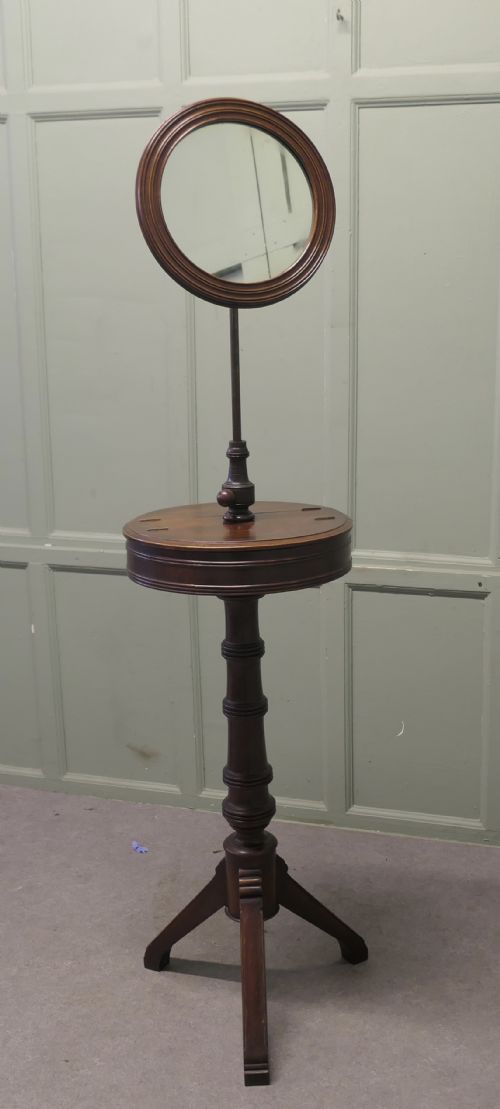
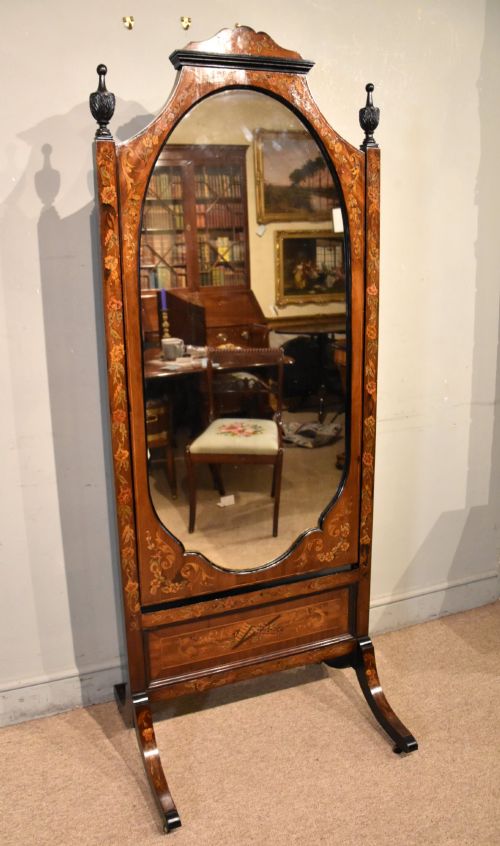
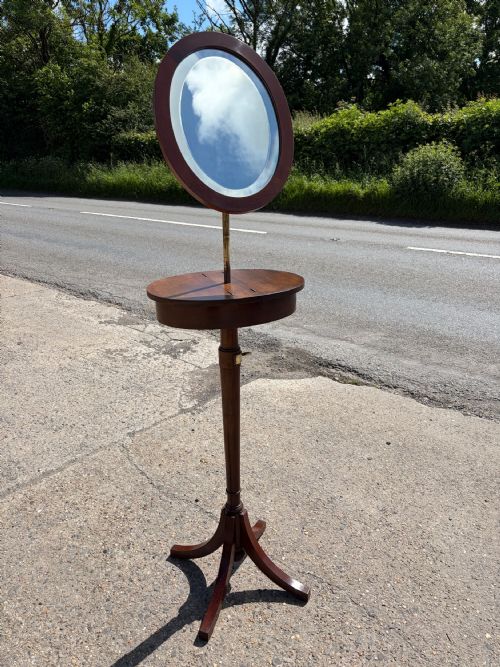
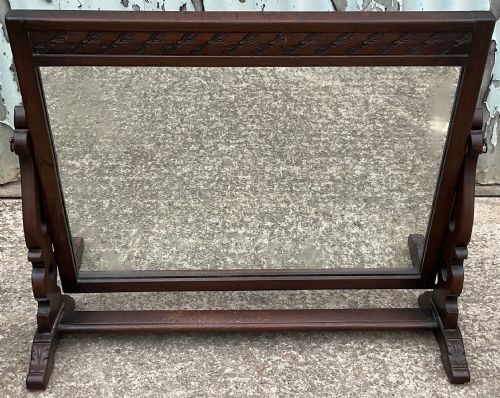
An adjustable mirror stand provides a functional glass surface mounted on a pivoting, telescopic, or swing frame designed for grooming and dressing. When searching for an adjustable mirror stand, buyers encounter various forms ranging from small table mirrors to tall shaving stands and floor-standing cheval mirrors.
The pieces appearing most frequently originate from the Victorian and Edwardian eras, constructed predominantly in mahogany, walnut, and oak. These utilitarian yet decorative objects often incorporate brass fittings, tripod bases, and small cupboards or drawers.
Earlier Regency examples alongside later Art Deco chrome variations also emerge within the selection. The designs span simple swing mirrors on boxes to complex telescopic stands meant for gentleman's shaving and personal vanity use.
Materials and Construction
Cabinet makers utilised dense hardwoods such as mahogany, walnut, oak, and ash for the structural frames and stands, occasionally adding marquetry inlay, painted finishes, or giltwood. Brass mechanisms, telescopic rods, and pivot screws enabled the glass to tilt and adjust in height.
Mirror glass sat within hinged frames or swing brackets, supported by sturdy tripod bases, pedestals, or tabletop boxes. Metal elements such as chrome appeared in later twentieth-century iterations, shifting the material palette towards industrial finishes.
An early Victorian boot maker's mirror turns up among the shaving stands, proving that tradesmen also needed a good angle.
Distinctions in Quality
Quality rests in the precision of the mechanical joints and the stability of the extending telescopic columns or pivot brackets. Superior examples retain original brass hardware, smooth tilting actions, and carefully fitted drawers or shaving cupboards without excessive looseness.
The selection of timber grain, such as figured mahogany or rich walnut, alongside crisp marquetry inlay or fine carving details, separates standard utilitarian pieces from workshop items of greater ambition.
J. Shoolbred
The Adjustable Mirror Stand Glossary
- Cheval mirror
- A full-length floor mirror hung in a frame that allows it to tilt. These large standing glasses often rest on four legs or scroll feet.
- Telescopic mirror
- A mirror mounted on an adjustable vertical rod that raises or lowers. This mechanism uses a central screw or friction collar to hold the height.
- Swing mirror
- A mirror suspended on pivot pins within two upright arms. This lets the glass tilt forward and backward at the desired angle.
- Shaving stand
- A specialised piece of furniture combining a mirror with a small stand, tray, or cupboard. Gentlemen utilised these for morning grooming routines.
- Marquetry inlay
- Decorative patterns formed by fitting contrasting veneers into timber surfaces. Craftsmen used this technique to ornament table bases and cabinet doors.
Adjustable Mirror Stand: Frequently Asked Questions
Where were adjustable mirror stands used in the home?
These stands functioned primarily in bedrooms and dressing rooms for shaving, hair styling, and applying makeup. Their portable nature allowed placement on dressing tables, chests of drawers, or directly on the floor.
Taller shaving stands stood independently in corners or beside washstands, serving the morning routines of Victorian and Edwardian households.
How do I adjust the height on a telescopic stand?
Telescopic models employ a central brass or metal rod that slides inside an outer column. A thumb screw or collar tightened by hand secures the inner rod at the chosen height.
Careful handling ensures the internal mechanisms remain undamaged during adjustment.
What is the difference between a cheval mirror and a shaving mirror?
A cheval mirror is a tall floor-standing glass designed to reflect the entire figure. It typically rests on a heavy frame with supporting legs or a pivoting pedestal.
A shaving mirror is smaller, built for tabletop use or mounted on a tall slender stand to focus on the upper body and face.
How can I date an antique mirror stand?
Dating relies on timber choices, construction techniques, and stylistic clues. Early nineteenth-century Regency pieces feature clean lines and specific mahogany grains, while Victorian examples often incorporate heavy turned columns and tripod bases.
Later Edwardian and 1930s variants introduce lighter oaks, painted surfaces, or industrial chrome materials.