

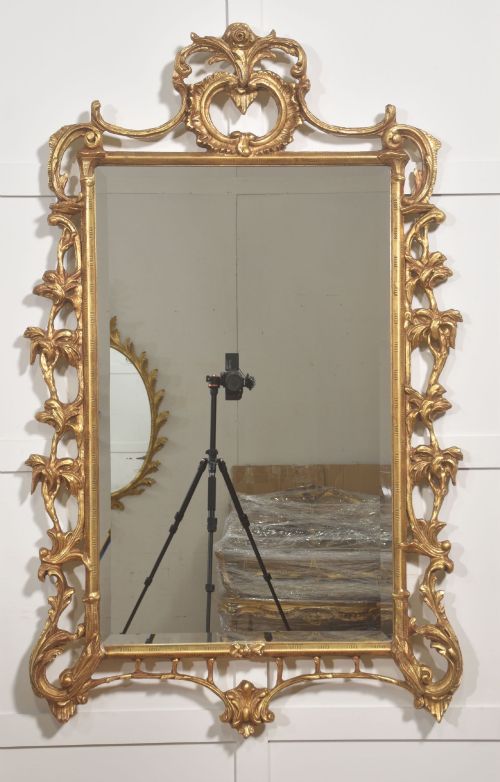
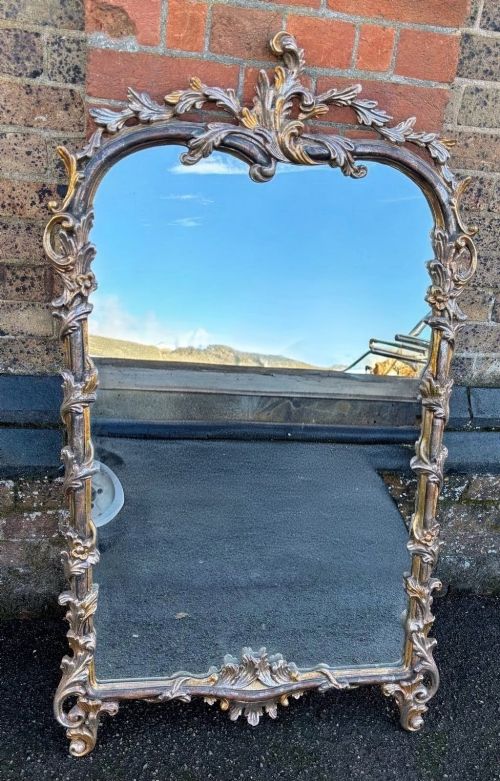
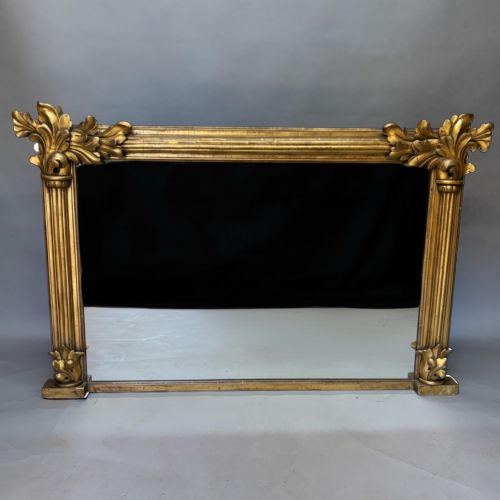
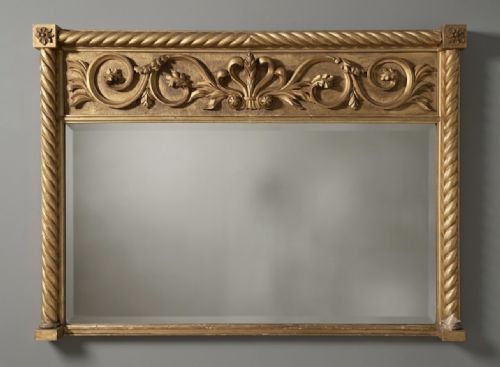

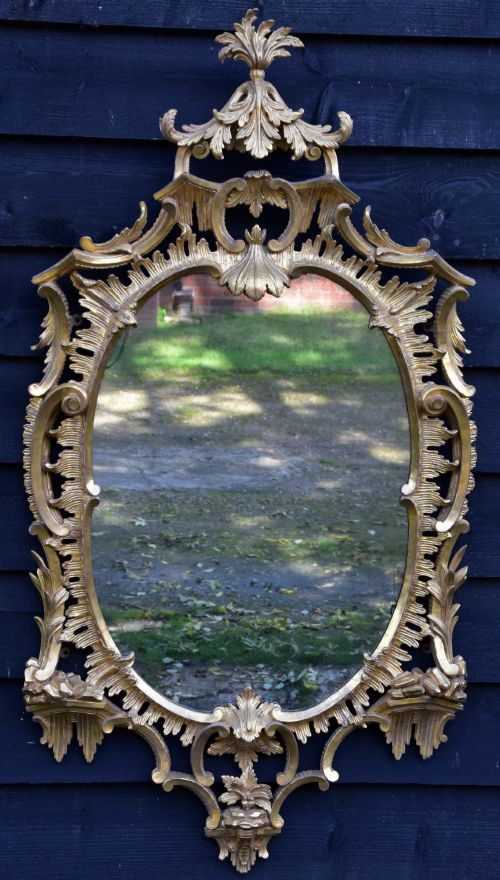
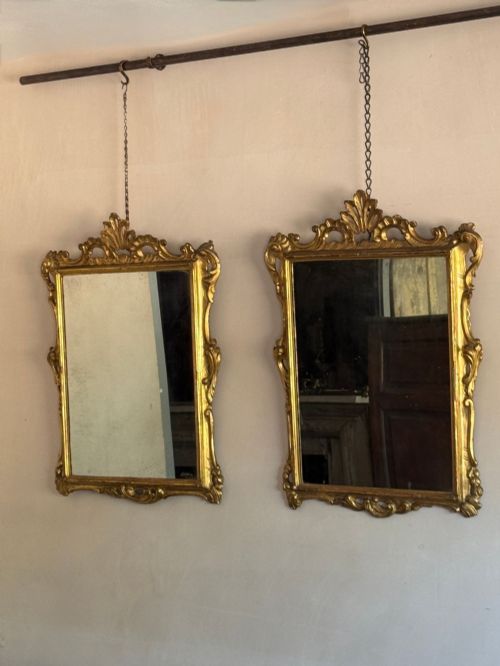
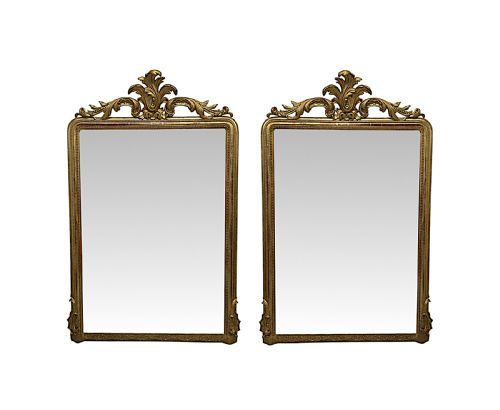
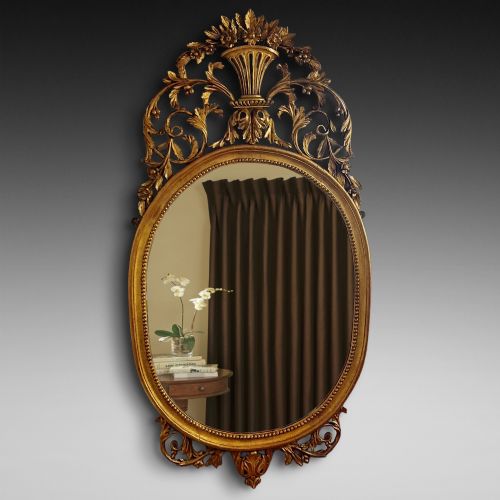


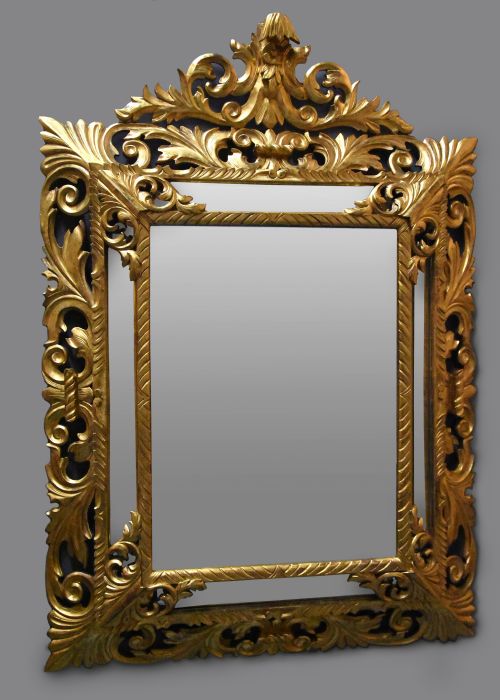
Acanthus Leaf Wall Mirror
An acanthus leaf wall mirror brings sculpted classical foliage into a room, offering reflected light framed in carved wood and gilt finish.
Acanthus Leaf Wall Mirror
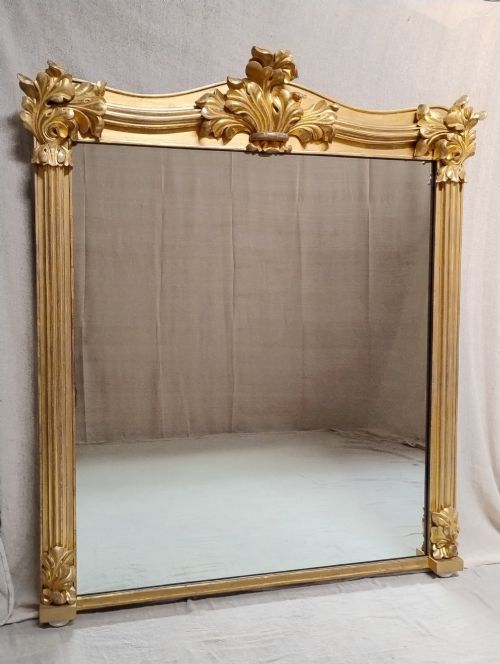
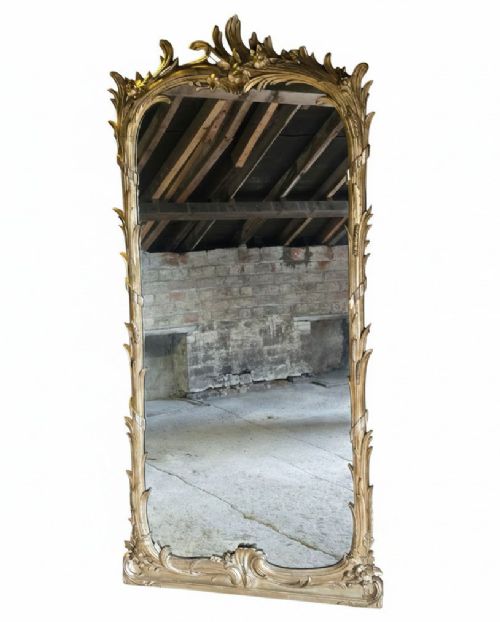
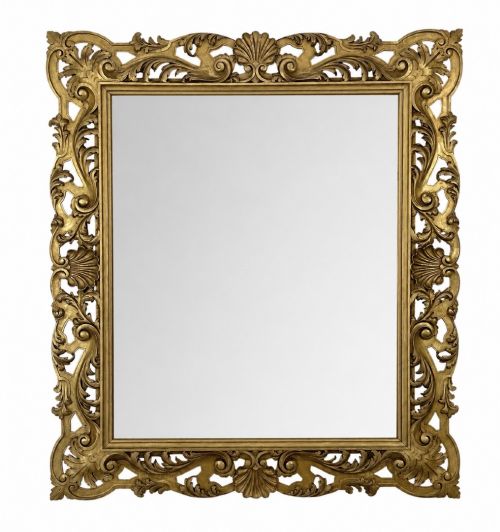
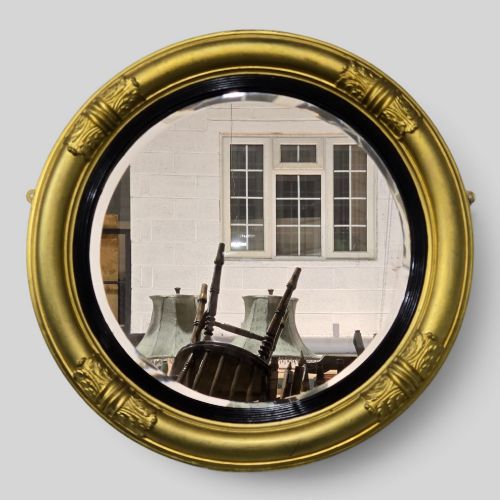
An acanthus leaf wall mirror combines functional glass with decorative carved woodwork modelled on classical leaf motifs. These pieces range in form from compact oval and round frames to large architectural overmantels designed to hang above a fireplace.
The nineteenth century provides the majority of surviving examples on this page, alongside eighteenth-century Georgian and Regency pieces. Italian Florentine workshops and French revival makers frequently utilised this leafy scrollwork across various regional interpretations.
How they were made
Carved wood provides the primary structural foundation for these frames, often shaped from limewood, oak, or mahogany before surface treatment. Artisans applied layers of gesso to the carved wooden base to create a smooth preparatory layer for subsequent gilding.
Gold leaf and silver leaf were laid over the gesso ground, sometimes combined with composition ornament moulded for repetitive scrollwork. This layered construction yielded the reflective metallic surfaces characteristic of period giltwood frames.
Acanthus Leaf Wall Mirror Retail Price Guide 2026
Typical asking prices for acanthus leaf wall mirror among the pieces listed under this phrase on Sellingantiques today, from the lower quarter to the upper quarter. They describe what is for sale here now, not the wider market.
Listings feature periods spanning from the seventeenth century through to the early twentieth century, with nineteenth-century pieces predominating.
What varies in quality
The depth and crispness of the carving distinguish finer examples from simpler production, particularly in the undercut leaves and scrolls. Hand-carved wooden relief shows subtle irregularities that contrast with moulded composition ornament.
The preservation of the original gilt surface and the quality of the mirror glass itself determine the character of the piece. Older mirror plates often exhibit desirable foxing and distortion that signal genuine age.
The Acanthus Leaf Wall Mirror Glossary
- Giltwood
- Wood that has been coated with gold leaf over a prepared gesso ground. This finish is typical of formal antique wall mirrors.
- Gesso
- A plaster mixture applied to wood frames to prepare the surface for gilding. It allows for crisp detailing beneath the gold leaf.
- Overmantel
- A large mirror specifically proportioned to hang above a mantelpiece or fireplace. These pieces often feature arched tops and architectural dimensions.
- Pier mirror
- A tall, narrow mirror designed to hang on the wall space between windows. They frequently match console tables placed below.
- Cushion frame
- A frame profile that swells outward in a convex curve toward the outer edge. This style is prominent in seventeenth- and nineteenth-century Italian and English pieces.
Acanthus Leaf Wall Mirror: Frequently Asked Questions
Can I clean the original gilt surface?
Original gilt surfaces require minimal intervention using a very soft dry brush to remove dust. Moisture and modern cleaning solutions can damage delicate gold leaf and aged gesso grounds.
Professional restoration is recommended if the surface shows active flaking. Avoid rubbing the metallic finish during routine maintenance.
How do I distinguish eighteenth and nineteenth century styles?
Eighteenth-century mirrors typically display hand-carved wooden structures with organic asymmetry in Rococo designs or strict classical balance in Georgian pieces. Nineteenth-century revival items often incorporate moulded composition ornament alongside hand-carving.
Backboards, fixings, and the composition of the gesso layer also provide clues to the period of manufacture. Examining the construction details behind the frame helps confirm the exact era.
What is foxing on mirror glass?
Foxing refers to the small dark spots and mottled patches that develop on old silvered mirror plates over time. Moisture behind the glass causes the reflective backing to oxidise gradually.
Many collectors value foxing as proof of age and authenticity rather than a defect. It creates a soft, mottled reflection distinct from modern glass.