





![Pen and Ink Sketch - Female Nudes by William Edward Frost [1810-1877]](https://www.sellingantiques.co.uk/photosnew/dealer_kendallhouse/dealer_kendallhouse_full_1758970795762-8493507346.jpg)
Academic Figure Sketch
An academic figure sketch captures the rigorous study of the human form through charcoal, graphite, and chalk on paper.
Academic Figure Sketch
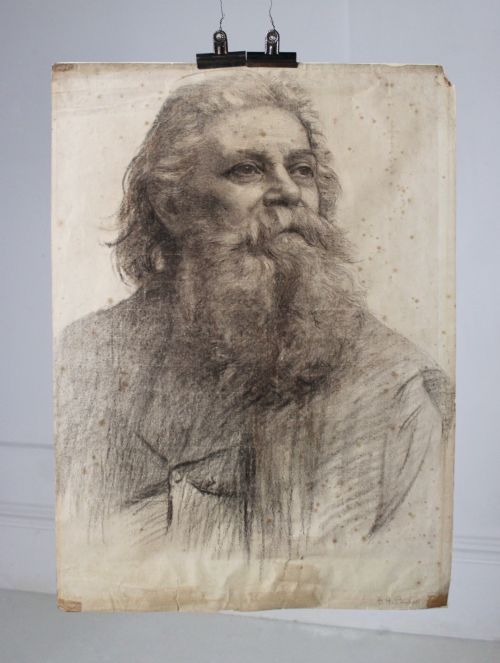
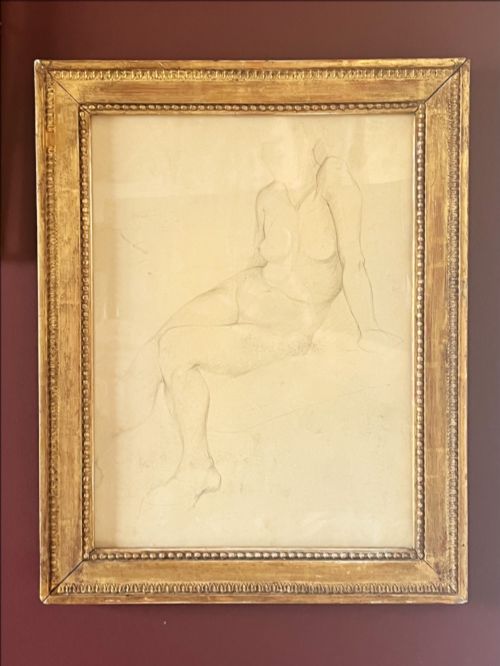
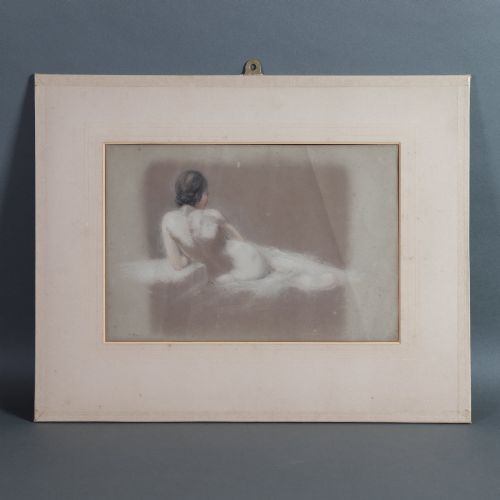
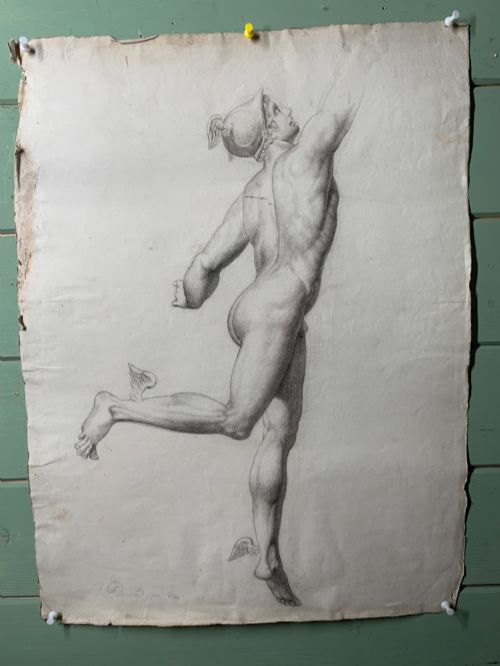
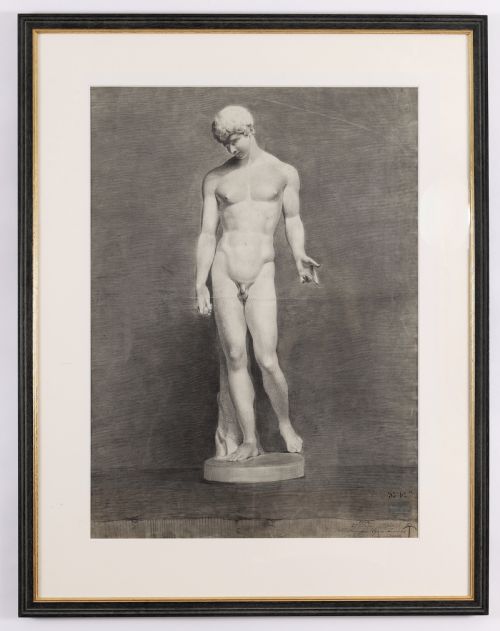
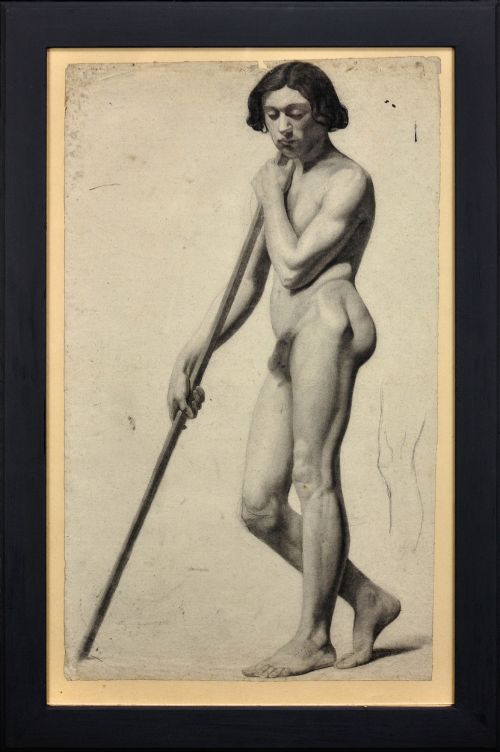
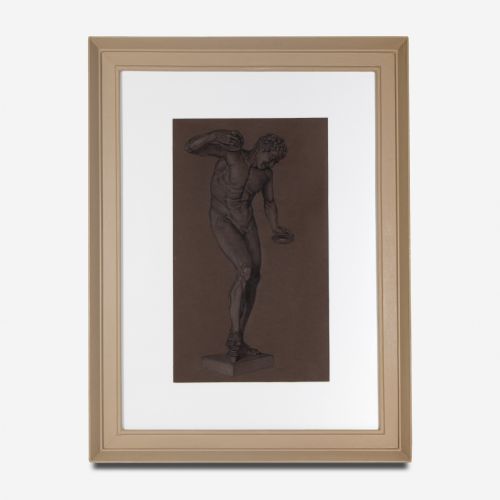
An academic figure sketch represents rigorous life drawing rooted in historical art training from the eighteenth through the twentieth century. These works capture male and female nudes, classical statues like the Capitoline Antinous, and detailed portrait studies executed in European academies.
Buyers encounter framed drawings and wall art created across diverse periods ranging from Georgian and Neoclassical eras to Modern British and mid-twentieth-century schools. The selection spans Italian Old Master traditions, French Neoclassical approaches, and nineteenth-century English school exercises.
Most pieces document formal studio practice, recording how artists mastered anatomy, proportion, and shadow. These range from quick preparatory studies of single limbs or heads to fully realised life drawings set within period gilt wood frames.
Materials and technique
Artists executed these works primarily on paper, including toned paper, using charcoal, graphite, red chalk, sanguine, pen and ink, and occasionally oil. Mediums were chosen to test precision, tonal gradation, and swift capture of shadow and light.
Techniques relied on careful observation of the human subject or classical sculpture, employing hatching, smudging, and layering to build volume and depth. Many sheets show rectos and versos utilised for multiple student exercises or preliminary compositions.
Judging quality in figure sketches
Quality rests upon anatomical confidence, line precision, and the expressive handling of shadow rather than mere age or subject matter. Superior works demonstrate a commanding grasp of skeletal structure and muscle tension, making the paper breathe with life.
The sophistication of the framing and the preservation of the paper surface influence the overall standing of a piece. Original antique gilt frames and stable media application elevate works executed by trained academic hands above ordinary student exercises.
William Etty·Augustus John·Henry Arthur Roberts·Pierre-Paul Prud'hon·William Edward Frost·Winifred Eugene Ballard·George Richmond·Cecil CP Lawson
The Academic Figure Sketch Glossary
- Academic Realism
- A style of painting and drawing produced under the influence of European academies of art, prioritising strict adherence to classical standards. It values precise anatomical accuracy and polished rendering over expressive distortion.
- Sanguine
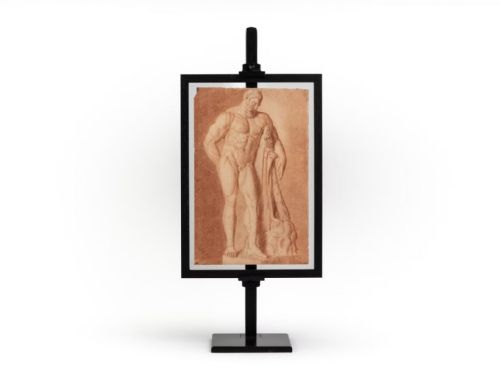
- A type of red chalk used in drawing, derived from haematite. It yields a warm, reddish-brown tone favoured for life studies and portrait sketches.
- Recto and Verso
- Respectively, the front and back of a sheet of paper or drawing. Artists frequently utilised both sides for economical studies during training.
- Charcoal
- A dry drawing medium made from finely ground organic matter held together with a binder or burned in a kiln without oxygen. It allows for deep blacks and rapid tonal blocking.
- Neoclassical
- A Western cultural movement drawing inspiration from the art and culture of classical antiquity. It emphasises austere linear design and heroic academic subjects.
Academic Figure Sketch: Frequently Asked Questions
What is an academic figure sketch?
An academic figure sketch is a drawing produced during artistic training to master human anatomy and proportion. These works record live models or classical statues using media such as charcoal, graphite, and chalk.
Created within structured school environments, these sketches reflect the rigorous standards demanded by historic European and British art academies.
How were these drawings used?
Artists used these sketches as foundational exercises to understand musculature, skeletal structure, and light before attempting large oil paintings. They served as direct observations from life or plaster casts.
Mastering the human form in this manner formed the backbone of traditional artistic education from the eighteenth century onwards.
How do I hang a charcoal drawing?
Charcoal drawings require careful framing behind glass to protect the delicate, friable pigment from disturbance and airborne moisture. Keep them away from direct sunlight to prevent the paper from yellowing.
Ensure the frame is properly sealed on the reverse to stop dust and insects from reaching the exposed paper surface.
How do I date an antique sketch?
Dating relies on examining the watermark and texture of the paper, the chemical composition of the ink or chalk, and stylistic clues. Frame construction and handwritten inscriptions on the reverse also provide chronological markers.
Comparison with documented works by known school participants helps narrow down the active period of creation.