
19th Century Wooden Carving
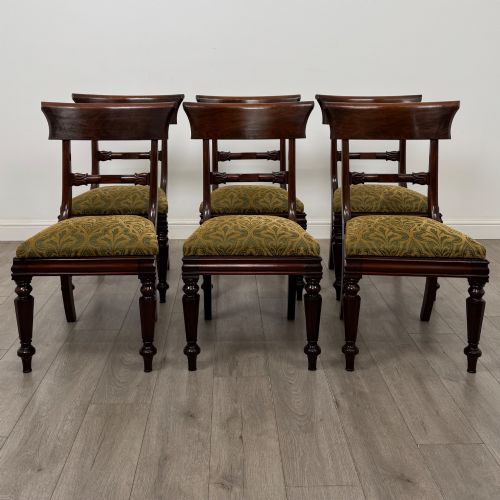
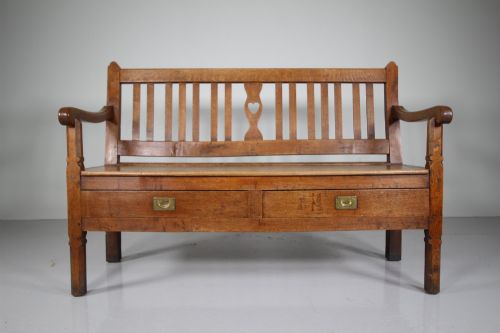
These 19th century wooden carving pieces offer substantive craft and history, bringing tactile depth to an interior.
19th Century Wooden Carving
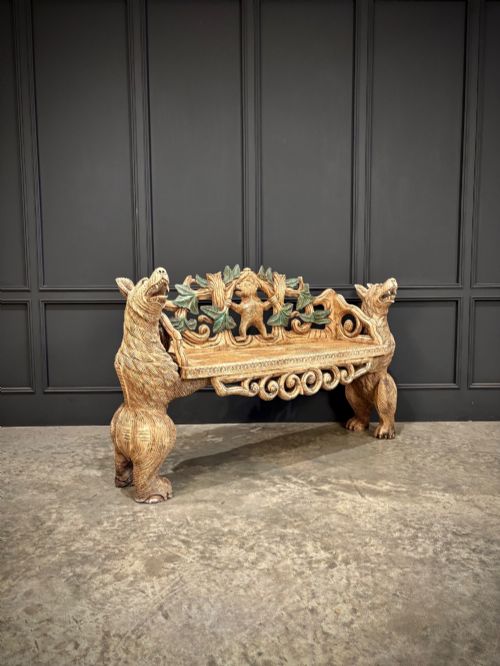
When you search for 19th century wooden carving, you encounter a diverse array of items ranging from utilitarian furniture to decorative furnishings. The selections span several distinct periods including the Victorian era, Regency, and William IV, alongside regional styles such as Black Forest and Anglo-Indian.
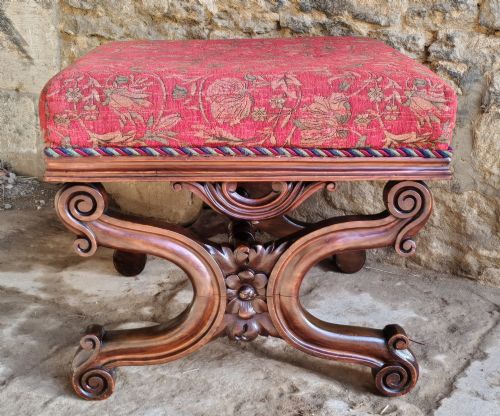
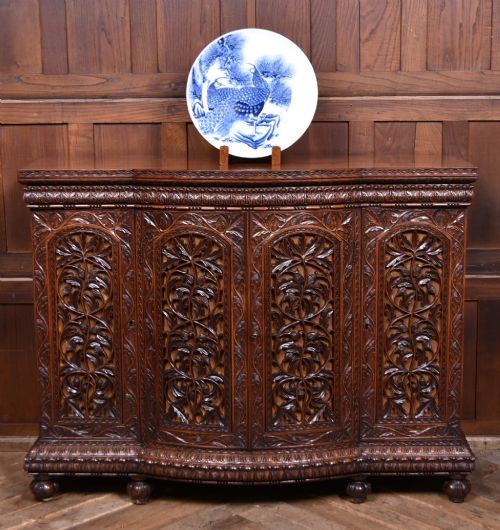
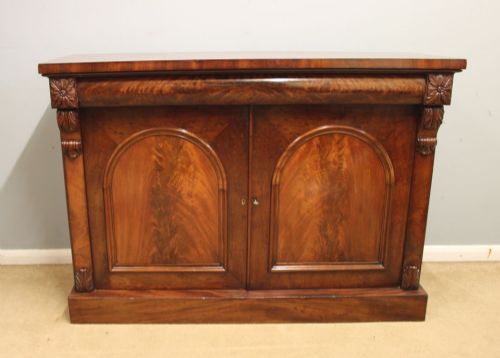
You are most likely to meet seating and storage forms on this page, including hall chairs, sideboards, and benches. Many of these objects integrate detailed sculptural elements directly into mahogany, oak, walnut, and exotic hardwoods.
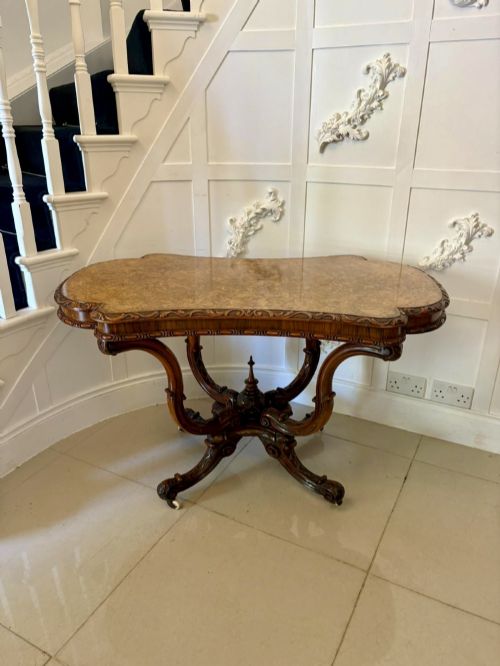
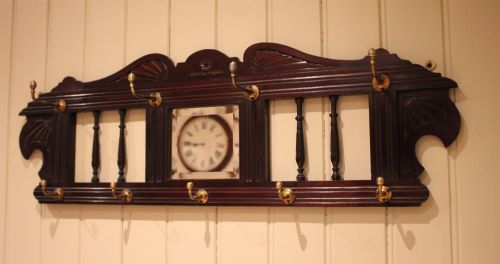
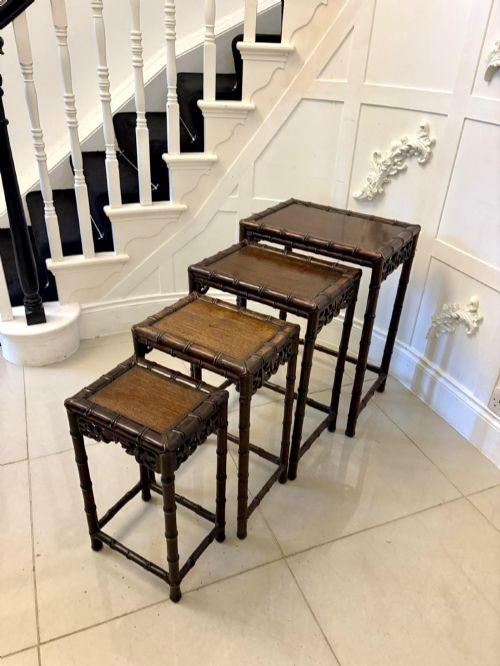
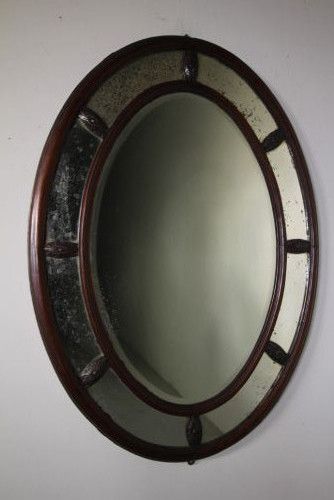
The assortment extends to occasional tables, mirrors, and specialised items like church pulpits and coat racks. These pieces demonstrate how workshop traditions varied across English, French, and Asian origins during the period.
Materials and methods
Makers utilised dense timbers such as mahogany, oak, walnut, burr walnut, and rosewood as the primary foundation for structural forms and surface enrichment. These woods provided the necessary tensile strength for deep relief work and delicate pierced decoration.
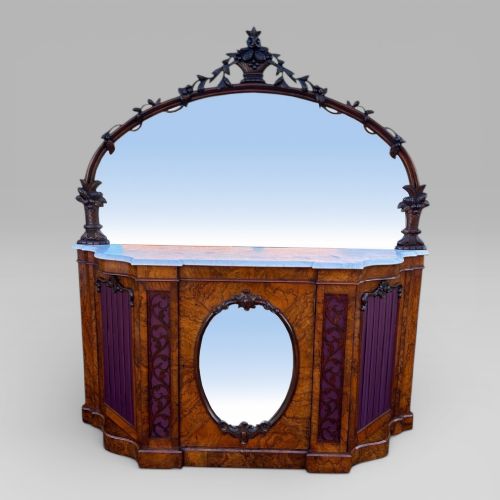
Craftsmen employed hand chisels and gouges to execute sculptural details directly into the solid timber or applied carved mouldings onto carcases. Secondary materials like brass fixtures, marble tops, and glass components were integrated to complete functional items such as sideboards and mirrors.
Listings feature woods spanning mahogany, oak, walnut, burr walnut, rosewood, sycamore, padouk, and birdseye maple across the nineteenth century.
Distinctions in quality
The distinction between ordinary and superior pieces rests on the depth, crispness, and anatomical correctness of the carved ornamentation. Master carvers achieved clean undercuts and fluid lines that catch the light, whereas lesser examples rely on shallow, mechanical scoring.
Material selection further divides the range, with figured woods like burr walnut and pollard oak indicating higher workshop ambition. Construction integrity, such as traditional joinery and well-matched grain patterns, separates standard utility items from exceptional commissions.
The 19th Century Wooden Carving Glossary
- Black Forest
- A style of carving originating from the Brienz region of Switzerland, typically depicting naturalistic bears and foliage in dark wood. These pieces often take the form of benches, umbrella stands, and table supports.
- Sgabello
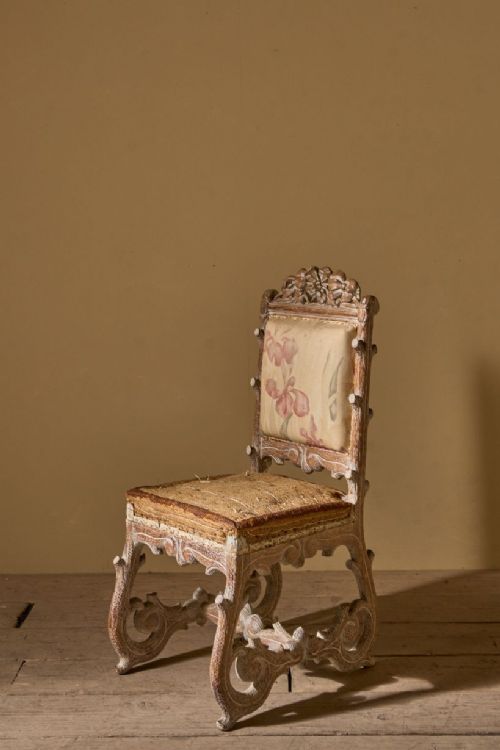
- A Renaissance-revival hall chair style featuring a narrow wooden seat, a high carved back, and solid trestle supports instead of conventional legs. They are frequently encountered in pairs within 19th-century hallways.
- Faux Bois
- A technique or style imitating wood grain, often executed in paint or carved to resemble natural timber branches. This aesthetic appeared on occasional seating and hall stands.
- Chiffonier
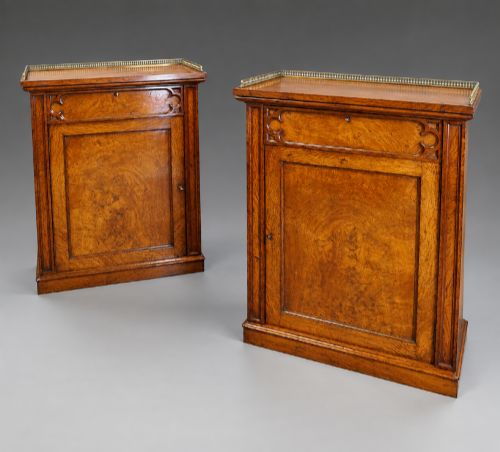
- A low sideboard cabinet developed during the Regency and Victorian periods, equipped with drawers and enclosed shelving below. They frequently incorporate scrolled corbels and mirror backs.
- Gothic Revival
- An architectural and decorative style inspired by medieval forms, characterised by pointed arches, tracery, and heavy carved oak. This aesthetic frequently appears on church furnishings and dining suites.
19th Century Wooden Carving: Frequently Asked Questions
How do I identify a Black Forest carving?
Black Forest carvings are typically rendered in lime or walnut, featuring realistic animal subjects like bears, deer, or dogs intertwined with foliage. They originated largely in Switzerland for the tourist and export markets.
The surfaces exhibit deep, textural fur work and lifelike glass eyes. Look for sturdy construction beneath the decorative ornamentation, as these pieces were designed for domestic use.
How should I care for carved antique wood?
Maintain stable humidity and temperature in your room to prevent the solid timbers and carved joints from splitting. Avoid placing pieces near direct heat sources or strong sunlight.
Apply a microcrystalline wax periodically to nourish the wood grain and protect the carved surfaces from dust and moisture. Buff gently with a soft cloth rather than using liquid silicone polishes.
Where were hall chairs placed in a 19th-century home?
Hall chairs stood primarily in the entrance hall or vestibule of large houses for visitors to use briefly. Because they were meant for waiting rather than long dining sessions, they usually featured solid wooden seats.
They were often made in pairs or sets of four, displaying the family crest or elaborate carved motifs on their tall wooden backs to impress arriving guests.