


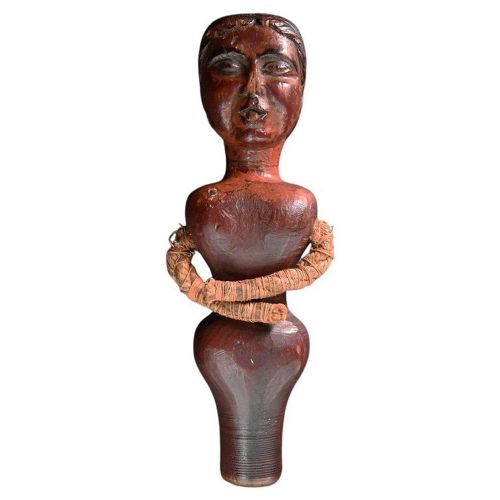


Vintage Carved Bed Post
These vintage carved bed post elements and full four-poster frames bring architectural substance and rich timber character into modern interiors.
Vintage Carved Bed Post
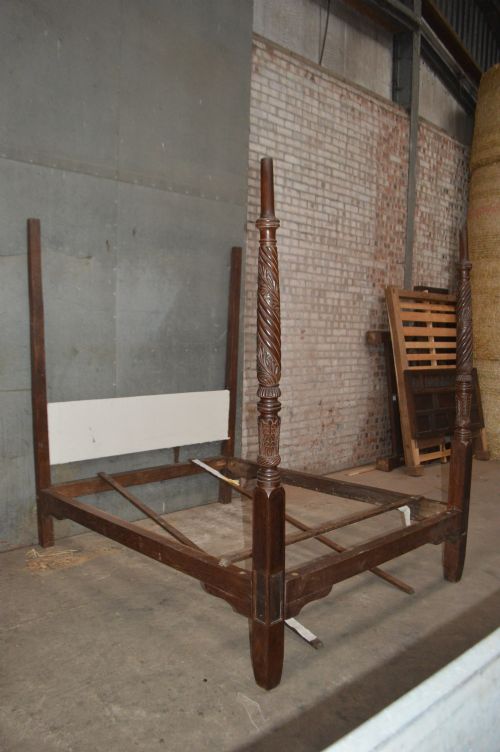
When you search for vintage carved bed post pieces, you encounter substantial timber supports originating from grand four-poster beds, tester beds, and occasional architectural salvage fragments. These components range from monumental Victorian mahogany columns to slender Edwardian posts and folk-art figures.
The pieces represented in current and past records span the nineteenth century through the early twentieth century, taking the form of complete beds with prominent posts, matched pairs of uprights, and individual carved elements. Mahogany and painted wood dominate the surviving examples, reflecting the preferences of their original periods.
How they were made
Cabinetmakers and artisans utilised dense timbers such as mahogany and oak, shaping the heavy structural components through hand-carving and turning on large lathes. These solid woods provided the necessary strength to support heavy tester frames and canopies.
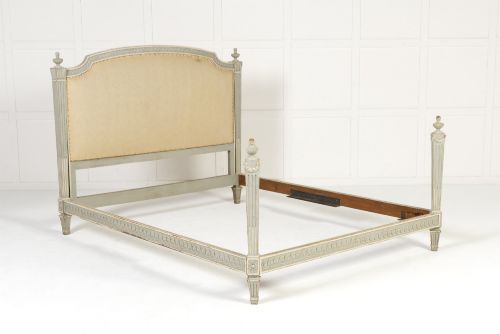
Surface treatments varied from polished timber finishes that highlighted the natural grain to painted wood, gilding, and upholstered components found in French Louis XVI and Portuguese Baroque revival styles.
Styles span Regency, Victorian, Edwardian, French Louis XVI, and Portuguese Baroque revival designs.
What varies in quality
The distinction between ordinary and exceptional pieces lies in the depth and precision of the carving, where crisp acanthus leaves, fluting, and figural details reveal the hand of a skilled artisan rather than a mechanical workshop. Timber selection also dictates overall presence, with richly figured mahogany and seasoned oak holding their structural integrity and visual weight far better over decades.
Proportion and stylistic consistency separate masterworks from simpler regional pieces, particularly when examining how capitals, shafts, and bases transition. Complete matching pairs and intact architectural context command greater interest than isolated or heavily altered fragments.
The Vintage Carved Bed Post Glossary
- Four poster bed
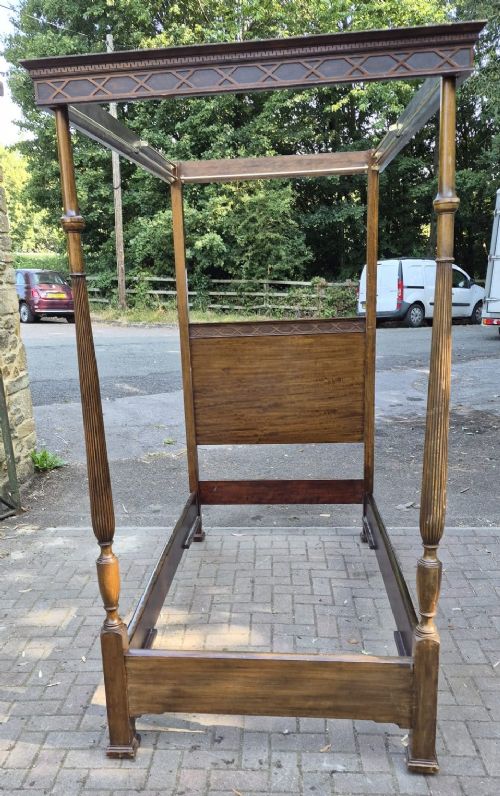
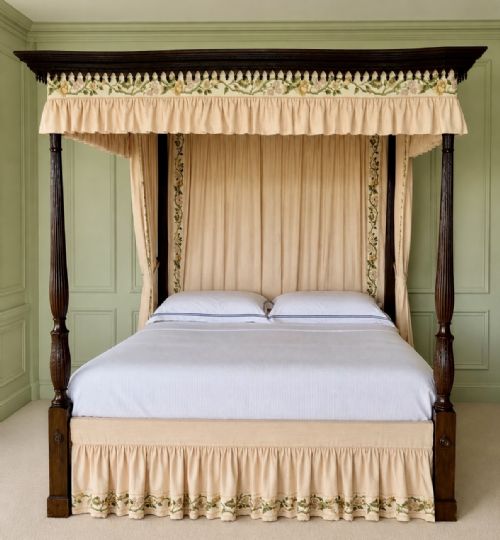
- A bed featuring four vertical columns that support an upper canopy or tester frame. These grand pieces frequently showcase intricate carving along the posts.
- Tester
- The flat wooden canopy or ceiling suspended above a four-poster bed. It rests directly upon the carved bed posts.
- Regency
- A British design period spanning the early nineteenth century characterised by classical restraint and neoclassical motifs. Furniture from this era often incorporates dark mahogany timbers.
- Louis XVI Style
- A French aesthetic revival focused on straight lines, classical symmetry, and carved ornamentation. Pieces in this style often combine painted surfaces with carved wood.
- Architectural salvage
- Building elements and furniture components rescued from older structures for reuse or display. This category includes individual carved bed posts and folk-art figures.
Vintage Carved Bed Post: Frequently Asked Questions
What is a vintage carved bed post?
A vintage carved bed post is a structural column or decorative upright salvaged from a traditional four-poster bed or tester frame. These items showcase period woodworking techniques and detailed hand-carved ornamentation.
They appear as matched pairs for display, standalone architectural fragments, or integrated parts of complete antique beds spanning the nineteenth and early twentieth centuries.
How were four-poster beds constructed?
Four-poster beds were built using heavy timbers such as mahogany and oak, joined with traditional framing methods to support the weight of the upper tester. Artisans turned the main shafts on lathes before carving detailed motifs like fluting and acanthus leaves by hand.
Surfaces were then finished with polished transparent coatings, paint, or gilding depending on the prevailing style of the period.
How do I identify Regency bed posts?
Regency bed posts typically display classical neoclassical influence, featuring clean lines, reeded or fluted mahogany shafts, and restrained decorative carving. The timber is usually dark and heavily figured, reflecting the aesthetic priorities of the early nineteenth century.
Comparing the turning patterns and joinery details against documented pieces from the same era helps confirm their period origin.
Can I use bed posts as decor?
Bed posts and architectural salvage fragments are frequently displayed upright as sculptural elements within a room to add height and historic character. Their substantial timber presence makes them effective focal points in traditional and eclectic interiors alike.
Pairs of posts can frame doorways or anchor corners, while individual figural carvings serve as standalone art objects.