

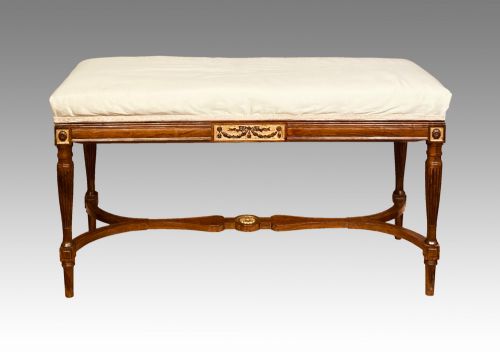
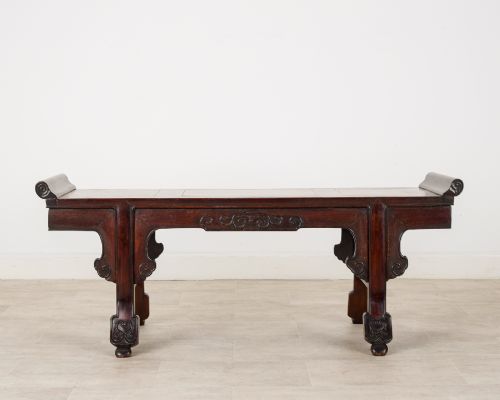
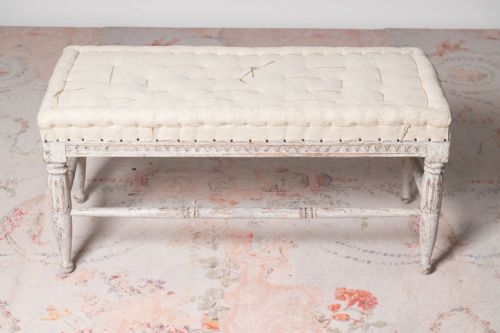
19th Century Window Seat
A 19th century window seat bridges architectural purpose and decorative flair, offering a low perch tailored to period rooms.
19th Century Window Seat
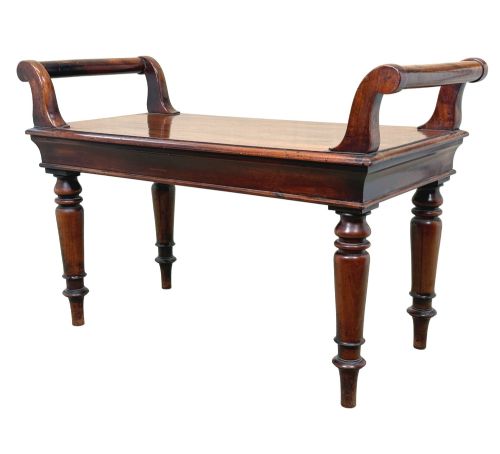
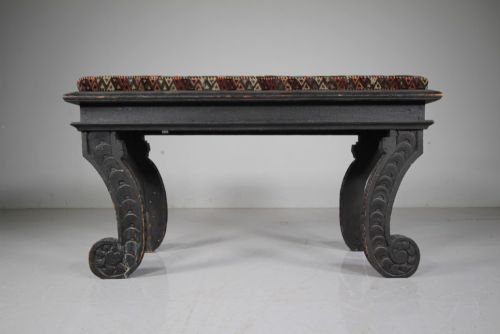
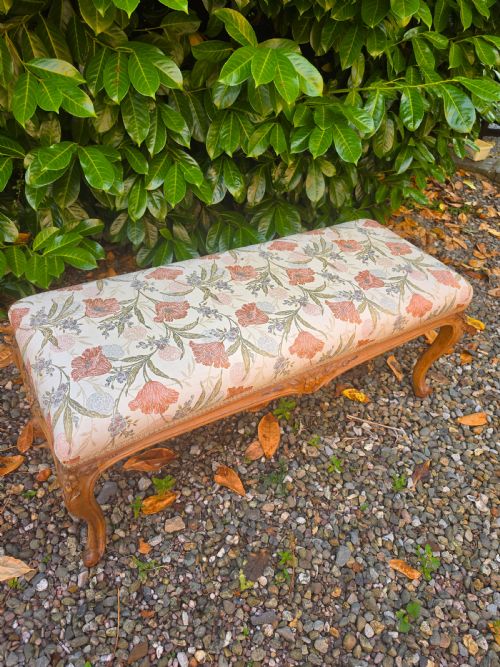
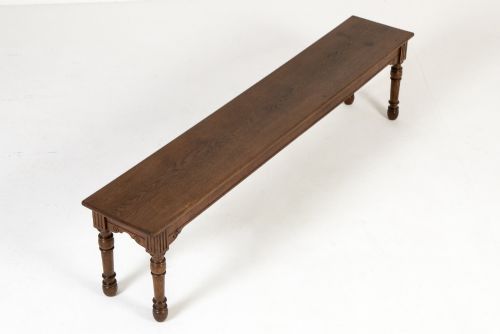
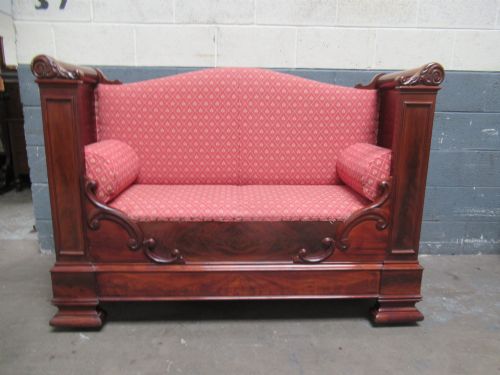
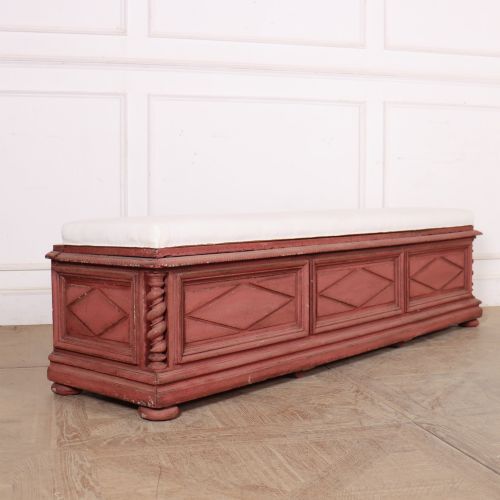
A 19th century window seat serves as a long, narrow bench constructed to fit beneath sills or in bay alcoves, drawing on Regency, Victorian, and Georgian traditions. The form overlaps with hall benches, long stools, and small settees, often sharing open sides or scrolled ends designed for comfortable viewing.
Mahogany and oak dominate the available examples, frequently accompanied by walnut, rosewood, and painted pine. Makers across England, France, and China produced these pieces in styles ranging from Gothic Revival and Louis XIV Revival to plain vernacular formats.
Materials and construction
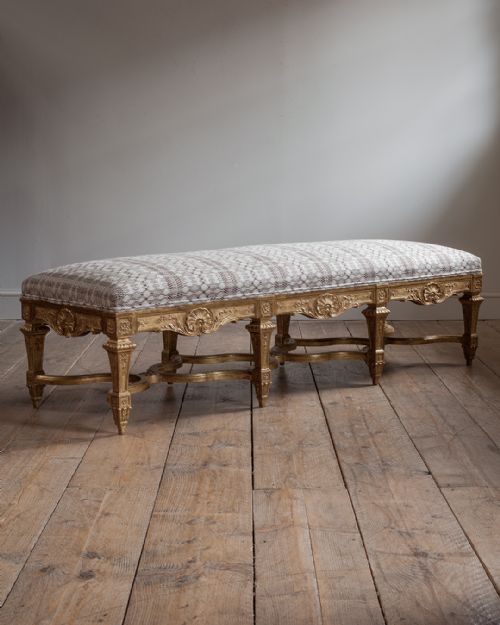
Carpenters utilised dense hardwoods like mahogany, oak, and walnut for structural stability, employing traditional joinery alongside hand-carved decorative motifs. Giltwood and painted finishes appear on continental and Regency frames, while cane seating and traditional horsehair or modern upholstery fabrics line the pads.
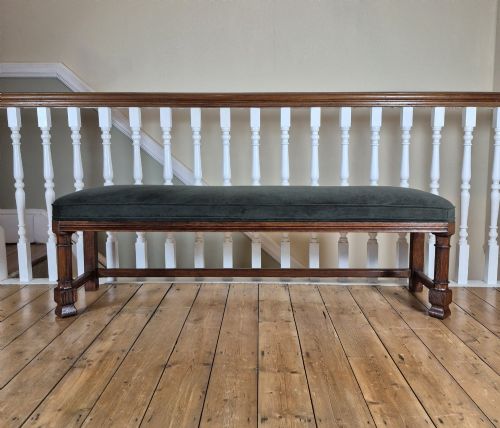
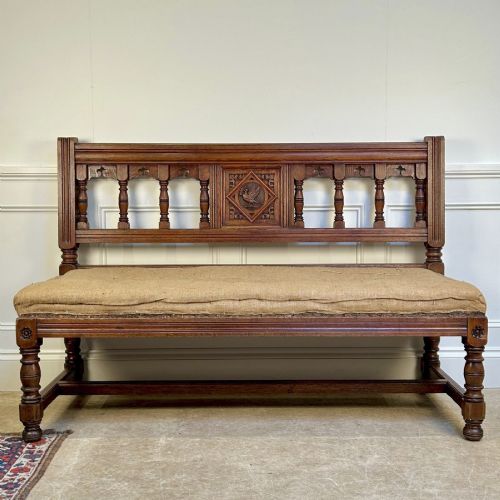
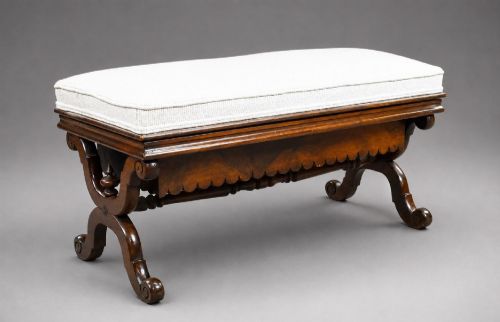
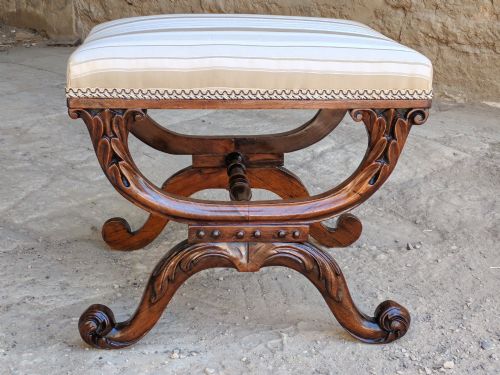
Turned legs, cabriole supports, and X-frame structures provide the base support for these seats. Carved details such as scroll arms and panelled wooden rails distinguish the more elaborate workshops from simpler regional benches.
Listings feature oak, mahogany, walnut, and rosewood across the 19th century, with styles spanning Regency, Gothic Revival, and Biedermeier.
Judging the standard
Quality rests in the crispness of the timber carving and the integrity of the frame construction, separating robust workshop output from standard utility furniture. Timber selection plays a significant part, with figured veneers, burr maple, or solid exotic hardwoods elevating the piece.
Retaining original surfaces, whether polished wood, historic gilding, or early textile upholstery, preserves the integrity of the piece. Subtle details such as hand-turned legs and proportional scroll ends indicate higher cabinet-making standards.
GIllows·Charles Nosotti·James Shoolbred & Co·Holland and Son
The 19th Century Window Seat Glossary
- Giltwood
- Timber coated with a thin layer of gold leaf over a prepared gesso base. This finish frequently appears on French revival stools and decorative Regency seats.
- X-frame
- A structural base formed by intersecting diagonal cross-legs. This design draws on ancient curule forms and appears on Empire and revival stools.
- Cabriole leg
- A furniture leg featuring a double curve, pinching outward at the knee and tapering inward at the foot. This shape is characteristic of mid-century walnut seats.
- Scroll back
- A wooden frame or armrest curving outward and downward in a continuous scroll. This profile supports the arms of Regency and Anglo-Indian benches.
19th Century Window Seat: Frequently Asked Questions
Where should a window seat go?
These long benches suit narrow hallways, bed ends, and living room bay windows. Their compact depth allows placement in transitional spaces without blocking circulation.
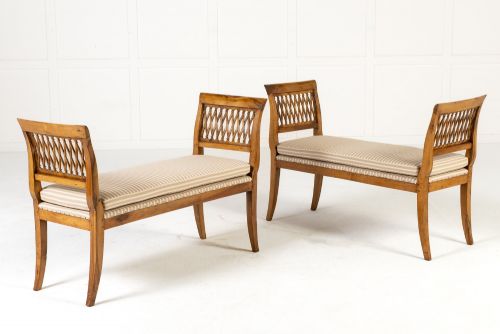
Positioning a bench beneath a low sill creates a functional reading nook. Pairs of matching seats work well facing each other across a fireplace or flanking a central table.
How do I identify a Regency piece?
Regency examples display classical restraint, often utilising dark mahogany or rosewood with understated brass mounts. Look for clean architectural lines and sabre legs.
Curved scroll ends and painted or gilded surfaces also signal the early nineteenth-century aesthetic. These details separate Regency forms from heavily carved later Victorian iterations.
Are these seats comfortable for daily sitting?
Padded examples featuring traditional horsehair or textile upholstery provide a firm sit suitable for resting. Upholstered versions offer more cushioning than hard wooden hall benches.
Many historic pieces feature removable squab cushions or cane panels. Buyers can update modern top covers to suit daily sitting requirements while retaining the antique frame.
What is the difference between a window seat and a hall bench?
Window seats are typically armless or feature low, symmetrical scroll ends designed to fit below glass sills. Hall benches frequently incorporate high backs or solid panelled ends.
Both forms share elongated proportions and narrow depths. The distinction often depends on whether the piece was meant to face a window or stand against a passage wall.