


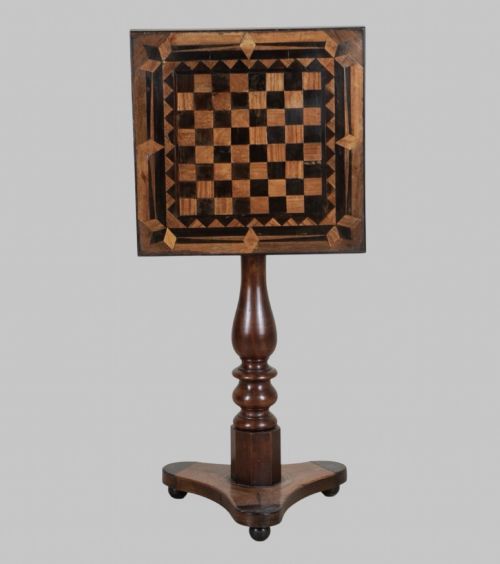
19th Century Walnut Pedestal
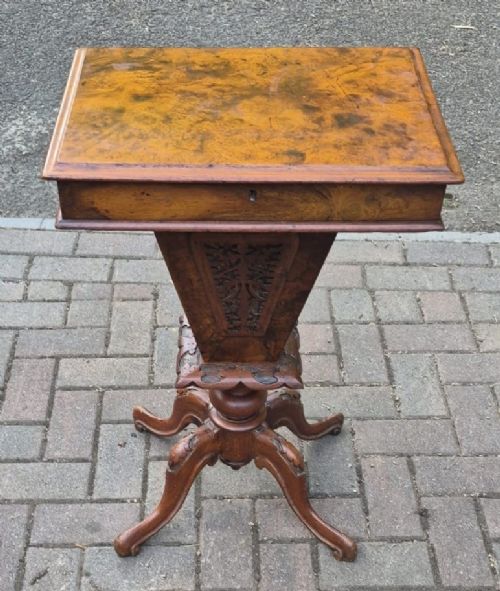
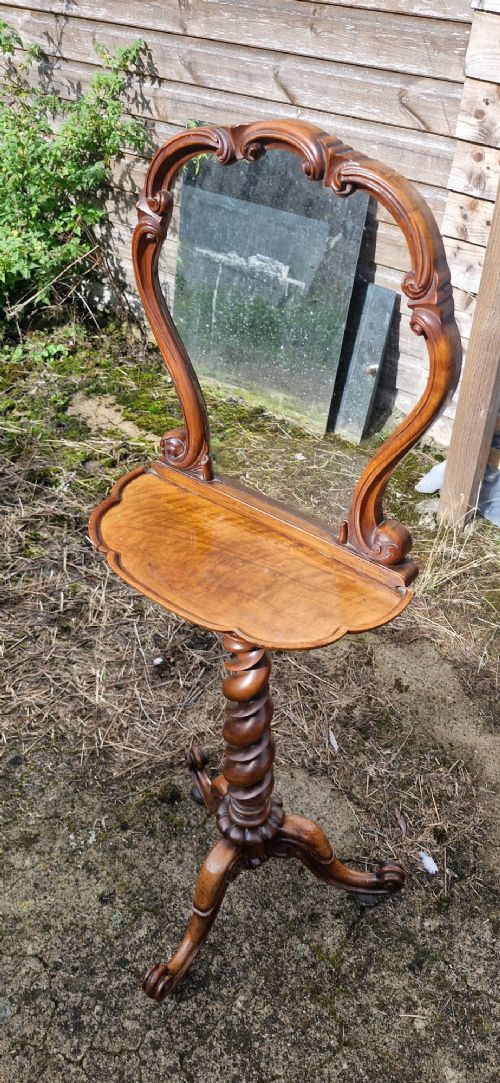
When you search for a 19th century walnut pedestal, you meet substantial library desks and occasional display stands that bring rich dark timber into a room.
19th Century Walnut Pedestal
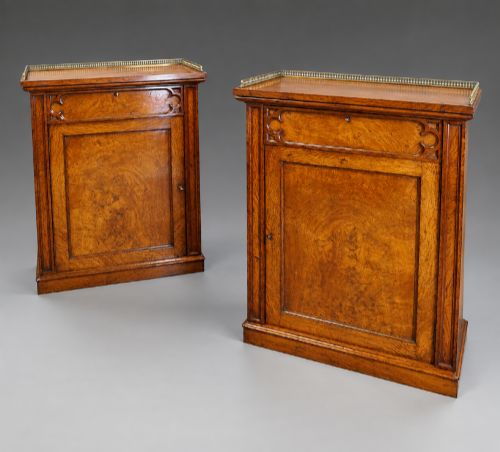
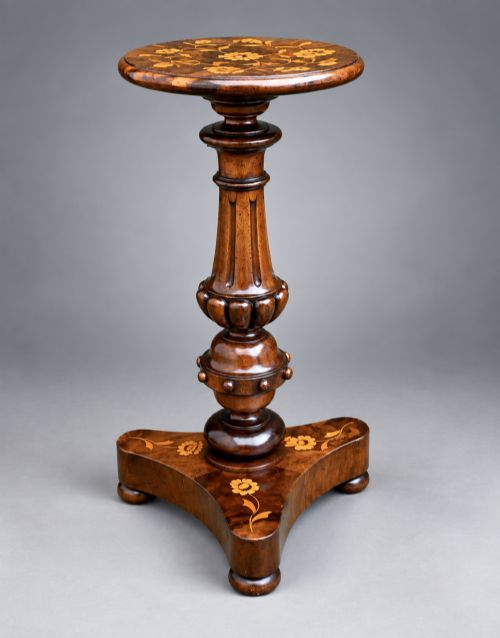
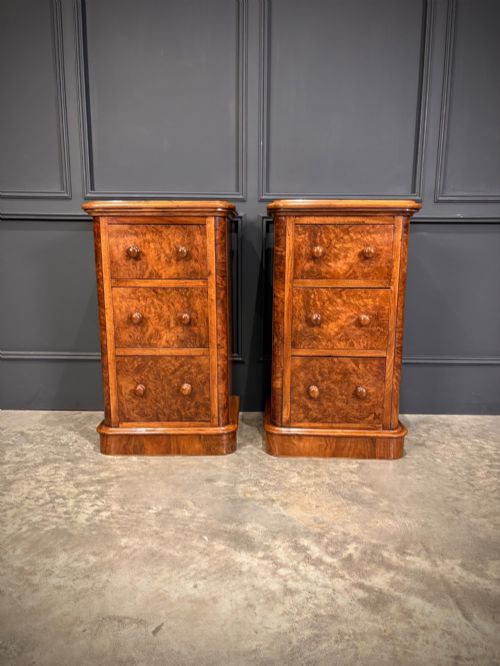
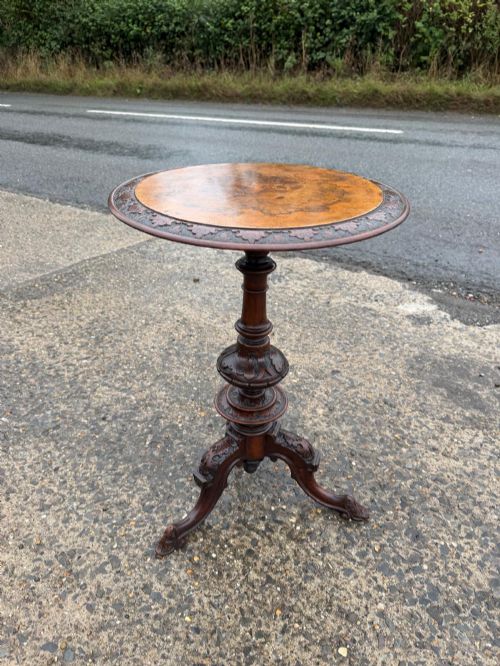
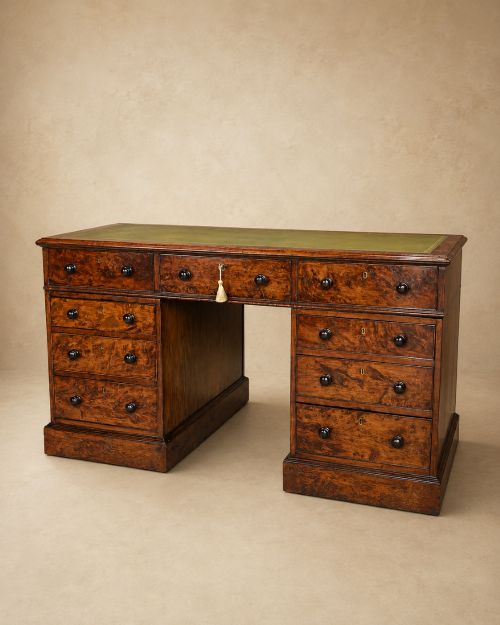
A 19th century walnut pedestal typically manifests as a twin pedestal partner desk or a sturdy standalone pillar stand designed for display. These items derive primarily from the Victorian era, spanning decades from the mid to late 1800s alongside earlier Georgian and William IV examples.
The functional forms divide cleanly between large writing desks fitted with multiple drawers and smaller decorative tables or stands supported by a central column. Such items served formal libraries, parlours and studies where dark wood furniture projected authority and refined taste.
Makers utilised dense timber to construct items that survived heavy daily use while retaining decorative carved or inlaid surfaces. Buyers searching this phrase encounter both British Victorian pieces and continental European interpretations.
How they were made
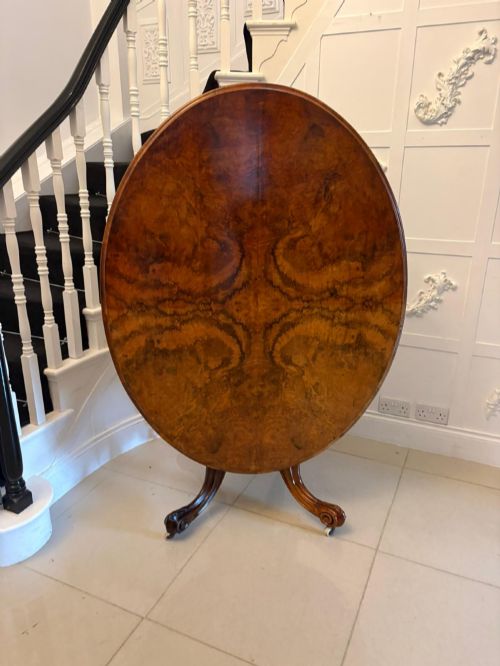
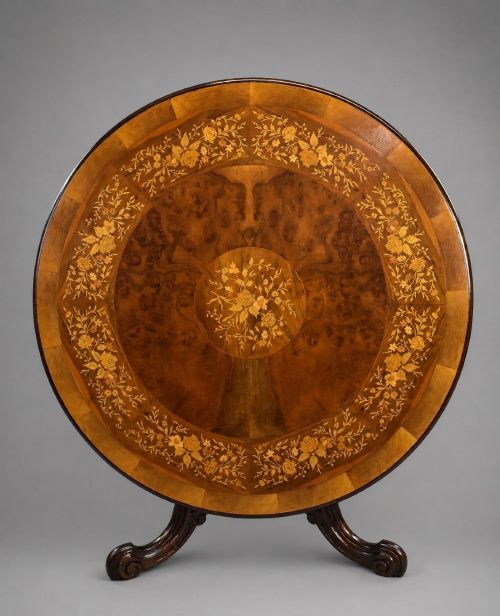
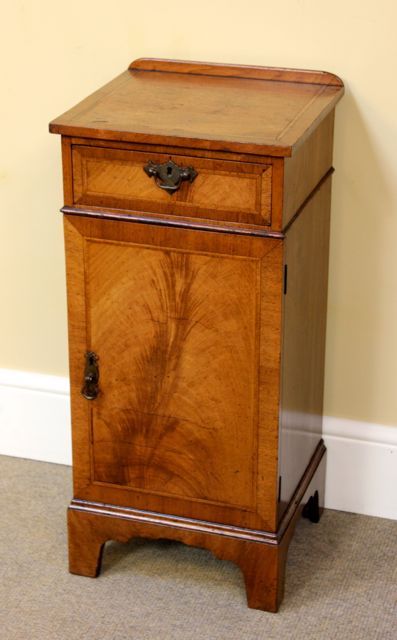
Cabinet makers selected figured walnut and burr walnut veneers to cover solid secondary woods, creating dramatic grain patterns across large surfaces like desk tops and table leaves. This technique allowed workshops to display swirling patterns while maintaining structural stability.
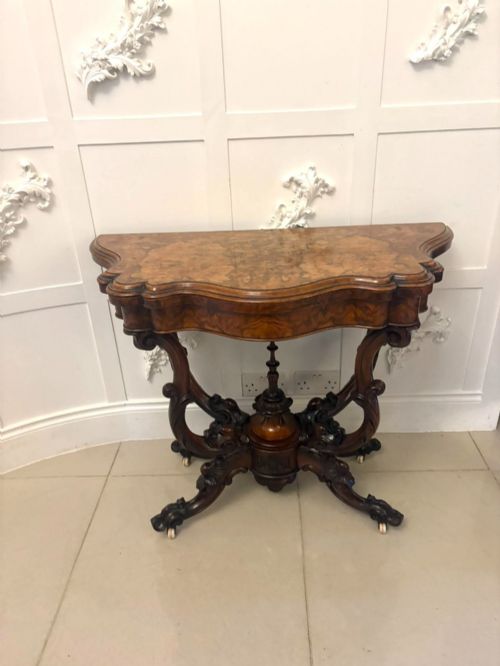
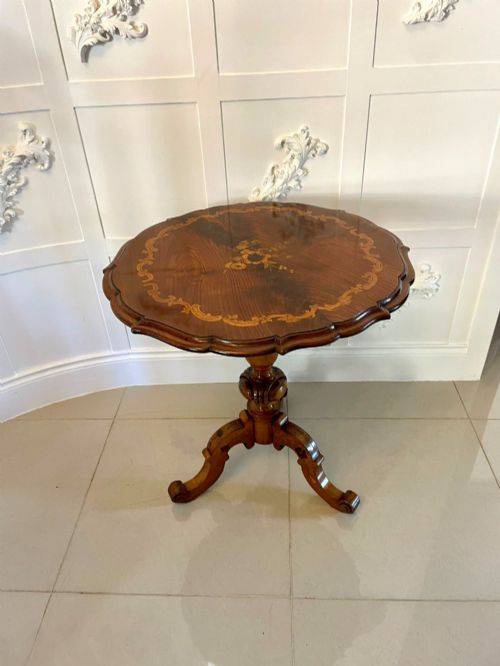
Brass hardware, tooled leather skivers and intricate wood inlay provided functional contrast and decorative enrichment to desks and tables. Carved elements on bases and legs required skilled hand chiselling, frequently seen in Victorian and Italian Renaissance Revival designs.
Secret drawers tucked within 19th century tables offered owners a private hiding spot for letters and valuables.
What varies in quality
The depth and selection of the walnut veneer dictate visual appeal, with burr figures and book-matched panels demanding greater carpentry skill than plain straight-grained timber. Superior examples exhibit continuous grain flow across drawers and harmonious tone matching.
The execution of carved details on pedestals and bases separates standard production from exceptional pieces. Crisp, deep relief carving without mechanical smoothing indicates higher workshop standards during the Victorian period.
Shoolbred·Holmes Baldock
The 19th Century Walnut Pedestal Glossary
- Burr walnut
- A prized timber harvested from tree growths, yielding intricate swirling patterns utilised for decorative veneer surfaces.
- Pedestal desk
- A heavy writing table comprising two separate drawer columns supporting a single wide top.
- Partners desk
- A large double-sided writing table designed for two people to work opposite one another.
- Skiver
- A panel of leather inset into the top surface of a desk to provide a smooth writing area.
- Marquetry
- The art of creating decorative patterns on furniture surfaces using thin slices of various woods.
19th Century Walnut Pedestal: Frequently Asked Questions
How do I clean a walnut desk?
Dust regularly with a soft dry cloth to prevent grit accumulation on the delicate timber veneer. Avoid modern silicone sprays that can damage historic polish.
Apply high quality beeswax periodically to nourish the dry wood and maintain the natural lustre of the walnut surface.
Can I use these desks daily?
These historical pieces were built for rigorous daily administration in Victorian offices and private libraries. Their robust construction handles normal modern writing tasks with ease.
Protect the leather insert and timber top from moisture and direct heat sources to preserve the original finish over decades of use.
What rooms suit a pedestal desk?
A large twin pedestal desk commands attention when placed centrally in a spacious home study or home office. Freestanding partner desks allow seating from both sides.
Smaller occasional stands and lamp tables fit neatly into corners or beside seating areas in living rooms and reception hallways.
How do I date a piece?
Examine the secondary woods inside drawers and the construction methods used for joints and fixings. Victorian items often feature machine-sawn components alongside hand-finished details.
Stylistic cues such as heavy carved mouldings or brass hardware matching Georgian or Renaissance Revival designs offer further chronological indicators.