


19th Century Walnut Nightstand
A 19th century walnut nightstand brings rich grain and practical bedside storage together in pieces designed for the Victorian and continental bedroom.
19th Century Walnut Nightstand
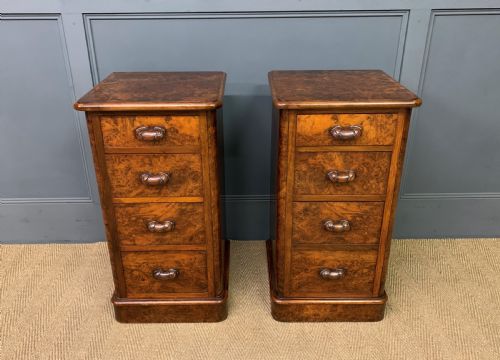
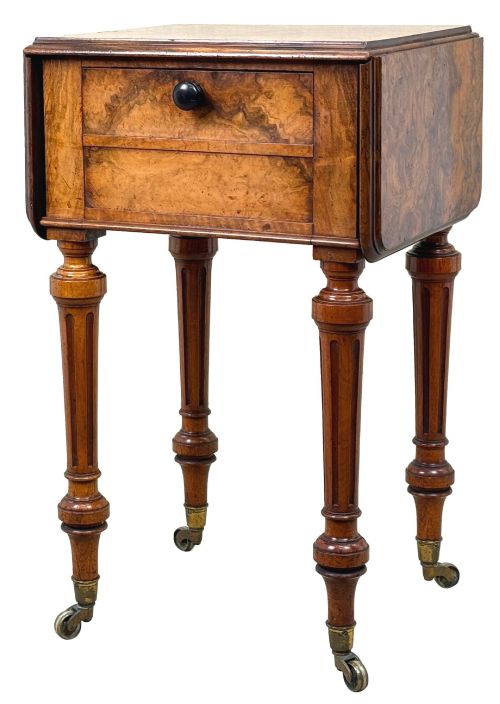
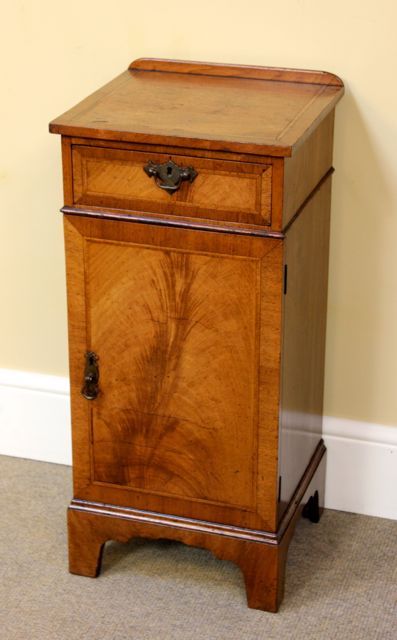
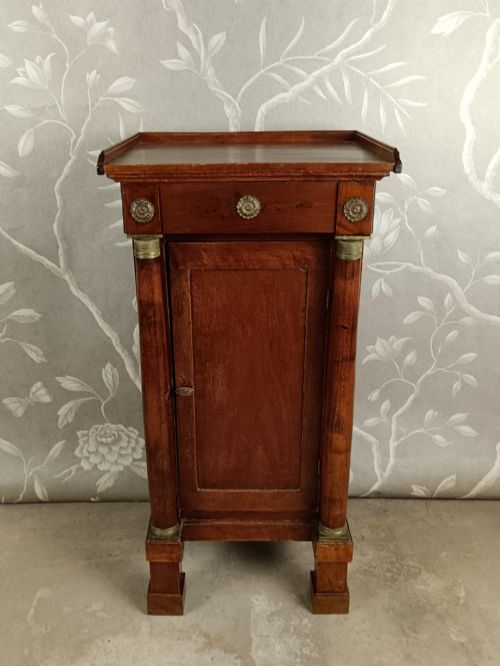
A 19th century walnut nightstand typically takes the form of a bedside cabinet, cupboard, or small table designed to hold chamber lights and personal items. These pieces emerge across the 19th century in various regional interpretations, from British Victorian walnut chests to French provincial and revival designs.
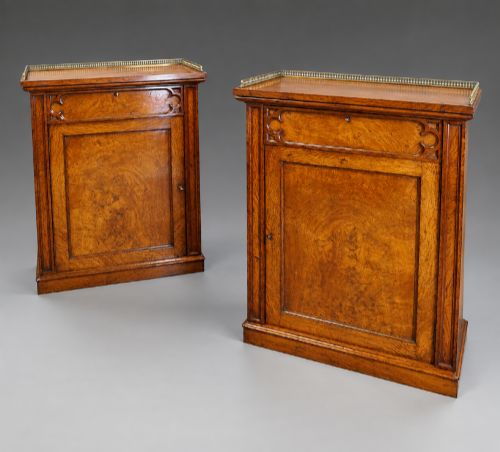
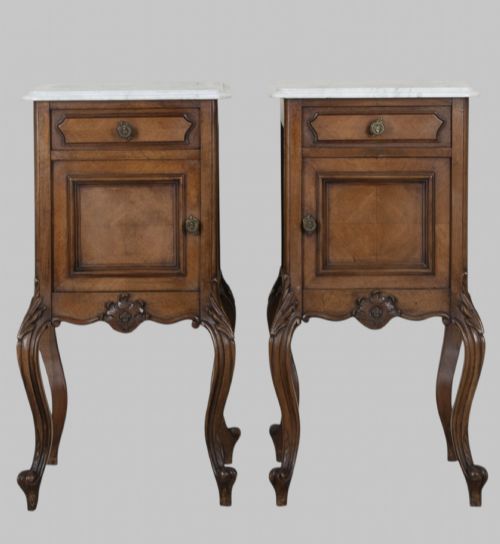
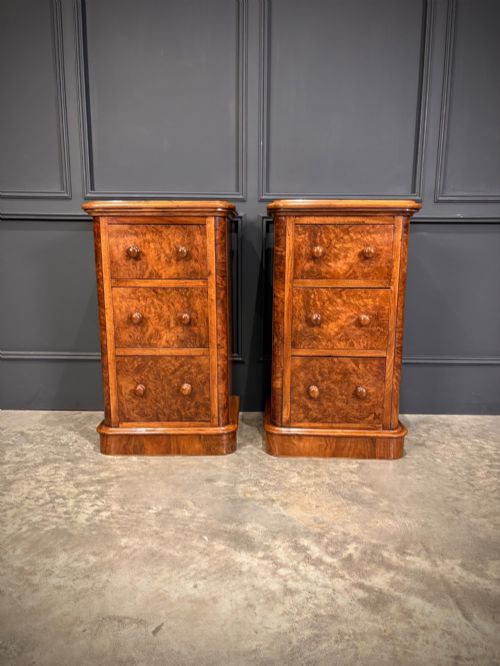
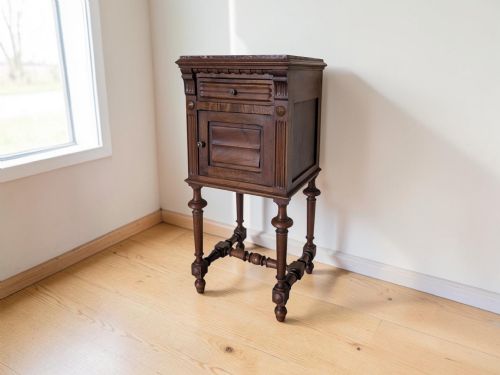
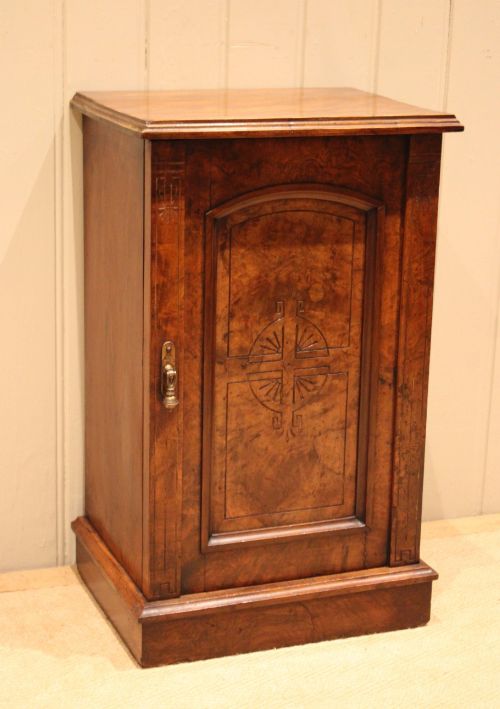
The most common formats on this page are bedside cabinets with single doors or drawers, alongside occasional tables and marble-topped stands. Many survive as pairs, reflecting their original placement flanking a bed.
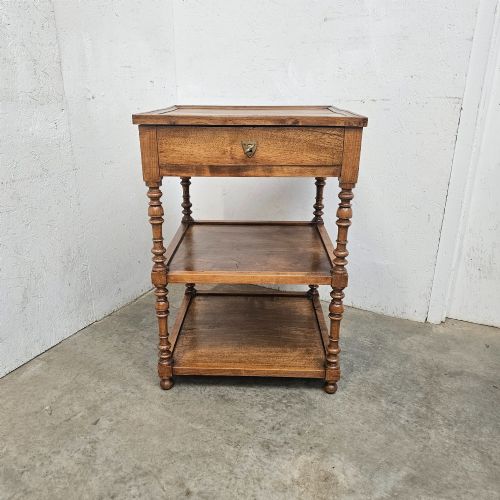
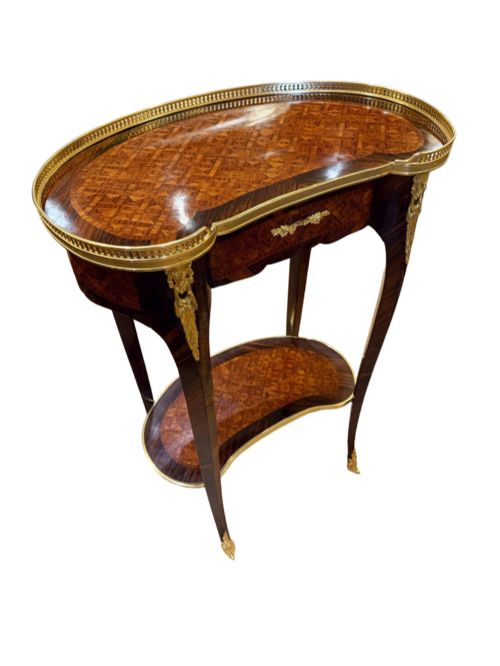
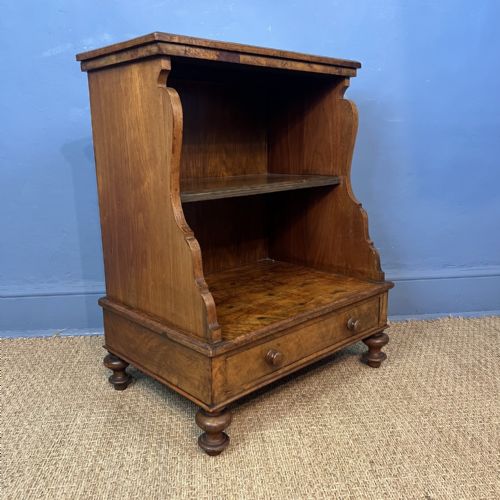
Origins span British workshops and French ateliers, bringing distinct regional character to the selection. Alongside standard bedside cupboards, the category includes tiered etageres and kidney-shaped side tables utilised for similar domestic purposes.
How they were made
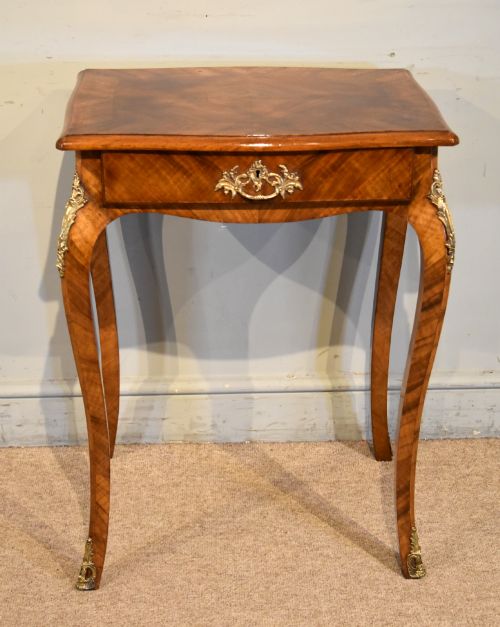
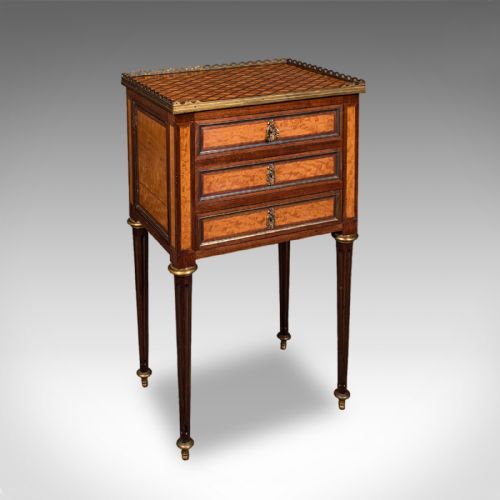
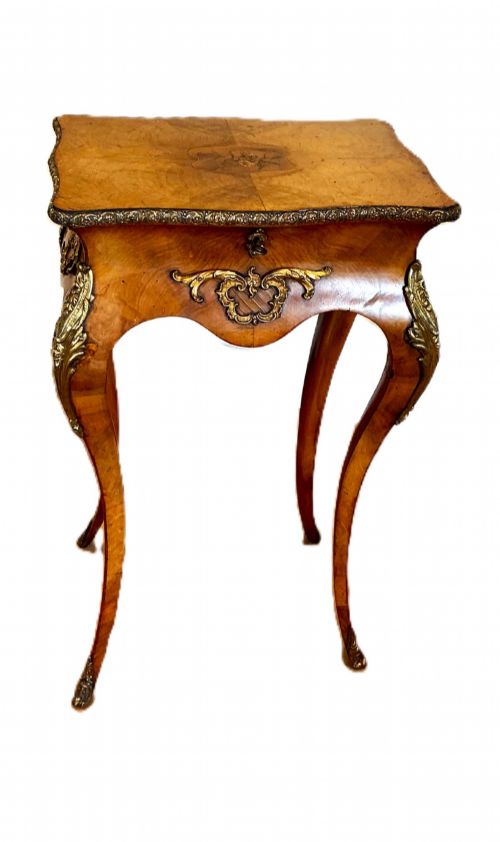
Cabinet makers utilised solid walnut and figured burr walnut veneers applied to secondary timbers like pine, creating rich surface patterns across doors and drawer fronts. Marquetry and parquetry inlay techniques frequently decorate the tops and panels of French and continental examples.
Many cabinets incorporate inset marble slabs to the upper surface, providing a durable and water-resistant top for daily use. Brass hardware, ormolu mounts, and ebonised wood details complete the construction of these decorative items.
19th Century Walnut Nightstand Retail Price Guide 2026
Typical asking prices for 19th century walnut nightstand among the pieces listed under this phrase on Sellingantiques today, from the lower quarter to the upper quarter. They describe what is for sale here now, not the wider market.
Secret drawers tucked beneath marble tops once kept midnight letters safe from prying eyes.
What varies in quality
Quality rests in the selection of the timber grain, particularly the depth and movement found in burr walnut veneers and precise parquetry geometric layouts. Superior examples display thoughtful proportions, crisp carving, and harmonious matching across pairs.
The integrity of secondary materials, such as heavy marble tops and fitted interior shelving, dictates the standing of a piece. Original mounts, intact brass fittings, and sound carcass construction separate standard utility items from finer cabinet work.
The 19th Century Walnut Nightstand Glossary
- Burr walnut
- A figured wood grain derived from walnut tree growths, prized for its swirling, organic patterns on cabinet doors and tabletops.
- Ormolu
- Gilded bronze mounts applied to furniture, frequently seen on French revival pieces of the period.
- Parquetry
- Geometric wood inlay work forming patterned surfaces across tabletops and cabinet fronts.
- Etagere
- An open tiered shelving unit used for display and storage.
- Bombe
- A swelling, outward-curving chest or cabinet profile characteristic of continental styles.
19th Century Walnut Nightstand: Frequently Asked Questions
What is a 19th century walnut nightstand used for?
These cabinets served beside the bed to conceal chamber items and support a bedside light or water jug.
Today they function as compact bedside tables or small accent cupboards in living spaces.
How do I identify French styles?
French pieces often feature marble tops, parquetry inlay, and revival details associated with Louis styles.
British examples tend to rely on straight lines, burr walnut veneers, and simpler panelled doors.
Are pairs common in walnut nightstands?
Makers frequently produced these cabinets in matching pairs to flank larger Victorian and continental beds.
Matching pairs are sought after for symmetrical bedroom layouts.
What maintenance do marble tops need?
Marble surfaces require simple cleaning with a damp cloth and avoidance of acidic spills.
The stone provides a durable resting surface that resists moisture from glasses and lamps.