



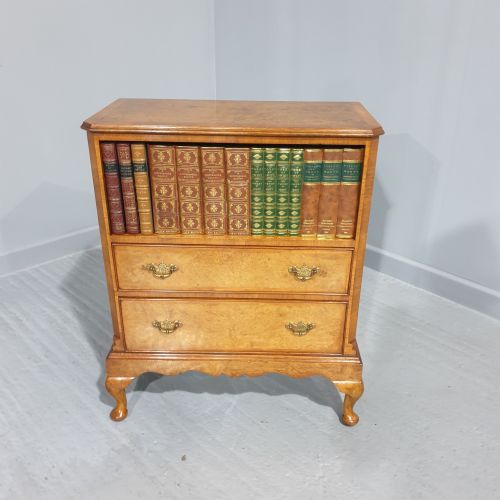
Small Open Bookshelf Drawer
These small open bookshelf drawer pieces combine compact shelving with accessible storage, offering both practicality and period charm for modern rooms.
Small Open Bookshelf Drawer
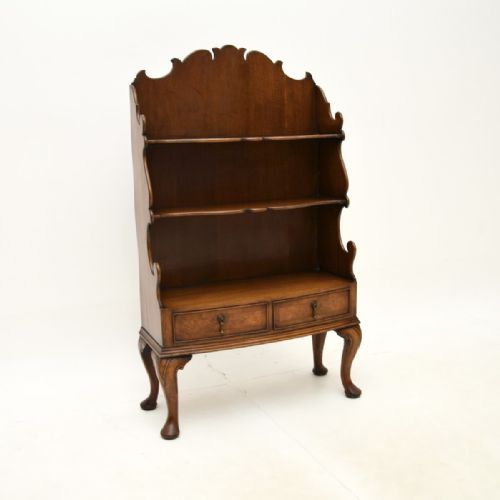
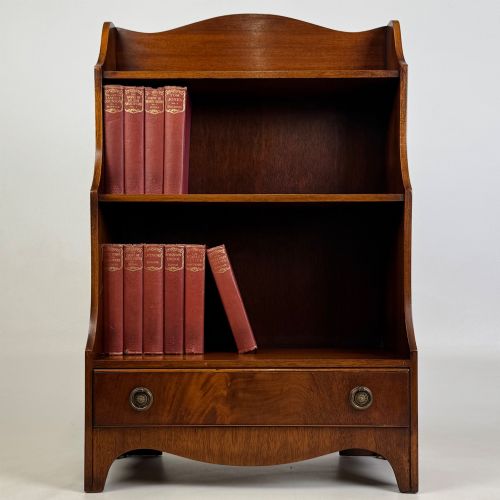
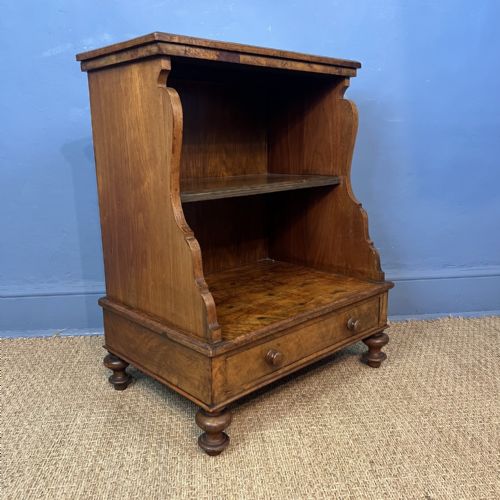
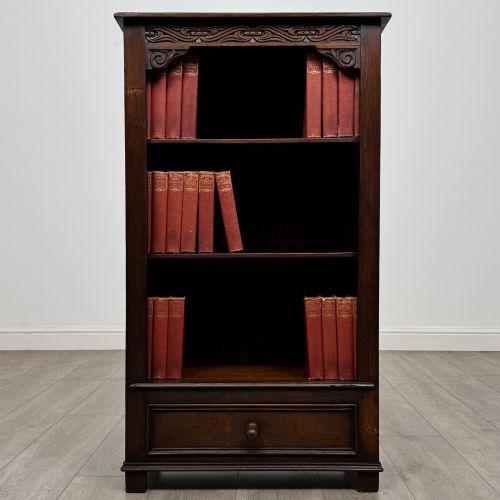
A small open bookshelf drawer piece provides open shelving alongside a compartment for smaller items, bringing both display space and discrete storage to compact rooms. These items appear primarily in Edwardian, Victorian, and early twentieth-century formats, reflecting domestic needs across those decades.
Mahogany and oak are the most common timbers seen among these listings, alongside richer veneers like burr walnut and satinwood. The forms vary from low open bookcases and waterfall tiers to break-fronted designs incorporating fitted drawers.
Revival styles dominate the selection, with Queen Anne, Georgian, and Regency influences appearing frequently alongside simpler Edwardian and Victorian constructions. Buyers looking at this page meet varied timber grains and compact proportions suited to studies and living spaces.
How they were made
Cabinet makers utilised solid timbers such as mahogany and oak for structural integrity, often applying figured walnut, burr walnut, or satinwood veneers to visible surfaces for decorative impact. These timbers were selected for grain pattern and strength, ensuring the small frames could bear the weight of books.
Brass handles and fittings frequently accent the drawer sections, providing functional hardware that complements the darker tones of mahogany and walnut. Wood veneer techniques allowed makers to create striking figured surfaces on drawer fronts and top panels while keeping the core construction stable.
Small Open Bookshelf Drawer Retail Price Guide 2026
Typical asking prices for small open bookshelf drawer among the pieces listed under this phrase on Sellingantiques today, from the lower quarter to the upper quarter. They describe what is for sale here now, not the wider market.
Styles represented across the inventory include Georgian Revival, Queen Anne Revival, and Regency.
What varies in quality
The choice of surface timber largely dictates the tier of the piece, with simple oak and mahogany sitting below richly figured burr walnut and satinwood models. Finer examples display carefully matched veneer grains across the drawer fronts and open shelves.
Gillows
The Small Open Bookshelf Drawer Glossary
- Waterfall bookcase
- A set of open shelves that successively recede in depth from bottom to top, creating a tiered profile resembling a cascade. This form became particularly popular during the nineteenth and early twentieth centuries for display purposes.
- Burr walnut
- A veneer taken from the knotted growth of a walnut tree, prized for its swirling, highly figured grain patterns. Makers utilised this decorative wood on prominent surfaces like drawer fronts.
- Break-front
- A cabinet facade where the central section projects forward from the flanking sides, adding architectural depth and visual weight. This arrangement often frames central drawers within a low bookcase.
- Satinwood
- A durable, yellowish timber with a lustrous sheen, frequently employed in high-end revival furniture for banding and veneering. It offers a bright contrast to darker woods like mahogany.
Small Open Bookshelf Drawer: Frequently Asked Questions
What is a small open bookshelf drawer?
A small open bookshelf drawer is a compact furnishing that combines accessible book storage with one or more fitted drawers. These pieces provide surface display alongside enclosed space for papers or small objects.
They appear in various revival styles and timbers such as mahogany, oak, and walnut, dating primarily from the Victorian and Edwardian eras. Their modest proportions make them suitable for placing beside a desk or chair.
How were these bookcases used?
These bookcases served domestic roles in studies, parlours, and bedrooms where floor space was at a premium. The open shelves held frequently read volumes, while the drawer kept writing materials or personal items close at hand.
Their dual function made them versatile additions to nineteenth and early twentieth-century homes. Today, they continue to serve similar roles in compact contemporary rooms.
How do I identify Edwardian pieces?
Edwardian items typically date from the period spanning the early twentieth century and often show lighter framing than their Victorian predecessors. They frequently utilise mahogany or oak, sometimes featuring subtle inlay work.
Comparing the construction details and timber choices against known period characteristics helps confirm the date. Revival styles of the era often reference Georgian or Regency design motifs.
How do I care for walnut veneer?
Walnut veneer requires protection from direct sunlight and excessive moisture to prevent fading and lifting of the wood. Regular dusting with a soft, dry cloth helps maintain the polished surface.
Applying a suitable wax occasionally nourishes the timber and preserves the figured grain. Avoiding placement near heat sources prevents the underlying wood from drying out.