



19th Century Travel Clock
A 19th century travel clock delivers portable precision housed in brass and glass, built for the journeys of Victorian travellers.
19th Century Travel Clock
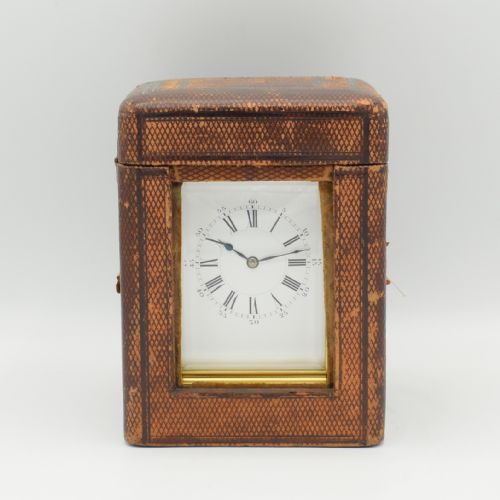
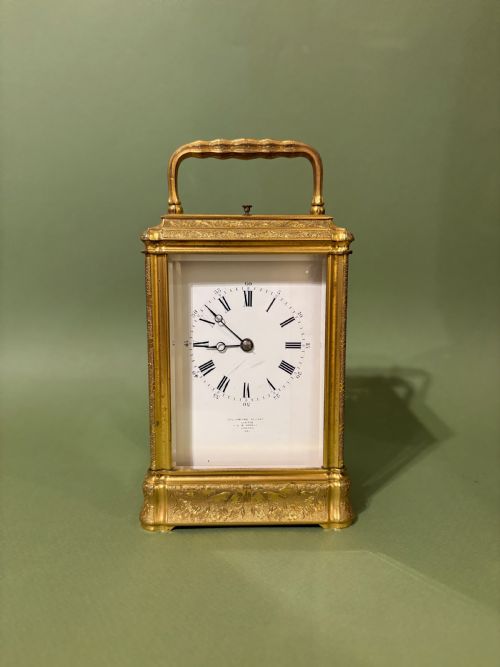
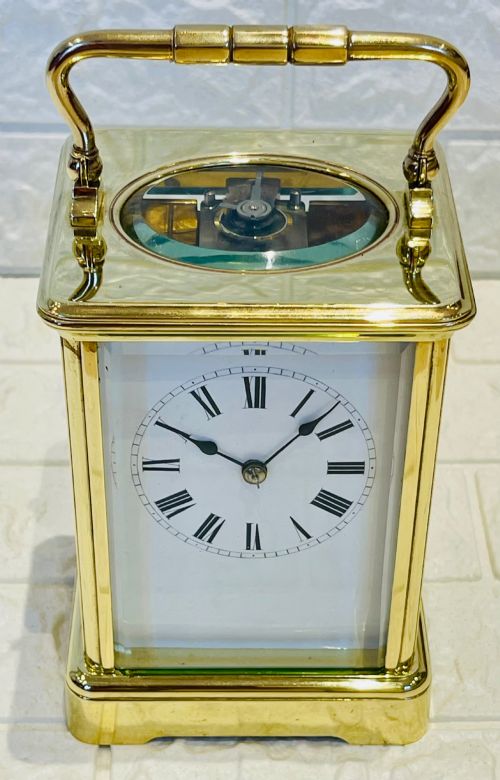
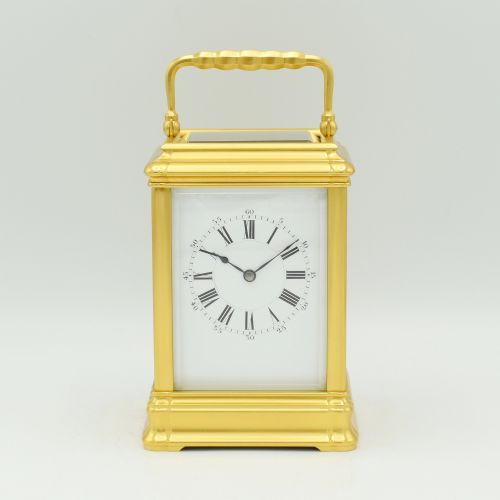
A 19th century travel clock is primarily represented by carriage clocks originating from French and English makers during the Victorian era and the decades spanning 1850 to 1900. These pieces take the form of portable clocks designed to be packed into travel cases for journeys.
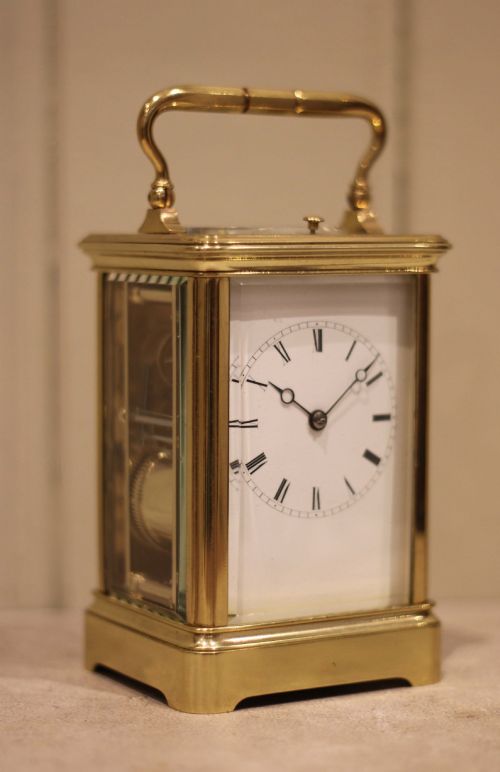
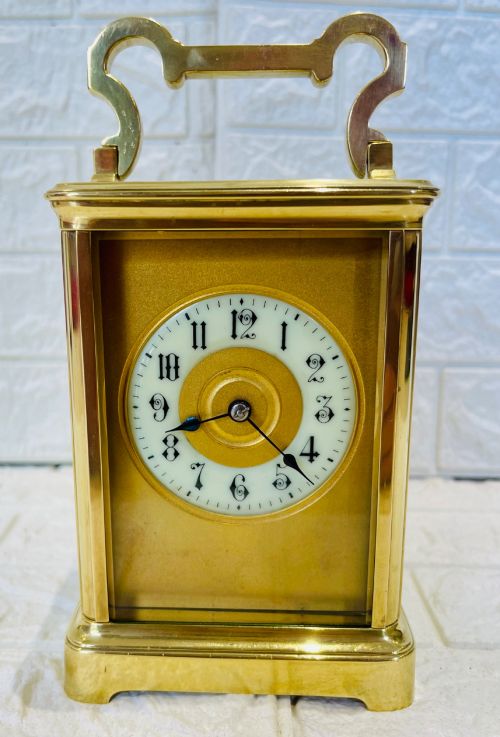
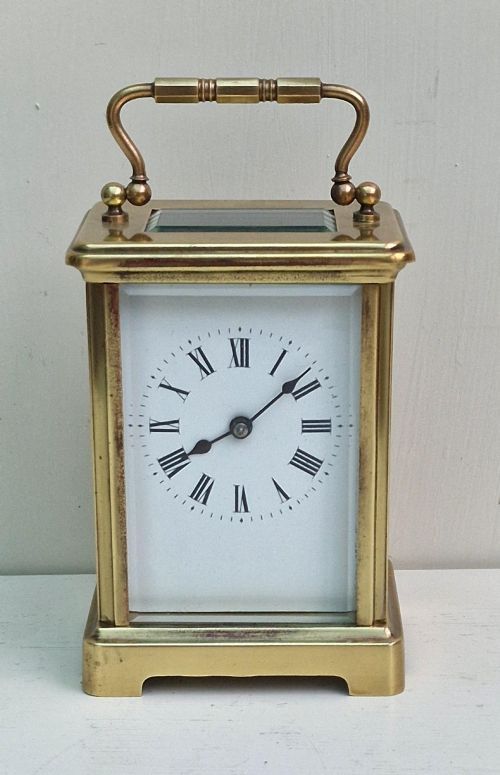
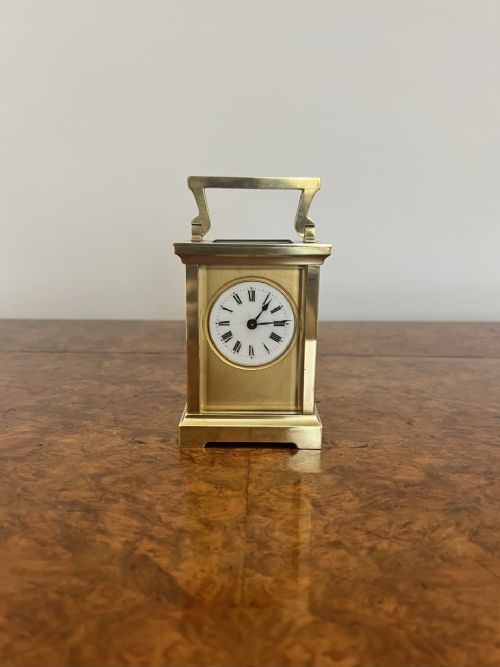
The most common version met on this page is the brass cased French carriage clock, often featuring bevelled glass panels that reveal the internal movement. Originating from periods labelled as 19th century, Victorian, and specific decades like 1880 and 1890, these objects combine utility with decorative metalwork.
Makers from London and Paris produced these clocks in various sizes, ranging from standard proportions to miniature formats. Styles span French 19th Century, Second Empire, and late Victorian designs.
Materials and construction
The construction relies heavily on brass and gilt brass frames fitted with glass panels, enclosing mechanical movements driven by steel components. Enamel dials and painted enamel panels frequently decorate the face and sides of the clock.
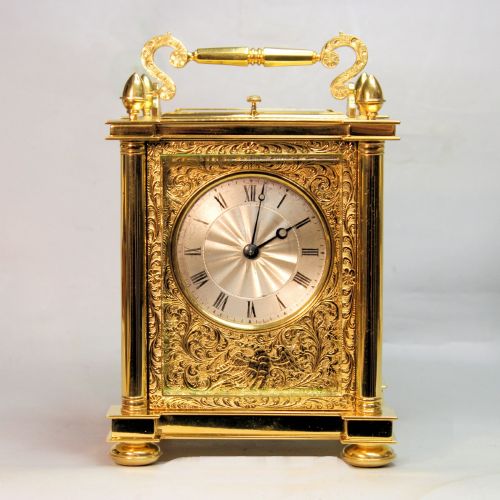
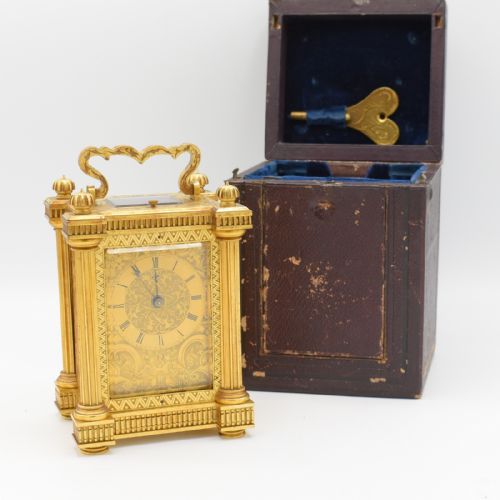
Cases are formed from brass, sometimes enhanced with bronze panels, engraved surface detailing, or leather travel cases designed to protect the clock during transit. Fusee movements appear in English pieces, whilst French workshops produced eight-day striking and repeating mechanisms.
19th Century Travel Clock Retail Price Guide 2026
Typical asking prices for 19th century travel clock among the pieces listed under this phrase on Sellingantiques today, from the lower quarter to the upper quarter. They describe what is for sale here now, not the wider market.
Materials recorded across the inventory include brass, gilt brass, glass, enamel, leather, steel, silvered metal, and bronze.
Distinctions in standard
Quality separates through the complexity of the internal movement, distinguishing simple timepieces from striking and repeating mechanisms that sound the hours and quarters. The depth and execution of hand engraving upon the brass case also mark the distinction between standard production and finer workshop output.
The presence of original fitted leather travel cases and intact enamel dial paintings elevates the completeness of a piece. Furthermore, the precision of the gilding and the weight of the cast brass frame indicate the standing of the maker.
Henri Jacot·Cousens And Whiteside·Howell And James·Drocourt Paris·T Martin And Co·Pickford Of London·Margaine Of France·Henry Jacob·Paul Garnier
The 19th Century Travel Clock Glossary
- Carriage clock
- A portable spring-driven timepiece designed for travel during the 19th century. These clocks typically feature a rectangular brass case with glass panels.
- Repeating mechanism
- A complication that sounds the last hour or quarters when a button or pendant is pressed. This function allowed travellers to check the time in the dark.
- Fusee
- A conical pulley used in English clocks to maintain equal tension on the movement as the mainspring unwinds. It represents a traditional method of improving timekeeping accuracy.
- Gorge case
- A specific stepped rectangular brass case style common in French carriage clocks. The top and bottom mouldings feature distinct concave curves.
- Enamel panel
- A decorated surface fused by heat onto metal, depicting scenes or patterns on the clock body. These panels add colour and artistic detail to the brass framework.
19th Century Travel Clock: Frequently Asked Questions
What is a 19th century travel clock?
A 19th century travel clock is a portable mechanical timepiece enclosed in a brass and glass case, designed to be carried during journeys.
These objects were produced primarily in France and England during the Victorian period, utilising spring-driven movements to maintain time away from home.
How did people use travel clocks?
Travellers placed these clocks in carriages, hotels, and temporary residences to keep track of time whilst away from static mantel clocks.
Owners utilised repeating functions to sound the hour in dark rooms without needing to light a candle.
How do I live with a carriage clock?
Display these clocks on stable surfaces where their glass panels and engraved brass cases can catch the light. Winding them regularly keeps the mechanical movement operating correctly.
Keep them away from direct sunlight and extreme temperature changes to protect the internal oils and exterior leather cases.
How do I tell periods apart?
Periods are identified by examining the style of the brass case, the complexity of the movement, and maker signatures. Earlier pieces from the mid 19th century often feature English fusee movements.
Late 19th century examples frequently display French repeating mechanisms, engraved gilt brass frames, and detailed enamel dial work.