




19th Century Tracery
These architectural panels and furnishings bearing 19th century tracery bring structural Gothic geometry and medieval stone forms directly into domestic rooms.
19th Century Tracery
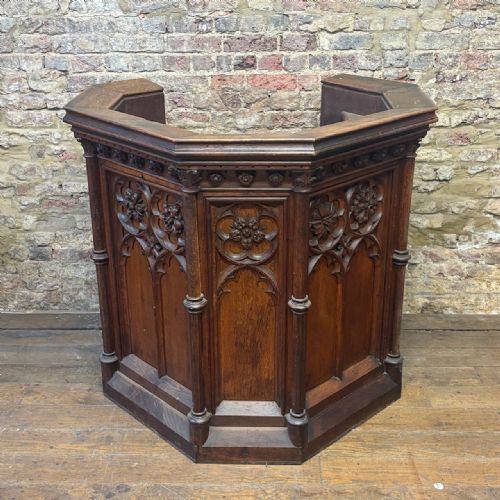
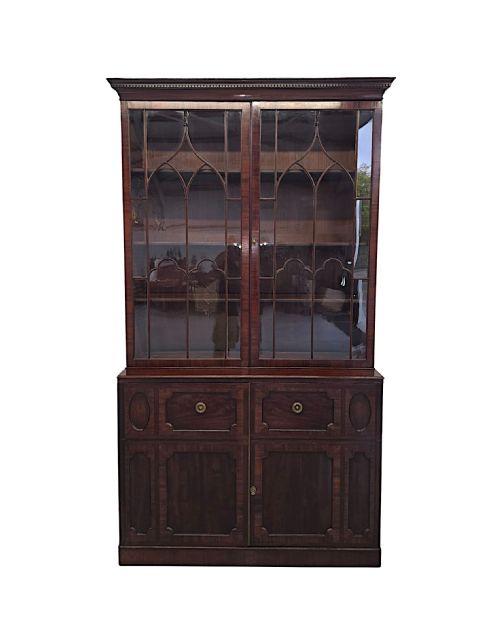
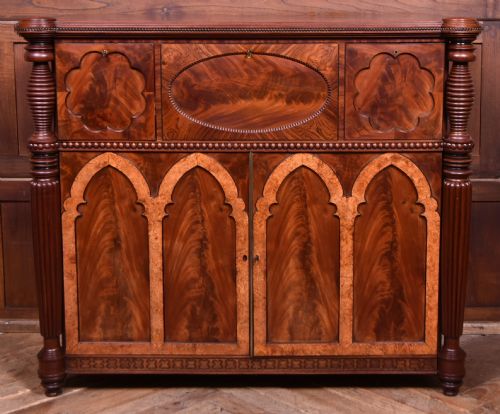
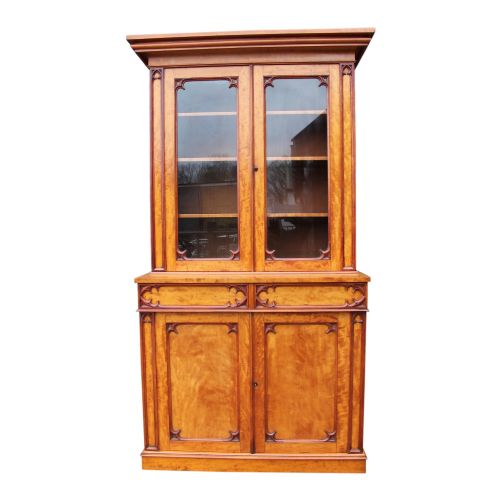
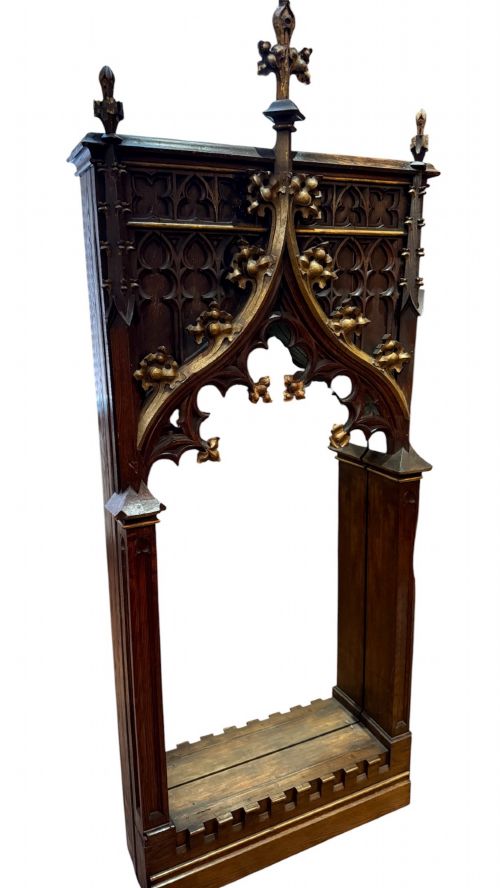
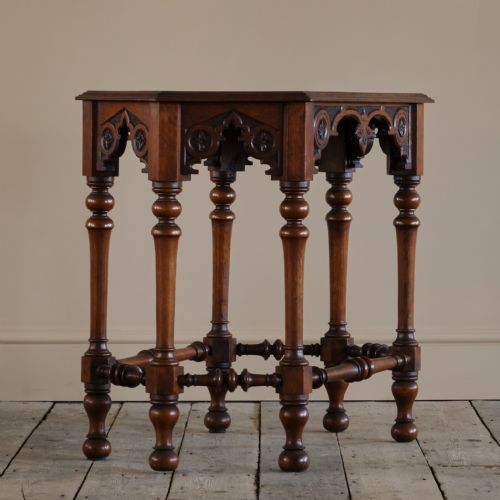
When you search for 19th century tracery, you encounter architectural woodwork, carved panels, and substantial furniture adapted from ecclesiastical stone patterns. These items range from large church panels and wall plaques to bookcases, sideboards, and seating built during the Victorian and Regency periods.
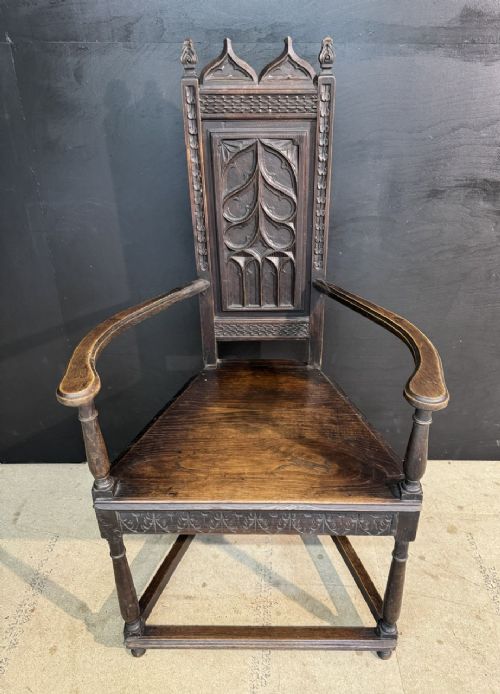
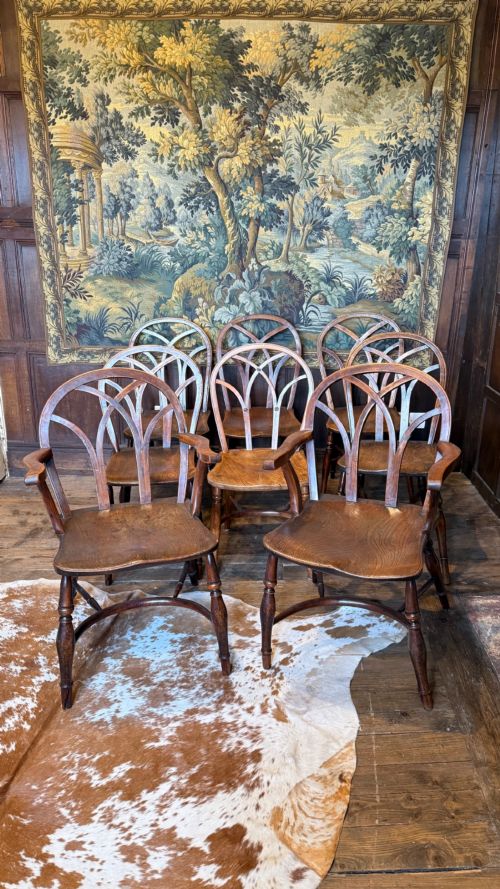
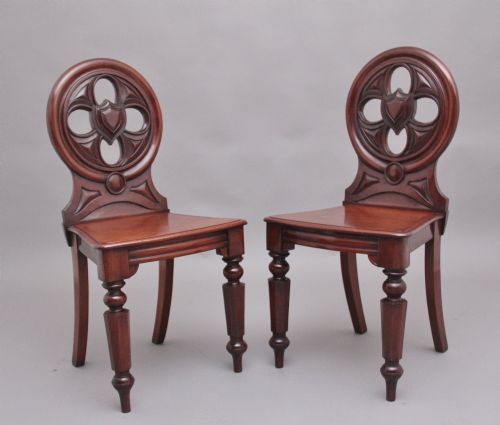
The most common forms you meet on this page are carved pine and oak architectural panels alongside library bookcases, hall chairs, and seating produced within the Gothic Revival style. Cabinetry and seating dominate the selection, often incorporating pointed arches and pierced stonework motifs translated into timber.
Makers and workshops across Britain and Europe drew inspiration from medieval church architecture, producing both large furnishings for country houses and smaller decorative panels. The selection bridges secular domestic utility and ecclesiastical design, reflecting the nineteenth-century enthusiasm for Gothic ornament.
How they were made
Woodworkers constructed these pieces using solid oak, mahogany, pine, and walnut, employing traditional mortise and tenon joinery to support heavy framework. Carvers shaped the intricate geometric windows and cusped arches by hand directly into the timber, utilising chisels and gouges to replicate stone tracery.
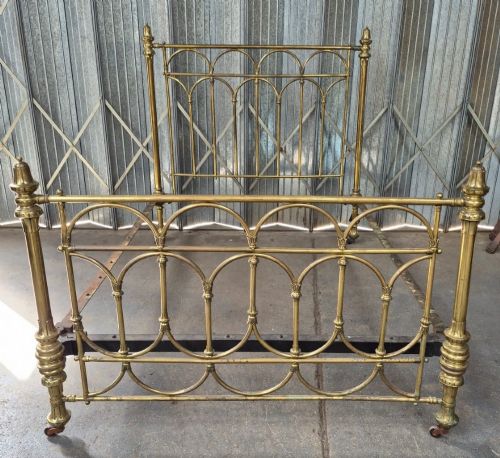
Secondary materials such as brass, iron, and glass appear in hardware, bedsteads, and glazed bookcase doors, complementing the dark woods. Finishing techniques included polishing, wax finishing, and occasionally scrumbled paint to accentuate the grain and depth of the carved motifs.
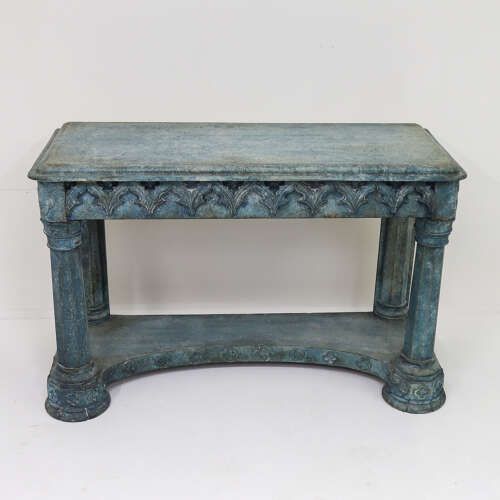
Object forms vary from church pulpits and library steps to console tables, bedsides, and brass bedsteads.
What varies in quality
The standard of carving dictates the upper tier of these pieces, separating sharp, deeply undercut architectural detailing from shallow, mechanical work. Depth and precision in the cusps and foils reveal the hand of a skilled artisan rather than a factory output.
Selection of timber also defines the grade, with dense, figured oak, satinwood, and well-seasoned mahogany commanding greater respect than utilitarian pine. Original structural integrity, untouched patination, and the retention of period hardware further elevate superior examples.
Gillows·RW Winfield
The 19th Century Tracery Glossary
- Tracery
- The stonework framework supporting glass in a Gothic window, adapted by nineteenth-century cabinetmakers into wooden panels and furniture decoration. It defines the characteristic arched and geometric patterns seen across these listings.
- Gothic Revival
- An architectural and decorative movement spanning the nineteenth century that revived medieval forms, pointed arches, and ecclesiastical motifs. This style informs the majority of furniture and panels found in this category.
- Wainscot
- Wooden paneling used to line interior walls, often incorporating carved blind tracery or linenfold patterns. In seating, it refers to sturdy armchairs constructed with solid wooden back panels.
- Blind tracery
- Carved ornamental work applied flat against a solid wooden surface rather than pierced through as an open window. It provides decorative texture on chests, cabinets, and sideboard doors without admitting light.
- Creedence cabinet
- A medieval-style side table or small cupboard historically used for holding sacramental bread and wine. Nineteenth-century revival examples adapted this form for domestic halls and dining rooms.
19th Century Tracery: Frequently Asked Questions
What is 19th century tracery?
Tracery refers to the intersecting stone ribs within Gothic windows that cabinetmakers translated into wood. In nineteenth-century pieces, you find this geometric ornamentation carved onto panels, bookcase doors, and furniture backs.
Items range from architectural church fragments to domestic library furniture and seating created during the Gothic Revival movement.
Where were these pieces used?
Original pieces served in churches, Victorian country houses, and urban Gothic revival interiors. Architects and designers installed architectural panels on walls and fitted bookcases into libraries.
Today, collectors place these items in studies, hallways, and living spaces to introduce architectural depth and historical character.
How do I date a piece?
Dating relies on timber species, construction methods, and stylistic cues associated with Victorian, Regency, or Georgian periods. Oak and mahogany items often bear characteristic joinery and hardware specific to the nineteenth century.
Makers' stamps, attribution to known firms like Gillows, and regional building traits further narrow down the exact decade of manufacture.
Are architectural panels structural?
Many pine and oak panels originated as church furnishings, screens, or wall plaques rather than load-bearing architectural elements. They were built to ornament sacred spaces or country house interiors.
In modern homes, they function as decorative wall art, headboards, or focal points within a room.