


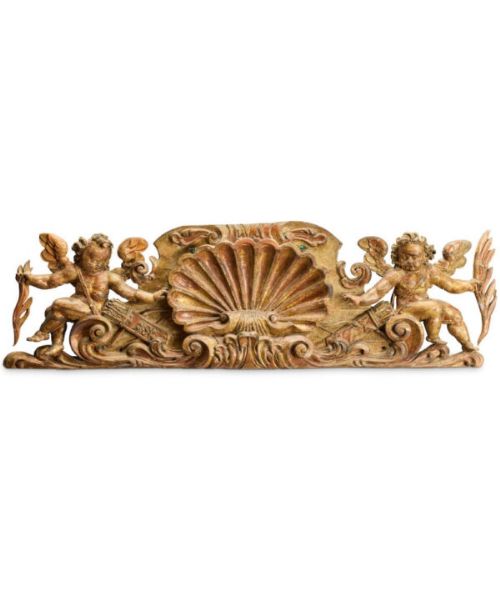


Carved Timber Pediment
These carved timber pediment examples are architectural elements that bring historic depth and classical proportion to an interior space.
Carved Timber Pediment
When you search for a carved timber pediment, you are looking at architectural fragments and overdoor panels salvaged from historic buildings and furniture. These decorative elements range from eighteenth-century parcel gilt examples to nineteenth-century pine carvings.
The versions you are most likely to meet on this page span the seventeenth, eighteenth, and nineteenth centuries, taking the form of architectural panels, overdoor pediments, and carved wood fragments in walnut, oak, and pine.
How they were made
These architectural pieces rely on traditional woodworking techniques applied to dense timbers like oak, walnut, and pine. Craftsmen shaped the wood using hand chisels and gouges to achieve deep relief and intricate scrollwork.
Surface finish is integral to the construction, with some examples employing gesso and gold leaf or parcel gilt highlights to accentuate the carved details.
Carved Timber Pediment Retail Price Guide 2026
Typical asking prices for carved timber pediment among the pieces listed under this phrase on Sellingantiques today, from the lower quarter to the upper quarter. They describe what is for sale here now, not the wider market.
The listings span from the seventeenth century through to the Victorian era, utilising materials including walnut, oak, pine, gesso, and gold leaf.
What varies in quality
Quality in a carved timber pediment rests upon the crispness of the chisel work and the depth of the relief carving. Pieces attributed to notable carvers or specific master traditions display a superior fluidity in foliage and scroll motifs.
The choice and preservation of material also dictate standing, with dense hardwoods like walnut and oak retaining sharper definition over centuries compared to softer woods.
Grinling Gibbons·Edward Pearce
The Carved Timber Pediment Glossary
- Pediment
- A triangular or segmental architectural crown above a door, window, or piece of furniture. It serves as a focal point for decorative carving.
- Parcel Gilt
- A surface treatment where only specific raised portions of the timber are gilded with gold leaf, contrasting with the exposed wood beneath.
- Gesso
- A plaster-like mixture applied to wood as a base for gilding or painting. It provides a smooth surface that can be modelled before applying gold leaf.
- Architectural Salvage
- Building components and decorative elements rescued from structures slated for alteration or demolition. These pieces retain their original historic character.
Carved Timber Pediment: Frequently Asked Questions
What is a carved timber pediment used for?
These pieces were originally built to crown doorways, overmantels, or large pieces of furniture like cabinets and bookcases. They established a grand architectural focal point within a room.
Today, interior designers mount them above internal doorways or display them directly on walls as independent sculptural art.
How do I hang a heavy wooden pediment?
Due to the substantial weight of historic hardwoods like oak and walnut, secure wall mounting requires fixing directly into wall studs or using heavy-duty masonry anchors.
Most architectural fragments require custom metal brackets fitted discreetly beneath the lower moulding to support the load safely.
How can I tell the age of the timber?
Age is determined by examining the tool marks left by hand chisels, the oxidation of the wood beneath the finish, and the construction joints.
Earlier pieces from the seventeenth and eighteenth centuries often display irregular hand-sawn grain patterns and patination accrued over hundreds of years.
Should I restore the gilded finish?
Original surfaces, including aged gilding and historic gesso, carry the patina of age and are generally preserved rather than refinished.
Intervention should be limited to gentle cleaning by a specialist to remove surface dust without disturbing the historic layers underneath.