


19th Century Tea Service
A 19th century tea service brings the elegance of Georgian, Regency and Victorian gatherings straight to the modern table.
19th Century Tea Service
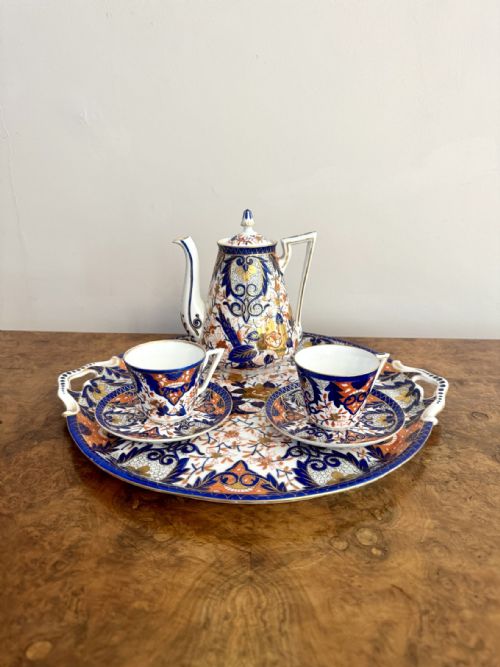
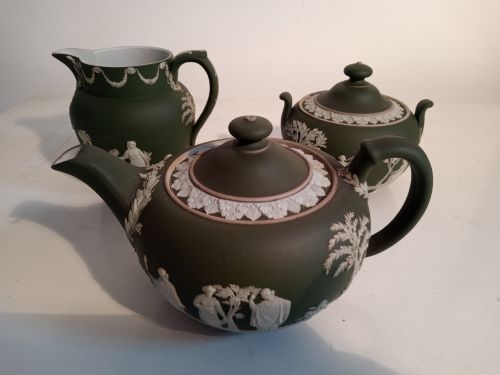
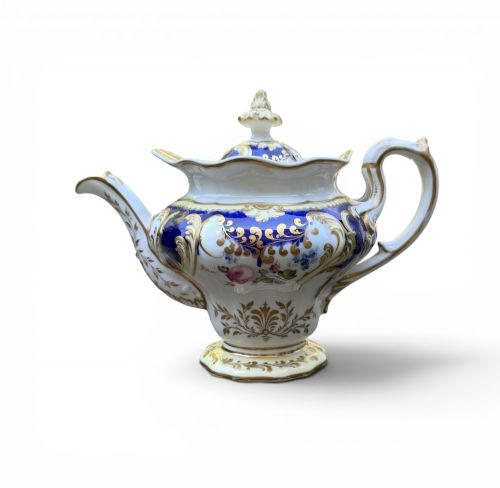
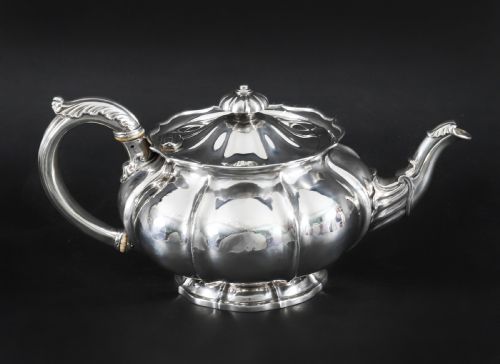
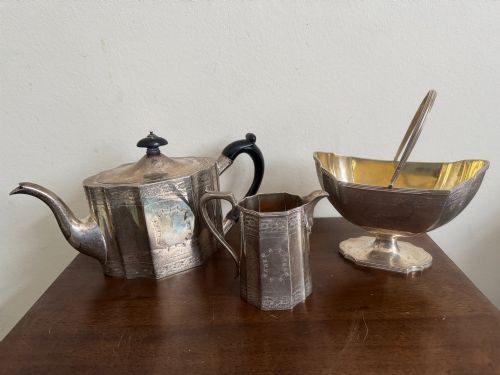
When you search for a 19th century tea service, you encounter a varied selection of antique dining and drawing room vessels. These collections range from complete four-piece silver arrangements to delicate porcelain teapots, coffee pots, sugar bowls and cream jugs.
The versions most likely to meet you on this page span the Georgian, Regency and Victorian eras. You will find items produced by notable English potteries alongside continental porcelain and substantial sterling silver sets.
Beyond full sets, the selection includes smaller breakfast sets, bachelor teasets and individual pieces such as spirit kettles and sucriers. Each item reflects the changing domestic rituals of nineteenth-century households.
Materials and construction
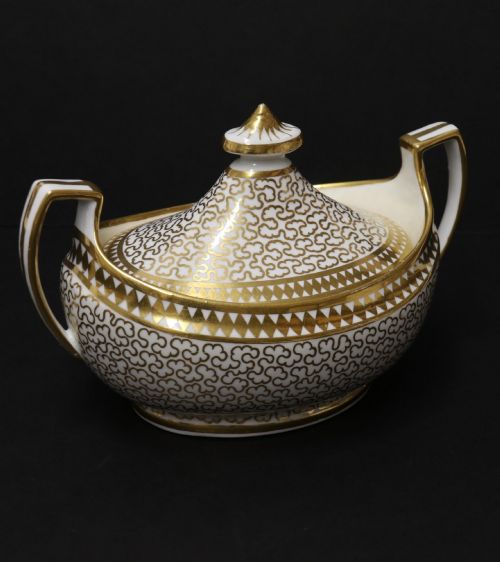
Maker's workshops utilised fine porcelain, earthenware and ironstone, shaping clay into robust teapots, jugs and cups. Many porcelain pieces display intricate details through hand-gilding, enamel decoration and colourful patterns such as Flow blue or Victorian Imari.
Silver and plated items relied on skilled metalsmiths working with sterling silver and Old Sheffield Plate. These metal services often feature chased or engraved surfaces, sometimes paired with wooden handles or bone accents.
Form variations include child-sized toy dinner services and miniature tea sets alongside full-scale adult vessels.
Factors of quality
The distinction between standard items and exceptional pieces rests upon the reputation of the maker and the precision of the craftsmanship. Works originating from celebrated makers or documented potteries hold greater distinction than unmarked wares.
Surface decoration and material preservation dictate the upper tier of the range. Intricate hand-enamelling, crisp gilding and complete, matching sets command more attention than heavily worn or mismatched components.
Paul Storr·Chamberlains Worcester·Flight Barr And Barr·Joseph Craddock·Benjamin Smith·Moser
The 19th Century Tea Service Glossary
- Sucrier
- A sugar bowl or pot designed to hold sugar during tea service. These often include matching covers.
- Spirit Kettle
- A water kettle mounted on a stand with a small spirit burner beneath to keep water hot at the table.
- Flow blue
- A style of transfer printing developed in nineteenth-century Staffordshire where cobalt blue glaze bled during firing.
- Ironstone
- A type of durable earthenware patented in the nineteenth century to imitate Chinese porcelain.
- Old Sheffield Plate
- An early composite material made by fusing a thin sheet of silver to a thicker copper base.
19th Century Tea Service: Frequently Asked Questions
What pieces comprise a standard service?
A standard service typically includes a teapot, sugar bowl and cream jug, sometimes accompanied by a matching coffee pot. Larger sets expand to include multiple cups, saucers and slop basins.
Complete matched sets remain less common than assembled groupings gathered over time.
How do I care for antique porcelain?
Wash porcelain pieces gently by hand using warm water and mild soap. Avoid dishwashers and harsh scrubbers that can damage delicate gold leaf and enamel.
Store pieces securely and keep silver-plated or metal elements polished with appropriate, non-abrasive cleaners.
How can I identify the date?
Examine the base of ceramic pieces for maker's marks, registry stamps or impressed cyphers. Silver items usually carry hallmarks indicating the assay office, city and year of production.
Stylistic cues such as Regency shapes or Aesthetic Movement motifs also point toward specific decades.
Were these sets used daily?
Nineteenth-century households utilised these services for formal afternoon tea, morning breakfast routines and evening gatherings. Wealthier families reserved silver and fine porcelain for guests.
Smaller bachelor sets catered to single occupants or intimate settings rather than large drawing-room parties.