

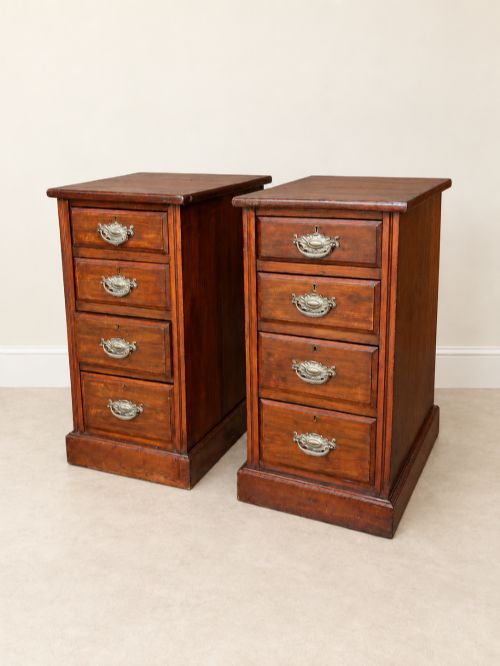
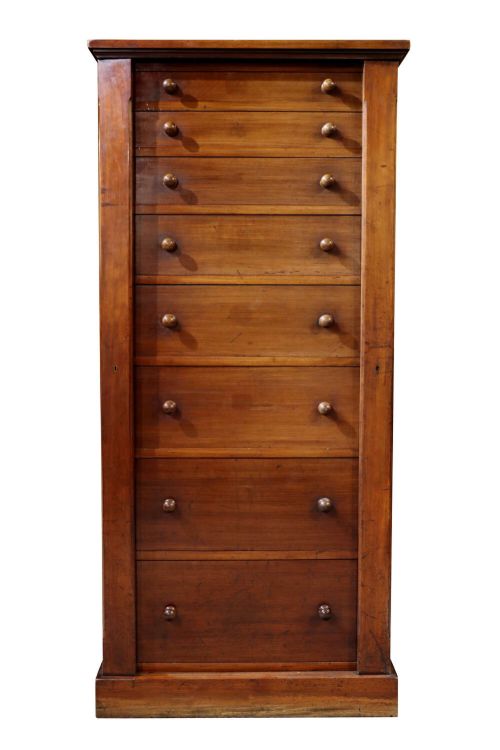
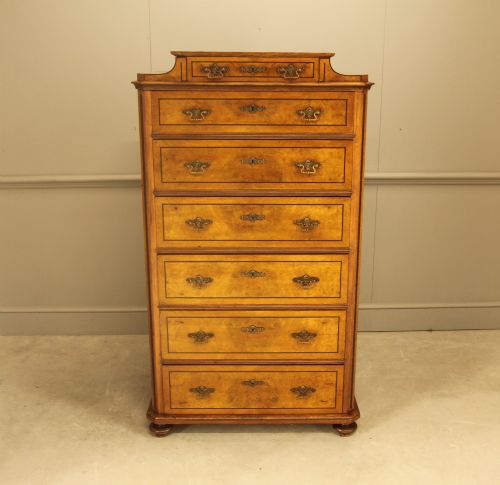
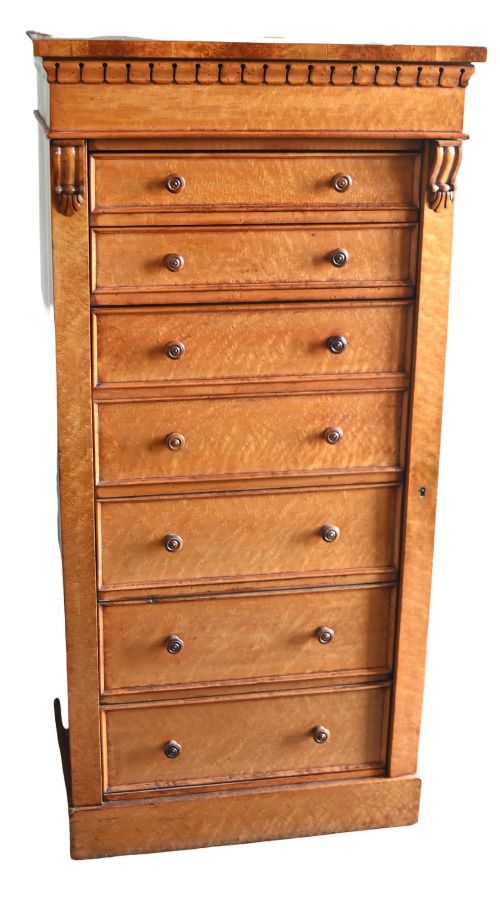
19th Century Tall Chest
A 19th century tall chest provides vertical storage through stacked drawers, combining period craftsmanship with practical proportions for modern rooms.
19th Century Tall Chest
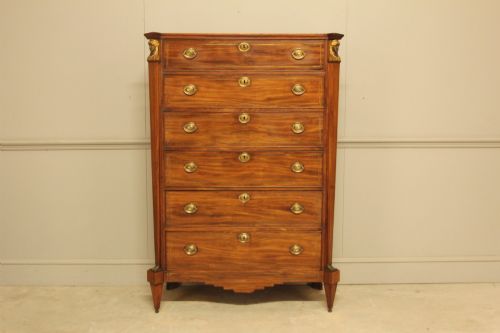
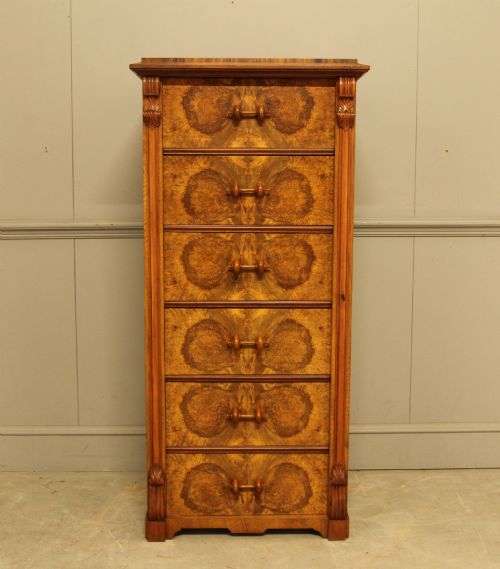
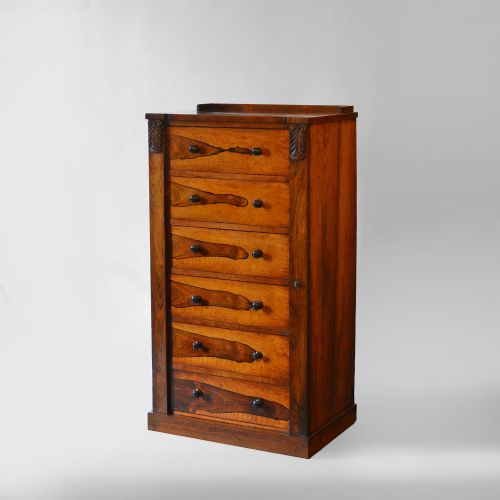
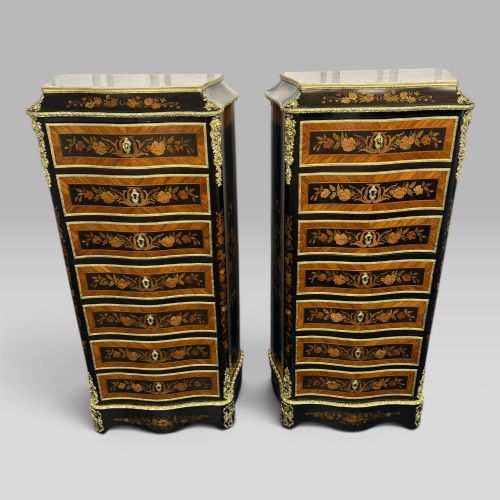
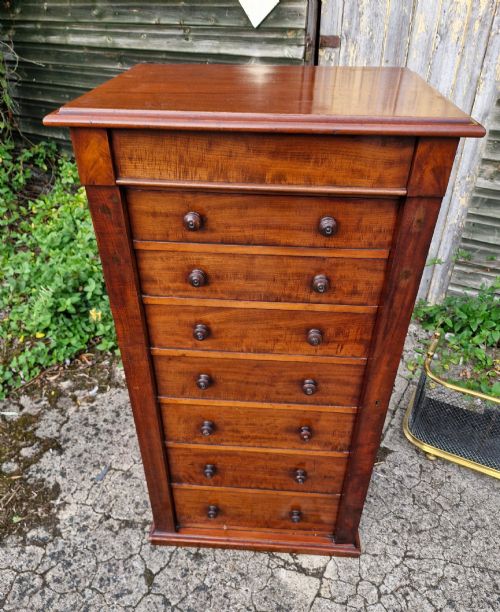
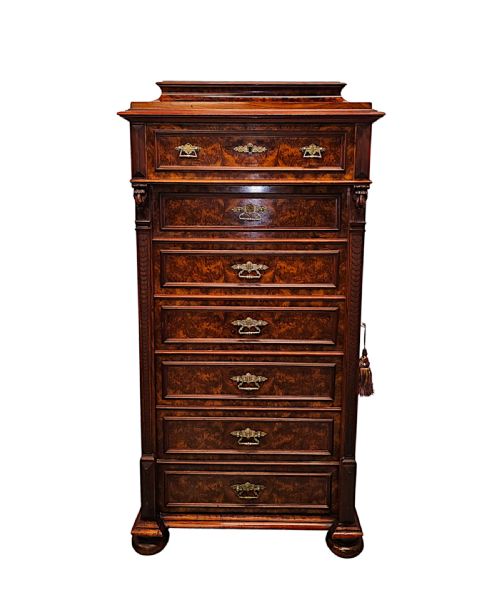
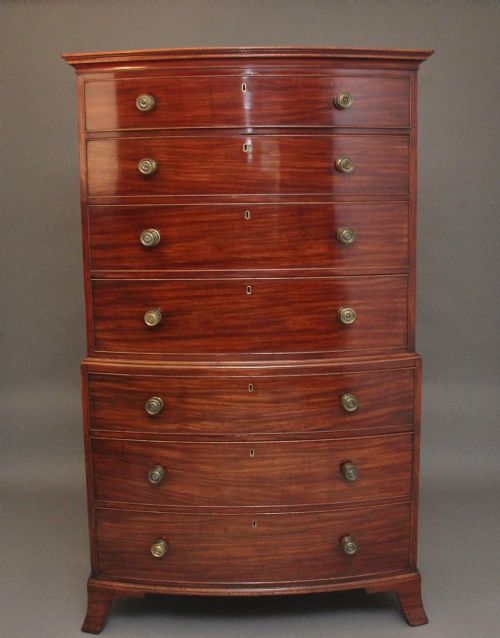
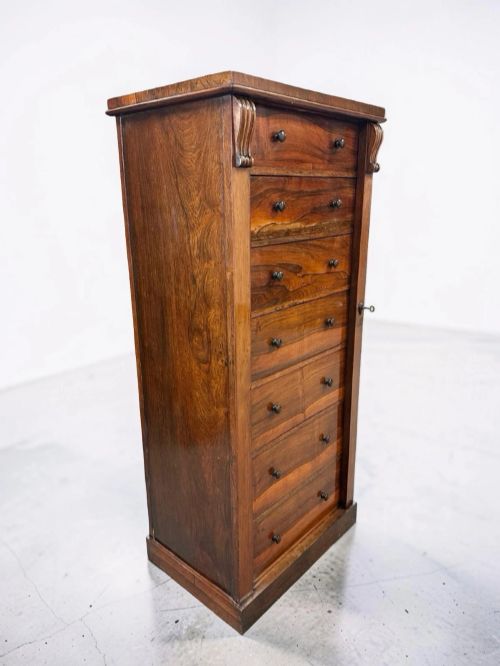
A 19th century tall chest encompasses several vertical forms designed to maximise storage without claiming excessive floor space. Buyers searching this phrase commonly encounter mahogany Wellington chests, walnut tallboys, and French semainiers.
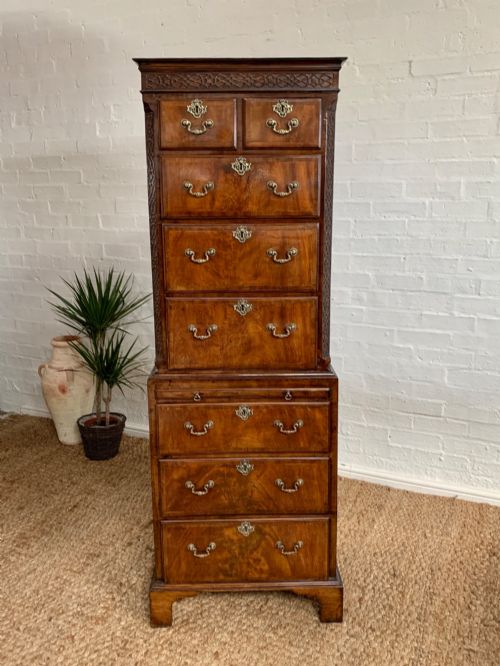
The pieces span various regional interpretations, including English Regency examples, Victorian carcases, and continental Biedermeier designs. These tall formats range from traditional chests on chests to narrow pedestal units with multiple graduated drawers.
How They Were Made
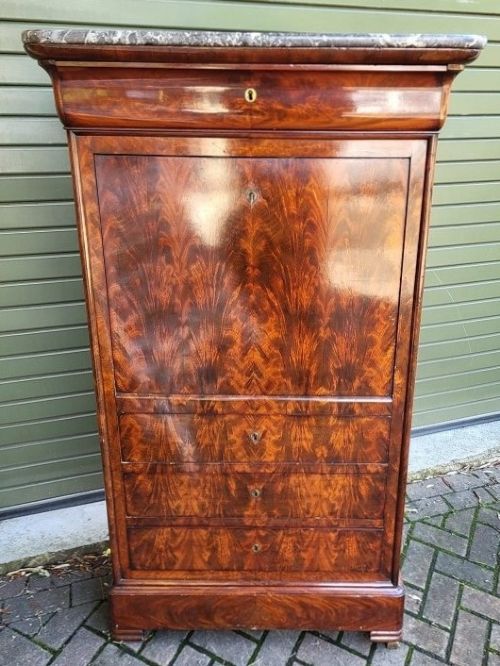
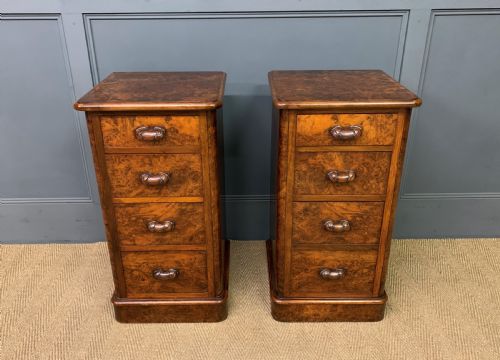
Cabinetmakers utilised dense timbers such as mahogany, walnut, and oak for structural carcases, frequently applying figured veneers like burr walnut or flame mahogany to primary surfaces. Drawer construction typically relied on hand-cut dovetails and solid secondary woods.
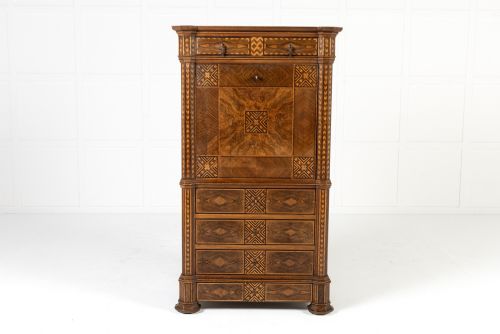
Decorative detailing involved brass hardware, marquetry inlay, or gilt bronze mounts, particularly on French and Dutch pieces. Surface finishes were achieved through traditional polishing methods that enhanced the natural grain patterns of the wood.
19th Century Tall Chest Retail Price Guide 2026
Typical asking prices for 19th century tall chest among the pieces listed under this phrase on Sellingantiques today, from the lower quarter to the upper quarter. They describe what is for sale here now, not the wider market.
Listings feature woods such as mahogany, walnut, oak, rosewood, and satinwood across the 19th century.
What Varies in Quality
Quality rests in the selection of timbers and the precision of the cabinetmaker's joinery, visible in tightly fitted drawer linings and continuous grain alignment across drawer fronts. Superior examples retain original hardware, functioning locking mechanisms, and undisturbed patination.
Proportion and scale distinguish finer workshops from standard production. Well-executed pieces balance considerable vertical height with stable construction, subtle veneer selection, and crisp carving or inlay.
Maison Krieger·Gillows·Heal & Son
The 19th Century Tall Chest Glossary
- Tallboy
- A tall chest of drawers made in two sections, often consisting of a smaller chest stacked upon a larger base chest. These units frequently incorporate a waist moulding between the upper and lower sections.
- Semainier
- A tall French chest of drawers traditionally containing seven drawers, designed to hold a week's supply of linen or clothing. The format translates from the French word for weekly.
- Secretaire
- A cabinet or chest incorporating a fitted writing drawer with a drop-front desk surface. These compartments often conceal smaller pigeonholes and secret drawers.
- Graduated drawers
- A series of drawers that decrease in depth from the bottom to the top of the chest. This arrangement creates balanced visual proportions on tall furniture.
19th Century Tall Chest: Frequently Asked Questions
What is a Wellington chest?
A Wellington chest is a narrow, vertical furniture piece distinguished by a locking flap that secures the entire column of drawers.
This locking mechanism allowed owners to protect valuable contents securely within a compact footprint.
How do tallboys and chests on chests differ?
A tallboy generally refers to a tall single carcase or a chest built in two stacked sections designed for storage.
Chest on chest specifically denotes a two-part form where a smaller upper chest sits directly upon a larger lower chest.
What is a semainier?
A semainier is a tall French chest featuring seven distinct drawers, historically utilised for organising weekly garments.
These pieces provide substantial vertical storage while maintaining a slender profile suitable for smaller rooms.
How do I identify a secretaire drawer?
A secretaire drawer functions as a standard drawer facade that pulls outward and drops down to reveal a writing surface.
Interior fittings typically include small pigeonholes, compartments, and concealed auxiliary compartments.