

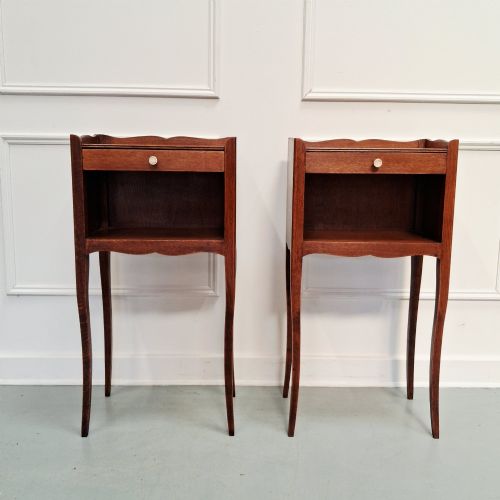
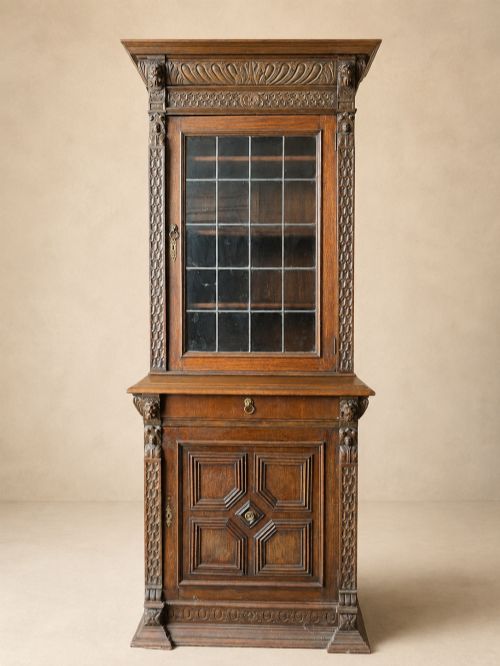
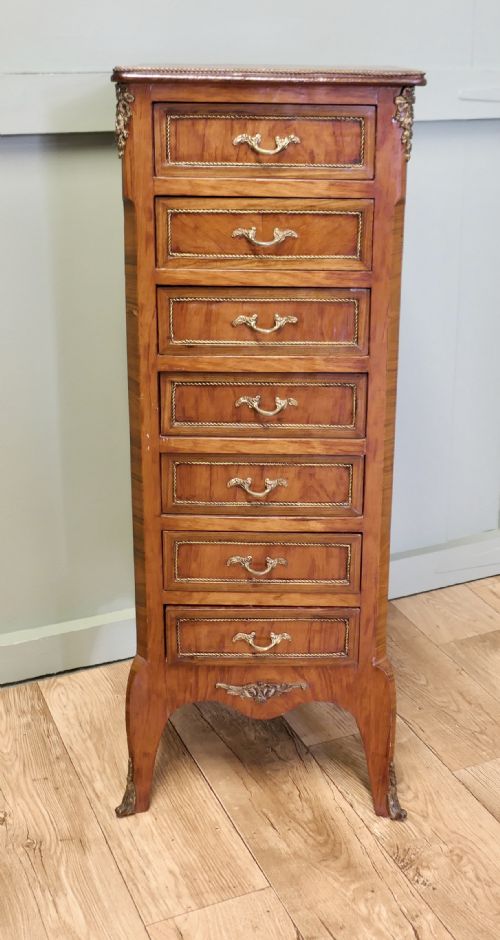


Antique Tall Slim Drawers
These antique tall slim drawers offer generous storage in a narrow footprint, making them the ideal solution for compact rooms.
Antique Tall Slim Drawers
When you search for antique tall slim drawers, you encounter pieces designed to maximise vertical space without dominating a room. These vertical storage units appear most frequently as chests of drawers, alongside specialised forms such as Wellington chests and narrow bedside cabinets.
The selection spans several periods, with Edwardian and Victorian examples forming a large portion of the available pieces. Alongside these, Georgian period items and later revivals demonstrate how cabinetmakers continued to serve the demand for tall, narrow furniture.
Makers constructed these pieces using dense hardwoods and pine, shaping them into proportions that suit smaller spaces. The forms range from simple bank of drawers designs to bow fronted items and pieces influenced by French Louis XV and Queen Anne styles.
How they were made
Cabinetmakers utilised timber such as mahogany, walnut, oak, and pine to build these tall structures. Selected pieces feature figured mahogany or walnut veneers, bringing decorative grain patterns to the narrow drawer fronts.
Construction details include brass handles, key escutcheons, and occasional ormolu mounts to accent the woodwork. Ebonised wood and glass elements also appear in specific stylistic interpretations, while lead is recorded in the broader material evidence.
Antique Tall Slim Drawers Retail Price Guide 2026
Typical asking prices for tall slim drawers among the pieces listed under this phrase on Sellingantiques today, from the lower quarter to the upper quarter. They describe what is for sale here now, not the wider market.
A dedicated watchmaker once required a tall bank of nine drawers to sort tiny cogs and delicate springs.
What varies in quality
The degree of figuration in the timber grain distinguishes standard storage pieces from finer examples. Cabinetmakers who selected highly figured mahogany or walnut elevated the visual impact of a narrow piece.
Construction precision determines the longevity and tactile feel of the drawers. Smooth running drawers, crisp carving, and well-fitted brass hardware separate ordinary utility furniture from superior workshop output.
The Antique Tall Slim Drawers Glossary
- Wellington chest
- A tall, narrow chest of drawers secured by a hinged vertical locking flap on one side. This locking mechanism protected the contents of every drawer simultaneously.
- Tallboy
- A traditional chest of drawers stacked higher than standard models, often combining a smaller chest set atop a deeper base. These pieces provide substantial capacity within a modest floor area.
- Bow front
- A convex curved front contour applied to a chest of drawers. This shaping softens the vertical lines of narrow furniture.
- Ormolu
- Gilded bronze ornamentation applied to furniture for decorative effect. It appears on pieces influenced by continental French design.
Antique Tall Slim Drawers: Frequently Asked Questions
Where should I place antique tall slim drawers?
These narrow chests fit comfortably into alcoves, hallways, or smaller bedrooms where floor space is limited. Their vertical orientation provides useful storage without overcrowding the room.
Ensure the piece sits level against the wall, particularly when dealing with tall antique furniture. Many owners anchor tall items to the wall for stability.
How do I identify an Edwardian tall chest?
Edwardian pieces often display lighter timbers such as golden mahogany or walnut, reflecting the brighter interior tastes of the early twentieth century. They frequently incorporate refined brass handles and clean architectural lines.
Compare the drawer construction and internal secondary woods with Victorian and Georgian pieces to understand the chronological shift in manufacturing methods.
How do I care for mahogany and walnut drawer surfaces?
Maintain the timber by dusting with a soft, dry cloth and applying traditional wax polish sparingly. Avoid placing antique wood in direct sunlight or near heat sources to prevent timber splitting.
Check drawer runners periodically and apply a small amount of beeswax to ensure smooth operation without damaging the historical wood.