



Side Locking Chest Drawers
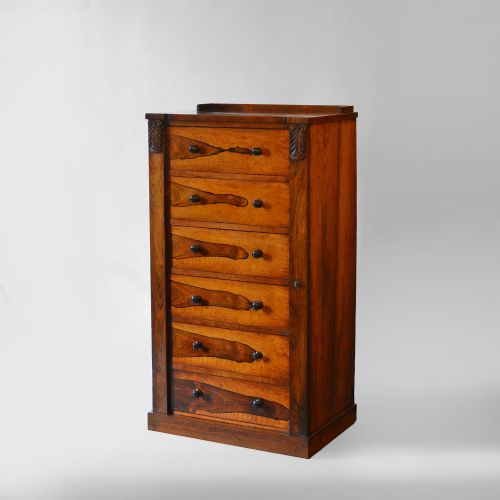
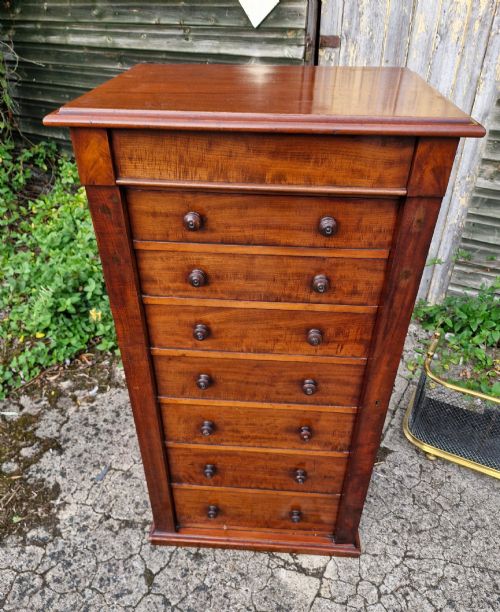
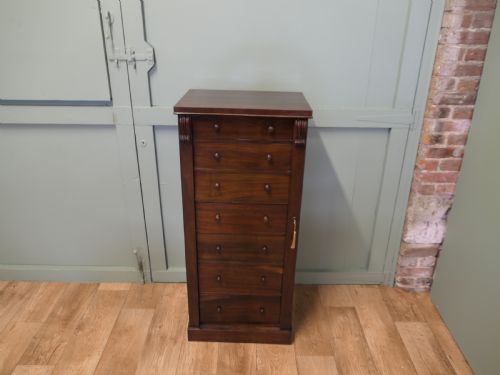
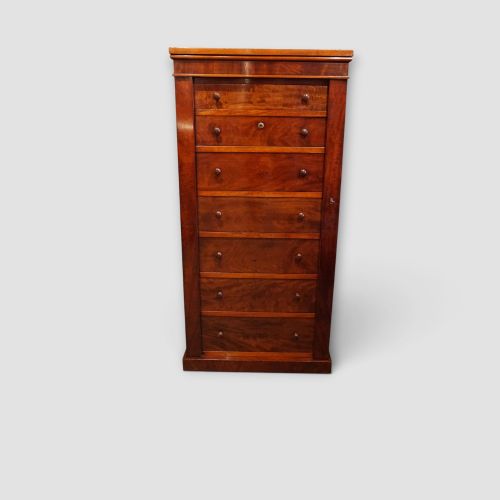
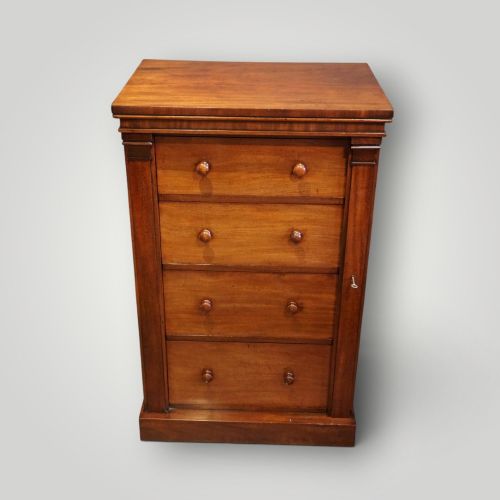
Side locking chest drawers are tall, narrow bedroom pieces designed with a hinged stile that secures all drawers at once, highly prized for safe storage.
Side Locking Chest Drawers
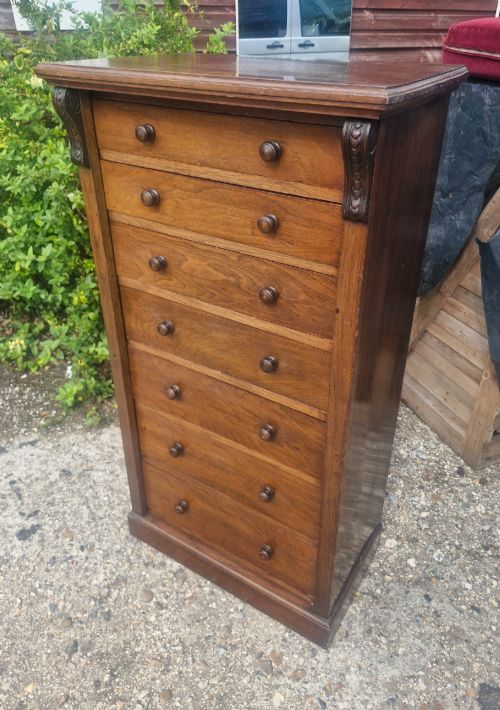
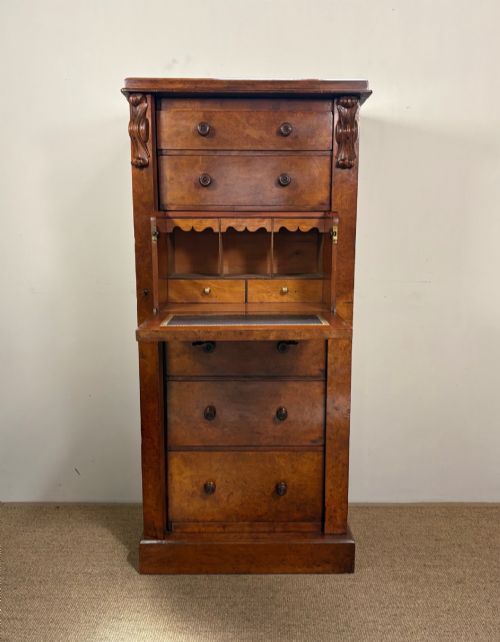
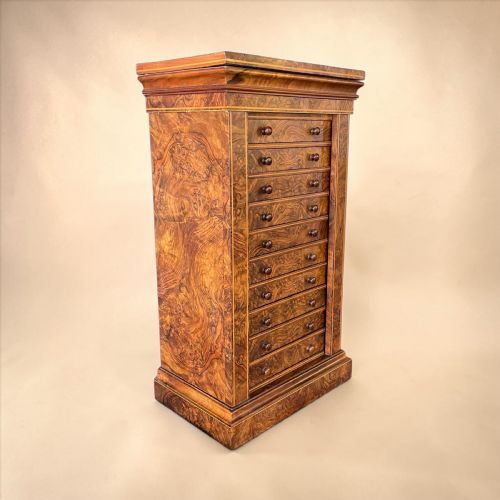
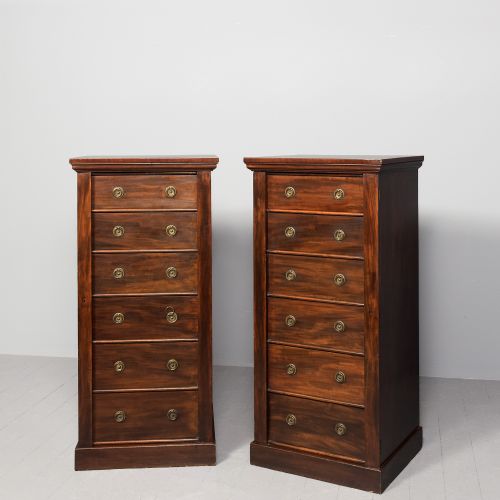
Side locking chest drawers, predominantly known as Wellington chests, appear largely from the Victorian period through the nineteenth century and into the early twentieth century. Buyers seeking these items will frequently encounter tall, narrow chests of drawers alongside miniature versions and pieces fitted with secretaire drawers.
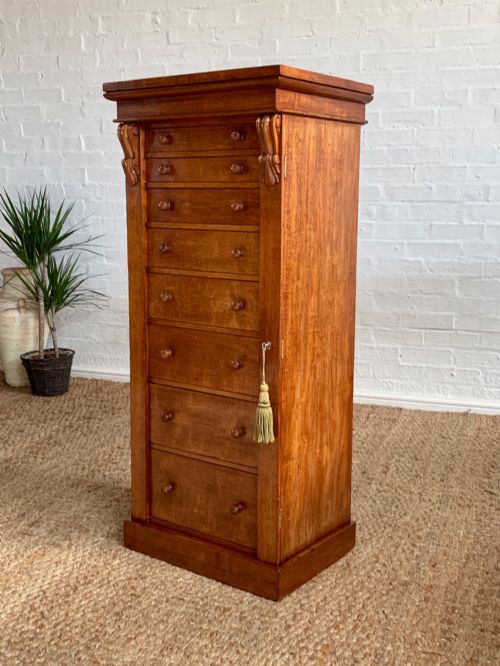
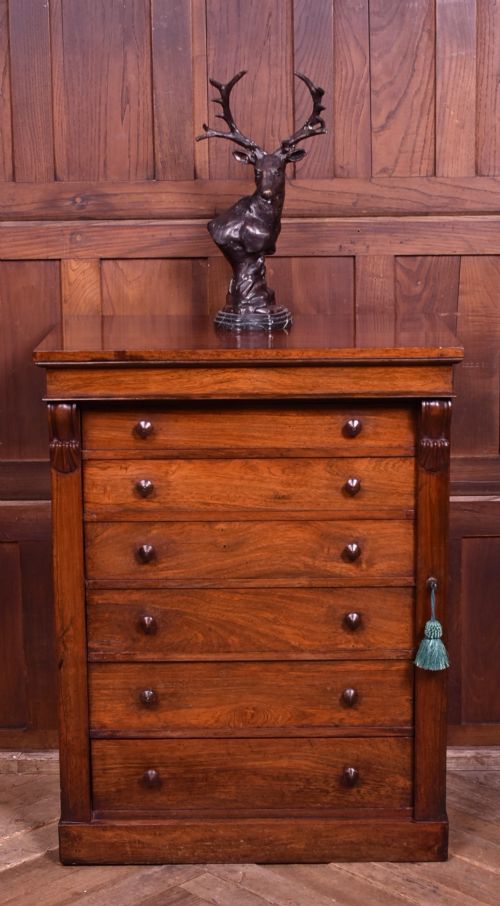
The form typically comprises multiple graduated drawers stacked vertically, enclosed by a hinged locking flap or stile on one side that engages with a key. Examples span styles from Regency influences to late Victorian designs, constructed as single units or occasionally double chests.
Origins trace across nineteenth century British workshops, offering substantial vertical storage without taking up significant floor space. The evidence shows variations ranging from small specimen collectors' chests to large seven drawer formats.
How they were made
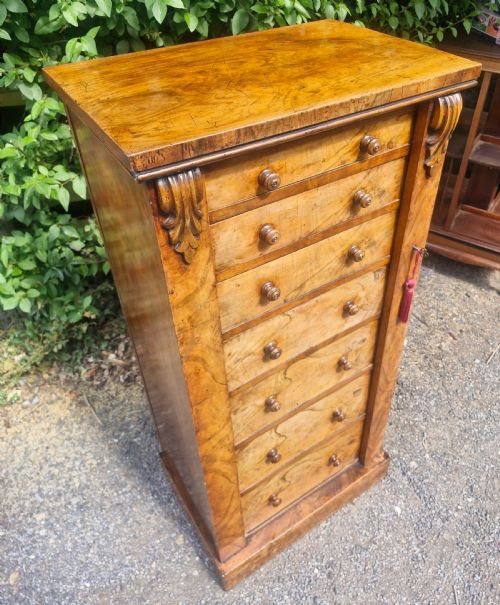
Makers utilised solid timbers alongside rich veneers, relying heavily on mahogany, walnut, and flame mahogany veneer, supplemented by rosewood, satinbirch, maple, and pitch pine. These primary woods provide both structural rigidity and decorative figured surfaces across the drawer fronts and bodies.
Hardware and mechanisms form an integral part of the construction, integrating brass locks and hinges with turned wooden knobs to operate the side locking flap. Surface decoration includes marquetry details, leather inserts, and polished wood finishes that highlight the grain.
Side Locking Chest Drawers Retail Price Guide 2026
Typical asking prices for side locking chest drawers among the pieces listed under this phrase on Sellingantiques today, from the lower quarter to the upper quarter. They describe what is for sale here now, not the wider market.
Miniature versions allowed cabinetmakers to demonstrate their skill in miniature joinery without occupying an entire room.
What varies in quality
Quality rests upon the choice of timber and the complexity of the internal configuration, such as the inclusion of secretaire flaps or specialised specimen drawers. Finely figured veneers and decorative marquetry separate standard utilitarian items from more ambitious cabinet work.
The integrity of the side locking mechanism and the survival of original hardware, including turned knobs and brass locks, determine the desirability of a piece. Proportions also vary, with tall seven drawer builds and miniature scales demonstrating different levels of cabinetmaker skill.
Druce And Co
The Side Locking Chest Drawers Glossary
- Wellington chest
- A tall, narrow chest of drawers secured by a hinged vertical locking flap on one side. This design gained popularity during the nineteenth century.
- Secretaire
- A desk drawer containing a hinged writing flap and small interior compartments. It integrates into the chest without disrupting the exterior vertical lines.
- Veneer
- A thin layer of finely figured wood applied to a secondary timber base. Flame mahogany and burr walnut are common examples found on these pieces.
- Marquetry
- Decorative patterns formed by inserting pieces of wood into a veneered surface. This technique appears on nineteenth century walnut examples.
- Specimen drawers
- Shallow compartments designed for organising small collections or botanical samples. They are frequently lined in materials such as leather.
Side Locking Chest Drawers: Frequently Asked Questions
What is a side locking chest drawers?
It is a tall, narrow storage unit where a hinged side flap secures all internal drawers simultaneously.
Most surviving examples date from the Victorian era and were built to maximise vertical storage in smaller bedrooms.
How do you operate the lock?
Turning the key in the side stile releases the hinged flap, allowing the individual drawers to pull open.
When closed and locked, the flap blocks the drawer fronts completely to prevent unauthorized access.
What woods were used?
Cabinetmakers relied heavily on mahogany and walnut, frequently utilising figured veneers for decorative impact on the drawer fronts.
Less common materials include rosewood, satinbirch, maple, and pitch pine across various nineteenth century formats.
Were they used as desks?
Certain variations include a secretaire drawer fitted with a hinged fall front and internal compartments for writing.
This provided a dual purpose for the owner, combining a tall chest with a compact writing surface.
How do you date these pieces?
Dating relies on timber selection, construction methods, and stylistic cues ranging from Regency influences to late Victorian designs.
Periods documented in the evidence span from the early nineteenth century through to nineteen twenty.