


19th Century Swedish Drawers
These pieces of 19th century swedish drawers offer functional storage rooted in Scandinavian craftsmanship.
19th Century Swedish Drawers
When searching for 19th century swedish drawers, buyers encounter substantial case pieces designed for domestic storage across Scandinavian interiors. Chests of drawers dominate the selection, appearing alongside sophisticated secretaire chests, commodes, and cabinets.
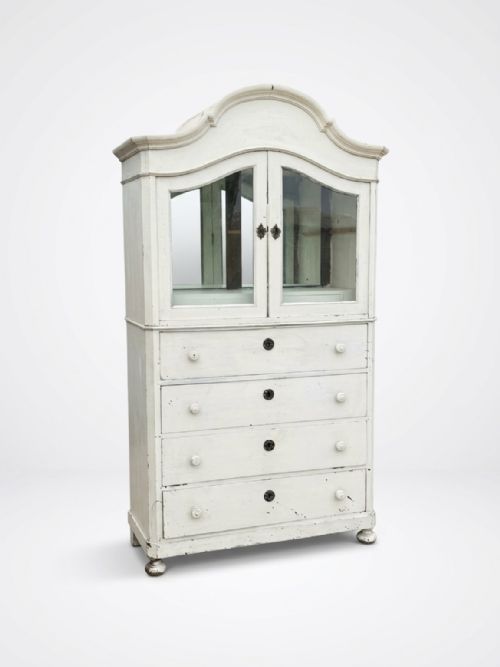
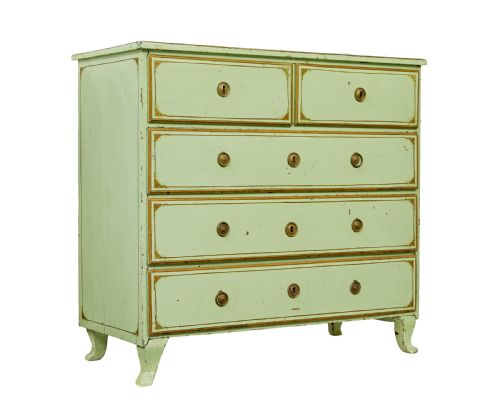
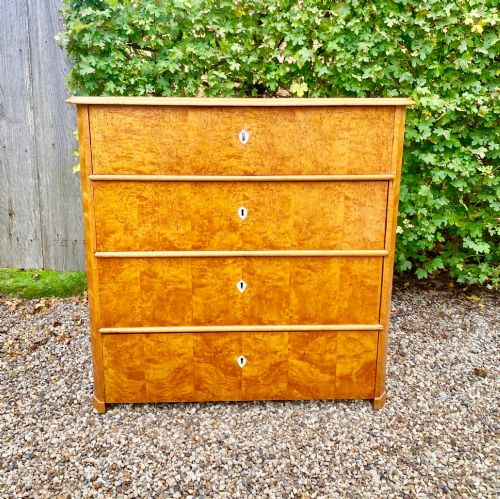
The aesthetic spans clean-lined Gustavian influences, geometric Biedermeier forms, and rustic painted country pieces. Most examples originate from the nineteenth century, showcasing regional variations from straight-fronted proportions to serpentine silhouettes.
How They Were Made
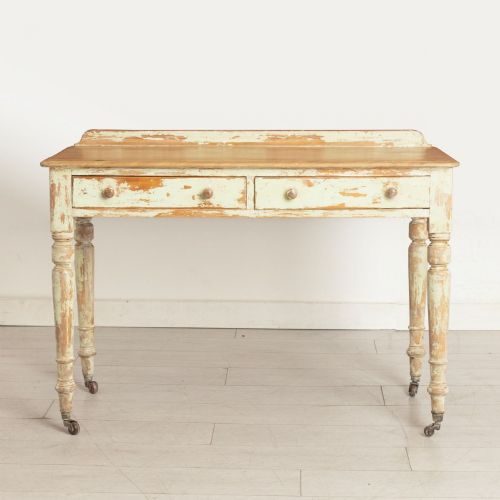
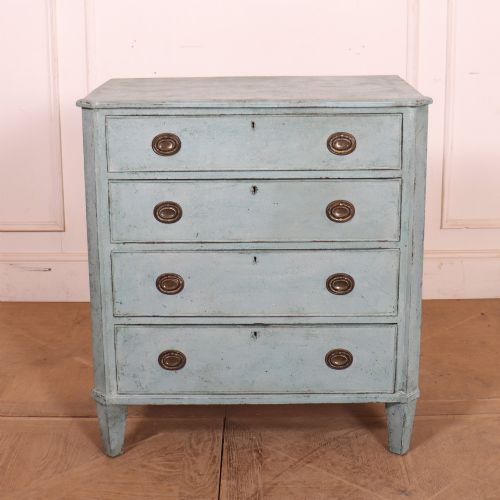
Cabinetmakers utilised native softwoods such as pine for structural framing, carcass construction, and surfaces intended for painted finishes. Applied paint layers frequently survive in original or early states, ranging from simple monochrome treatments to faux marble effects.
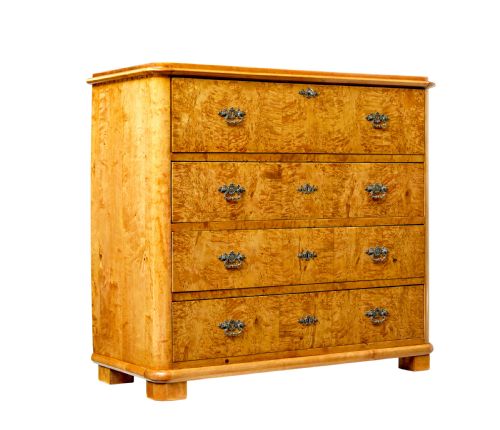
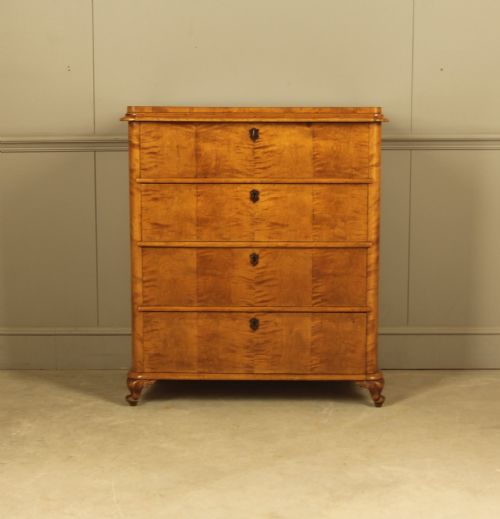
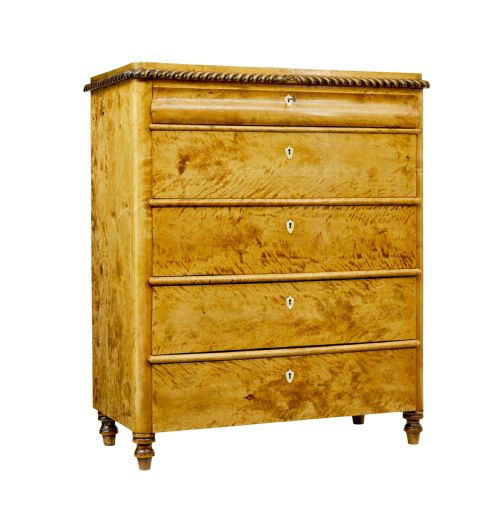
Decorative surfaces rely heavily on indigenous hardwoods, employing birch, flame birch, burr birch, and tiger birch veneers to create striking grain patterns. Walnut and mahogany also appear in select regional interpretations, complemented by brass and bone hardware.
What Varies in Quality
The standard of execution depends heavily on the selection and matching of timber veneers, where symmetrical grain alignment elevates the visual impact of birch and walnut surfaces. Superior joinery is evident in the precision of drawer construction and the integration of carved or moulded details.
Painted finishes demonstrate distinct grades of craftsmanship, moving from basic utilitarian coatings to meticulous hand-painted surfaces with integrated faux marble tops. The harmony of proportions, particularly in serpentine and bombe profiles, distinguishes exceptional regional cabinetwork.
The 19th Century Swedish Drawers Glossary
- Secretaire chest of drawers
- A case piece featuring a fitted top drawer that pulls down to reveal a writing surface and small compartments.
- Commode
- A decorative low chest of drawers or cabinet originating from French furniture design, adapted in Scandinavian workshops.
- Biedermeier
- A Central European and Scandinavian style prioritising utilitarian comfort and clean geometric forms over excessive ornamentation.
- Gustavian
- A Swedish neoclassical style characterised by restrained classical motifs, light painted finishes, and symmetrical proportions.
- Burr birch
- Timber harvested from birch trees featuring distorted grain patterns that produce rich, swirling circular figures.
19th Century Swedish Drawers: Frequently Asked Questions
Where were these pieces made?
These items originate primarily from Sweden and wider Scandinavian regions during the eighteen hundreds. Local workshops produced diverse regional interpretations influenced by international neoclassical and revival movements.
Cabinetmakers utilised local timber stocks and traditional joinery techniques suited to northern European domestic architecture.
How do I care for painted surfaces?
Original painted finishes require gentle maintenance using dry cloths to remove dust without abrasive cleaning agents. Direct sunlight and fluctuating humidity levels should be avoided to protect fragile pigment layers.
Maintaining stable indoor environments prevents wood movement that might otherwise stress historical paint or varnish.
What is flame birch?
Flame birch refers to wood grain displaying a rippled, undulating pattern resembling flickering flames. Craftsmen prized this figured veneer for primary drawer fronts and principal facade surfaces.
Its distinct optical movement catches ambient light differently depending on viewing angles.
How do I identify a secretaire?
A secretaire incorporates a specialised upper drawer fitted with a drop-front mechanism enclosing inner pigeonholes and small writing compartments. This dual-purpose design offered compact desk space within standard chest dimensions.
Closed drawers conceal the internal writing utility entirely.