






19th Century Suzani Textile
A 19th century suzani textile brings vibrant Central Asian needlework into a room, offering rich colours and intricate patterns that collectors prize for wall hanging or display.
19th Century Suzani Textile
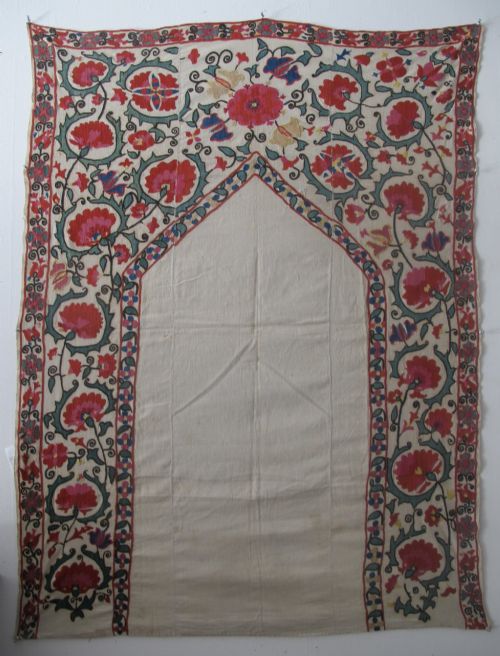
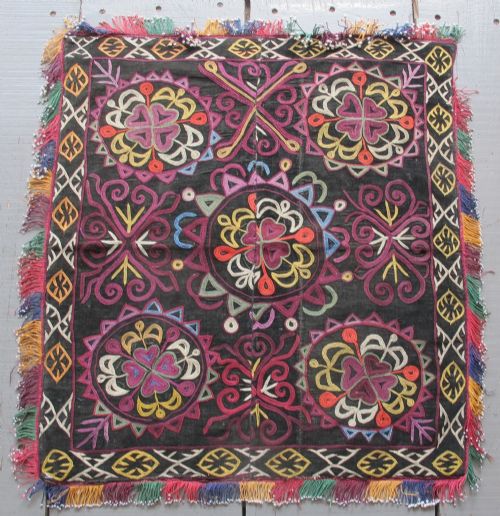
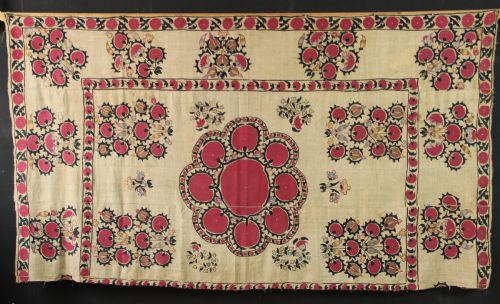
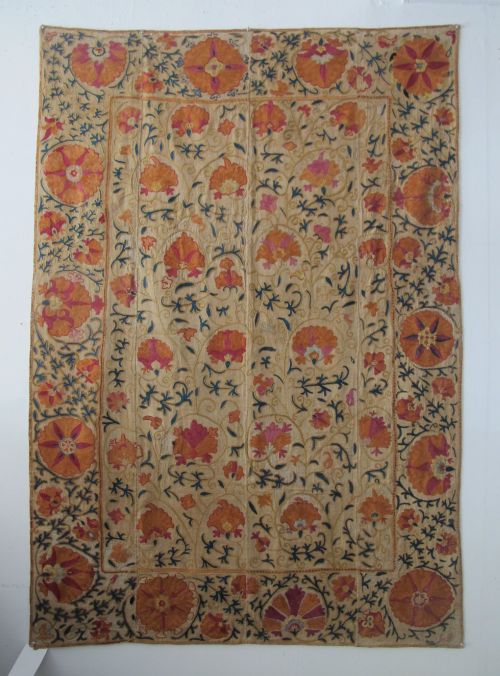
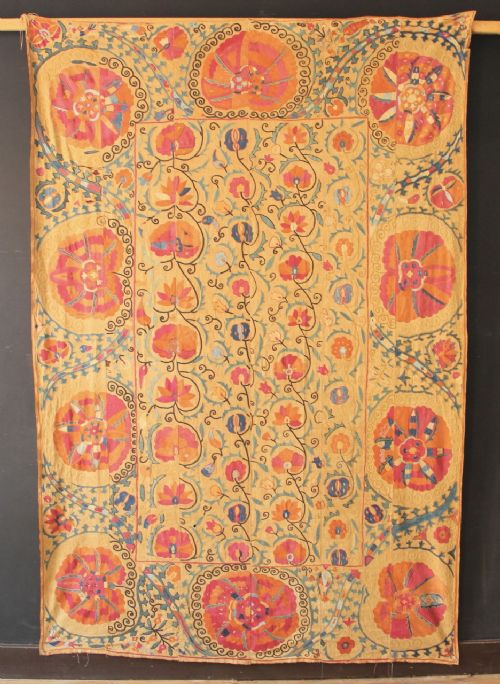
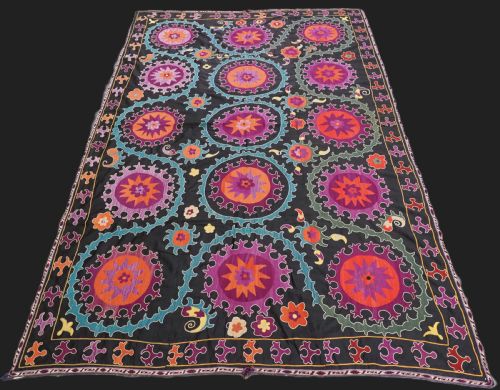
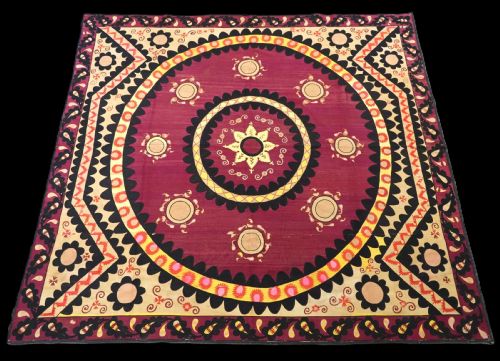
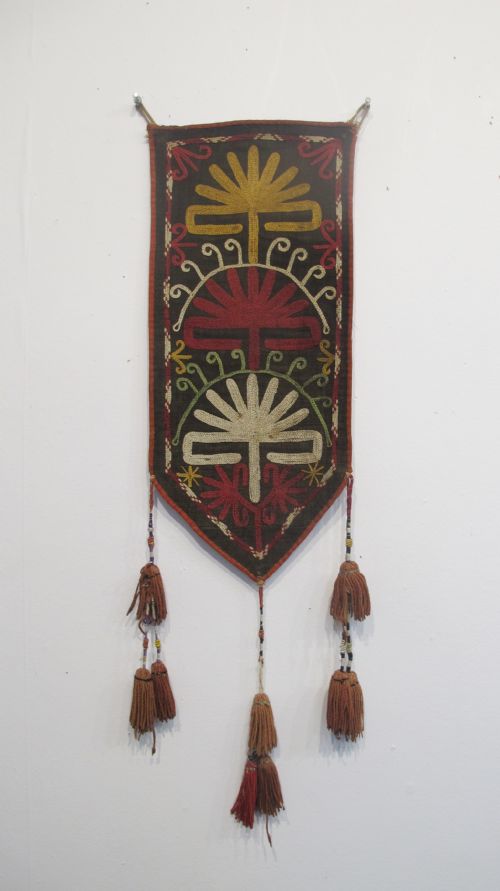
A 19th century suzani textile is an embroidered panel originating from Central Asia, often created as part of a bride's dowry in regions such as Uzbekistan. These pieces take various forms including large wall hangings, smaller nim suzanis, mirror covers, and amulets. Buyers searching for a 19th century suzani textile will encounter traditional regional designs ranging from bold medallion layouts to architectural and floral motifs.
The material ground usually consists of cotton or wool, which serves as a sturdy foundation for extensive needlework. Works from centres like Bokhara, Tashkent, Samarkand, and Ura Tube display distinct local traditions in pattern and palette. Tribal groups such as the Lakai also contributed specific dowry embroideries like the ilgich, expanding the stylistic range available.
Most examples date across the nineteenth century, with specific pieces recorded from around eighteen hundred through to nineteen hundred. These textiles function primarily as decorative wall hangings or covers, showcasing the domestic artistry of Central Asian makers. Each variant carries the specific visual vocabulary of its origin, whether a palak design with a central star or a simple prayer suzani.
Materials and construction
Makers utilised silk thread for the primary embroidery, working dense stitches across grounds of cotton, wool, or occasionally black and yellow cotton fabrics. Silk embroidery provided a lustrous finish that caught the light, contrasting sharply with the matte texture of the woven foundation cloth. Certain pieces incorporated glass beads to add detail and texture to the surface design.
Needlework techniques varied by region and workshop, resulting in fully embroidered surfaces on palak variants and lighter floral compositions on others. The stitching was executed by hand, demanding considerable time and skill to cover large areas of fabric completely. Artisans joined multiple narrower widths of loom-woven cloth together before embroidery commenced, creating the large panels required for wall hangings.
Current listings feature cotton and wool grounds decorated with silk thread and glass beads from centres including Bokhara and Samarkand.
Evaluating quality and execution
Quality rests upon the density and precision of the silk embroidery across the cotton or wool ground. Works that cover the entire foundation cloth demonstrate greater labour intensity than sparser compositions. The harmony of the palette and the crispness of the architectural, medallion, or floral design determine visual success.
Condition and scale also influence the standing of an individual piece. Large formats like the Tashkent palak or extensive Bokhara wall hangings require sustained technical skill over a greater surface area. Finer work shows tight, even stitches that maintain pattern clarity without distortion across the textile.
The 19th Century Suzani Textile Glossary
- Suzani
- An embroidered textile from Central Asia, traditionally made as part of a bride's dowry. The word derives from the Persian term for needle.
- Nim Suzani
- A smaller version of the standard suzani textile, often measuring around half the scale. These compact panels served alternative domestic purposes.
- Ilgich
- A dowry embroidery piece created by the Lakai tribe in Central Asia. These items functioned primarily as decorative wall hangings.
- Prayer Suzani
- A textile featuring a mihrab or niche design used in Islamic prayer traditions. These pieces incorporate specific architectural motifs into the embroidery.
19th Century Suzani Textile: Frequently Asked Questions
How were suzanis used originally?
These textiles functioned primarily as wall hangings, decorative covers, and dowry items within Central Asian homes. Families displayed them during wedding celebrations and special domestic occasions.
They also served as mirror covers, prayer mats, and protective amulets depending on the specific scale and format of the textile.
What materials make up these textiles?
The foundation typically consists of woven cotton or wool cloth, sometimes dyed in black, yellow, or red grounds. Artisans used silk thread for the extensive embroidery work that covers the surface.
Additional elements like glass beads occasionally appear within the embroidery to provide extra texture and visual detail.
Where did these pieces originate?
Originating across Central Asia, these works came from established urban and regional centres such as Bokhara, Tashkent, Samarkand, and Ura Tube. Each location developed distinct stylistic traits.
Nomadic and tribal groups, including the Lakai, also produced notable embroideries with unique regional characteristics.
How do I care for a textile?
Display these works away from direct sunlight to protect the natural silk and cotton dyes from fading over time. Gentle dusting with a soft brush helps maintain the surface without damaging delicate stitches.
Professional textile conservation methods should be employed if cleaning becomes necessary, avoiding standard washing techniques.