


19th Century Stoneware Jug
These pieces of 19th century stoneware jug encompass utilitarian service vessels and decorated drinking containers shaped by diverse regional traditions.
19th Century Stoneware Jug
A 19th century stoneware jug serves as both a functional container and a decorative object originating from British pottery traditions. The selection spans utilitarian storage vessels, tavern containers, and commemorative harvest pieces.
Buyers frequently encounter robust salt-glazed examples alongside relief-moulded pitchers and specialised whisky flasks. The forms range from small drinking vessels to large gallon capacities bearing historical figures or sporting motifs.
The periods represented stretch from the Georgian era through the Victorian period, reflecting varied domestic and tavern uses. Pieces incorporate styles such as Victorian Neoclassical, Rustic Country, and Victorian Folk Art.
Materials and Technique
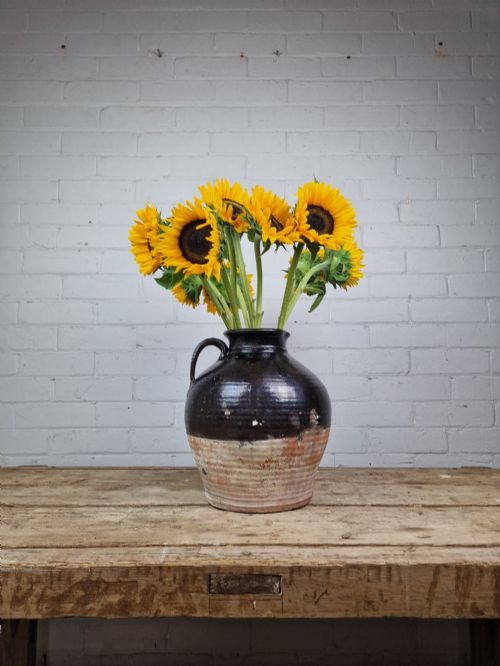
Potters utilised dense stoneware and earthenware bodies, often finished with salt glazes, lead glazes, or specialised brown and cobalt blue colourations. The firing process created impermeable surfaces suitable for holding liquids.
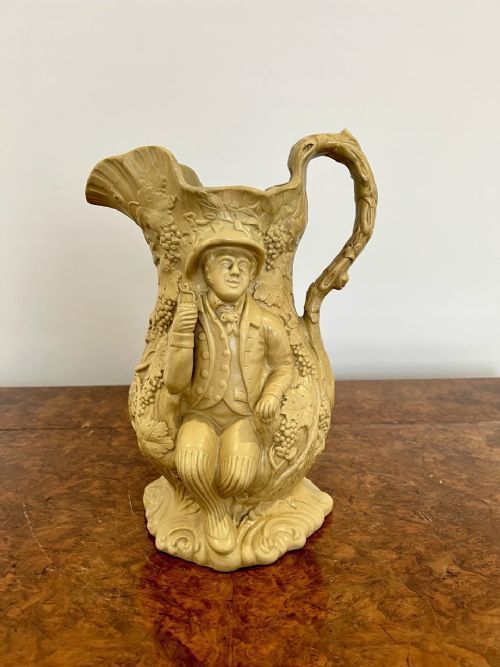
Many pitchers and jugs employ relief-moulding techniques to create sharp decorative scenes such as bacchanalian dances or hunting motifs directly into the clay body. Additional elements include applied silver rims and sculpted hound handles.
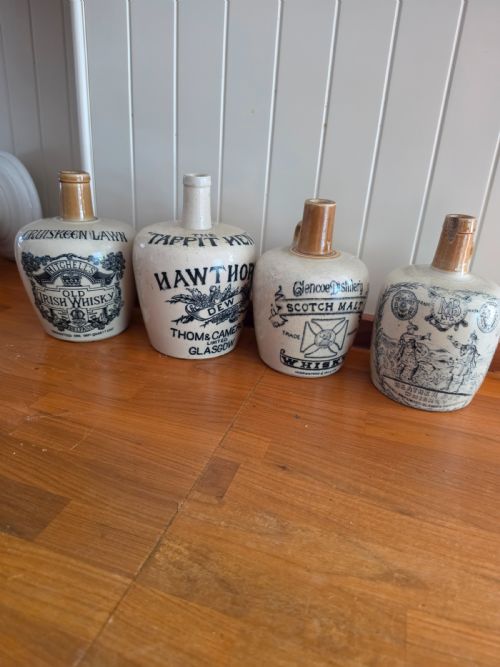
A golfing motif adorns a brown-glazed whisky flask, proving that nineteenth-century drinkers took their sporting allegiances straight to the tavern table.
Evaluating the Ware
Quality rests upon the crispness of relief-moulded details and the uniformity of the glaze across the ceramic body. Pieces that maintain sharp mythological or social scenes display superior craftsmanship from established makers.
The integration of secondary materials, such as hallmarked silver rims or fitted metal mounts, elevates the standing of a vessel. The overall balance of form, weight, and glaze depth determines the visual impact of each piece.
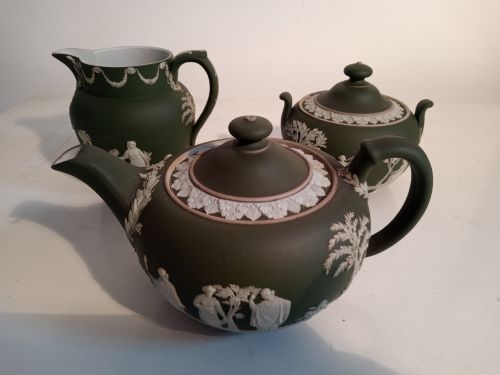
Charles Meigh·Royal Doulton·Wedgwood·Minton·Jones & Walley
The 19th Century Stoneware Jug Glossary
- Stoneware
- A heavy, dense ceramic fired at high temperatures until vitrified. This process renders the material completely non-porous without requiring an interior glaze.
- Salt Glaze
- A finish achieved by throwing common salt into the kiln during high-temperature firing. The sodium reacts with the silica in the clay to form a distinctive orange-peel texture.
- Relief Moulded
- A technique where designs are pressed in low relief onto the surface of the vessel during manufacture. This method allows for intricate figurative scenes and botanical patterns.
- Puzzle Jug
- A vessel featuring a pierced neck and multiple spouts designed to trick the drinker. Fluid must be sucked through a hidden tubular handle to avoid spilling.
- Parian Ware
- A fine white bisque porcelain developed to resemble carved marble. Makers utilised this dense material for decorative portrait busts and classical jugs.
19th Century Stoneware Jug: Frequently Asked Questions
What is a stoneware jug used for?
These vessels served various functions including holding water, storing ale in taverns, and containing spirits like whisky. Larger examples acted as commemorative harvest cups for communal drinking.
Smaller decorated flasks were often produced for commercial advertising or specific taverns. Their robust construction made them practical for daily domestic and public house service.
How do you clean an antique jug?
Careful dusting with a soft, dry cloth is usually sufficient for maintaining the exterior surface. Avoid harsh chemical cleaners that might damage historic salt glazes or delicate slipware.
If the interior requires washing, use lukewarm water without submerging silver rims for extended periods. Pat dry immediately with a lint-free towel to protect vulnerable areas.
Are these jugs safe for daily use?
Most antique ceramic vessels are best reserved for display due to historic wear and potential hairline cracks. Historic glazes may also not meet modern food safety standards for acidic liquids.
Gentle handling preserves the structural integrity of applied handles and delicate silver mounts. Enjoying them as decorative objects protects the material from modern detergent damage.
How do I identify the period of a jug?
Stylistic indicators such as classical revival motifs point toward Victorian production, while simpler salt-glazed bodies often suggest earlier origins. Maker marks and registration numbers stamped into the base provide precise chronological markers.
Examining the manufacturing technique, such as mould seams or glaze consistency, helps distinguish between Georgian and later Victorian interpretations.