




Relief Moulded Water Pitcher
A relief moulded water pitcher brings tactile depth and sculptural storytelling straight to the table.
Relief Moulded Water Pitcher
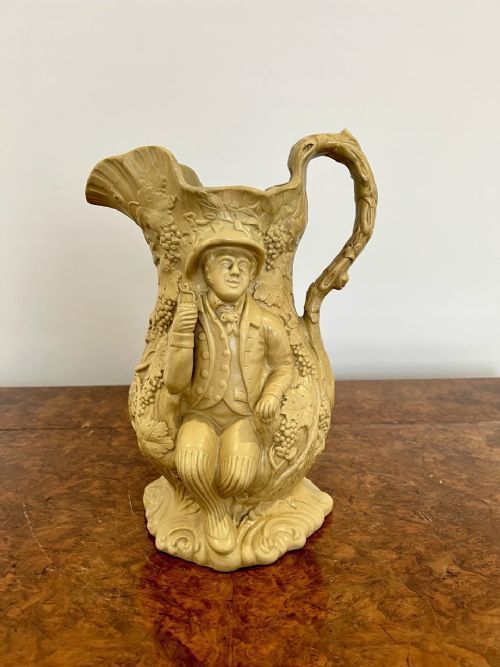
A relief moulded water pitcher is a substantial ceramic vessel featuring raised decorative motifs pressed into the body during production. When exploring relief moulded water pitcher options, buyers typically encounter sturdy earthenware and stoneware pieces originating from the nineteenth century. These jugs range from compact individual servers to large exhibition pieces holding multiple gallons of liquid.
Most examples hail from the Victorian era, spanning Classical Revival, Gothic, and Regency styles alongside robust Georgian antecedents. The decoration often depicts classical mythology, hunting scenes, or natural flora and fauna rendered in sharp, three-dimensional detail. Common variants include buff stoneware, salt-glazed stoneware, and vibrantly coloured majolica or parian bodies.
Makers utilised specialised metal moulds to imprint intricate patterns directly into the damp clay before firing. This technique allowed potteries to produce deeply textured surfaces depicting bacchanalian revels, stags, and pastoral figures with remarkable consistency. Collectors prize these vessels for their combination of robust utility and elaborate sculptural artistry.
Materials and production techniques
Potters formed a relief moulded water pitcher by pressing fluid clay into multi-part plaster or metal moulds that bore negative impressions of the design. Once the clay dried slightly and shrank away from the sides, the formed sections were joined together and fitted with applied handles. This method permitted mass production of highly ornate surfaces without sacrificing structural integrity.
The material body varied significantly, utilising dense stoneware, porous earthenware, or fine white parian depending on the desired finish. Many pieces received salt glazing applied during the high-temperature kiln firing, which produced a pitted, orange-peel texture across the raised motifs. Other variations employed coloured glazes, slip coating, or contrasting sprigged ornaments applied separately to the main body.
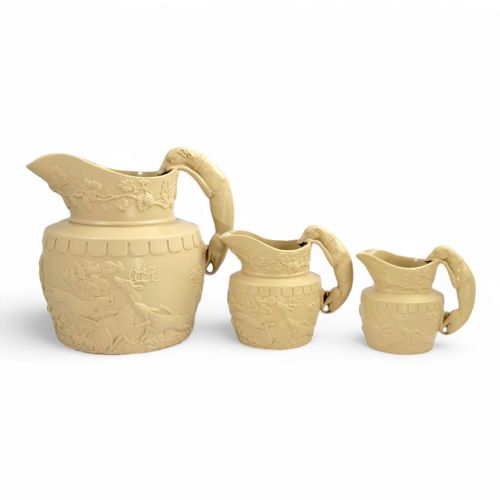
Hounds chase stags across several nineteenth-century spouts, giving loyal dogs a permanent spot on the rim.
Assessing quality in moulded pitchers
The distinction between ordinary utility ware and superior pieces lies in the crispness of the moulded detail and the precision of the assembly seams. Finer pitchers display sharply defined facial expressions, foliage, and figures where the pattern remains distinct even beneath thick glazes. Poorer examples suffer from worn mould impressions that blur the narrative scenes into indistinct lumps of clay.
Proportion and material refinement also dictate value, with master potters achieving thinner, lighter walls without compromising the structural strength of the vessel. The execution of applied elements, such as hound handles or sprigged botanical sprigs, reveals the maker's level of care. Superior pieces balance weighty practicality with delicate sculptural clarity.
Charles Meigh·Ridgway and Sons·Jones and Walley·Phillips and Bagster·George Jones
The Relief Moulded Water Pitcher Glossary
- Relief moulding
- A ceramic manufacturing technique where decorative patterns are pressed into the clay body in high or low relief using carved moulds. This process creates tactile, three-dimensional ornamentation across the exterior of the vessel.
- Stoneware
- A heavy, durable ceramic fired at high temperatures until vitrified and rendered impermeable to liquids. It forms a dense body that tolerates deep surface moulding exceptionally well.
- Majolica
- A type of earthenware coated with an opaque tin glaze and decorated with brightly coloured metal oxide pigments. It produces vivid, glossy surfaces popular during the Victorian period.
- Sprigging
- The method of pressing small separate clay ornaments in tiny moulds and applying them to the surface of a vessel using liquid slip as an adhesive. This adds contrasting decorative layers to the main body.
Relief Moulded Water Pitcher: Frequently Asked Questions
Can I still use these pitchers for serving water?
Many sturdy stoneware and glazed earthenware jugs remain fully functional for holding and pouring cold liquids during dinner service.
Inspect the interior and base for hairline cracks or historical repairs before filling, as porous bodies or delicate parian are better suited for display.
What is the difference between stoneware and earthenware?
Stoneware fires at much higher temperatures until the clay vitrifies into a dense, non-porous material that resists moisture without needing a heavy glaze.
Earthenware remains softer and more porous, requiring a surface glaze or slip coating to hold liquids effectively.
How do I date a nineteenth century pitcher?
Examine the style of the handle, the sharpness of the relief moulding, and any impressed registration marks or maker stamps located on the unglazed base.
Comparing the decorative motifs, such as classical revival figures or gothic tracery, against known production periods helps narrow down the decade of manufacture.