

19th Century Sideboard Server
These pieces meet under the search phrase 19th century sideboard server to provide deep storage and broad serving surfaces for dining rooms.
19th Century Sideboard Server
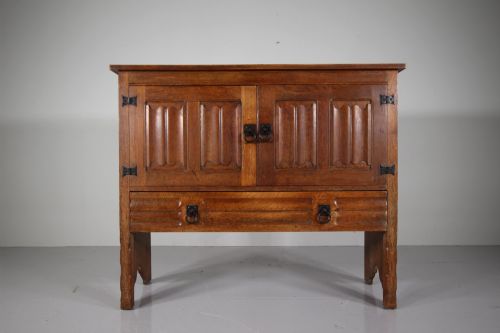
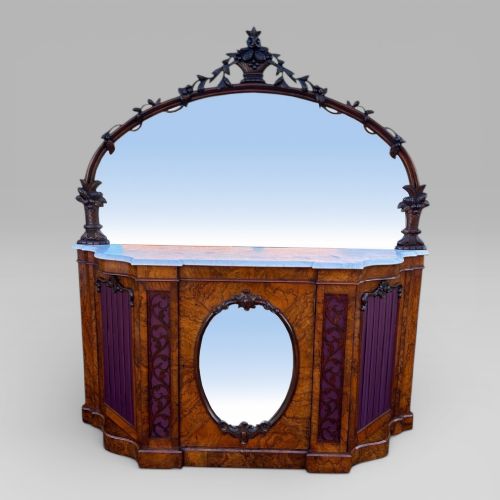
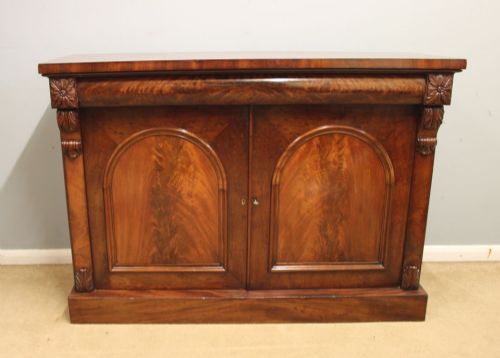
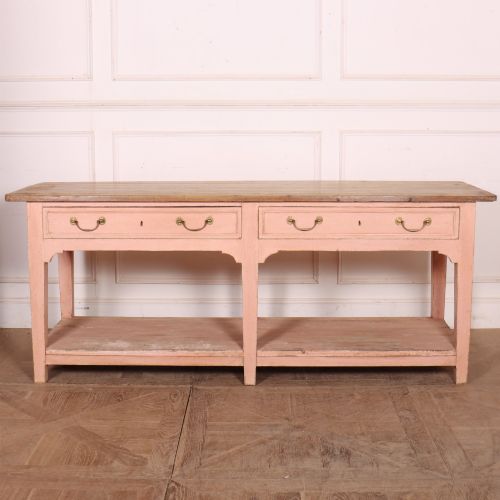
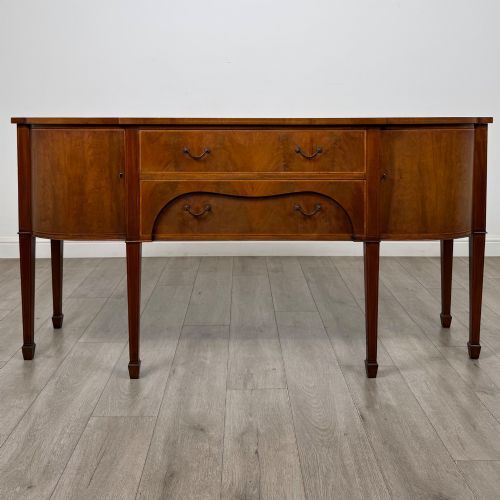
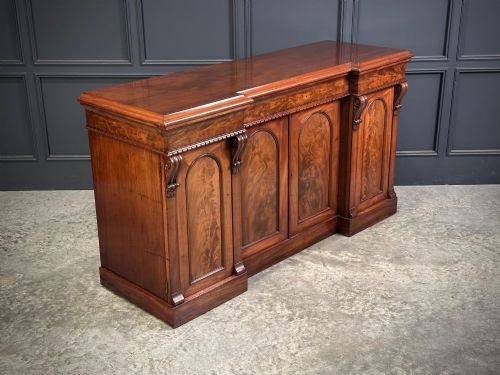
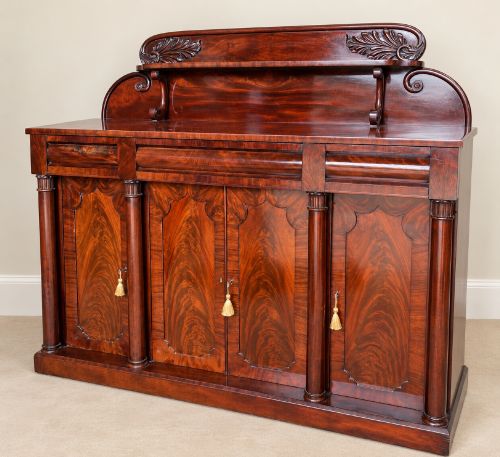
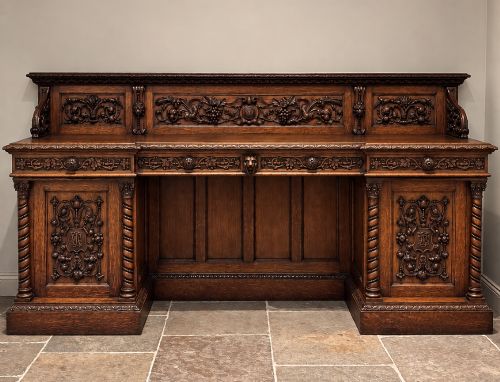
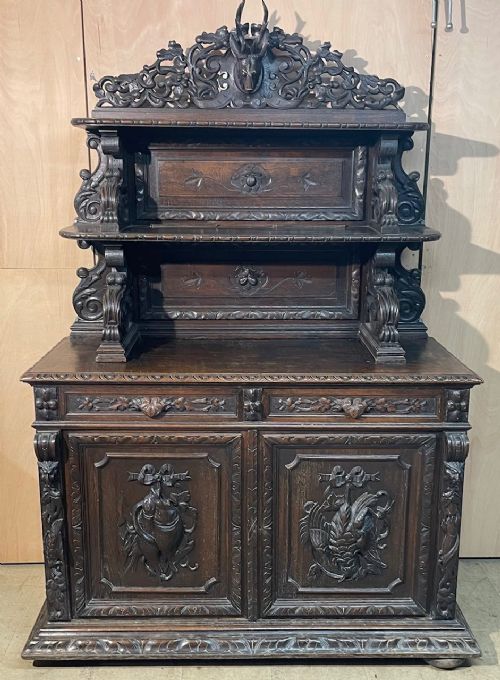
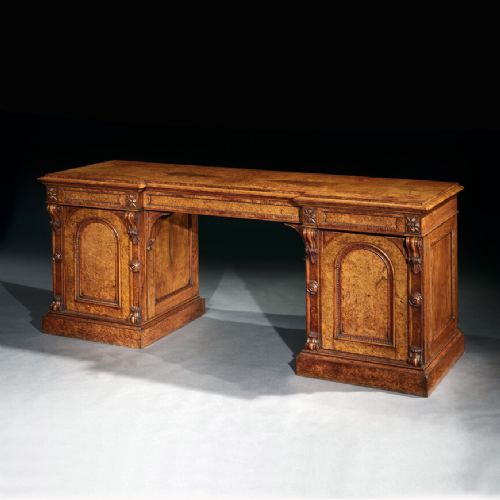
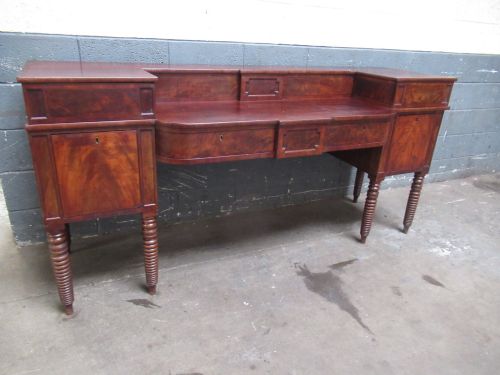
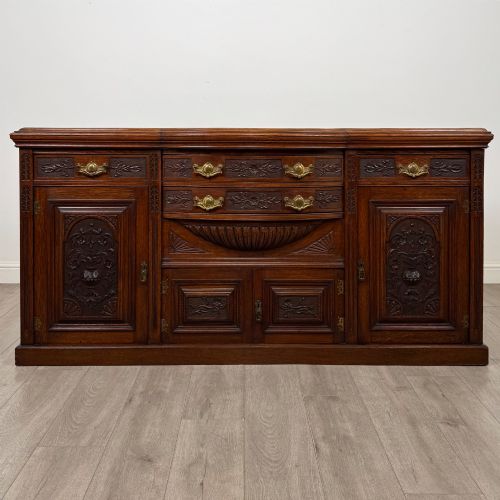
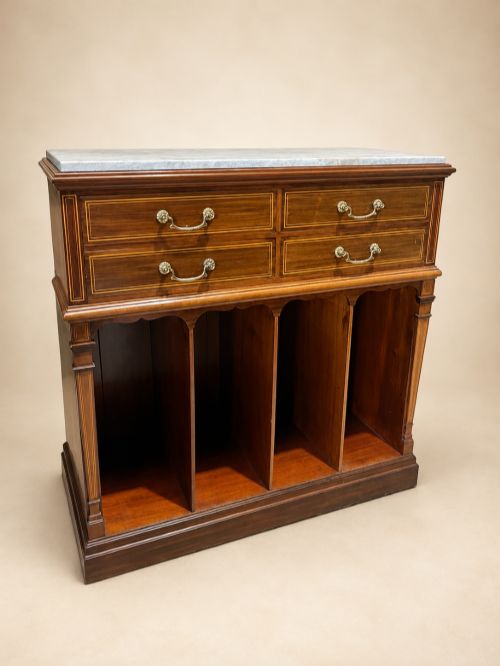
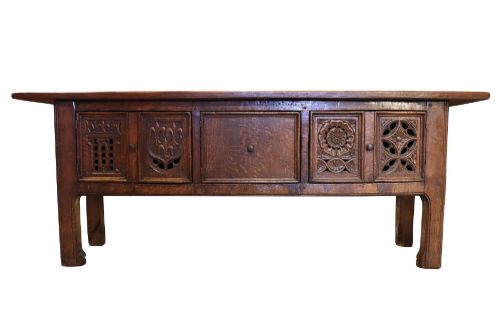
A 19th century sideboard server encompasses a broad range of dining and serving furniture originating from British, French, and Scottish workshops during the 19th century. Buyers searching this phrase encounter formats such as bow front pedestals, chiffoniers, potboard dresser bases, and heavy oak buffets.
Mahogany and oak dominate the offerings, appearing alongside cherry wood, walnut, pine, and rosewood. These items span periods from Regency and Georgian designs through to Victorian and Gothic Revival interpretations.
Materials and Construction
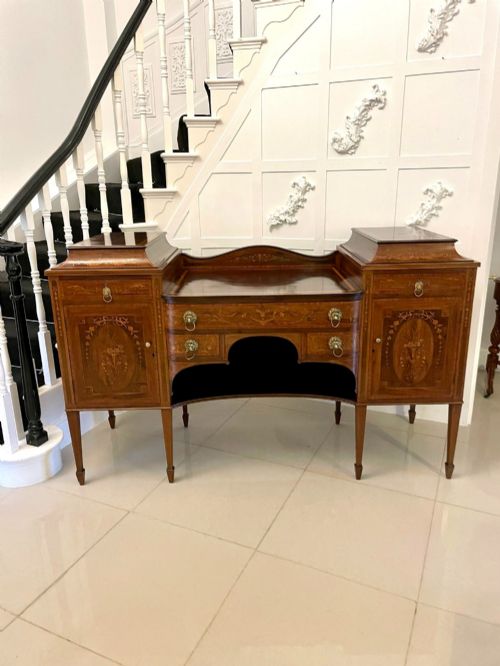
Cabinet makers utilised solid timbers alongside flame mahogany veneers applied over robust structural carcases of pine or oak. Surfaces frequently feature detailed marquetry inlay, carved mouldings, and brass hardware.
Secondary timbers such as pine appear on drawer linings and internal shelving, while heavier pieces incorporate marble tops or glazed mirror backs.
Items span multiple regional traditions including English, Scottish, Anglo-Indian, and French provincial workshops.
Craftsmanship and Selection
Quality rests upon the selection of timber veneers, such as richly figured flame mahogany or pollard oak, paired with tight joinery in the drawer construction. Superior examples show crisp, deep hand carving and original brass fixtures rather than later replacements.
Proportion and scale distinguish finer formal pieces from heavier regional vernacular items, though both demand integrity in the timber and minimal structural alteration.
Hewetsons London
The 19th Century Sideboard Server Glossary
- Chiffonier
- A compact sideboard or cabinet featuring enclosed shelving beneath, developed during the early 19th century. These items often include a raised mirror or shelf on the upper surface.
- Pedestal sideboard
- A formal dining room piece comprising two distinct pedestals joined by a central serving table or recess. Such items typically date from the Regency and early Victorian eras.
- Potboard dresser base
- A regional kitchen or dining table base featuring an open lower shelf designed to store heavy pots and platters. This form appears frequently in oak and pine.
- Flame mahogany veneer
- A thin slice of timber cut from the fork of a mahogany tree to create a distinctive flickering flame pattern. Cabinet makers applied this over stable secondary woods.
19th Century Sideboard Server: Frequently Asked Questions
What is a sideboard server?
A sideboard server is a large storage and display piece designed for dining rooms to hold serving dishes, cutlery, and glassware.
These items provide a wide surface top for laying out food during meals while keeping dining accessories organised underneath.
How do I style a sideboard server?
Place the piece against a dining room wall, anchoring it with a large mirror or artwork hung directly above.
Use the surface for lamps and decorative ceramics while keeping daily dining linen and silver stored in the drawers.
Are these pieces made of solid wood?
Most items combine solid structural timbers like oak or pine with decorative veneers applied to visible drawer fronts and doors.
Finer formal examples utilise solid mahogany or walnut, while regional vernacular pieces rely on local fruitwoods and cherry.
How do I identify a Regency period piece?
Regency items often feature classical proportions, sweeping bow fronts, and brass lion paw feet or ring handles.
The timber grain on these pieces tends to be highly figured mahogany with minimal heavy carving compared to later Victorian designs.