
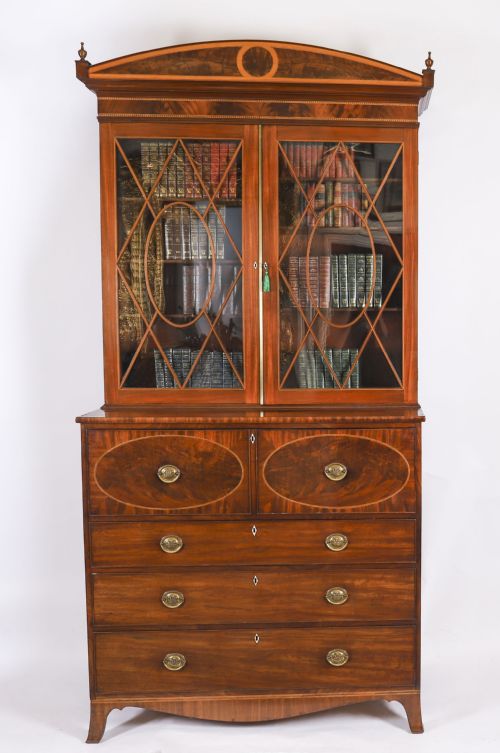
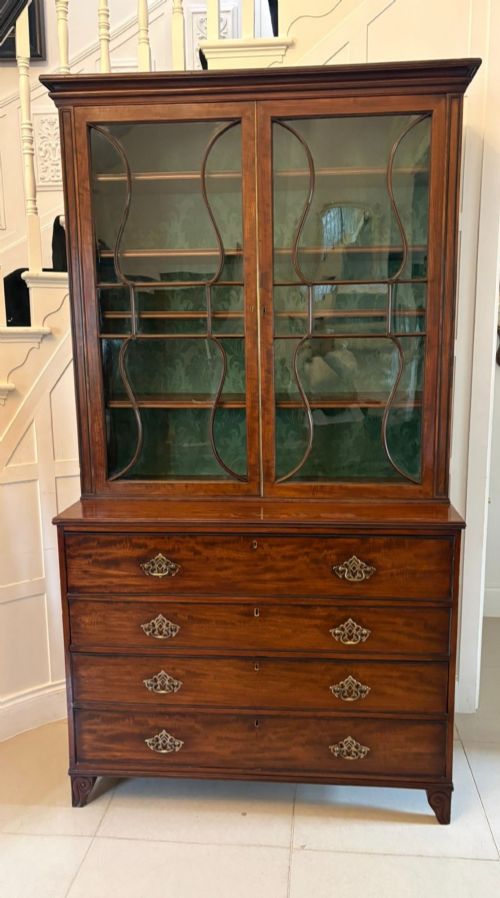
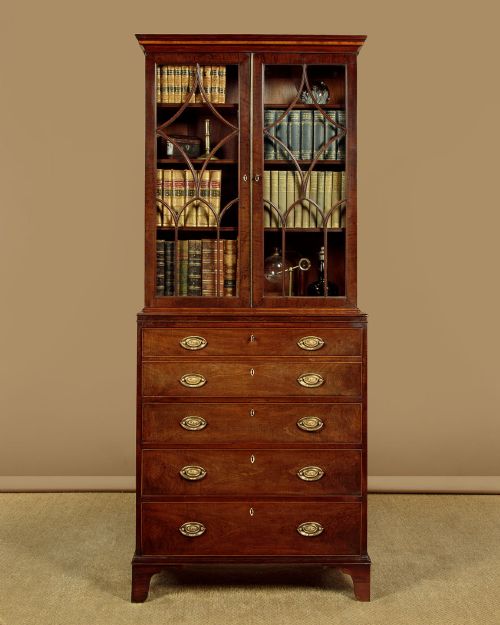
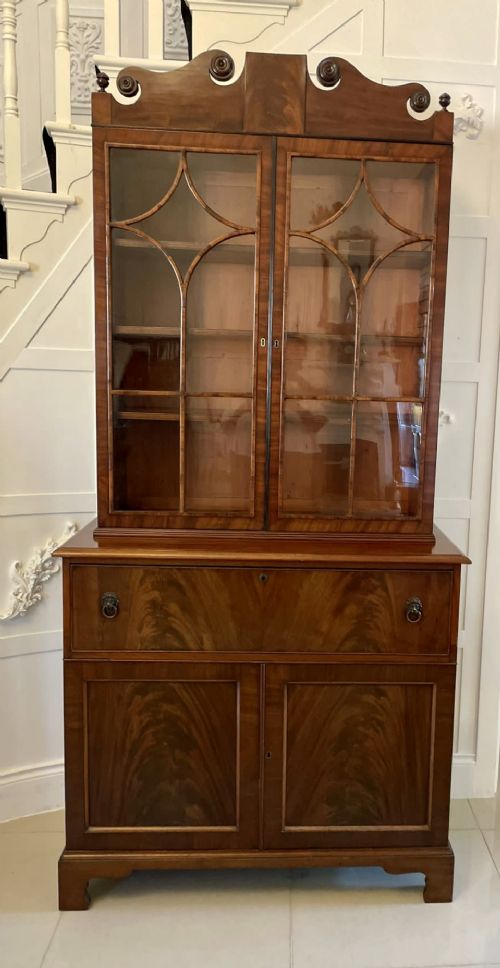




19th Century Secretaire Bookcase
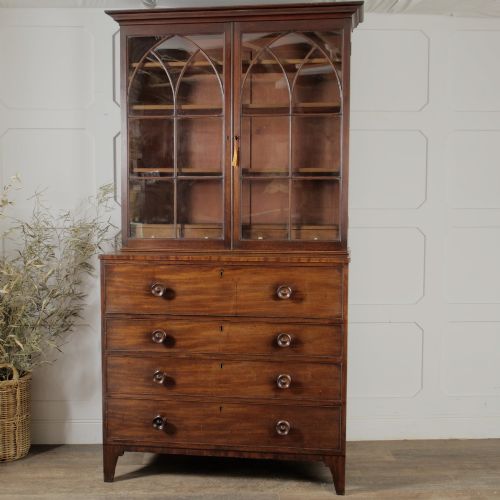
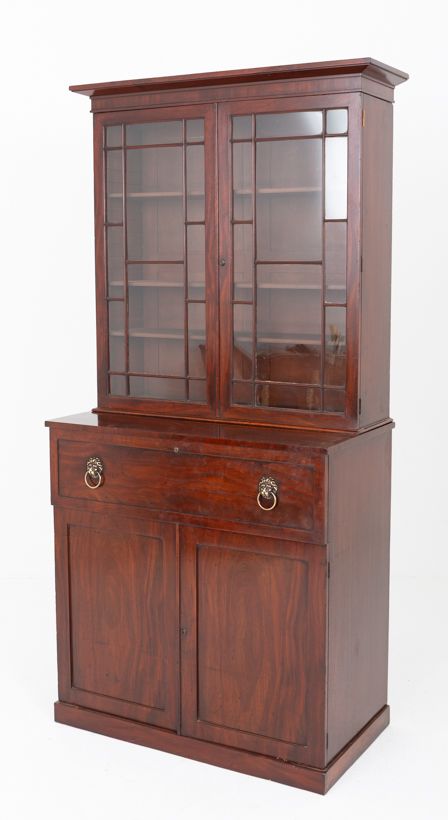
A 19th century secretaire bookcase combines a fitted writing drawer with shelved upper glazing, providing dual purpose utility for studies and libraries.
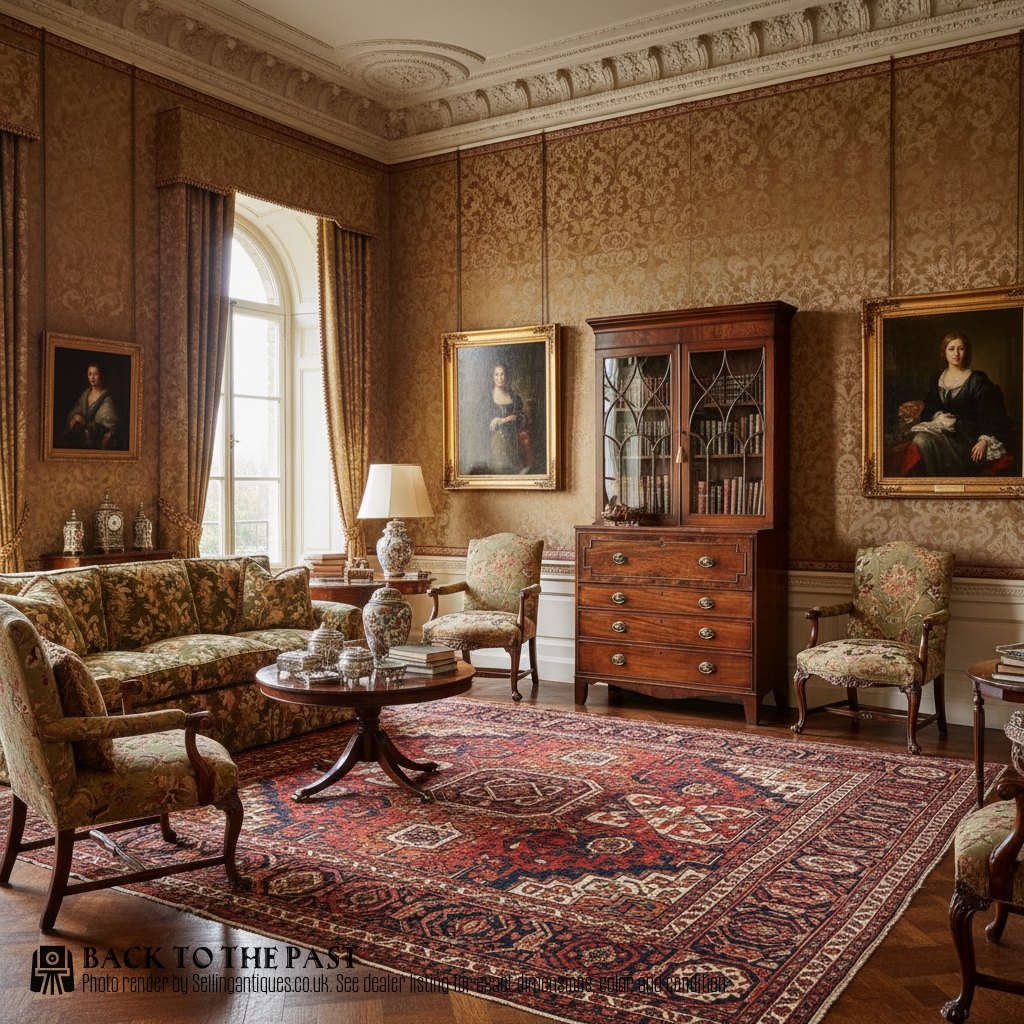
19th Century Secretaire Bookcase
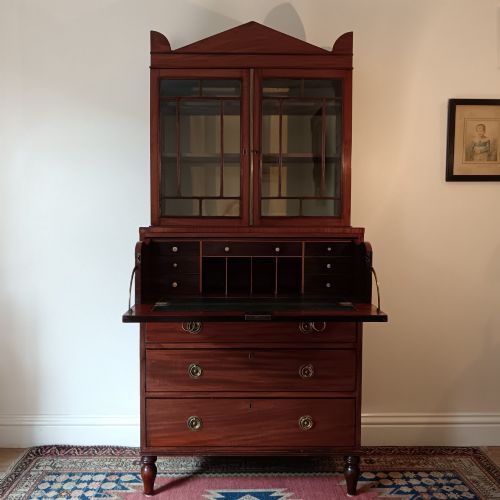
A 19th century secretaire bookcase combines tall glazed shelving above a drop-front writing drawer with internal compartments and small drawers, sitting above lower cabinet doors or drawers. These pieces served as libraries and writing desks combined, originating to meet the need for compact administrative furniture in domestic spaces.
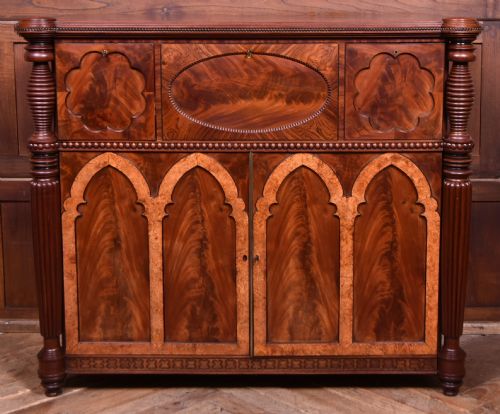
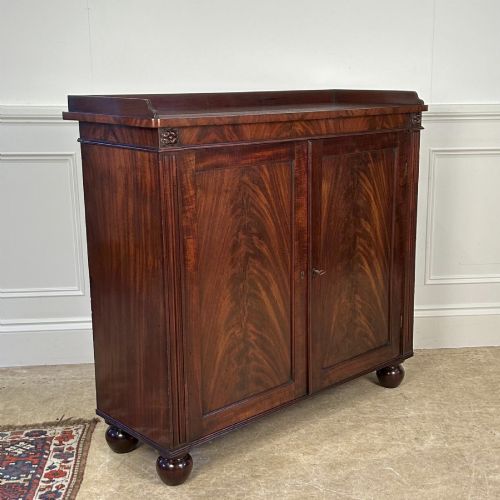
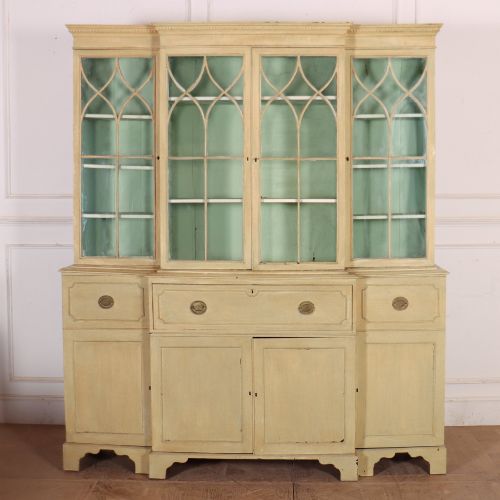
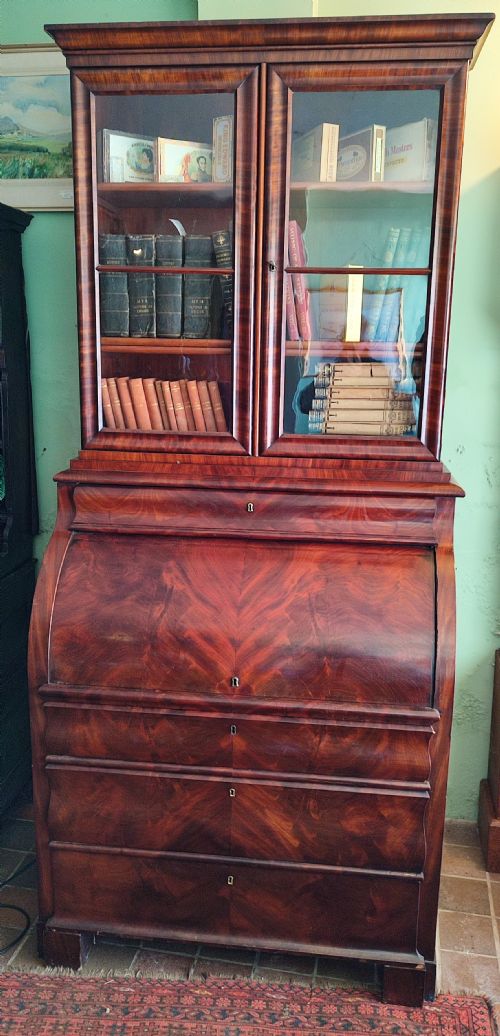
The version most commonly met on this page is constructed from mahogany, often displaying flame veneer or figuration, spanning the Regency, George III, and Victorian periods. Variations include breakfront proportions, dwarf formats, and cylinder bureau adaptations.
Originating across Georgian, Regency, and Victorian workshops, these items reflect changing domestic fashions from neoclassical restraint to heavier revival styles. Cabinet makers adapted the form to suit townhouses and country libraries alike, utilising timber grains to catch the light.
Materials and construction methods
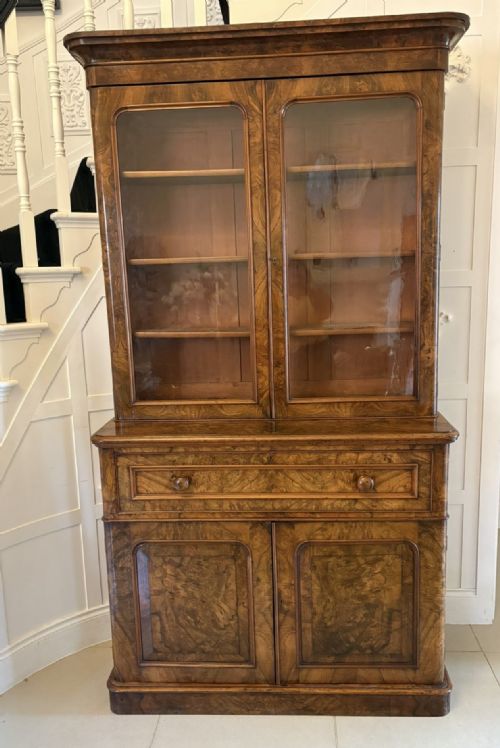
Makers relied heavily on mahogany, flame mahogany veneer, and burr walnut, laid over secondary structural timbers to create figured surfaces on the primary facades. Rosewood, oak, tulipwood, and satinwood appear alongside brass inlays and glazed door frames.
The secretaire drawer utilises a hinged fall-front mechanism supported by quadrants or side arms, concealing pigeonholes, miniature drawers, and central cupboards within the fitted interior. Glazed upper doors are framed with timber bars holding individual glass panes above adjustable shelving.
Secret inner drawers tucked inside the secretaire section often require finding hidden wooden spring releases to open.
Separating standards of execution
Quality rests upon the selection and matching of wood veneers, particularly the symmetry of flame mahogany or burr walnut across large drawer fronts and cabinet doors. Superior examples display continuous grain patterns and meticulous timber selection rather than standard stock planks.
Internal joinery of the fitted writing section distinguishes finer items, seen in dovetailed drawer construction, secret compartments, and finely turned pulls. The architectural proportioning of the upper glazed cornices and the crispness of inlaid brass or stringing further separate standard workshop production from accomplished cabinet work.
George Oakley·Gillows
The 19th Century Secretaire Bookcase Glossary
- Secretaire
- A writing drawer or compartment featuring a drop-front that reveals inner pigeonholes and small drawers. This pull-out section serves as a desk surface when lowered.
- Breakfront
- A piece of furniture where the central section projects forward from the flanking outer wings. This architectural arrangement creates depth and shadow across the facade.
- Cylinder bureau
- A desk featuring a quarter-circle rotating wooden cylinder that rolls backward to uncover the writing surface and interior fittings. It encloses the desk area completely when closed.
- Flame mahogany
- Timber cut from the fork of the mahogany tree to produce a rippling, flame-like grain pattern. Cabinet makers used this veneer symmetrically on prominent surfaces.
- Glazed doors
- Doors fitted with glass panes to display books or collections while protecting them from dust. These frames are typically divided by wooden glazing bars.
19th Century Secretaire Bookcase: Frequently Asked Questions
How do I use a secretaire drawer?
Lower the drop-front flap by releasing internal catches or locks, which rests horizontally on support arms to form a writing surface. This reveals the pigeonholes and miniature drawers designed for correspondence.
Close the flap upward when writing concludes to conceal desk clutter while keeping books visible through the upper glazed cabinet doors.
What fits inside the upper bookcase?
Adjustable wooden shelves house standard library volumes, ledgers, and display items behind the glass-fronted upper doors. Shelf heights adjust using traditional peg supports.
Heavier folios sit on lower shelves while lighter volumes occupy upper tiers, maintaining stable weight distribution within the tall framework.
How do I distinguish Regency from Victorian examples?
Regency pieces often display neoclassical restraint, architectural cornices, brass inlay, and figured mahogany veneers dating from the early decades of the century. Lines remain clean and proportions lean toward classical harmony.
Victorian items tend toward heavier proportions, darker woods like burr walnut, and revival ornamentation reflecting mid to late 19th-century tastes.
Are these pieces split for transport?
Most large examples separate into distinct upper bookcase sections and lower secretaire desk bases to facilitate moving and installation. Some grander breakfront formats disassemble into three vertical components.
Ensure cornices and plinths remain paired with their correct carcase sections during any relocation within the home.