


19th Century Round Table
A 19th century round table brings organic flow to a room, offering practical surface area while breaking the rigid lines of square walls.
19th Century Round Table
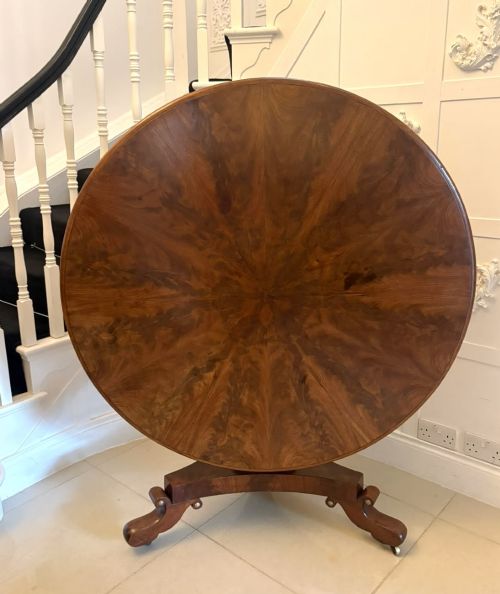
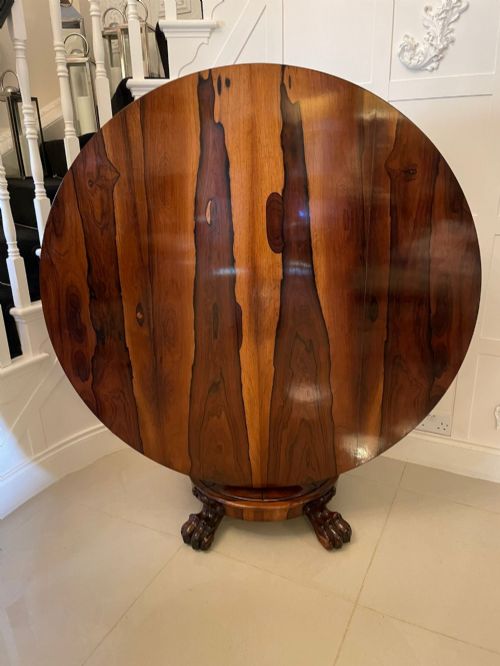
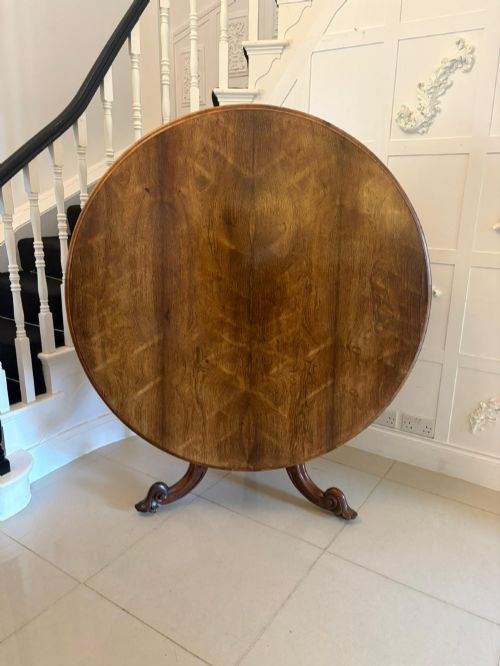
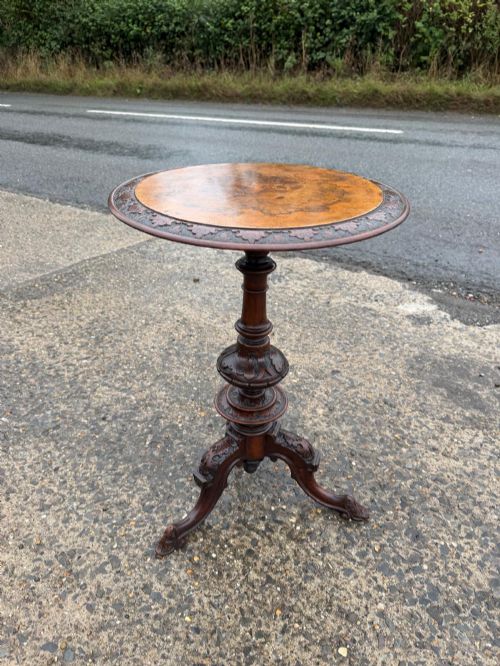
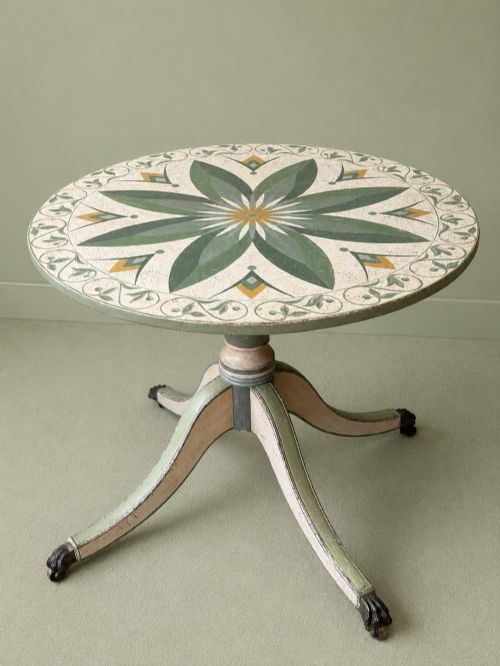
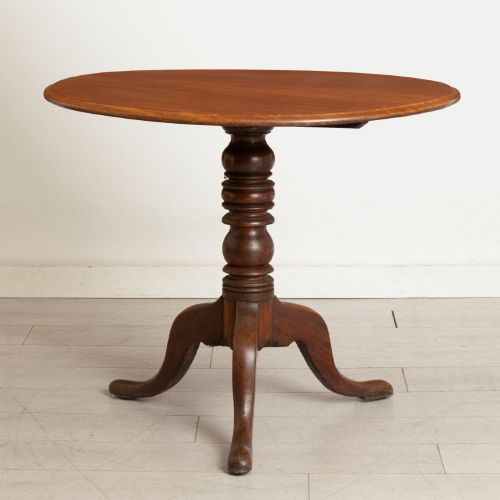
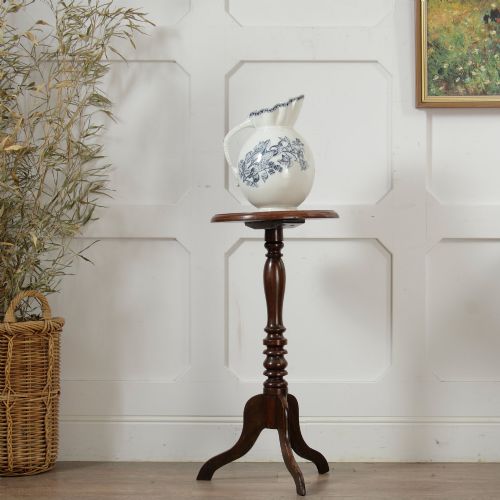
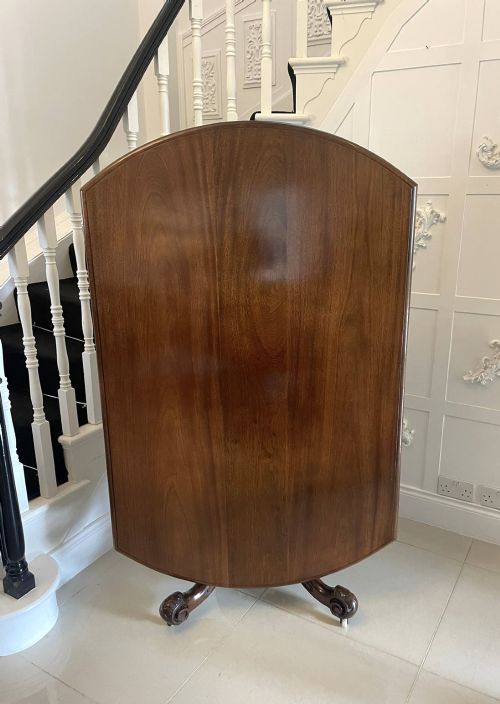
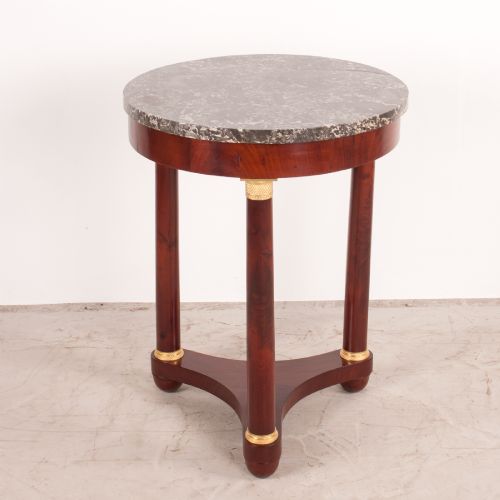
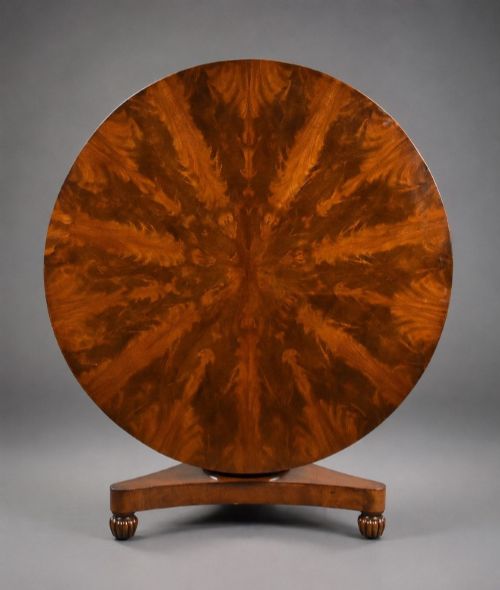
A 19th century round table encompasses diverse forms from intimate wine and occasional tables to large dining pieces and grand centre tables. The version most frequently encountered on this page is the circular rosewood or mahogany breakfast or centre table, resting on a central pedestal or a triform base.
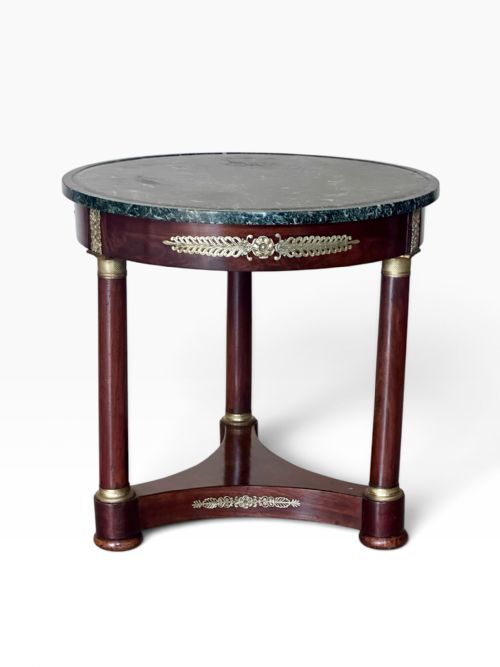
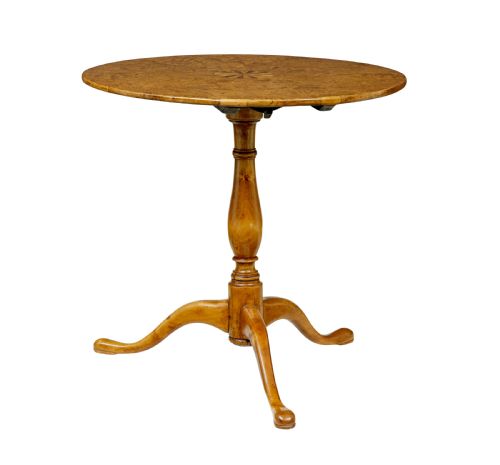
The periods span from Regency and William IV through Victorian and late 19th century examples, incorporating styles such as French Empire, Swedish Biedermeier, and rustic country. These pieces served varied domestic functions, functioning as tea tables, tilt top breakfast tables, and gueridons in European and British interiors.
Materials and Technique
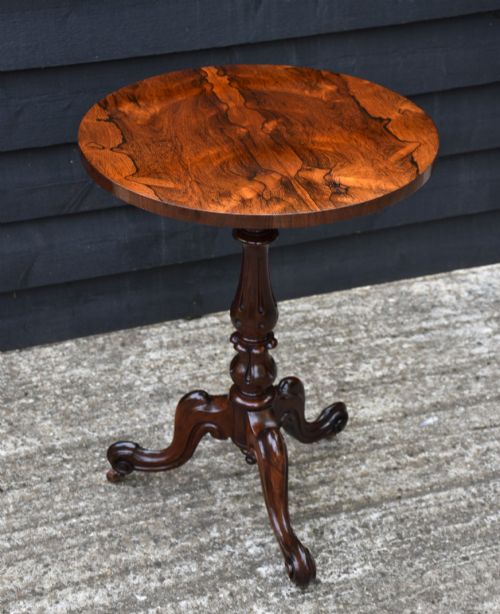
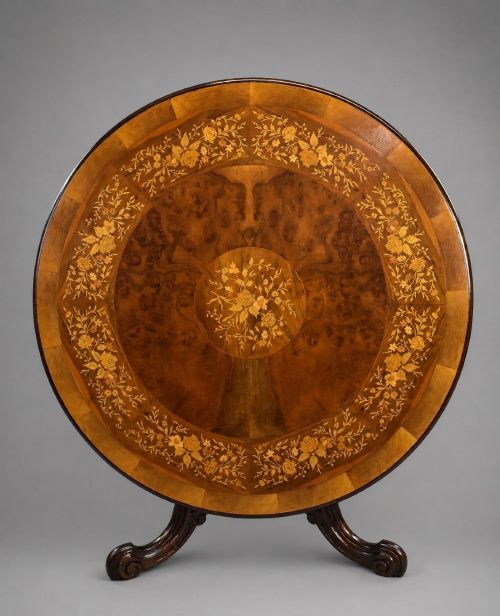
Cabinetmakers utilised rich timbers such as mahogany, rosewood, walnut, and burr birch, often applying veneers and marquetry over solid secondary woods. Tops frequently feature flame mahogany, burr wood, or inset marble, supported by turned pedestals, tripod legs, or heavy triform bases.
Construction techniques include tilt top mechanisms with brass catches, secret drawers integrated into friezes, and brass or cast iron elements for stability and decoration. Painted finishes and brass inlay also appear across French gueridons and Bouillotte tables.
19th Century Round Table Retail Price Guide 2026
Typical asking prices for 19th century round table among the pieces listed under this phrase on Sellingantiques today, from the lower quarter to the upper quarter. They describe what is for sale here now, not the wider market.
Listings feature circular tables spanning the 19th century, executed in mahogany, rosewood, walnut, and pine across styles from Regency to rustic country.
Judging Quality
Quality rests in the selection of timber figures, such as highly figured rosewood or burr walnut veneers, and the crispness of carved details on pedestals and tripod bases. Superior examples demonstrate balanced proportions, stable tilt mechanisms, and refined joinery that withstands heavy daily use.
The distinction between standard utility items and finer pieces lies in the subtlety of the marquetry, the integration of secret drawers, and the inclusion of premium materials like white marble tops or fine brass inlay. Finer workshops ensured grain patterns matched harmoniously across the circular top.
Gregory & Co·Heals·Peters of Genoa
The 19th Century Round Table Glossary
- Gueridon
- A small French round table, often used as a centre table or occasional piece, popular during the 19th century. These tables frequently feature marble tops and decorative wood veneers.
- Tilt top
- A tabletop mechanism that allows the surface to pivot and lock vertically when not in use. This clever design saved space in smaller 19th century rooms.
- Bouillotte table
- A small French neoclassical round table with a raised gallery edge, traditionally used for card games. They often combine marble tops with brass galleries.
- Triform base
- A heavy three-sided pedestal base providing stability to large circular dining and breakfast tables. It is commonly found on Regency and William IV rosewood examples.
- Cricket table
- A rustic three-legged round occasional table, typically made of pine or oak. Their simple construction suits country and farmhouse interiors.
19th Century Round Table: Frequently Asked Questions
How were 19th century round tables used?
These tables served multiple domestic purposes, functioning as breakfast tables in mornings, tea tables in afternoons, and dining or centre tables in evenings. Tilt top variants allowed households to clear floor space easily when the tables were not actively in use.
Smaller occasional and wine tables were easily moved around rooms to hold lamps, books, or decorative objects. Larger pedestal models anchored the middle of formal drawing rooms and dining spaces.
What is a Bouillotte table?
A Bouillotte table is a distinctive French round table characterised by a shallow raised gallery border around the top. This rim kept card game counters or glassware from sliding off the surface during use.
They frequently feature marble tops surrounded by brass galleries and small pull-out candle slides beneath the frieze. These refined tables work exceptionally well as lamp tables in modern reception rooms.
How do I tell Regency from Victorian tables?
Regency round tables, dating from the early 19th century, often display neoclassical influences with clean architectural lines, rosewood or mahogany veneers, and brass inlay. They frequently utilise heavy brass paw feet and sophisticated pedestal designs.
Victorian pieces, produced from the mid 19th century onward, often feature heavier carved rosewood or walnut frames, ornate burr wood tops, and elaborate triform or tripod bases. Victorian furniture embraces varied historical revivals with robust proportions.