
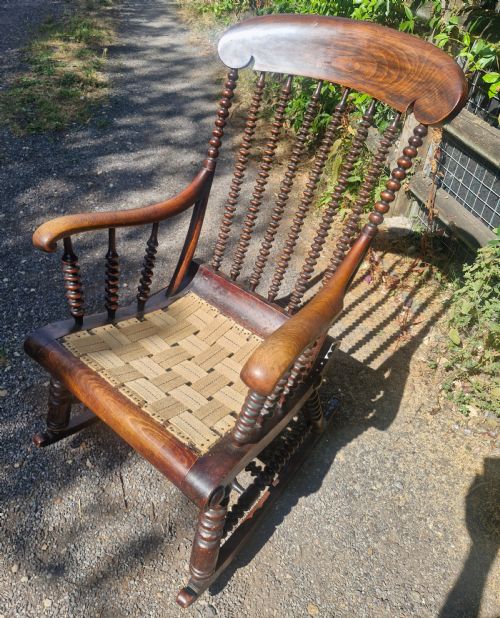
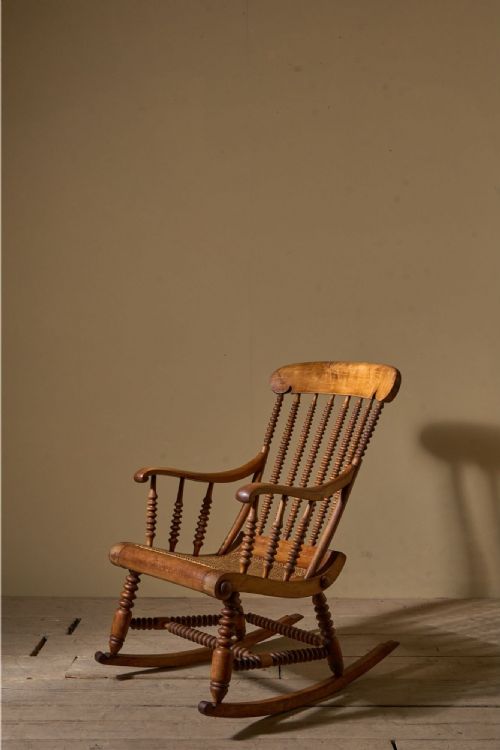
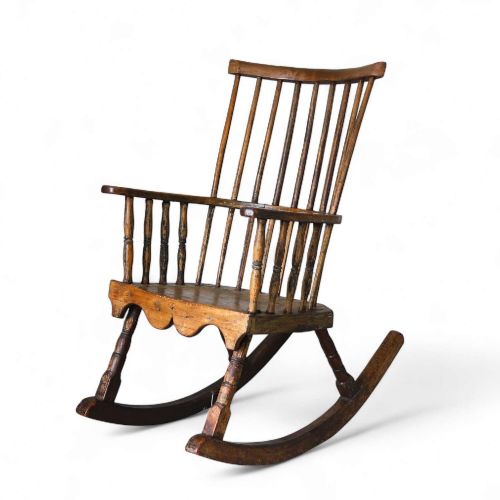
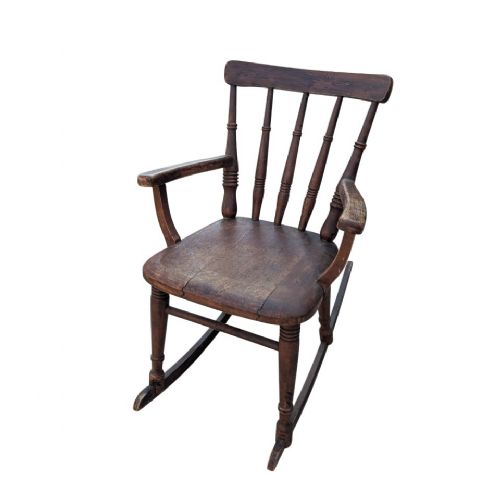
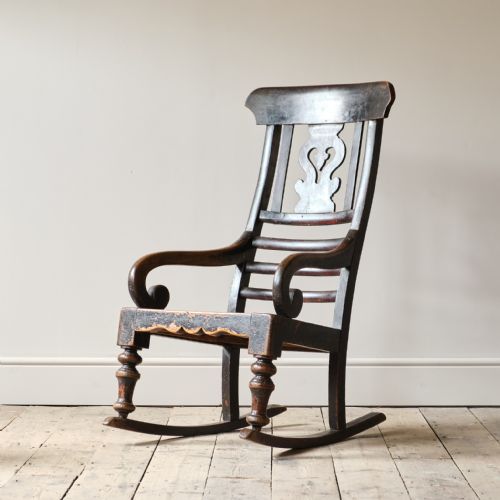
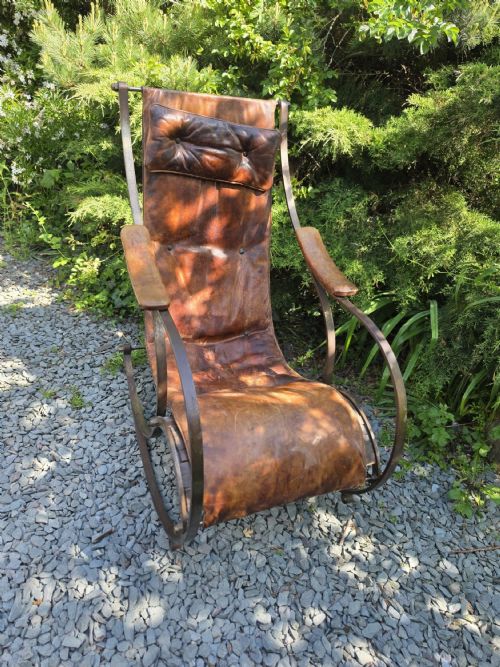


19th Century Rocking Chair
These pieces are a 19th century rocking chair, offering historic seating forms crafted for relaxation and everyday utility.
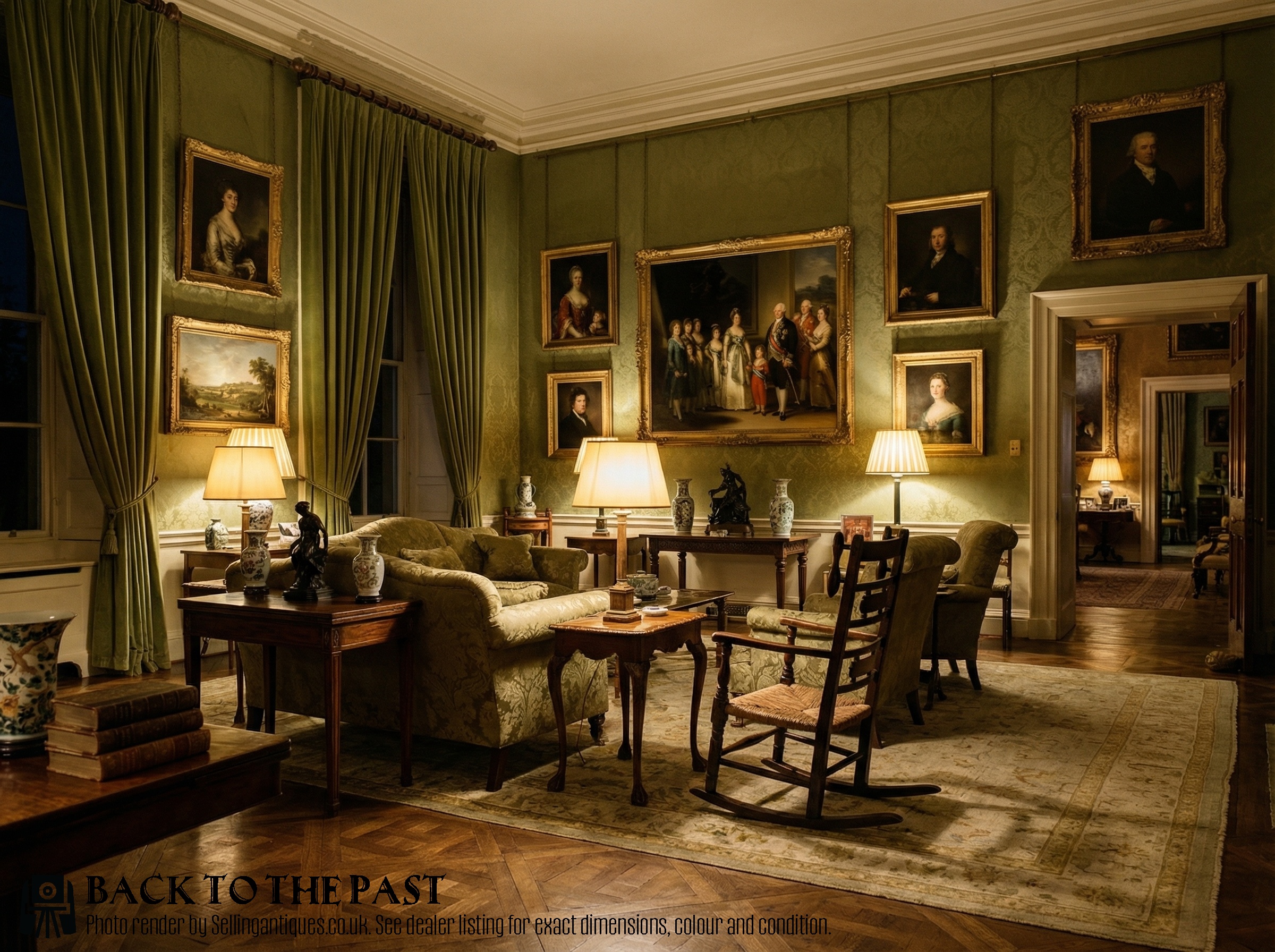
19th Century Rocking Chair
A 19th century rocking chair encompasses diverse regional styles, from English Windsor models to American imports and primitive vernacular seating.
The selection frequently includes smaller child and doll variants alongside full-sized adult armchairs built for fireside or nursery use.
Makers utilised traditional country idioms, resulting in ladder back, spindle back, comb-back, and bobbin-turned frameworks.
Materials and Construction
Local timbers such as elm, ash, beech, oak, and fruitwood formed the sturdy structural frames, often combining multiple woods in a single chair.
Seats incorporate solid carved timber, rush, sea grass, leather, or upholstered fabric pads depending on the regional workshop and period.
Turned components, bentwood techniques, and pegged joinery provided the necessary flexibility and strength for constant movement.
19th Century Rocking Chair Retail Price Guide 2026
Typical asking prices for 19th century rocking chair among the pieces listed under this phrase on Sellingantiques today, from the lower quarter to the upper quarter. They describe what is for sale here now, not the wider market.
Recorded seating materials range from solid elm and ash boards to rush, sea grass, and original leather upholstery.
Build and Integrity
Quality rests in the balance of the timber selection, the crispness of the turnings, and the preservation of original surfaces like paint or polish.
Substantial weight, tight joints without excessive modern intervention, and intact vernacular details distinguish better examples.
Hugh Shields·Brears Of Addingham·R W Wingfield
The 19th Century Rocking Chair Glossary
- Windsor
- A chair built with a solid wood seat into which the legs and back sticks are separately inserted. This construction method ensures robust daily utility.
- Bobbin turned
- A style of furniture leg or stretcher shaped on a lathe to resemble a series of wooden reels or bobbins. It is typical of mid-century vernacular pieces.
- Comb-back
- A Windsor chair variation where the vertical spindles of the back extend up into a small headrest resembling a traditional hair comb.
- Vernacular
- Objects designed by local craftspeople using regional materials and traditional methods rather than following strict high-style metropolitan fashions.
19th Century Rocking Chair: Frequently Asked Questions
How do I identify a child's rocking chair?
Child and doll variants share the exact construction methods, timber choices, and stylistic traits of full-sized seating but are scaled down for smaller occupants.
Look at the proportions of the arms and seat height to confirm the intended scale of the piece.
What woods were commonly used?
Country workshops relied heavily on native hardwoods like ash, elm, beech, and oak for their strength and availability.
Selected pieces also incorporate fruitwood, mahogany, or sycamore depending on the specific regional tradition.
Are American models different?
Imported variants from the United States often feature distinct structural forms, including specific Shaker designs and upholstered Boston rocking chairs.
These frequently utilise alternative seating materials such as woven rush or fabric pads.
What is a nursing chair?
A nursing chair is a low-seated armchair designed specifically to provide comfort and ease of movement during infant care.
They often appear with upholstered or cane seats and compact proportions.