


19th Century Recamier
These 19th century recamier pieces offer classic daybed forms and reclining seating designed for elegant interiors.
19th Century Recamier
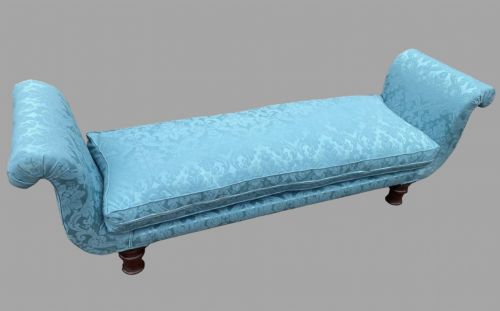
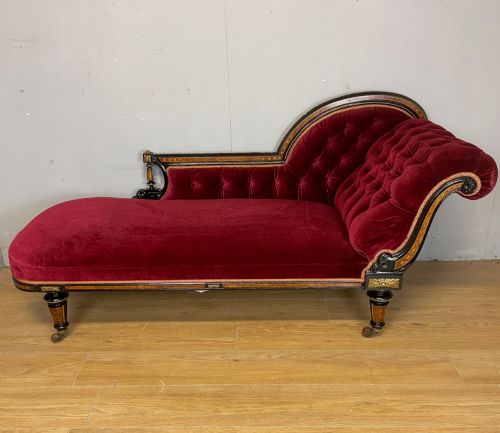
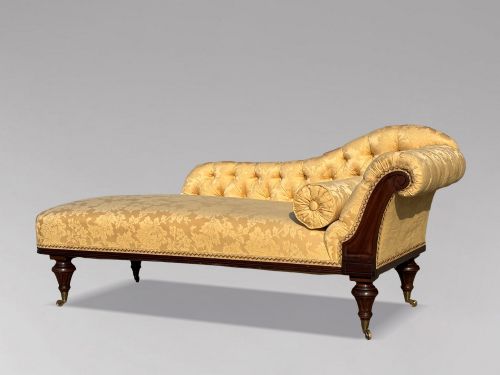
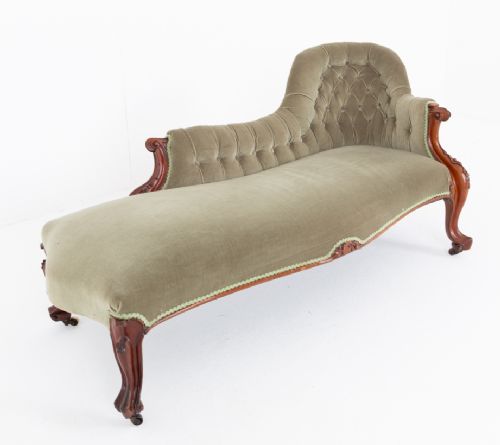
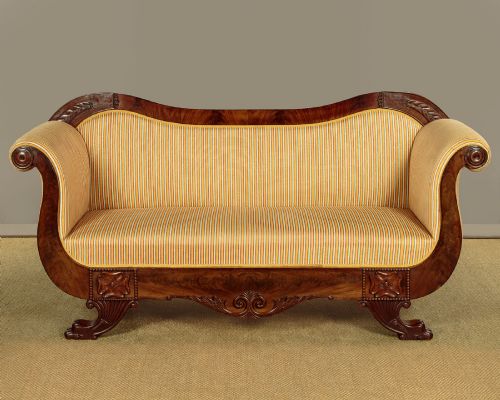
A 19th century recamier search brings up daybeds, chaise longues, and couches designed for reclining in formal interiors. The forms span Regency, Victorian, and William IV periods, capturing the classical taste of the era.
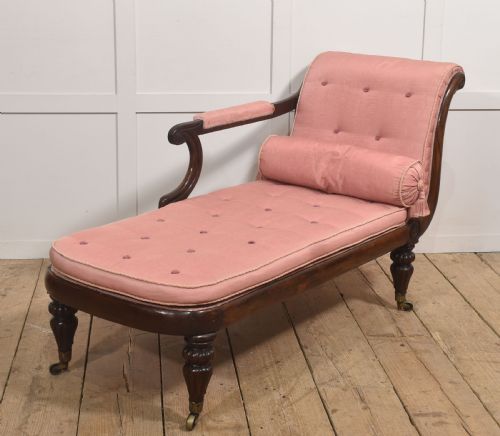
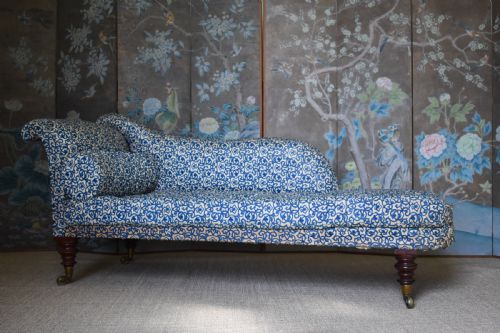
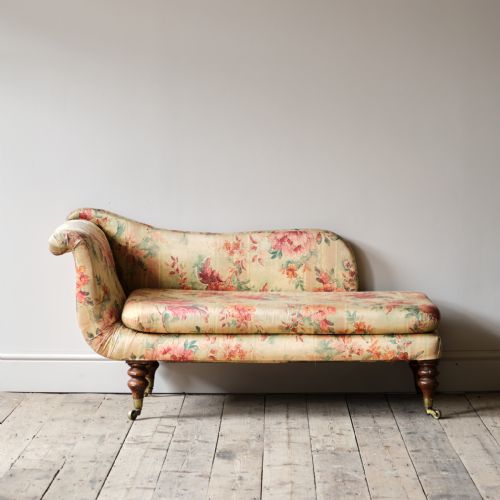
Most pieces seen here are mahogany, rosewood, or walnut chaise longues featuring scroll ends and upholstered seats. Alongside these seating forms, marble and bronze busts of Madame Récamier occasionally appear in the record.
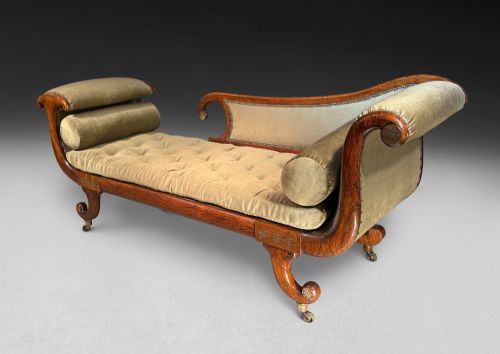
The style ranges from Neoclassical and French Empire to English Victorian interpretations. Buyers encounter everything from simple timber frames to elaborate pieces with brass inlay and ormolu decoration.
How they were made
Cabinetmakers utilised dense timbers like mahogany, walnut, and rosewood for the structural frames, often employing ebonised finishes or simulated grain. Brass inlay and ormolu mounts provide metallic contrast against the polished wood surfaces.
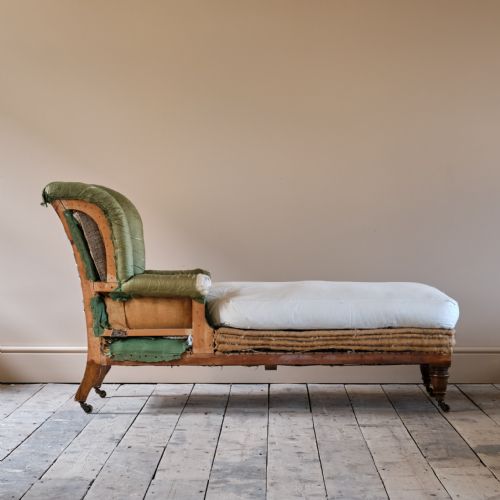
Upholstery relies on fabric, velvet, and cotton, paired occasionally with cane seating on daybeds and frames. Carved wooden scrolls and shaped wooden panels define the distinct silhouettes of the period.
The listings combine timber daybed frames with fabric-upholstered seating across the Regency, William IV, and Victorian periods.
What varies in quality
The sophistication of the carved timber framework and the precision of brass inlay set individual pieces apart. Finer examples display meticulous joinery and sculptural scroll ends that reflect skilled workshop execution.
The choice of primary timber, such as solid Rio rosewood versus standard mahogany, marks a distinction in material grade. Additionally, the integration of ormolu decoration and the quality of the upholstery fabrics influence the overall standard of the piece.
Holland & Sons·Miles & Edwards
The 19th Century Recamier Glossary
- Chaise Longue
- A long reclining chair or daybed designed for one person to stretch out. This form dominates the seating options in the collection.
- Ormolu
- Gilt-bronze decorative mounts applied to furniture. It provides bright metallic detail against dark timbers like rosewood.
- Lit Bateau
- A French bed or daybed style with parallel high head and footboards resembling a boat. Examples appear in classical French Empire designs.
- Scroll End
- A curved wooden terminal shaping the arm or backrest of a couch. This feature is typical of Regency and William IV daybeds.
- Cane Seating
- Woven plant material used to form a breathable seat base. It appears on solid rosewood daybeds from the nineteenth century.
19th Century Recamier: Frequently Asked Questions
How do I identify a Regency recamier?
Regency recamier pieces often feature classical Neoclassical lines, brass inlay, and simulated rosewood finishes. They reflect the early nineteenth-century taste for ancient Greek and Roman forms.
Scroll ends and mahogany construction further help distinguish pieces from this specific period.
Where should I place a recamier in my home?
These pieces suit living rooms, large hallways, or bedrooms where their sculptural frames can be viewed from multiple angles. Their elongated forms work well placed against a long wall or floating in a spacious interior.
Consider the traffic flow around the scroll ends and extended seating.
How do I care for nineteenth-century wood and upholstery?
Dust mahogany, walnut, and rosewood frames regularly with a soft cloth to protect the polished surface. Avoid direct sunlight to prevent fading on velvet, cotton, or fabric upholstery.
Professional cleaning helps preserve delicate cane seating and ormolu mounts.