


Antique Pink Chaise
An antique pink chaise brings dramatic nineteenth-century lounge seating and classic daybeds into a room with striking upholstered flair.
Antique Pink Chaise
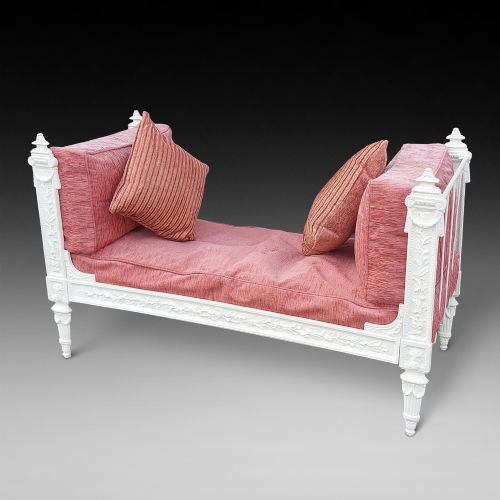
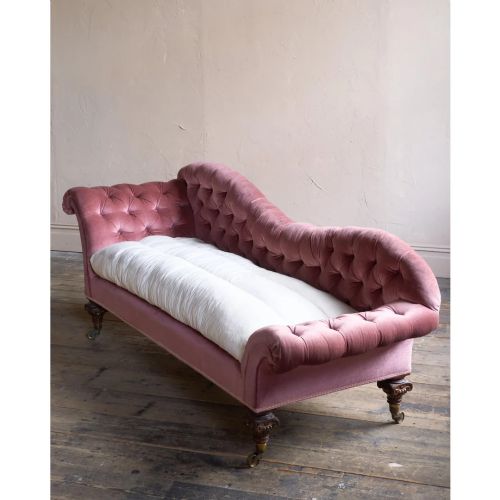
When you search for an antique pink chaise, you are looking at nineteenth-century daybeds, conversational seats, and extended lounge furniture dressed in pink fabric, velvet, or silk upholstery. These pieces offer a reclining or lounging seat designed for relaxed posture rather than upright sitting.
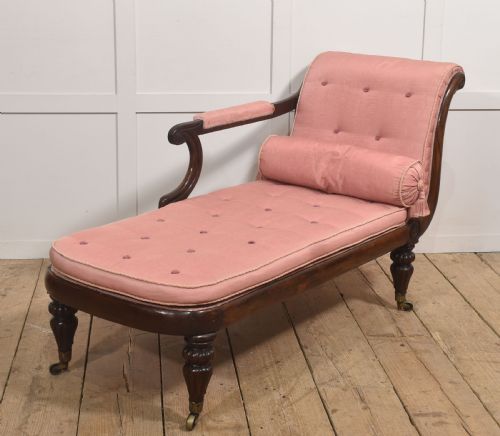
The versions you are most likely to meet on this page hail from the Victorian period, alongside earlier Regency and William IV examples. They span various forms including classic chaise longues, French window seats, and architectural daybeds fitted with distinctive columns or turned wooden frames.
How they were made
Cabinetmakers constructed the frames of these loungers using solid timbers such as walnut, mahogany, and rosewood, whilst some utilitarian or garden-adjacent daybeds utilised cast iron. Skilled artisans shaped the wooden components with architectural details like ionic columns, barley twist supports, and French Empire stylistic influences.
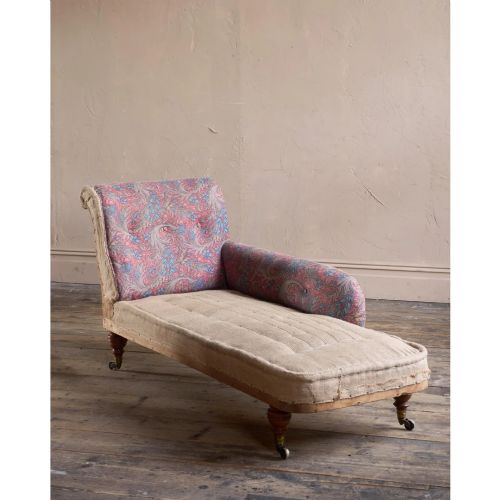
Upholstery techniques combined traditional stuffing methods with tactile coverings of silk, velvet, or standard fabric, often secured over hessian foundations and supported by brass castors. Frame stability relied on robust joinery embedded within the hardwood structures to withstand the outward pressure of the raised headrests.
Miniature French Empire style chaises prove that miniature lounging furniture was taken just as seriously as full-sized daybeds.
What varies in quality
The distinction between ordinary and exceptional pieces rests upon the sophistication of the frame timber and the refinement of the carved details. Fine walnut or rosewood structures displaying crisp architectural elements like ionic column legs or barley twists represent the upper tier of craftsmanship.
Makers' attribution elevates certain examples significantly above anonymous workshop output, transforming a standard lounge seat into a documented collector piece. The integrity of the original wood shaping and the proportional harmony of the scrolling backrest determine the enduring architectural success of the item.
A Howard and Sons·Holland & Sons·Thomas Hope
The Antique Pink Chaise Glossary
- Day Bed
- A multi-purpose seating form used for daytime resting and sleeping, frequently constructed with an architectural timber or iron frame. It resembles a sofa combined with a bed.
- Barley Twist
- A turned wooden furniture leg or structural support carved in a helical spiral resembling barley sugar. This decorative motif appears frequently on nineteenth-century frames.
- Ionic Column
- A classical architectural column featuring spiral scrolls on its capital, sometimes adapted by cabinetmakers to form the legs of seating furniture. It reflects classical revival tastes.
- Hessian
- A coarse woven fabric traditionally utilised as sturdy internal foundation upholstery beneath finer outer layers of silk or velvet.
Antique Pink Chaise: Frequently Asked Questions
What is an antique pink chaise?
An antique pink chaise is a nineteenth-century daybed or lounge seat upholstered in pink fabrics such as velvet, silk, or standard textiles. These pieces combine extended seating platforms with decorative wooden or iron frames.
They served as elegant resting furniture in drawing rooms and boudoirs, allowing occupants to recline comfortably whilst remaining upright enough for daytime leisure and conversation.
How do I date a chaise longue?
Dating relies on examining the timber species, decorative motifs, and overarching style characteristics visible in the frame construction. Pieces featuring heavy rosewood, barley twists, or ionic columns typically point toward specific nineteenth-century periods like the Victorian or Regency eras.
Maker signatures or stamps embedded within the timber frame offer the most precise chronological indicator when available.
Where should I place a daybed?
These long seating forms suit living rooms, large bedrooms, or studies where their asymmetric silhouettes can be viewed from multiple angles. Position them against a principal wall or floating slightly away from it to showcase the carved backrest and legs.
Ensure adequate floor space surrounds the piece so the extended reclining section remains unobstructed and visually balanced.
What is a conversation seat?
A conversation seat is a specialised nineteenth-century upholstered form designed to seat two people facing opposite directions while remaining close. They feature joined padded sections supported by decorative frames such as barley twists.
These pieces facilitated polite social interaction without requiring participants to turn their heads awkwardly.