

19th Century Putti
These 19th century putti bring the winged infant figures of classical art into decorative and functional objects for the home.
19th Century Putti
When searching for 19th century putti, a buyer encounters sculptural figures and functional decorative items depicting cherubs, winged infants or mythological cupids. These representations appear across sculpture, mantel clocks, wall brackets, and lighting fixtures from various European traditions.
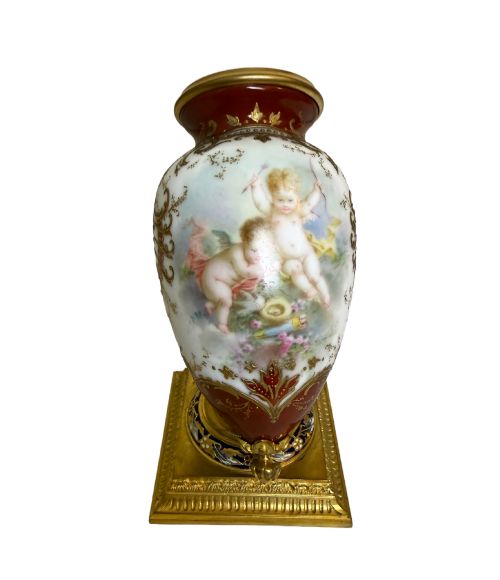
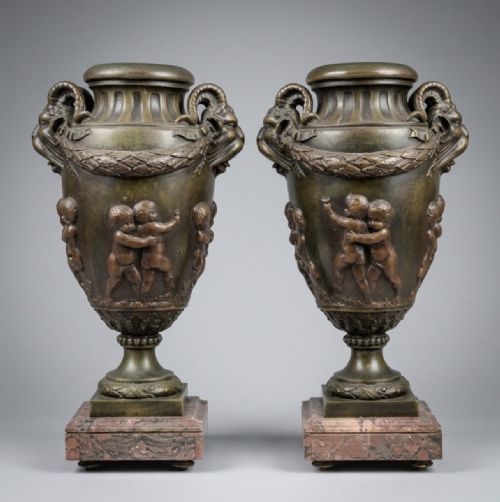
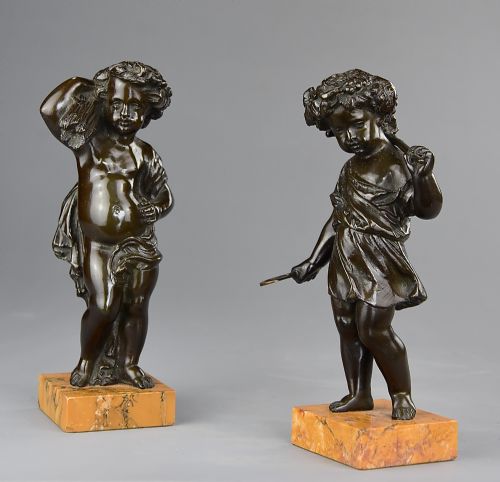
The objects stem predominantly from French and Italian makers working in revivalist styles during the Victorian era and the broader nineteenth century. Figures are cast in bronze, carved in walnut and oak, or modelled in porcelain and marble.
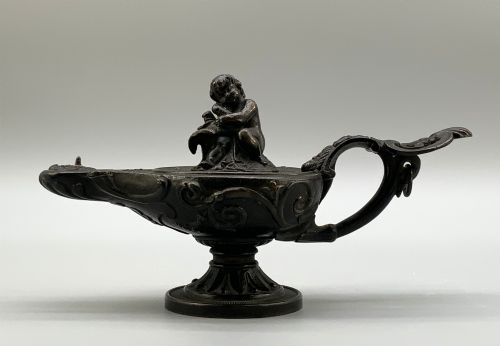
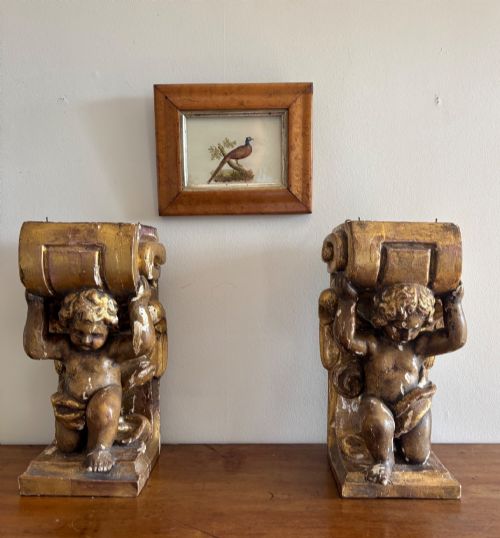
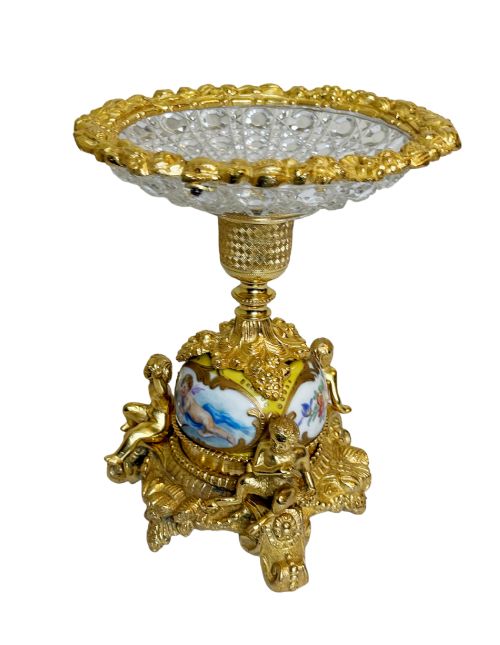
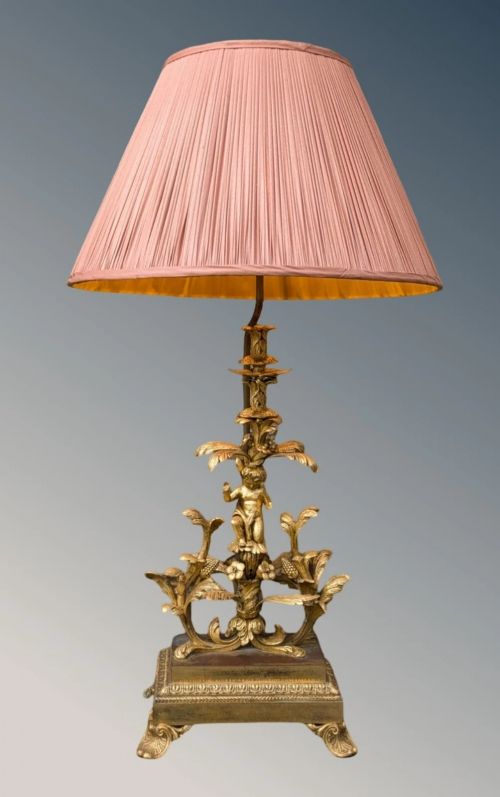
Candlesticks, lamps, and centrepieces frequently incorporate these infant figures supporting sconces or embellishing bases. Architectural elements such as wall corbels and fire fenders also employ putti as decorative supports.
How they were made
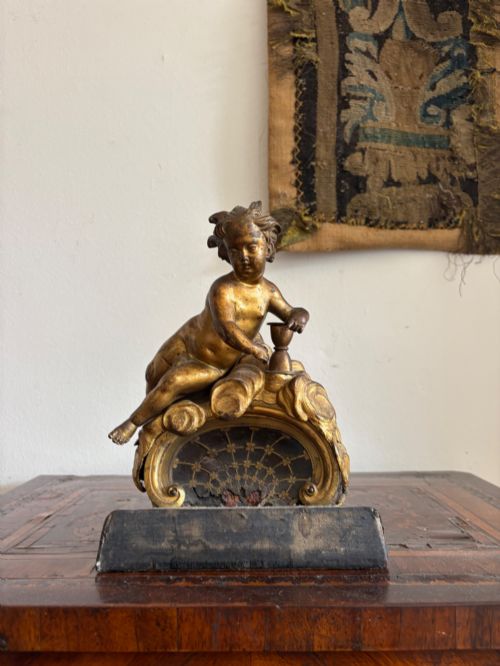
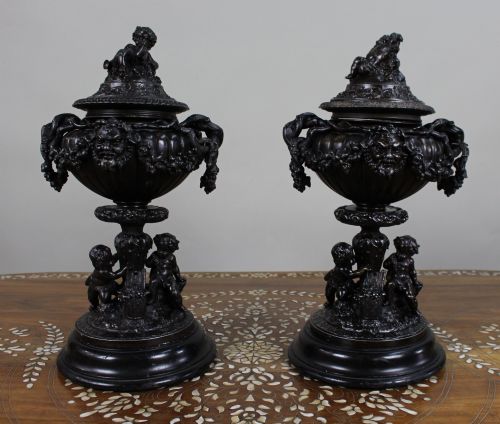
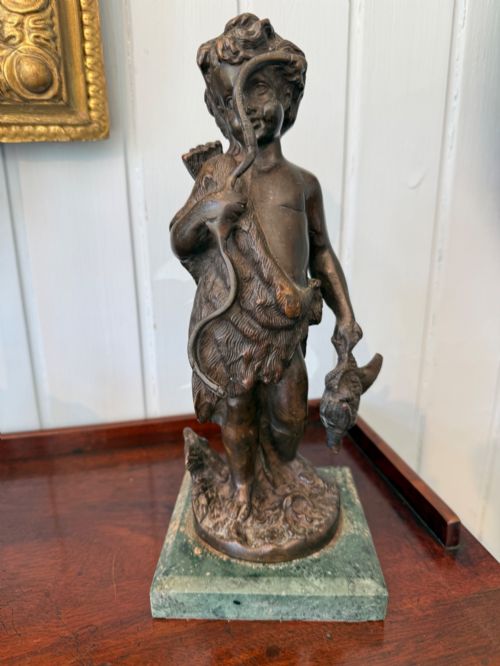
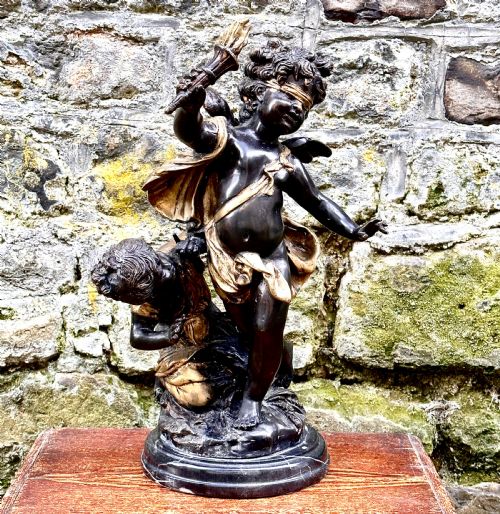
Metal objects rely on bronze, gilt bronze, and ormolu, often utilising lost-wax casting techniques to capture detailed musculature and facial expressions. Spelter serves as an alternative metal for larger decorative urns and figures, finished with patination or bronze paint.
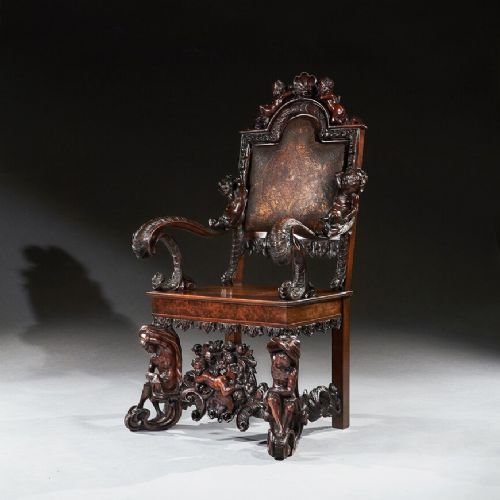
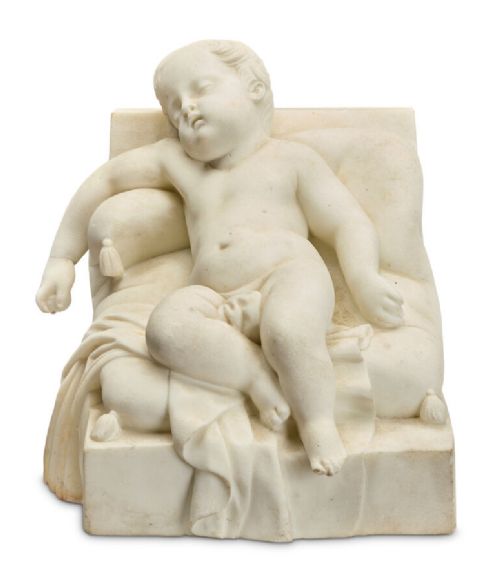
Marble and porcelain form the primary media for sculptural figures and vessels, with Carrara marble providing a smooth surface for carved sleeping putti and cherubs. Woodcarvers utilise walnut and oak for architectural panels, wall brackets, and furniture supports.
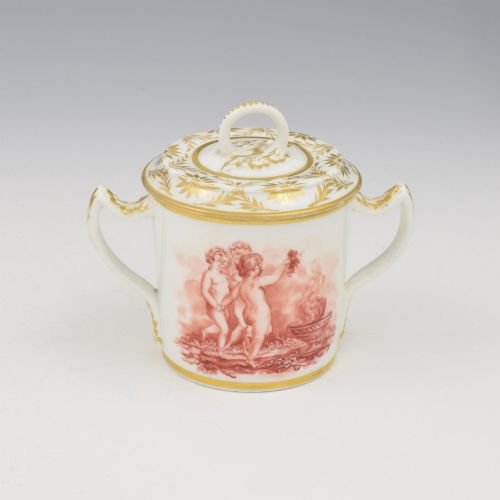
Gilding and hand-painting enhance ceramic surfaces, particularly on porcelain chocolate cups and vases decorated with sepia or polychrome putti scenes.
Objects range from monumental mantel clocks and architectural wall brackets to small bronze desk figures.
What varies in quality
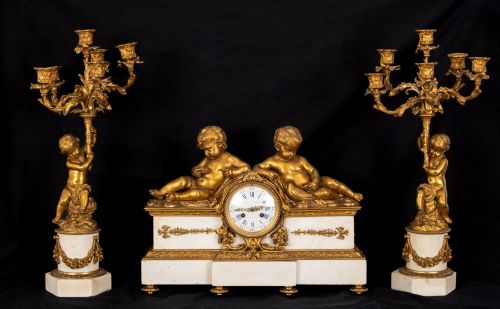
Material selection separates standard decorative items from exhibition pieces, with heavy Carrara marble bases, fine ormolu mounts, and signed porcelain bodies commanding higher regard. The integration of the putto into the functional design, such as a candelabra arm or clock garniture, reflects the ambition of the maker.
Sevres·Claude Michael Clodion·Andrea Brustolon·Clement Messier·G R Collis·Minton·Antonio Canova·Domenico Zampieri·Ernst Wallace·Cantagalli
The 19th Century Putti Glossary
- Putto
- A plump, often winged infant figure derived from classical art and frequently seen in Renaissance and nineteenth-century decorative works.
- Ormolu
- Gilt bronze utilised for decorative mounts, clock cases, and furniture embellishments during the eighteenth and nineteenth centuries.
- Spelter
- A zinc alloy cast into decorative figures and urns, often painted to resemble bronze.
- Garniture
- A set of matching decorative ornaments, typically comprising a mantel clock flanked by matching candelabra or vases.
- Chenet
- A decorative iron or bronze fire dog placed at the hearth, often adorned with figural mounts such as putti.
19th Century Putti: Frequently Asked Questions
What is a putto?
A putto is a chubby, wingless or winged infant figure originating in classical mythology and art. In nineteenth-century pieces, they represent cupids, cherubs, or allegorical figures of harvest and love.
These figures appear across various mediums, including bronze sculptures, carved wooden panels, and painted porcelain vessels.
How were bronze putti made?
Bronze putti were typically produced using the lost-wax casting method, which allowed artisans to achieve intricate detail in hair, wings, and facial expressions. After casting, the metal surfaces were often finished with patination, gilding, or ormolu mounts.
Cheaper alternatives were cast from spelter and subsequently painted to imitate genuine bronze.
Where do these pieces originate?
The majority of these items originate from France and Italy, reflecting the popularity of Rococo Revival, Neoclassical, and Louis XVI styles during the nineteenth century. French workshops produced numerous gilt bronze and marble clock garnitures and wall lights.
Italian makers contributed carved wooden furniture panels, marble sculptures, and Grand Tour bronze figures.
How do I care for gilt bronze?
Gilt bronze and ormolu require gentle dusting with a soft, dry cloth to prevent the accumulation of dirt on the textured surfaces. Avoid abrasive cleaners or chemical polishes, which can strip the delicate gold leaf or patination from the metal.
Keeping pieces away from direct sunlight and moisture preserves the original finish of the bronze and any associated marble or wood components.