
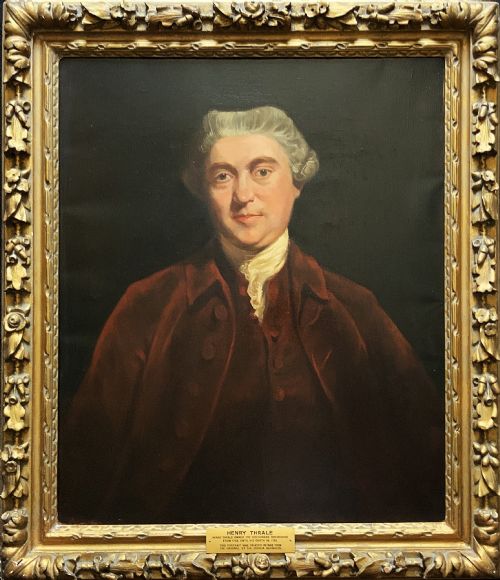


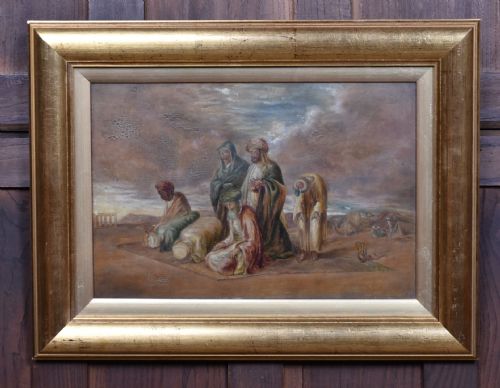



19th Century Oil Copy
These 19th century oil copy works are painted interpretations of established masters, bringing historic portraiture and religious art into period interiors.
19th Century Oil Copy
When you search for 19th century oil copy, you encounter painted reproductions of earlier masterworks produced across the nineteenth century and into the mid-twentieth century. These canvases replicate compositions by celebrated painters such as Sir Joshua Reynolds, Sir Edwin Landseer, Raphael, Peter Paul Rubens, and Guido Reni.
The selections span domestic portraiture, religious iconography, and animal studies, frequently housed in elaborate giltwood frames. While the majority of listings date to the nineteenth century, variations include works from the eighteenth and twentieth centuries alongside occasional watercolour adaptations.
How they were made
Makers applied oil paint to canvas stretched over wooden supports, capturing the depth and texture of original compositions. Canvases were secured within frames constructed from wood and gesso, then finished with layers of gold leaf.
Detail work relied on fine brushwork to mimic the glazing and tonal gradations of Renaissance and Baroque prototypes. Secondary materials such as brass fixings occasionally appear on framing elements.
Listings for this phrase include works spanning the 18th, 19th, and 20th centuries, executed in oil on canvas, watercolour, and wood.
What varies in quality
The fidelity of the brushwork to the original source material distinguishes finer interpretations from simpler studio exercises. Skill in rendering facial expressions, textile folds, and lighting effects determines the visual impact of the canvas.
The craftsmanship of the accompanying frame contributes significantly to the overall piece, with hand-gilded giltwood mouldings representing superior production compared to simpler wooden surrounds.
The 19th Century Oil Copy Glossary
- Oil on canvas
- Pigments bound in a drying oil applied to a woven fabric support. This combination allows for rich blending of colours and durable preservation.
- Giltwood
- Timber carved and coated with gold leaf or gold paint. It provides a reflective, decorative border for traditional paintings.
- Gesso
- A paint mixture consisting of a binder mixed with chalk, gypsum, or pigment. It creates a smooth surface on wooden frames before gilding.
- After
- A term used in titles to indicate that a painting is a copy or interpretation of an earlier known work by a specific artist. It acknowledges the primary source of the composition.
19th Century Oil Copy: Frequently Asked Questions
What is a 19th century oil copy?
A 19th century oil copy is a painting produced during the nineteenth century that reproduces an earlier work by a master artist. These pieces allowed collectors to own representations of famous museum paintings.
They range from large religious scenes to intimate animal studies and portraits.
Who painted these copies?
Many copies were painted by anonymous studio artists, students, or professional copyists working in galleries. Some pieces bear signatures or labels identifying specific makers or commercial suppliers.
The skill level varied from accomplished academic painters to commercial decorators.
How should I frame an old oil painting?
Traditional frames typically feature giltwood or gesso mouldings that complement the period of the canvas. Selecting a frame appropriate to the nineteenth century enhances the historical context of the artwork.
Ensure the painting is properly secured and ventilated within the rebate of the frame.
How do I care for oil on canvas?
Keep oil paintings away from direct sunlight and dramatic shifts in temperature or humidity. Dust the canvas gently with a soft, dry brush without applying pressure.
Avoid using water or chemical cleaners on the painted surface.