

Religious Oil on Canvas
These religious oil on canvas works bring devotional depth and historical gravity into a room, offering rich narrative scenes and portraiture rooted in centuries of European tradition.
Religious Oil on Canvas
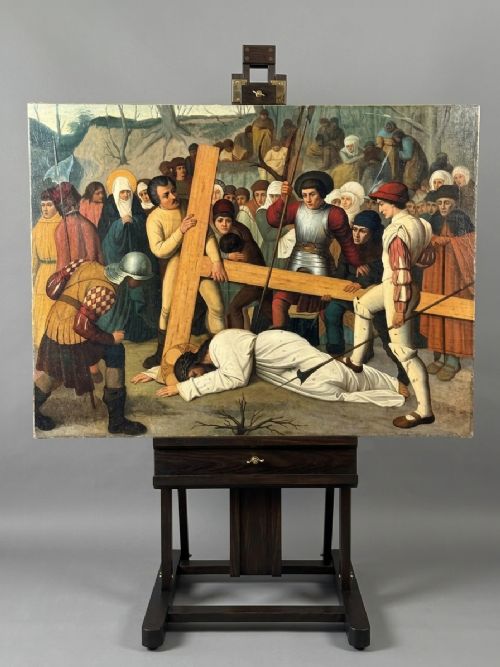
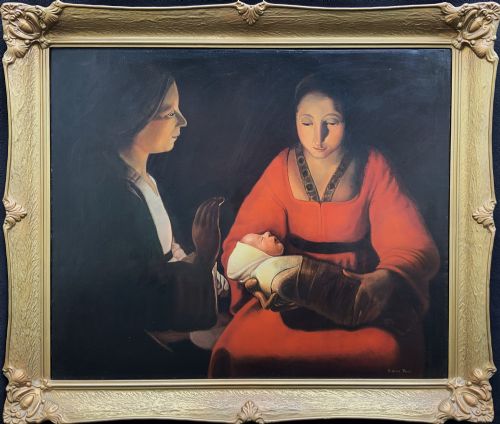
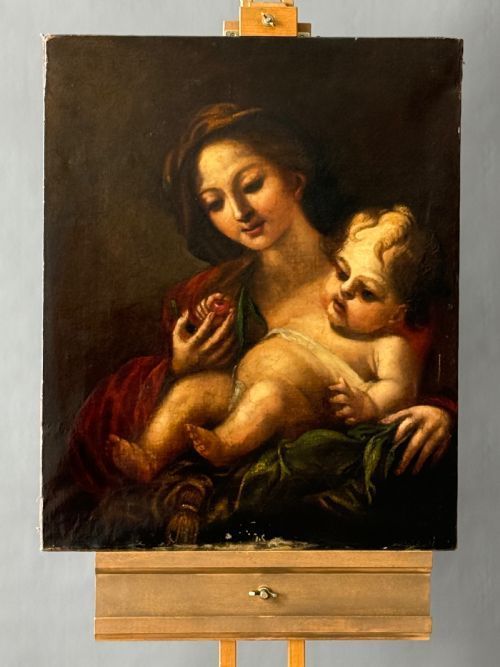
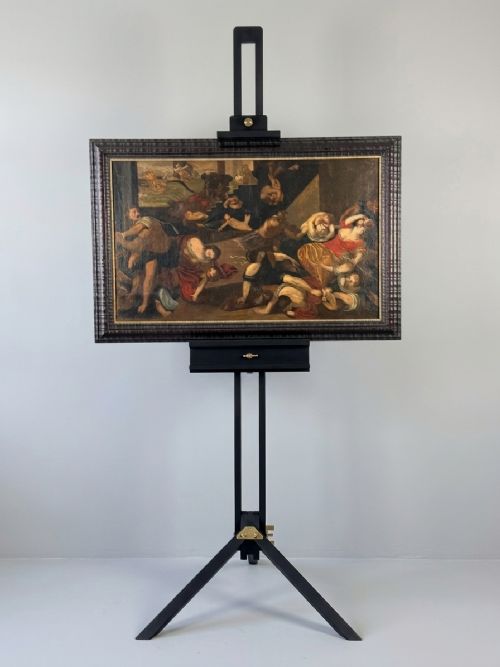
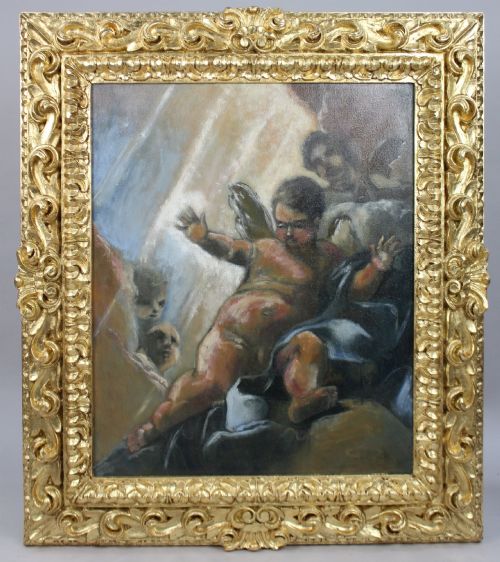
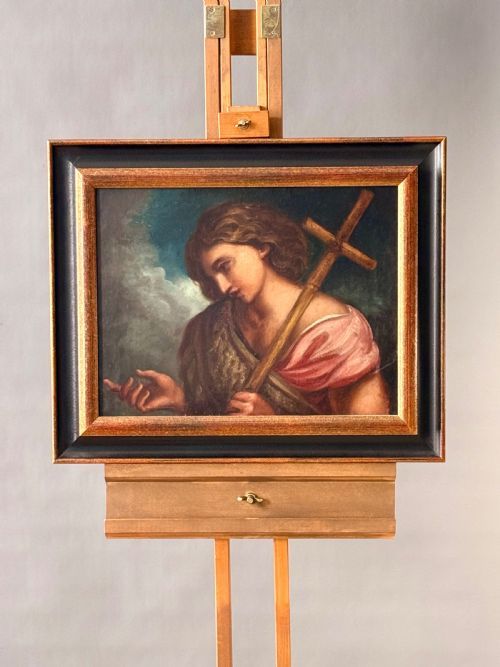
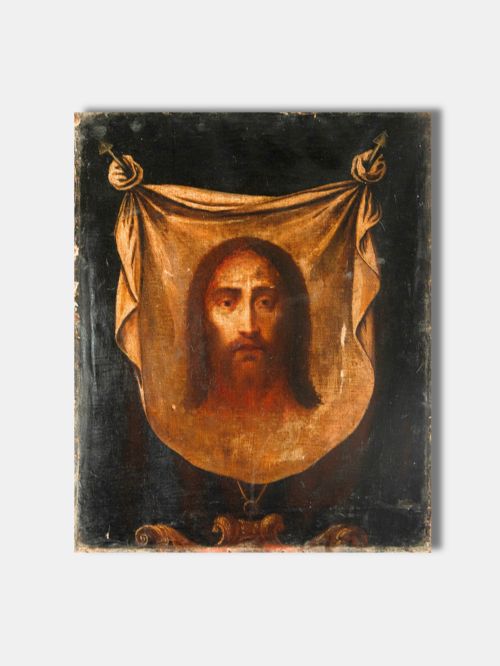
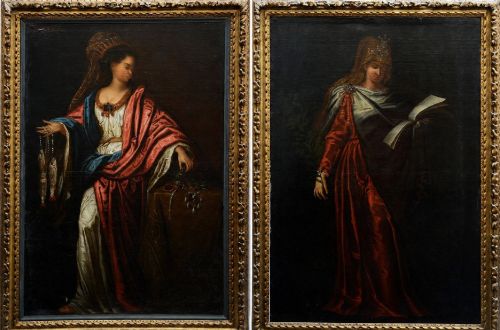
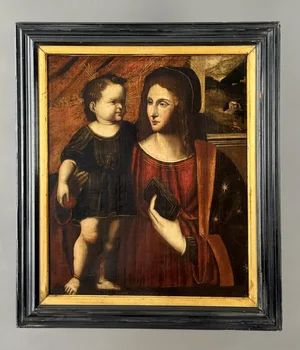
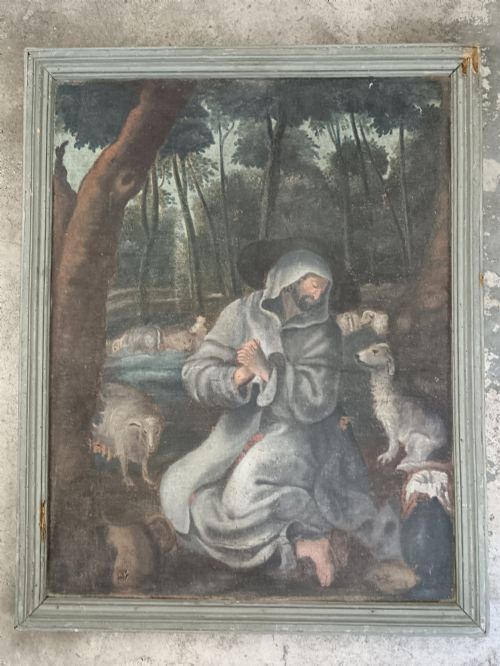
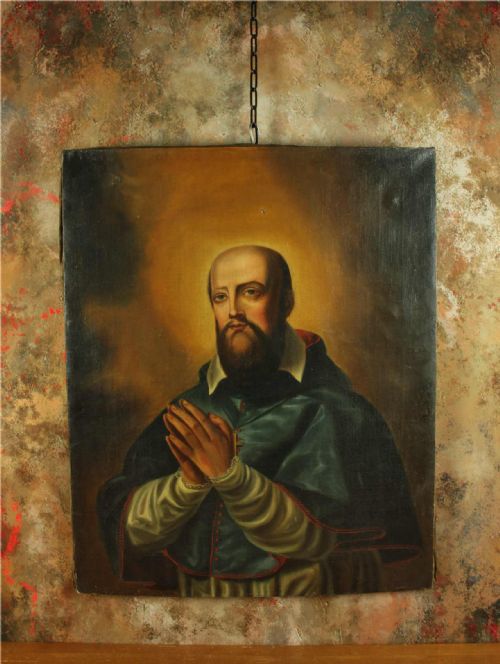
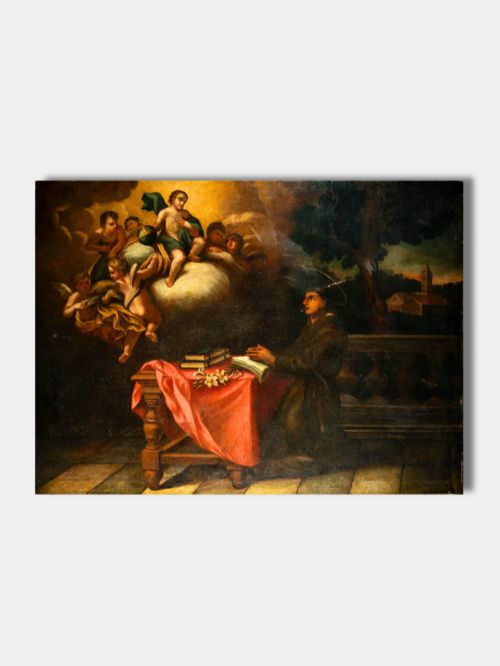
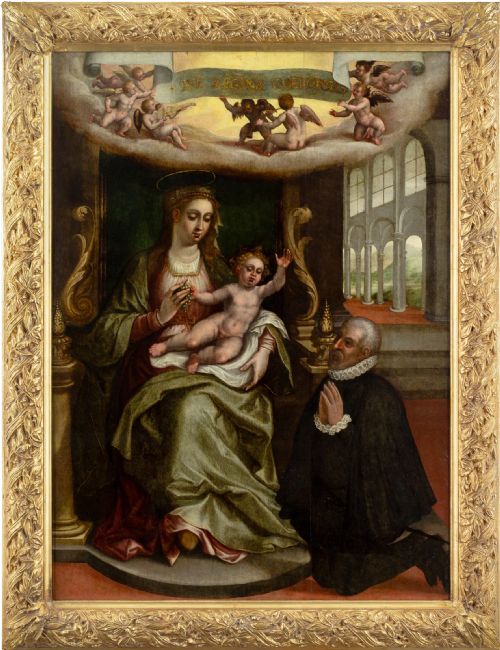
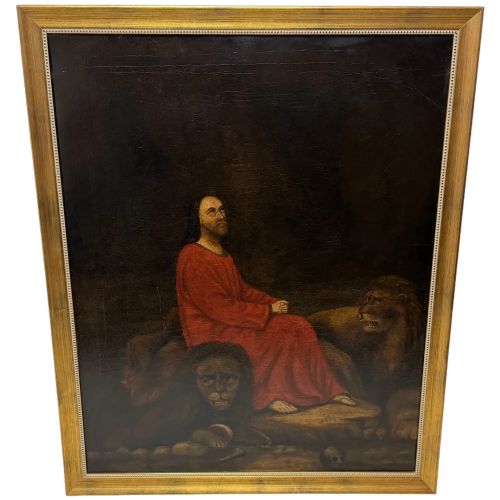
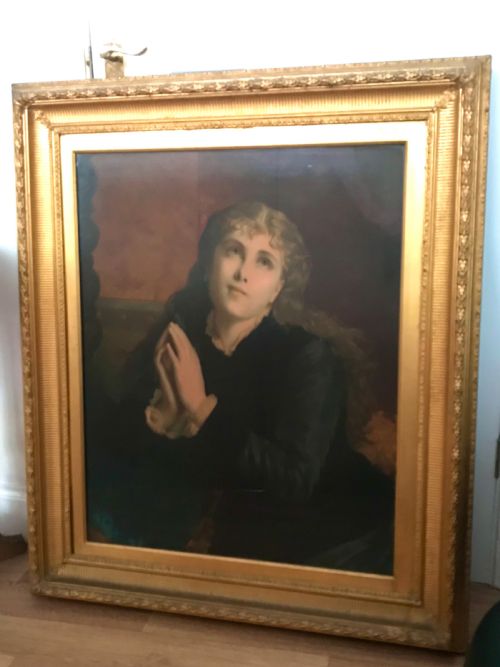
When you search for religious oil on canvas, you encounter centuries of sacred imagery, ranging from Italian Baroque battle scenes and Renaissance Revival Madonnas to later Polish icons and British festival studies. These works encompass dramatic biblical narratives, quiet portrait studies of apostles, and devotional depictions of the Sacred Heart.
You are most likely to meet seventeenth-century Italian works and nineteenth-century interpretations after old masters on this page. The subjects stretch from grand biblical episodes like the capture of Samson to intimate devotional portrayals designed for private contemplation.
How they were made
The physical foundation of these pieces relies upon pigment suspended in oil applied to stretched canvas surfaces. This technique allows for deep chiaroscuro contrasts and luminous layering, which artists used to build dramatic shadows and glowing sacred forms.
Many of these canvases are housed within contemporary or later giltwood and wood frames finished with gold leaf. The combination of oil paint on textile and gilded timber gives each piece its characteristic antique weight and presence.
The listings span the seventeenth century through to the twentieth century, utilising oil on canvas, giltwood, wood, and gold leaf.
What varies in quality
Quality in these devotional paintings rests on the surety of the brushwork and the psychological depth of the figures. Stronger works demonstrate a confident handling of anatomy and drapery, whereas lesser examples can feel stiff or formulaic in their execution.
The handling of light and shadow distinguishes accomplished studio output from more derivative pieces. Superior works capture a convincing sense of volume and spiritual intensity through masterly tonal graduation.
The Religious Oil on Canvas Glossary
- Chiaroscuro
- The strong contrast between light and dark used to give volume to figures and heighten the dramatic tension of a sacred narrative.
- Giltwood
- Timber that has been coated with a thin layer of gold leaf, frequently forming ornate frames for antique paintings.
- Baroque
- An artistic style originating in Italy characterised by dynamic movement and exuberant detail, visible in seventeenth-century pieces.
- Renaissance Revival
- A nineteenth-century artistic movement that drew inspiration from the forms and ideals of the Renaissance, seen in copies after masters like Raphael.
- Icon
- A devotional painting, particularly associated with Eastern Christian traditions, meant to serve as a window to the divine.
Religious Oil on Canvas: Frequently Asked Questions
How should I hang an old oil painting?
Mount these canvases on sturdy walls away from direct sunlight and dramatic temperature fluctuations. Stable indoor conditions protect the oil paint and canvas from cracking or warping over time.
Ensure the hanging hardware is securely fixed to support both the canvas stretcher and any heavy giltwood frame. Professional picture hooks suited to the weight of the piece will keep the work secure.
What does after an old master mean?
This phrase indicates that the work is a later painted copy or study after a famous composition by a master artist such as Raphael or Rembrandt. These paintings served as important training exercises and allowed owners to enjoy famous imagery.
Such works carry their own historical significance, often reflecting the aesthetic priorities of the period in which the copy was created rather than the original date of the design.
Why are some canvases unlined while others are lined?
Lining involves attaching a new canvas to the back of the original fabric to provide structural support for fragile or degraded material. Many older paintings undergo this process to stabilise the original support.
Unlined canvases retain their original fabric structure, which some collectors prefer provided the tension and paint layer remain stable.