




19th Century Biblical Art
These 19th century biblical art pieces bring sacred narratives into your home through devotional oil paintings, engravings and intricate textiles.
19th Century Biblical Art
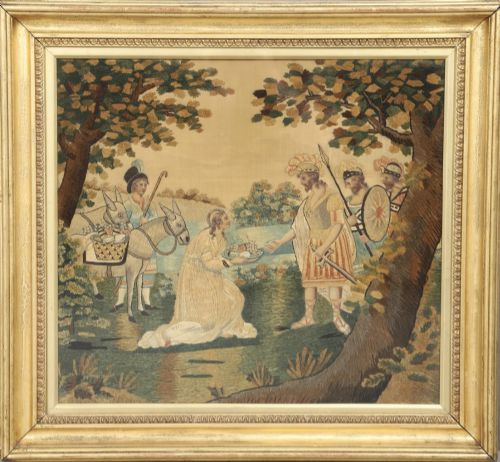
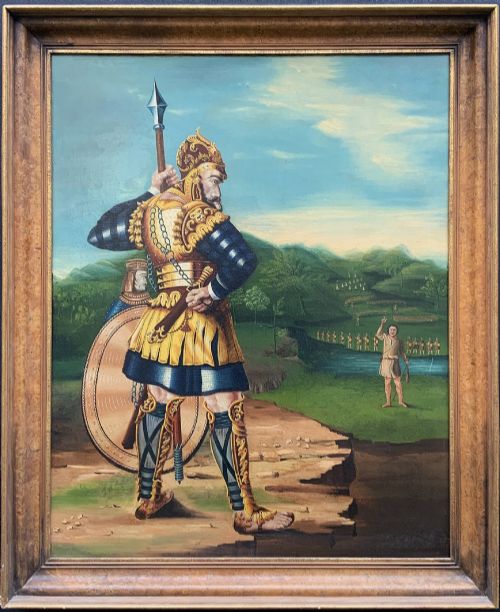
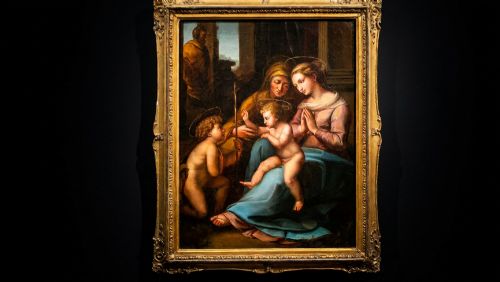
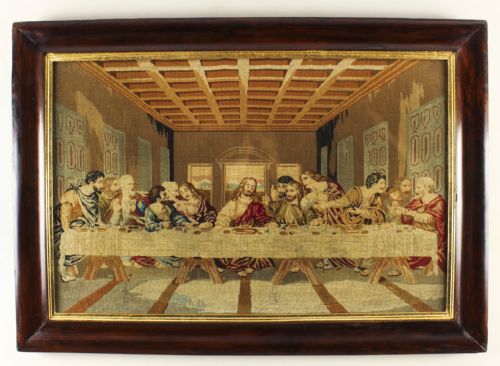
The objects on this page span oil paintings on canvas, delicate engravings, etchings, and large Berlin wool work tapestries. You will frequently find pieces influenced by Renaissance masters or executed in styles such as Gothic Revival and Dutch Golden Age traditions.
Works range from Scottish and German workshops to Flemish tapestries, reflecting a widespread European devotion. Whether rendered in oil paint or worked in wool under gilt frames, these pieces served as focal points for contemplation and worship.
Materials and Technique
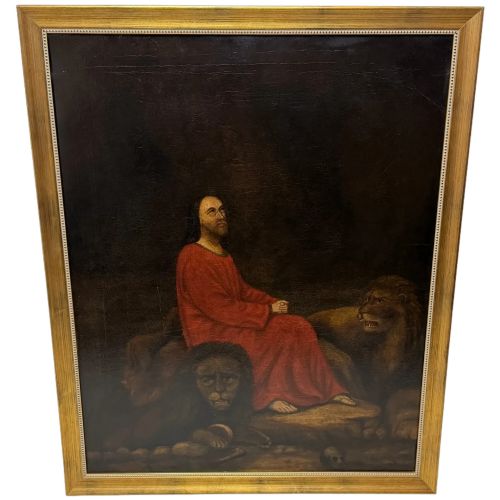
Makers utilised traditional oil paint applied to canvas, often combined with gold leaf for frames that elevated the devotional subject matter. Painters worked either in direct composition or as part of a circle, producing devotional scenes with considerable skill.
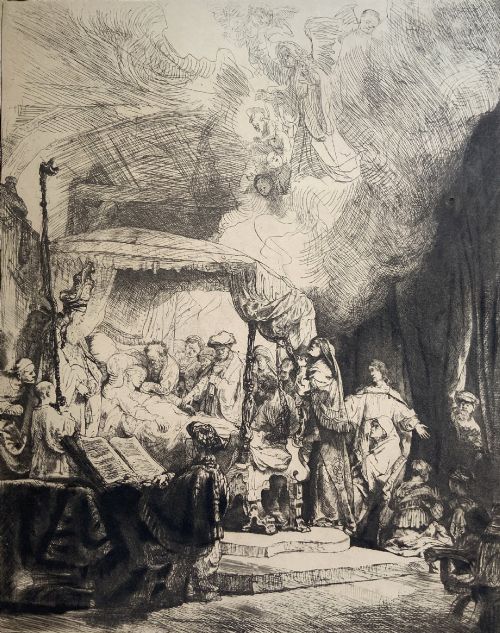
Printmakers employed etching and engraving techniques on paper, as seen in works by Amand-Durand after Rembrandt or engravings by Adolphe Pannemaker after Gustave Doré. These methods allowed detailed linear precision in illustrating complex biblical narratives.
Textile artists created large wall hangings through Berlin wool work or Flanders tapestry techniques using wool on canvas. Wood carving also appears among German artisans to depict figures such as Christ on his way to Calvary.
19th Century Biblical Art Retail Price Guide 2026
Typical asking prices for 19th century biblical art among the pieces listed under this phrase on Sellingantiques today, from the lower quarter to the upper quarter. They describe what is for sale here now, not the wider market.
Nineteenth-century artisans diligently translated epic religious dramas into colourful wool tapestries, proving that patience is indeed a virtue.
Assessing Quality
Quality rests in the precision of the brushwork and the fidelity of the composition to its theological or artistic source. Works that capture emotional intensity in faces and drapery stand above simpler decorative outputs.
The execution of detail defines the upper tier, whether in the fine lines of an etching or the tight needlework of a wool tapestry. Materials such as original gilt frames and well-preserved canvas ground contribute significantly to the overall presence of the piece.
Siegfried Bendixen·Jozef Jansessens·Amand-Durand·Gustave Doré·Adolphe Pannemaker·Rahael
The 19th Century Biblical Art Glossary
- Etching
- A printmaking process where lines are incised into a metal plate with acid before being inked and pressed onto paper. This technique allows for fine detail and tonal variation.
- Berlin wool work
- A type of counted-thread embroidery using wool yarn on canvas, popular during the nineteenth century for producing colourful pictorial panels.
- Gothic Revival
- An architectural and artistic style that drew inspiration from medieval forms, prevalent in nineteenth-century religious decoration.
- Engraving
- A method of cutting designs into a hard plate to hold ink for printing. It produces sharp, clear lines suited to narrative illustration.
19th Century Biblical Art: Frequently Asked Questions
What subjects appear in nineteenth-century biblical art?
These works depict well-known Old and New Testament narratives, including Daniel in the lions' den, Adam and Eve, and the Last Supper. Depictions of the Madonna and Christ's journey to Calvary also feature prominently.
Artists frequently referenced earlier masters such as Rembrandt or Raphael, reinterpreting traditional iconography through the lens of nineteenth-century aesthetics.
Where were these devotional pieces displayed?
Devotional art of this period hung in domestic parlours, private chapels, and institutional settings to inspire reflection and convey piety. Large tapestries and oil paintings served as central wall decorations in formal rooms.
Smaller prints and engravings offered personal devotional focus for study rooms and quiet spaces within the home.
How do I care for canvas and tapestry works?
Keep oil paintings and tapestries away from direct sunlight and excessive humidity to protect the canvas, wool, and paint layers. Gentle dusting with a soft, dry brush helps maintain the surface without causing abrasion.
Avoid using liquid cleaners on delicate textiles or painted surfaces to preserve the integrity of the original materials.
How can I tell a print from an oil painting?
Oil paintings display visible texture from brushstrokes and the weave of the canvas beneath layers of oil paint. Prints on paper show flat ink application beneath glass, often revealing fine engraved or etched lines under magnification.
Textile works present a woven or stitched surface rather than pigment on canvas or paper.