

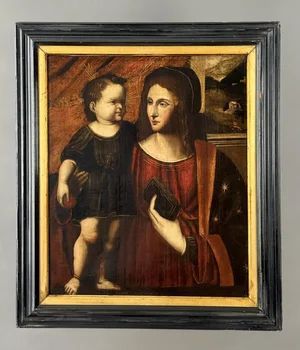
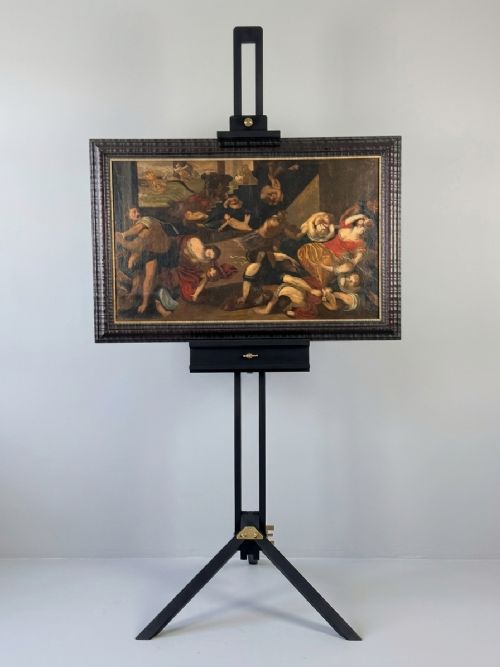
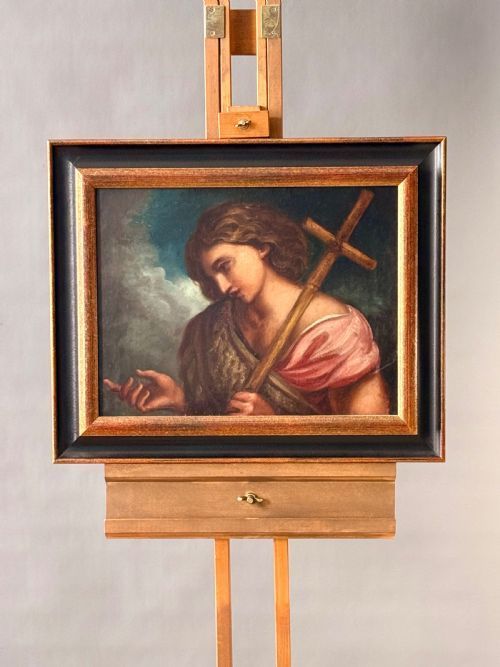
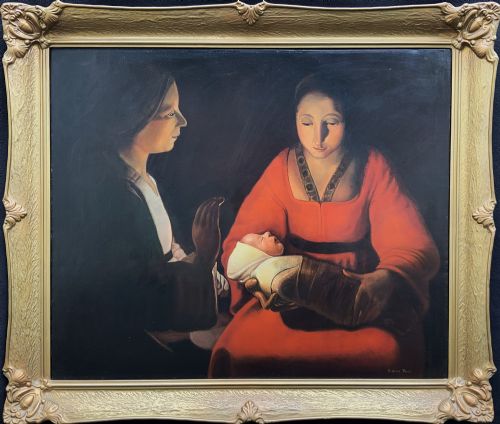

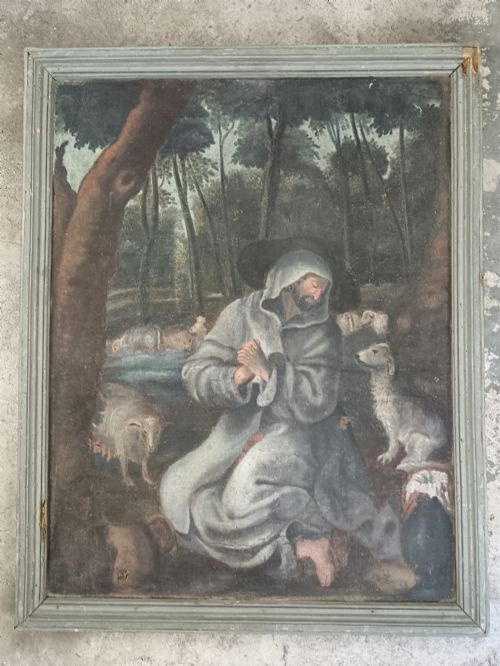
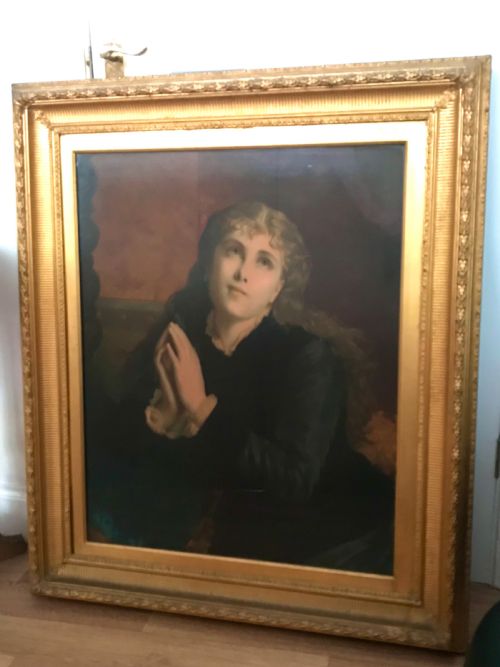
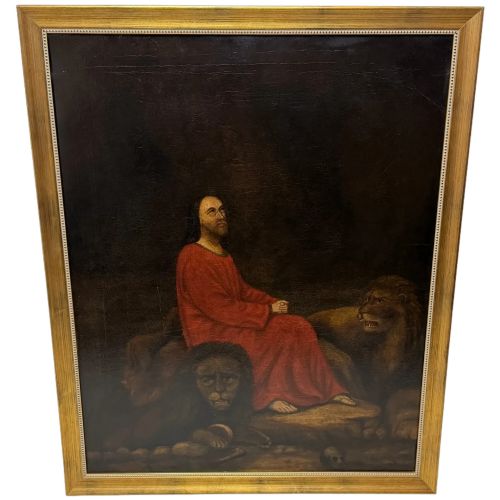
Framed Religious Canvas Art
Framed religious canvas art brings centuries of devotion, iconography, and masterwork copies into domestic spaces through enduring oil paintings.
Framed Religious Canvas Art
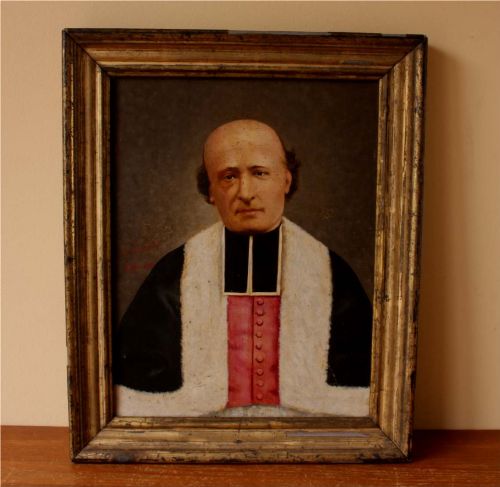
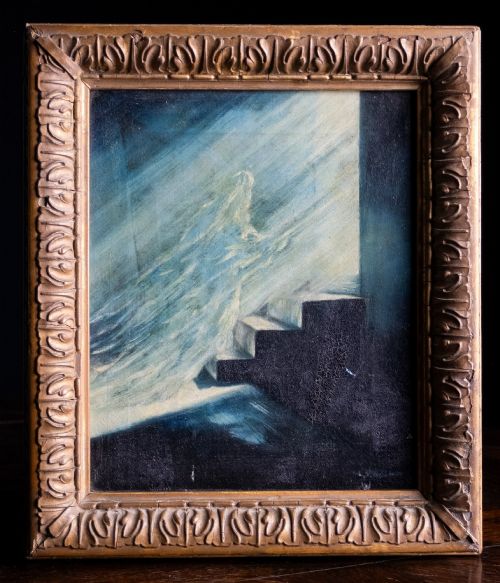
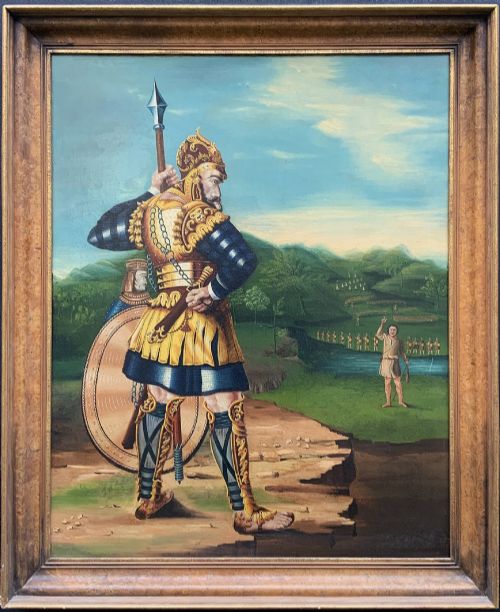
Framed religious canvas art encompasses centuries of devotional imagery, spanning from the sixteenth century through to the mid-twentieth century. Buyers encounter oil paintings on canvas, tempera works, and oleographs depicting biblical narratives, saints, and sacred figures.
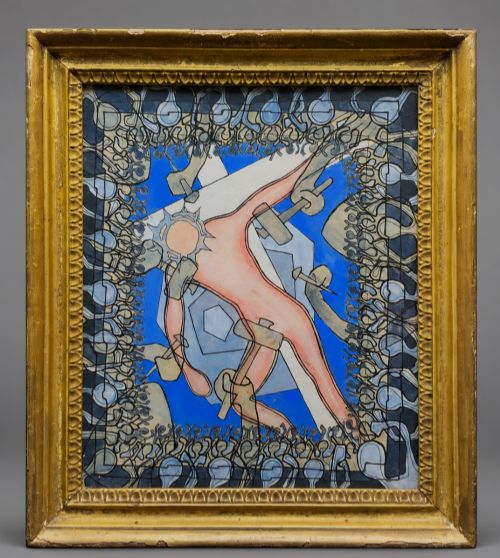
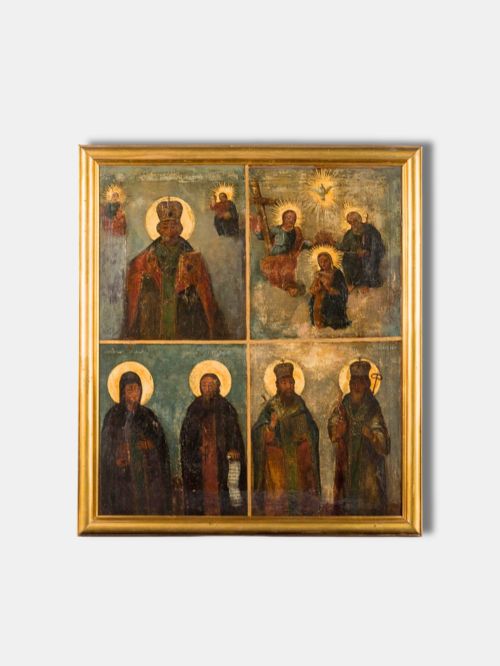
The selection ranges from large antique biblical compositions and Italian school oil paintings to Russian icons and mid-century modernist crucifixions. Many pieces reflect the styles of Baroque, Renaissance Revival, and Italian Old Masters, often housed within carved wooden frames.
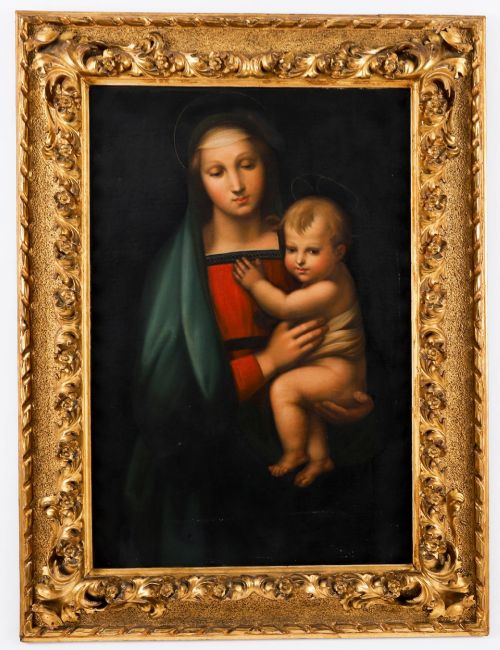
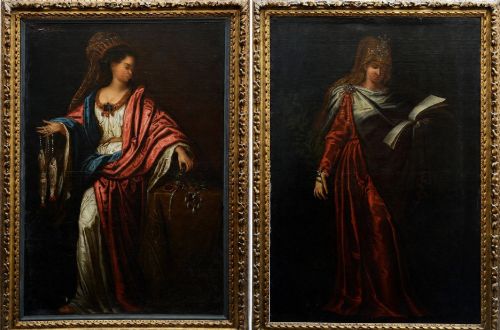
Works attributed to regional European schools, circles of known painters, or later copies after masters like Raphael dominate the selection. These canvases preserve traditional iconography, portraying subjects such as the Madonna and Child, Mary Magdalene, and various saints.
How they were made
The foundation of these works is woven canvas stretched over wooden supports, primed to receive pigment. Artists applied oil paint, and occasionally tempera or gold leaf, building up rich layers of colour and shadow.
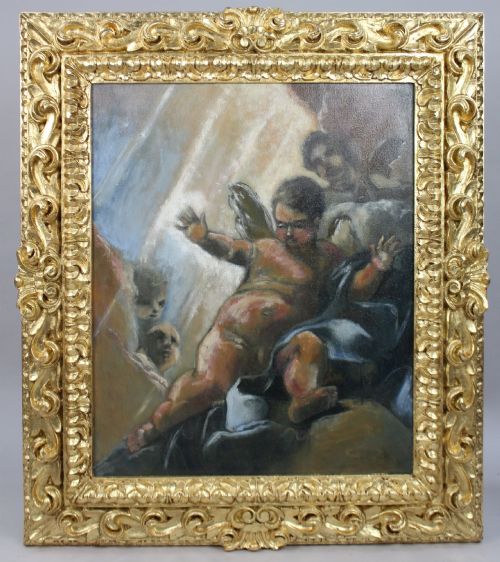
Many canvases are set within heavy wooden or giltwood frames, some carved in high relief to complement the religious subject matter. The combination of oil paint on canvas within ornate framing defines the physical structure of these historic artworks.
Framed Religious Canvas Art Retail Price Guide 2026
Typical asking prices for framed religious canvas art among the pieces listed under this phrase on Sellingantiques today, from the lower quarter to the upper quarter. They describe what is for sale here now, not the wider market.
Listings span periods from the sixteenth century through the mid-twentieth century, featuring oil on canvas, wood, and gold leaf.
What varies in quality
Quality rests upon the skill of the brushwork, the depth of anatomical understanding, and the expressiveness achieved in the figures. Finer examples display confident handling of light and shadow, particularly in drapery and facial expressions.
The integrity of the canvas and the preservation of the original pigment layers significantly influence the standing of a piece. Additionally, the craftsmanship and original pairing of the carved giltwood frame contribute to the overall merit of the artwork.
Siegfried Bendixen·Bernardino Luini·Matthieu Elias·Ernst Stierhof·Georges de La Tour·Miguel Barroso·Edgard Maxence·Benvenuto Tisi·Francesco Solimena·Costantino Frixione·Juan Ruiz Soriano·Gaspar de Figueroa·Antonio Allegri Correggio·G.F. Penni·Scipione Pulzone·Gian Lorenzo Bertolotto·Rosso Fiorentino·Guido Reni·Antonio Tempesta
The Framed Religious Canvas Art Glossary
- Oil on Canvas
- A traditional painting medium where pigments are suspended in a drying oil, applied to a woven fabric support. This technique allowed artists to achieve smooth tonal gradations and rich colours.
- Giltwood
- Wood that has been treated with a thin layer of gold leaf or gold paint. Frames utilising this material often feature elaborate carved ornamentation.
- Icon
- A devotional painting, typically depicting sacred figures, rooted in religious tradition. These works often incorporate gold leaf and follow strict compositional formulas.
- Pentimento
- A visible trace of earlier painting beneath the completed layer, showing where the artist changed their composition. This occurrence offers insight into the creative process.
- Oleograph
- A mechanical colour lithograph reproduction designed to imitate an oil painting, sometimes produced on canvas. These emerged as popular alternatives to original art in the nineteenth century.
Framed Religious Canvas Art: Frequently Asked Questions
How do I identify sixteenth-century canvases?
Sixteenth-century canvases generally display Renaissance stylistic conventions, focusing on balanced composition and classical proportions in sacred subjects. Pigment analysis and canvas weave examination often assist in determining age.
Paintings from this era frequently depict traditional biblical narratives influenced by Italian masters and regional European schools.
What is a religious icon?
A religious icon is a sacred image used for veneration, traditionally found in Eastern Christian traditions. These pieces often employ tempera and gold leaf on canvas or wood.
The imagery follows strict iconographic rules to represent saints, angels, or biblical scenes with symbolic meaning.
How should I display antique religious art?
Antique religious art requires placement away from direct sunlight and fluctuating humidity to protect the canvas and wooden frame. Proper wall mounting ensures the heavy giltwood frames are securely supported.
Lighting should be subtle to highlight the oil paint textures without generating excessive heat.
What is the difference between an original and a copy?
An original composition is conceived directly by the artist, whereas a copy or follower's work reinterprets an established master's design. Many historical pieces are period studies after renowned painters like Raphael.
Both categories hold historical significance, reflecting how religious imagery was disseminated and taught across centuries.