9,648  PAGES BROWSED TODAY PAGES TODAY 48 ANTIQUES UPLOADED TODAYNEW ARRIVALS
48 ITEMS ADDED TODAY
Sort Order
Items Per Page
Browse Categories
Sort order
Relevant Links
Items per page
ID #SA1161856
FOR SALE
£1,550
Email
Save
Antique Self Portrait Rubens by F. Flor for Flor & Findel 19th C
Regent Antiques
for sale €1,814     $1,969
£1,550
Regent Antiques

Regent Antiques

Sellingantiques Verified Since Sep 2016
View Dealers Stock Page
  • About Us
    We specialise in english and continental furniture, silver, porcelain and decorative items.
  • Trade Associations
    Regent Antiques is a registered member of LAPADA  CINOA
Id #SA1161856
PDF SHARE
SAVE

Antique Self Portrait Rubens by F. Flor for Flor & Findel 19th C

19th century
For Sale by Regent Antiques
Description

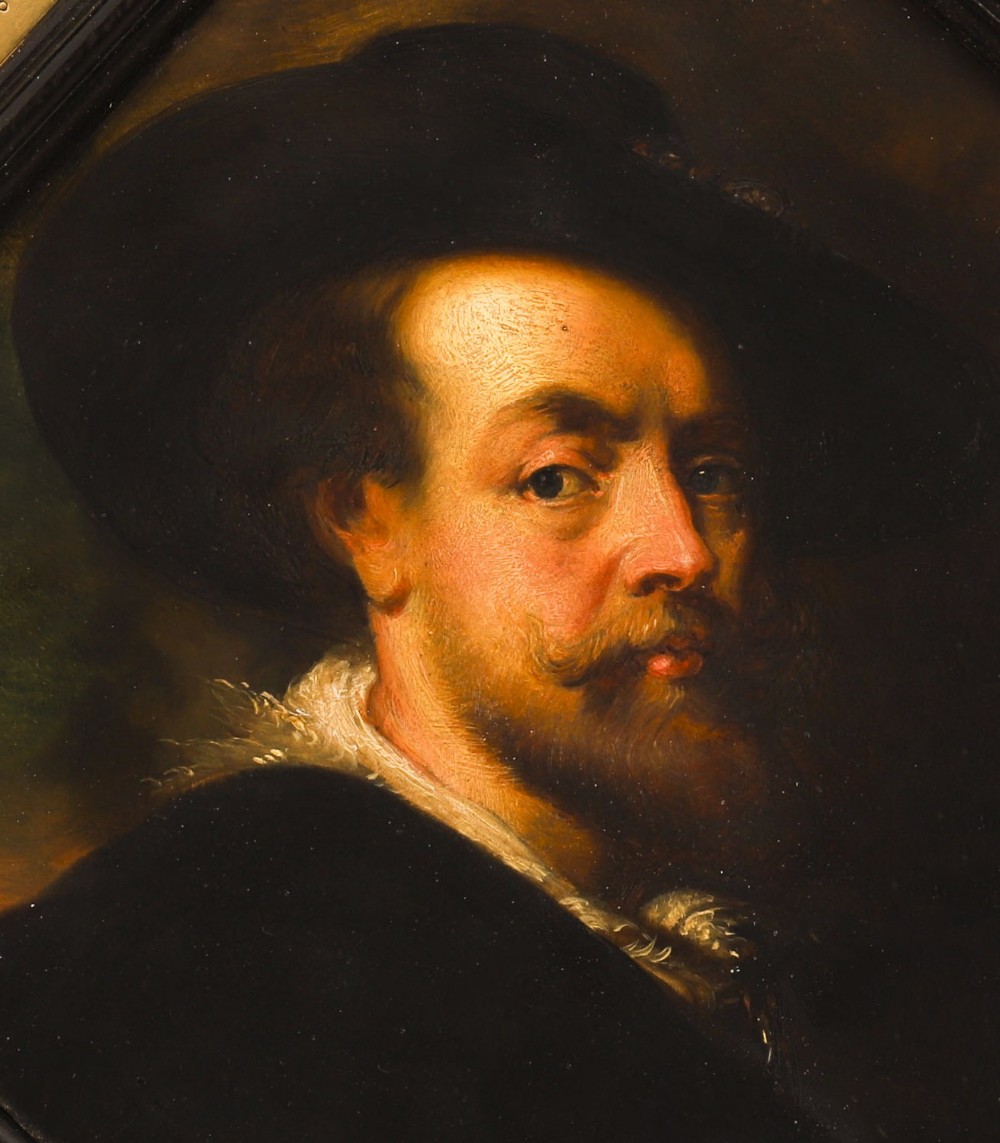
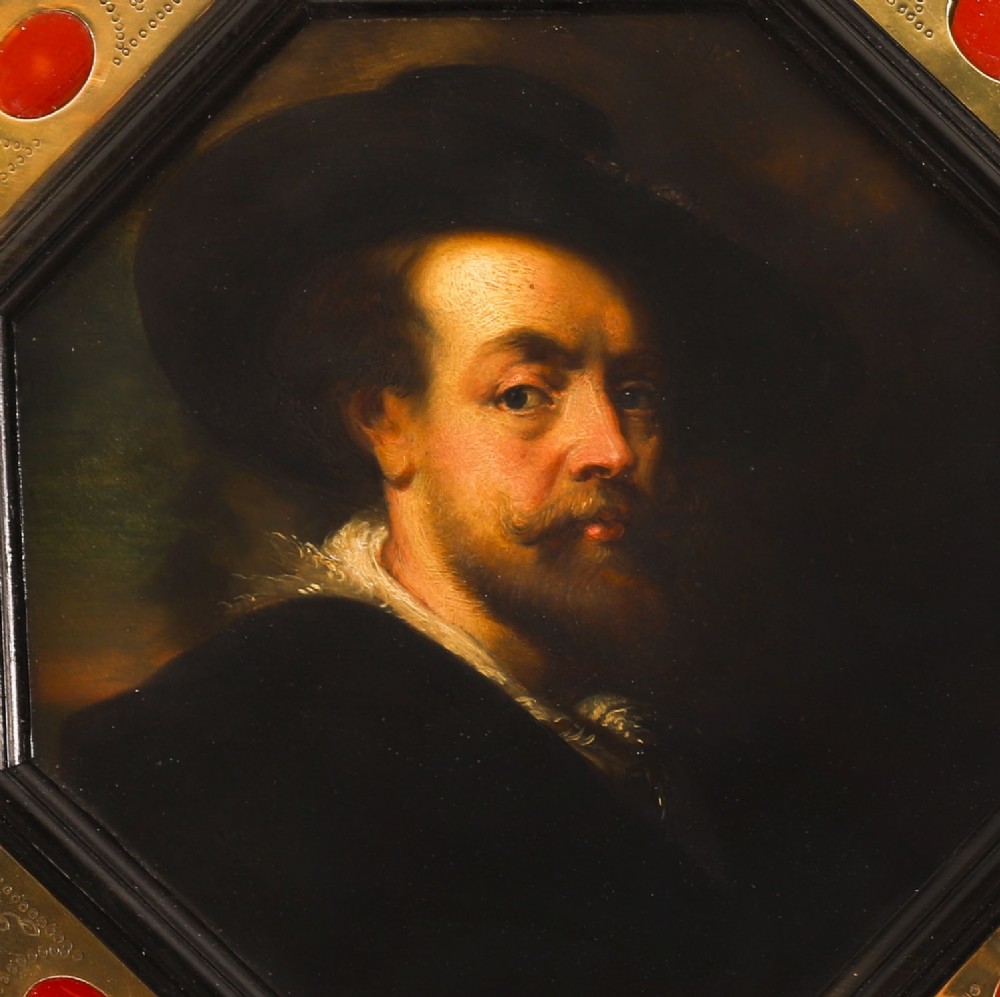
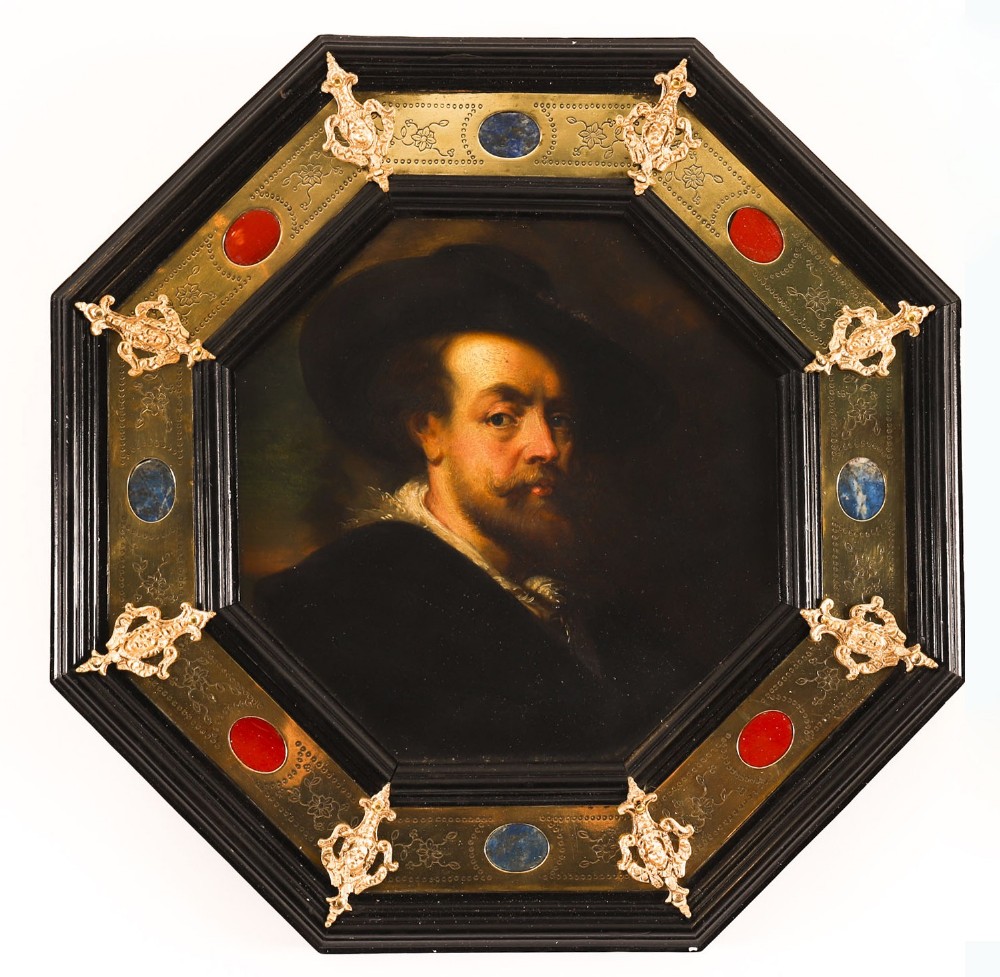
An antique Florentine copy of a self-portrait by Peter Paul Rubens (1577-1640) painted by F. Flor for Flor & Findel, early 19th century.

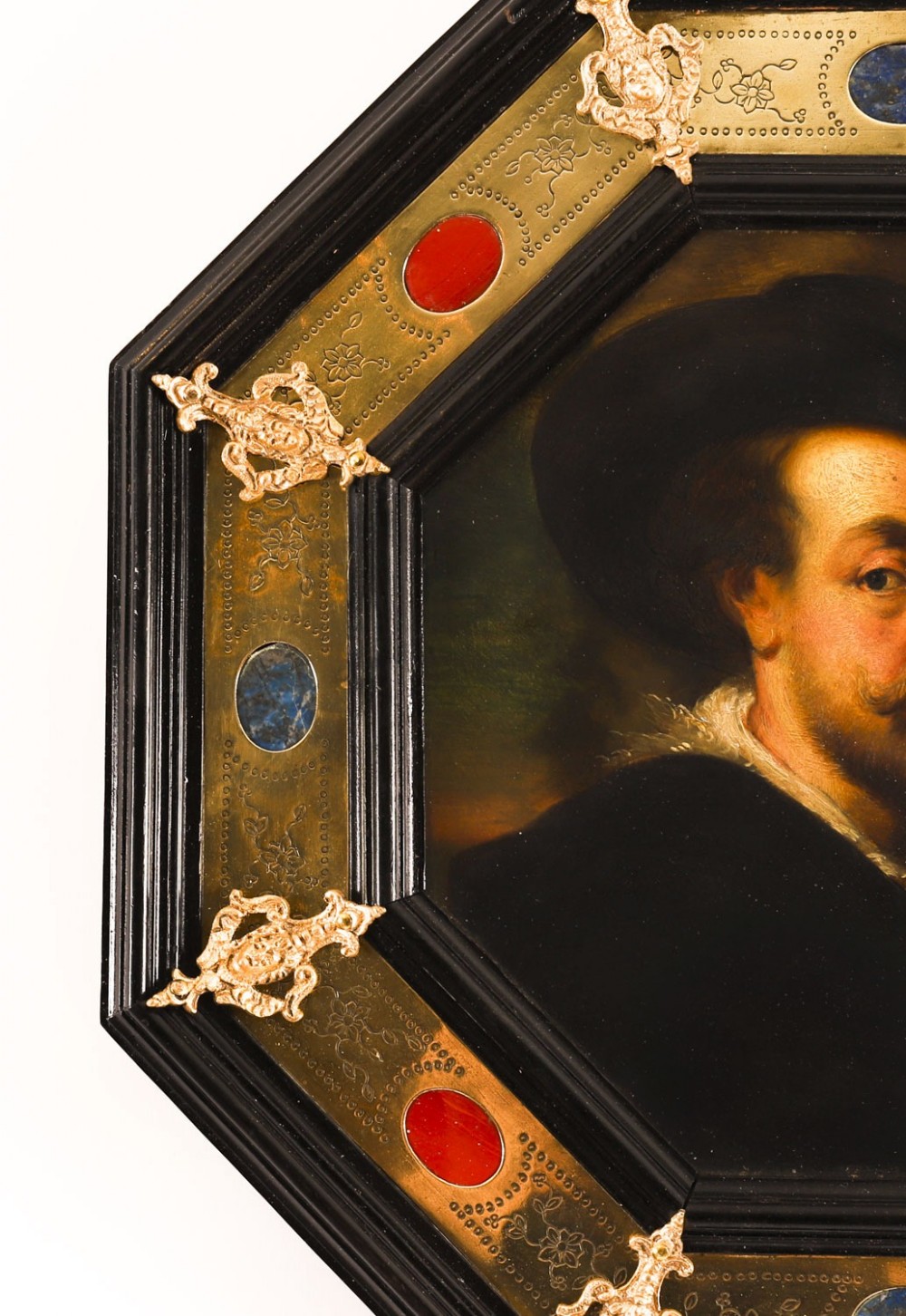
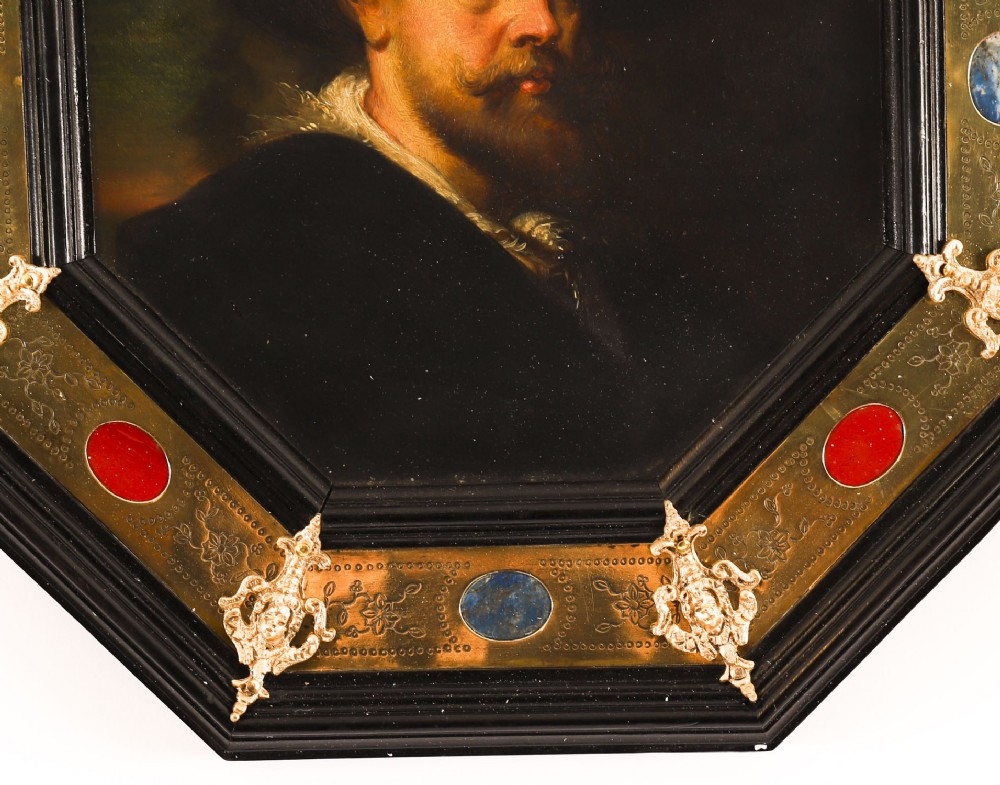
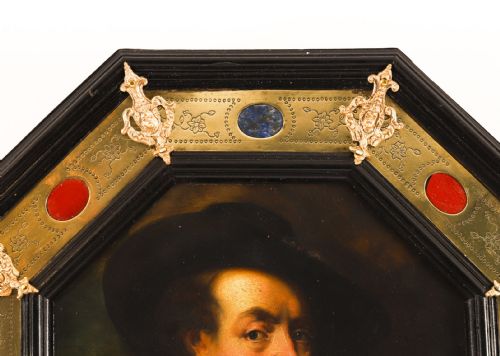
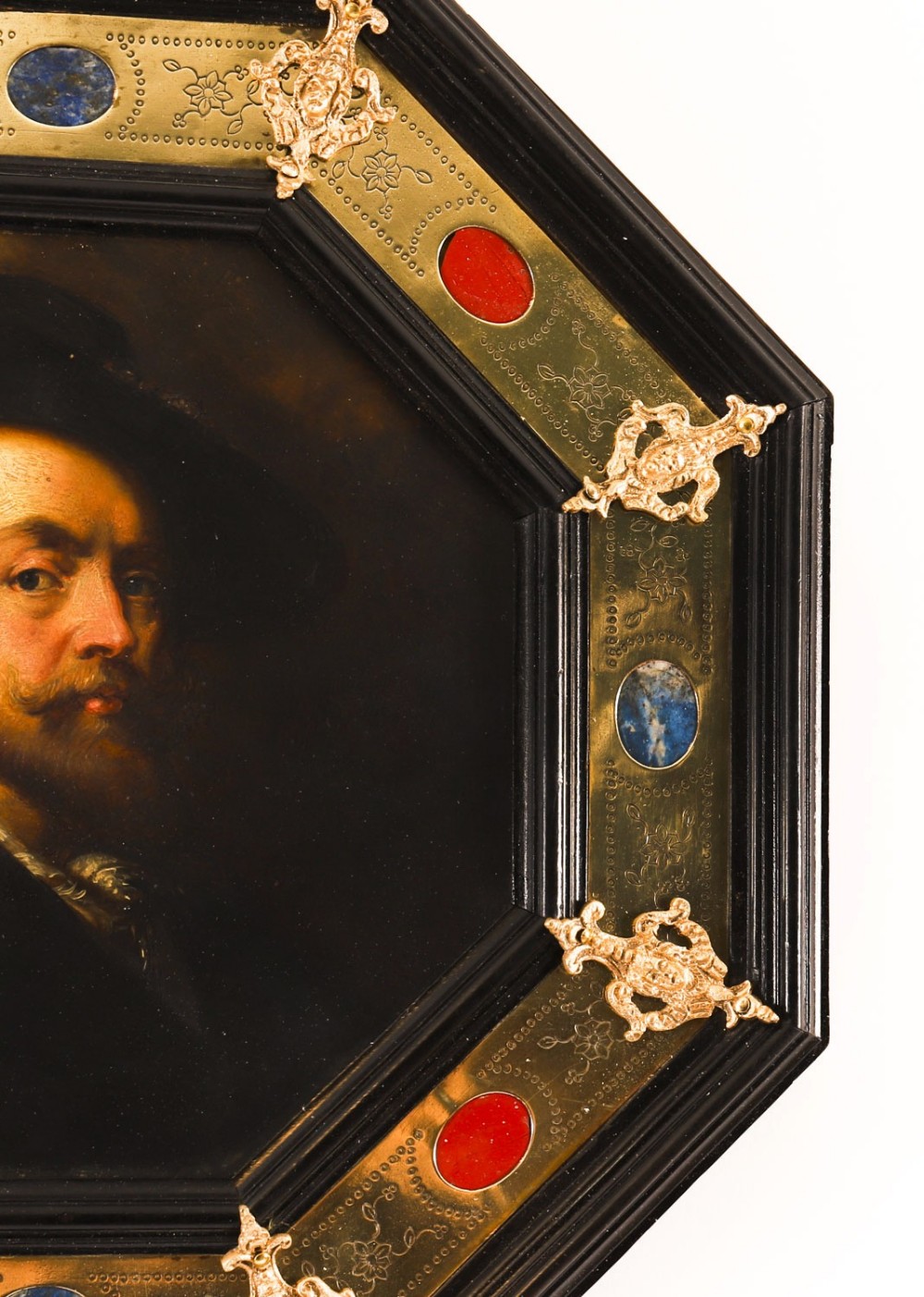
The portrait is framed in the original carved Florentine octagonal ebonised frame with an ornate thick ormolu band inset with Agate and Lapis Lazuli stones.

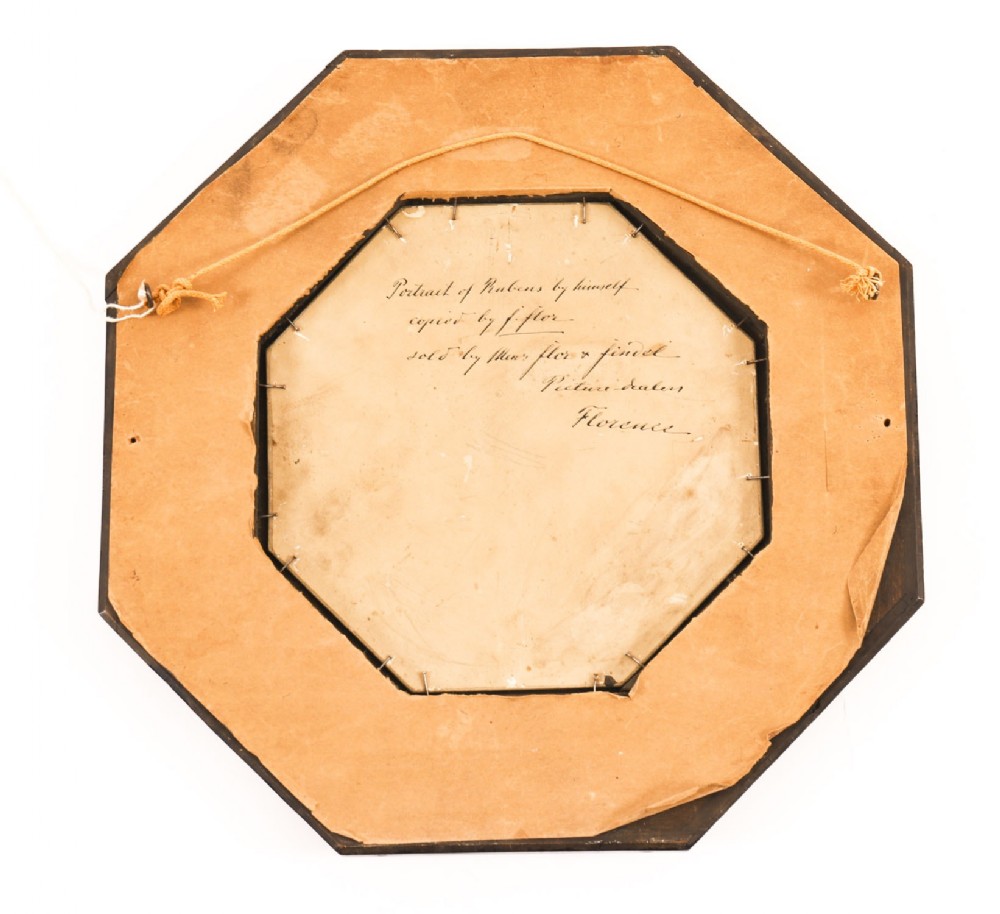
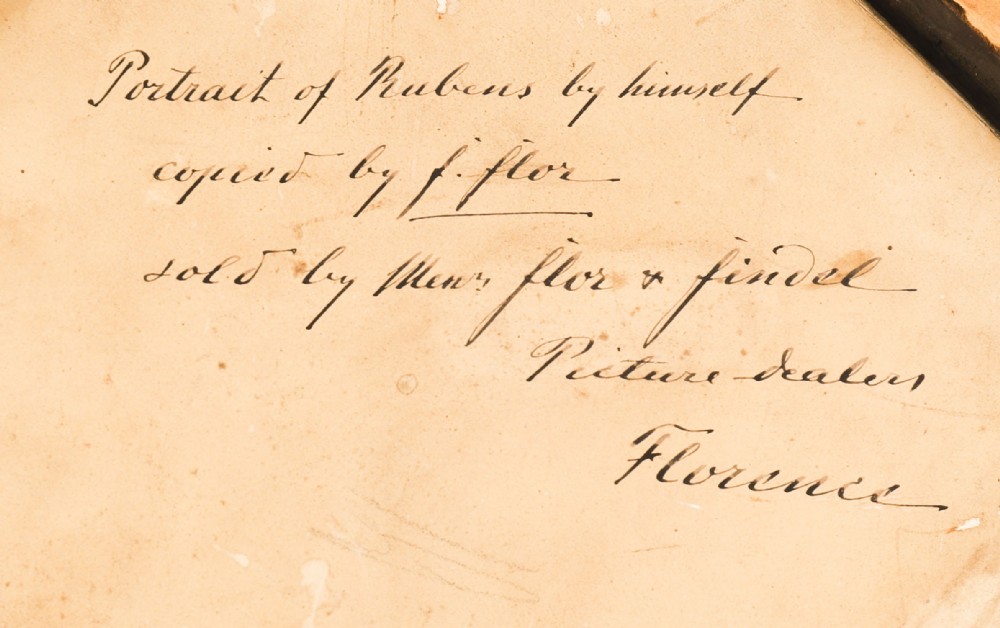
Inscribed verso: 'Portrait of Rubens by himself, copied by F. Flor, sold by Messrs Flor & Findel, picture dealers, Florence'.

Flor & Findel were booksellers and stationers in Florence and as was common in the nineteenth century they were also picture dealers.

Add some classical elegance to your home with this charming painting.

Condition:

In excellent condition the painting and frame having been delicately cleaned in our workshops, please see photos for confirmation.

Dimensions in cm:

Height 37 cm x Width 37 cm x Depth 4 cm  - FrameHeight 22.5 cm x Width 22.5 cm  - Painting

Dimensions in inches:Height 1 foot, 3 inches x Width 1 foot, 3 inches x Depth 2 inches -FrameHeight 9 inches x Width 9 inches - Painting

Florentine Crafts

During the Renaissance, Florence was renowned throughout Europe as a centre of fine art, particularly in painting, gold gilding, bronze work, and furnishings inlaid with intricate designs in marble or rare wood. The fine craft traditions associated with some of these arts never entirely died out in Florence, and remained well-established up to the 19th century. Florence's craft guilds were a crucial force behind the survival of these trades.

In an effort to boost Florence's economy, and promote its crafts to tourists, a museum of decorative arts opened in the Bargello in 1865. This, in combination with Florence's reputation in fine arts, led to rapid growth in the demand for craft products among tourists, particularly from England. Victorian tourists found many craft shops listed in the back of guide books, such as John Murray's Florence and its Environs.

Florentine style crafts have an ornate appearance, and are typically gold gilded.  Decoupage usually includes reproductions of well-known Classical Florentine art works, which may or may not be religious in nature.

Although the reproductions are in many cases a derivative style imitating fine art and fine objects made of rare materials, Florentine crafts aimed at tourists were fashionable, and termed bon gusto, or fine taste, "pure Italian" or "pure Renaissance style". Florentine hand carved gold-gilt frames in particular became popular during the late Victorian era; references to such ornate frames appear in period literature, such as Oscar Wilde's The Picture of Dorian Gray.

Florentine-style crafts remain collectable today. Florentine frames and plaques, and reproduction Florentine furniture, are associated with the Shabby chic style of interior decorating in particular in recent years.

Lapis lazuli, or lapis for short, is a deep blue matamorphic rock used as a semi-precious stone that has been prized since antiquity for its intense color. As early as the 7th millennium BCE, lapis lazuli was mined in the Sar-i Sang mines, in Shortugai, and in other mines in Badakhshan province in northeast Afghanistan. Lapis was highly valued by the Indus Valley Civilisation (3300–1900 BC). Lapis beads have been found at Neolithic burials in Mehrgarh, the Caucasus, and even as far from Afghanistan as Mauritania. It was used in the funeral mask of Tutankhamum (1341–1323 BCE).

At the end of the Middle Ages, lapis lazuli began to be exported to Europe, where it was ground into powder and made into ultramarine, the finest and most expensive of all blue pigments. It was used by some of the most important artists of the Renaissance and Baroque, including Masaccio, Perugino, Titian and Vermeer, and was often reserved for the clothing of the central figures of their paintings, especially the Virgin Mary.

Lapis takes an excellent pol

Physical Dimensions
Height
37cm (14.57")
Width
37cm (14.57")
Depth
4cm (1.57")
Declaration

Regent Antiques has dated this Octagonal Framed Portrait Painting to the 19th Century.
Reference Numbers
Sellingantiques Reference
SA1161856
Dealers Internal Reference
A4624
Description
An antique Florentine copy of a self-portrait by Peter Paul Rubens (1577-1640) painted by F. Flor for Flor & Findel, early 19th century.
The portrait is framed in the original carved Florentine octagonal ebonised frame with an ornate thick ormolu band inset with Agate and Lapis Lazuli stones.
Regent Antiques
fig 1. An octagonal ebonised wooden frame with etched brass straps and inset stone cabochons surrounding a miniature portrait painting of a man with a beard and wide hat.
fig 1. Antique Self Portrait Rubens by F. Flor for Flor & Findel 19th C

Inscribed verso: 'Portrait of Rubens by himself, copied by F. Flor, sold by Messrs Flor & Findel, picture dealers, Florence'.

Flor & Findel were booksellers and stationers in Florence and as was common in the nineteenth century they were also picture dealers.
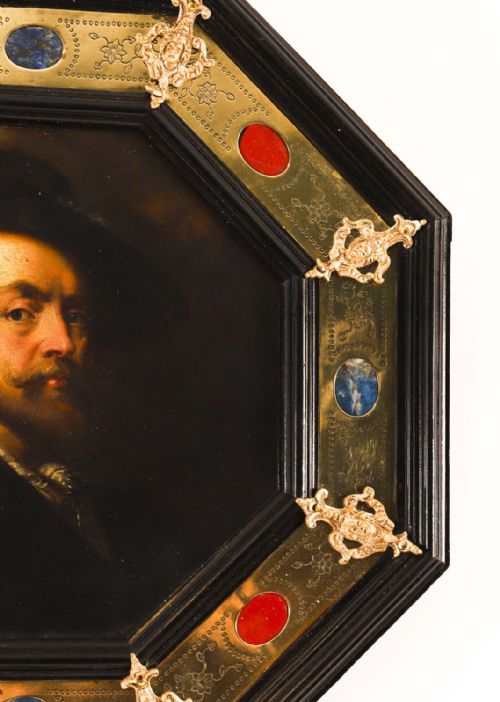
fig 2. An octagonal ebonised wooden frame with etched brass straps and inset stone cabochons surrounding a miniature portrait painting of a man with a beard and wide hat.
fig 2. Antique Self Portrait Rubens by F. Flor for Flor & Findel 19th C

Add some classical elegance to your home with this charming painting.

Condition:

In excellent condition the painting and frame having been delicately cleaned in our workshops, please see photos for confirmation.
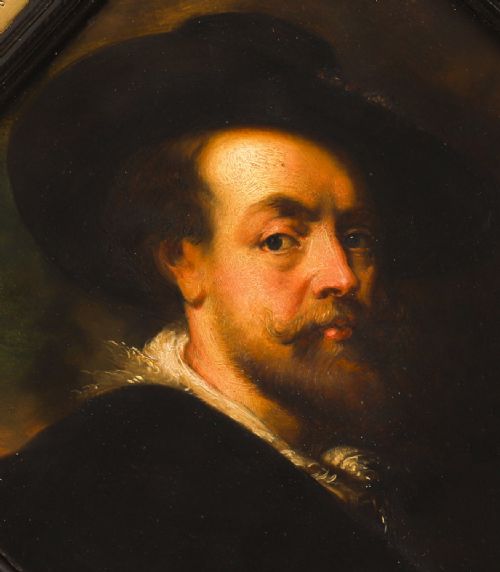
fig 3. An octagonal ebonised wooden frame with etched brass straps and inset stone cabochons surrounding a miniature portrait painting of a man with a beard and wide hat.
fig 3. Antique Self Portrait Rubens by F. Flor for Flor & Findel 19th C

Dimensions in cm:

Height 37 cm x Width 37 cm x Depth 4 cm  - FrameHeight 22.5 cm x Width 22.5 cm  - Painting

Dimensions in inches:Height 1 foot, 3 inches x Width 1 foot, 3 inches x Depth 2 inches -FrameHeight 9 inches x Width 9 inches - Painting
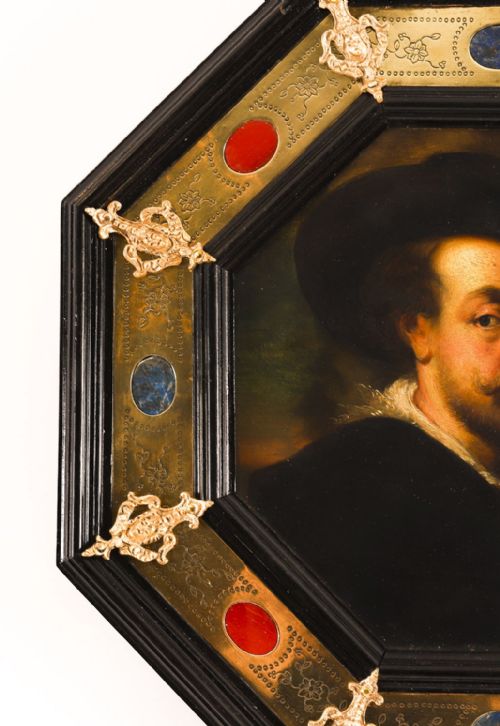
fig 4. An octagonal ebonised wooden frame with etched brass straps and inset stone cabochons surrounding a miniature portrait painting of a man with a beard and wide hat.
fig 4. Antique Self Portrait Rubens by F. Flor for Flor & Findel 19th C

Florentine Crafts

During the Renaissance, Florence was renowned throughout Europe as a centre of fine art, particularly in painting, gold gilding, bronze work, and furnishings inlaid with intricate designs in marble or rare wood. The fine craft traditions associated with some of these arts never entirely died out in Florence, and remained well-established up to the 19th century. Florence's craft guilds were a crucial force behind the survival of these trades.
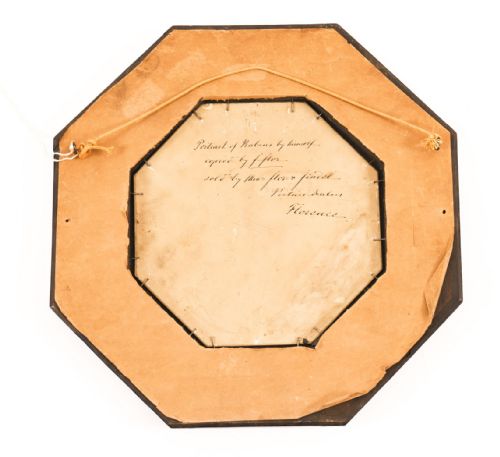
fig 5. An octagonal ebonised wooden frame with etched brass straps and inset stone cabochons surrounding a miniature portrait painting of a man with a beard and wide hat.
fig 5. Antique Self Portrait Rubens by F. Flor for Flor & Findel 19th C

In an effort to boost Florence's economy, and promote its crafts to tourists, a museum of decorative arts opened in the Bargello in 1865. This, in combination with Florence's reputation in fine arts, led to rapid growth in the demand for craft products among tourists, particularly from England. Victorian tourists found many craft shops listed in the back of guide books, such as John Murray's Florence and its Environs.
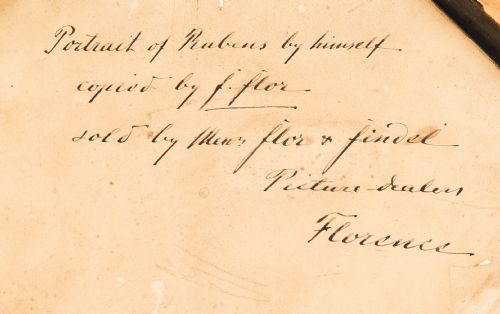
fig 6. An octagonal ebonised wooden frame with etched brass straps and inset stone cabochons surrounding a miniature portrait painting of a man with a beard and wide hat.
fig 6. Antique Self Portrait Rubens by F. Flor for Flor & Findel 19th C

Florentine style crafts have an ornate appearance, and are typically gold gilded.  Decoupage usually includes reproductions of well-known Classical Florentine art works, which may or may not be religious in nature.
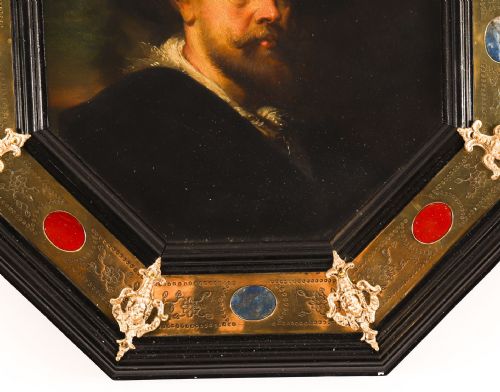
fig 7. An octagonal ebonised wooden frame with etched brass straps and inset stone cabochons surrounding a miniature portrait painting of a man with a beard and wide hat.
fig 7. Antique Self Portrait Rubens by F. Flor for Flor & Findel 19th C

Although the reproductions are in many cases a derivative style imitating fine art and fine objects made of rare materials, Florentine crafts aimed at tourists were fashionable, and termed bon gusto, or fine taste, "pure Italian" or "pure Renaissance style". Florentine hand carved gold-gilt frames in particular became popular during the late Victorian era; references to such ornate frames appear in period literature, such as Oscar Wilde's The Picture of Dorian Gray.
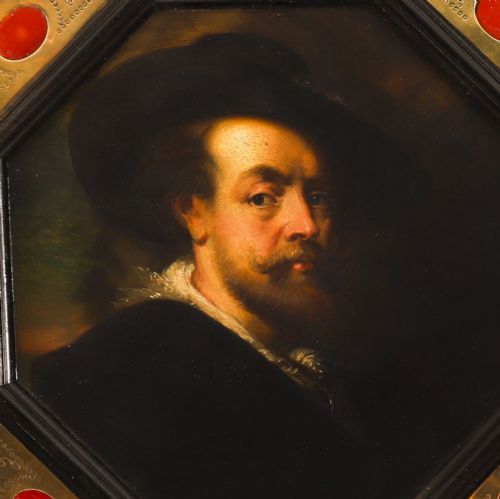
fig 8. An octagonal ebonised wooden frame with etched brass straps and inset stone cabochons surrounding a miniature portrait painting of a man with a beard and wide hat.
fig 8. Antique Self Portrait Rubens by F. Flor for Flor & Findel 19th C

Florentine-style crafts remain collectable today. Florentine frames and plaques, and reproduction Florentine furniture, are associated with the Shabby chic style of interior decorating in particular in recent years.

Lapis lazuli, or lapis for short, is a deep blue matamorphic rock used as a semi-precious stone that has been prized since antiquity for its intense color. As early as the 7th millennium BCE, lapis lazuli was mined in the Sar-i Sang mines, in Shortugai, and in other mines in Badakhshan province in northeast Afghanistan. Lapis was highly valued by the Indus Valley Civilisation (3300–1900 BC). Lapis beads have been found at Neolithic burials in Mehrgarh, the Caucasus, and even as far from Afghanistan as Mauritania. It was used in the funeral mask of Tutankhamum (1341–1323 BCE).

At the end of the Middle Ages, lapis lazuli began to be exported to Europe, where it was ground into powder and made into ultramarine, the finest and most expensive of all blue pigments. It was used by some of the most important artists of the Renaissance and Baroque, including Masaccio, Perugino, Titian and Vermeer, and was often reserved for the clothing of the central figures of their paintings, especially the Virgin Mary.

Lapis takes an excellent pol

Height
37cm (14.57")
Width
37cm (14.57")
Depth
4cm (1.57")
Date of Manufacture

Regent Antiques has dated this Octagonal Framed Portrait Painting to the 19th Century.

Reference Numbers
Sellingantiques Ref
SA1161856
Dealers Internal Ref
A4624
Regent Antiques
Regent Antiques
Sellingantiques verified Since Sep 2016

We specialise in english and continental furniture, silver, porcelain and decorative items.

Dealer Profile

You can view the stock and full dealer information on the Regent Antiques Profile Page

Trade Associations

Regent Antiques is a registered member of LAPADA  CINOA
PDF SHARE
SAVE
An octagonal ebonised wooden frame with etched brass straps and inset stone cabochons surrounding a miniature portrait painting of a man with a beard and wide hat.
1 / 9
Archive I An octagonal ebonised wooden frame with etched brass straps and inset stone cabochons surrounding a miniature portrait painting of a man with a beard and wide hat.

Antique Self Portrait Rubens by F. Flor for Flor & Findel 19th C
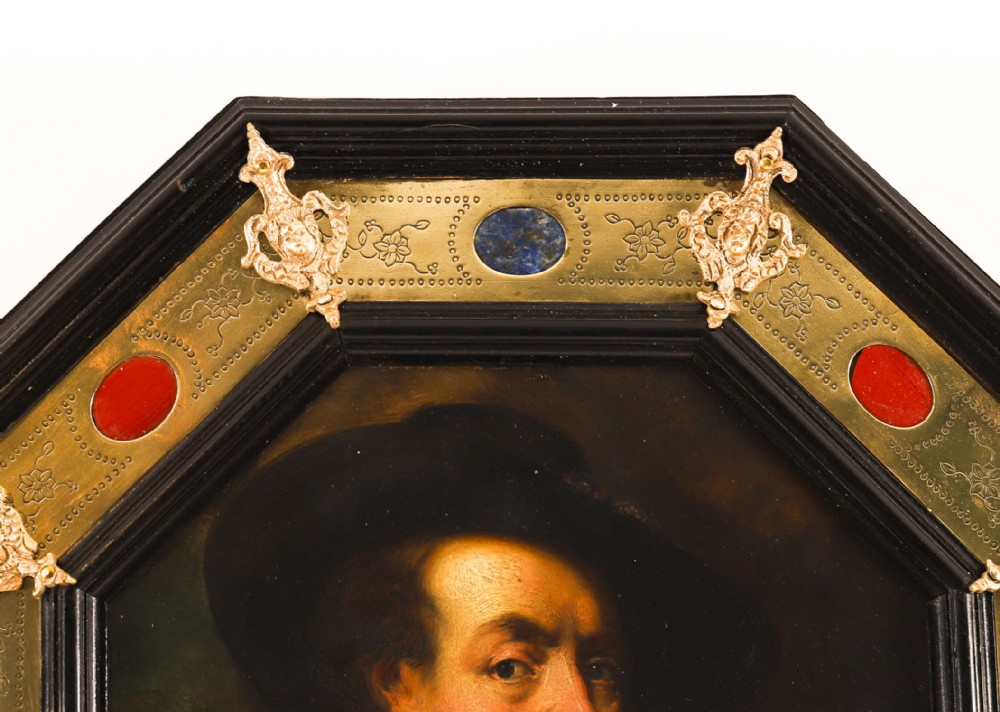
Archive II An octagonal ebonised wooden frame with etched brass straps and inset stone cabochons surrounding a miniature portrait painting of a man with a beard and wide hat. View II
Archive III An octagonal ebonised wooden frame with etched brass straps and inset stone cabochons surrounding a miniature portrait painting of a man with a beard and wide hat. View III
Archive IV An octagonal ebonised wooden frame with etched brass straps and inset stone cabochons surrounding a miniature portrait painting of a man with a beard and wide hat. View IV
Archive V An octagonal ebonised wooden frame with etched brass straps and inset stone cabochons surrounding a miniature portrait painting of a man with a beard and wide hat. View V
Archive VI An octagonal ebonised wooden frame with etched brass straps and inset stone cabochons surrounding a miniature portrait painting of a man with a beard and wide hat. View VI
Archive VII An octagonal ebonised wooden frame with etched brass straps and inset stone cabochons surrounding a miniature portrait painting of a man with a beard and wide hat. View VII
Archive VIII An octagonal ebonised wooden frame with etched brass straps and inset stone cabochons surrounding a miniature portrait painting of a man with a beard and wide hat. View VIII
Archive IX An octagonal ebonised wooden frame with etched brass straps and inset stone cabochons surrounding a miniature portrait painting of a man with a beard and wide hat. View IX
Enlarged Archival View
Location
Manor Warehouse
318 Green Lanes
London
N4 1BX
United Kingdom
Verified Since Sep 2016
Items For Sale 651
Items Sold 2,629
Regent Antiques
Regent Antiques
Verified Since Sep 2016
View Dealer Info
Location: Manor Warehouse, 318 Green Lanes, London, N4 1BX, United Kingdom
Verified
Sep 2016
For Sale
651
Sold
2,629
An octagonal ebonised wooden frame with etched brass straps and inset stone cabochons surrounding a miniature portrait painting of a man with a beard and wide hat.
Antique Self Portrait Rubens by F. Flor for Flor & Findel 19th C
Ref: SA1161856
An octagonal ebonised wooden frame with etched brass straps and inset stone cabochons surrounding a miniature portrait painting of a man with a beard and wide hat.
Detail View 1
Detail View 2
Detail View 3
Detail View 4
Detail View 5
Detail View 6
Detail View 7
Detail View 8
Archival Detail
Every single antique dealer on our platform is individually approved by our internal team. We verify their professional trade history, ethical standards, and photographic quality to ensure a secure, high-standard buying environment. Upon joining, every dealer agrees to a strict 9-point code of conduct. While issues can occasionally arise, our dealers typically resolve them swiftly and directly with the buyer. In fact, since our founding in 2002, Sellingantiques has only had to step in to help resolve an issue on roughly five occasions—a true testament to the quality of our dealers and their dedication to your happiness.
Our dealers are highly experienced in packing and shipping fragile, high-value antiques. Because you are in direct contact with the dealer, you will be able to easily go through all available shipping and insurance options together to ensure your item arrives safely.
Antiques are the ultimate green purchase. By choosing historical pieces over newly manufactured goods, you completely eliminate the carbon footprint of modern mass production while preserving exceptional, timeless craftsmanship.

During the 19th century, skilled artists frequently produced high-quality miniature copies of famous Baroque and Renaissance masterworks for collectors and grand tour travellers seeking classic European art.

Frames from this era often combined ebonised or stained hardwoods with etched brass straps, cast metal corner mounts, and cabochons of semi-precious stones such as lapis lazuli and jasper or agate.

Key indicators include period-appropriate craquelure, natural oxidisation on metal fittings, original gallery or framer labels on the reverse, and authentic period joinery on the wooden frame.

Positioning the piece against a modern neutral background or integrating it into a gallery wall creates a balanced focal point that bridges contemporary and historic aesthetics.

Display the painting away from direct sunlight and moisture fluctuations, dusting the frame gently with a soft dry microfibre cloth while avoiding chemical cleansers on metal or stone elements.
items
Add keywords to the filter
Price
£100
£250000
Era
Movements
Material
Origin
Stock Location
Freshness
Online Payments
Categories