

19th Century Oak Sideboard
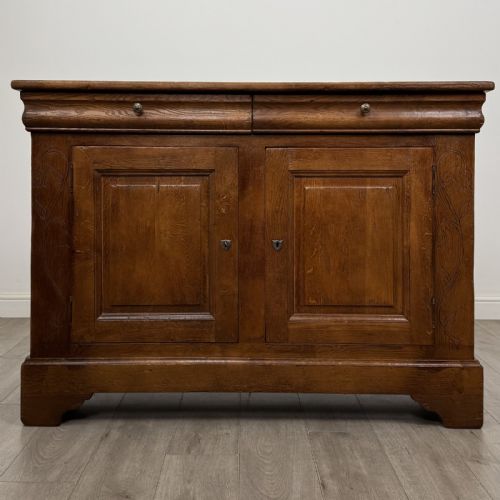
A 19th century oak sideboard provides robust storage and grounding architectural presence in a room through substantial timber construction and historic regional character.

19th Century Oak Sideboard
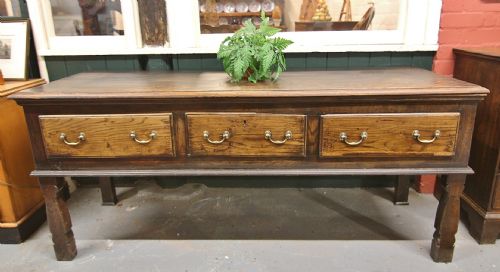
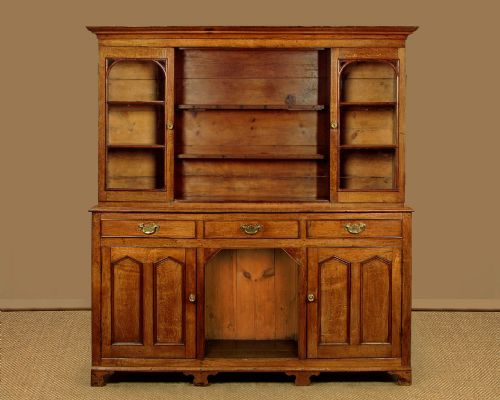
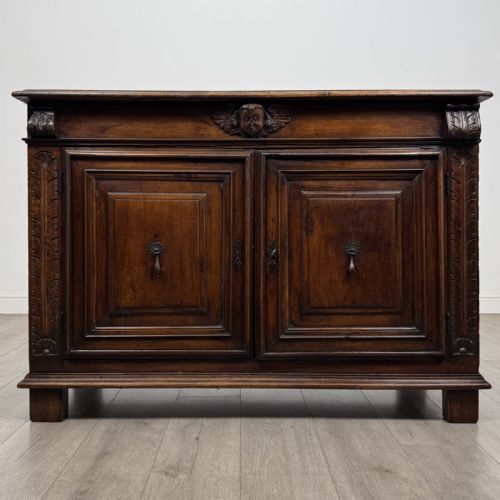
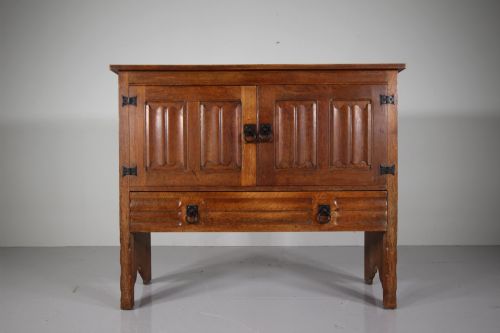
A 19th century oak sideboard encompasses heavy Victorian carved buffet units, Georgian dresser bases, and regional Welsh or Scottish cupboards designed for dining room utility.
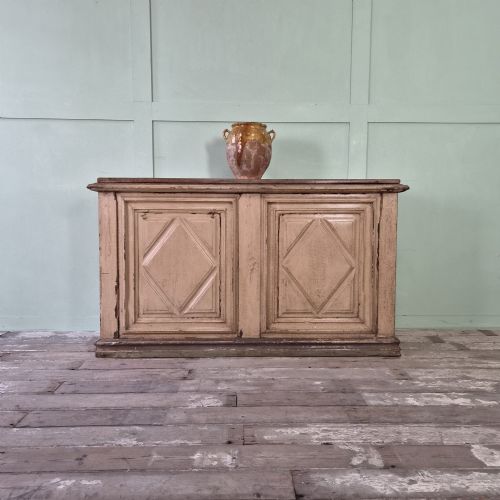
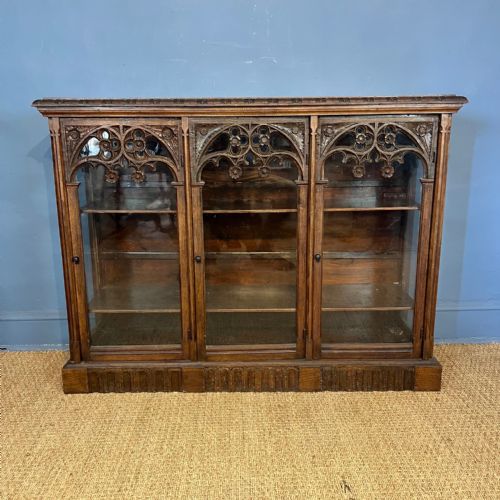
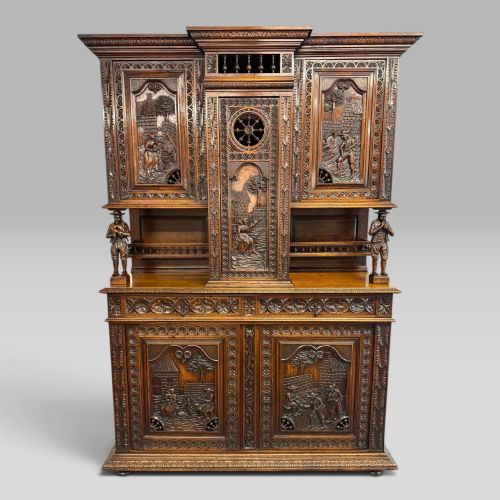
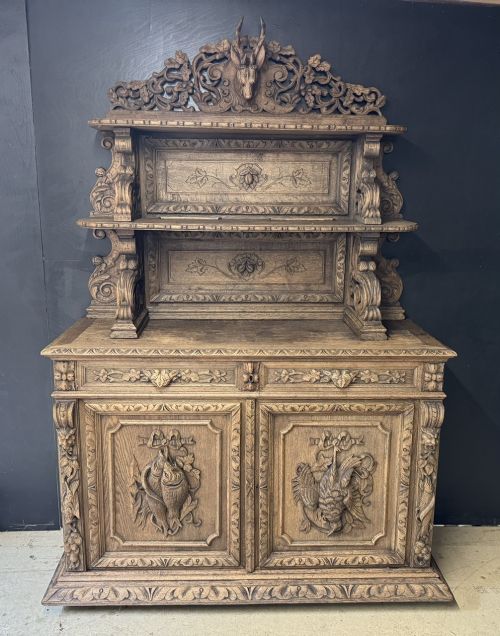
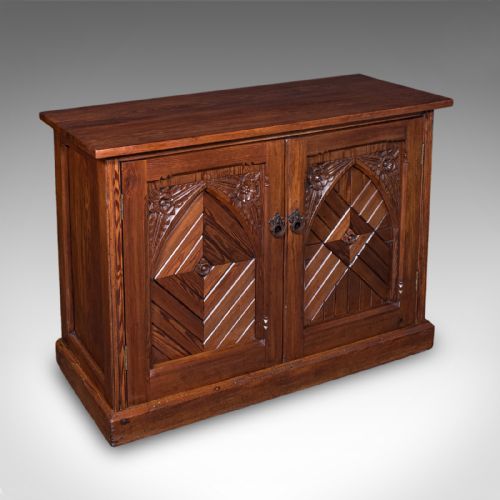
Buyers encounter British country pieces alongside French hunting cabinets and Gothic Revival servers, showing varied regional interpretations of storage.
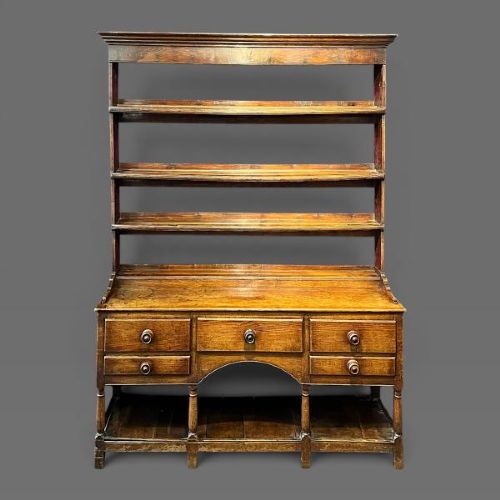
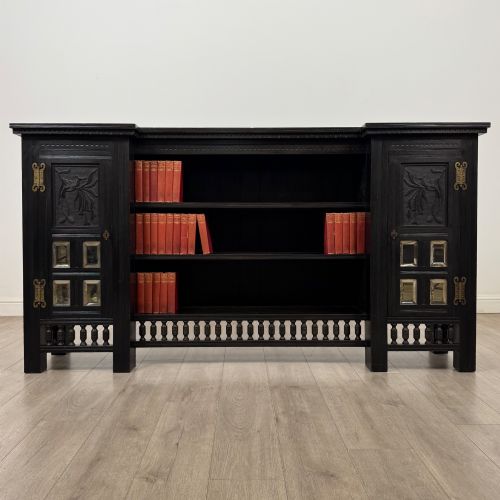
The category bridges formal Victorian display sideboards with simpler utilitarian dresser bases fitted with pot boards or drawers.
Materials and construction methods
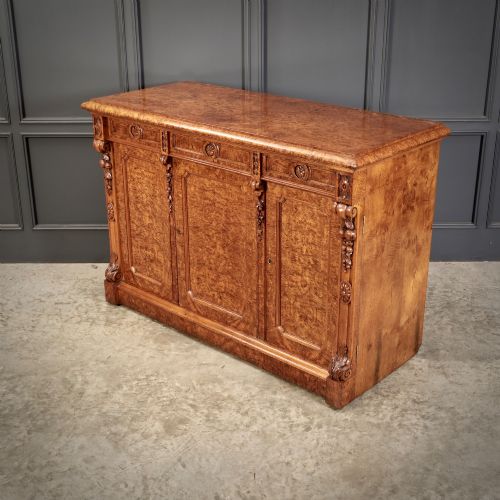
Solid oak forms the primary structural material, frequently complemented by decorative veneers like pollard oak or burr elm and contrasting details in ebony, fruitwood, and walnut.
Hardware incorporates cast brass handles and iron fittings, while select continental items feature inserted marble tops.
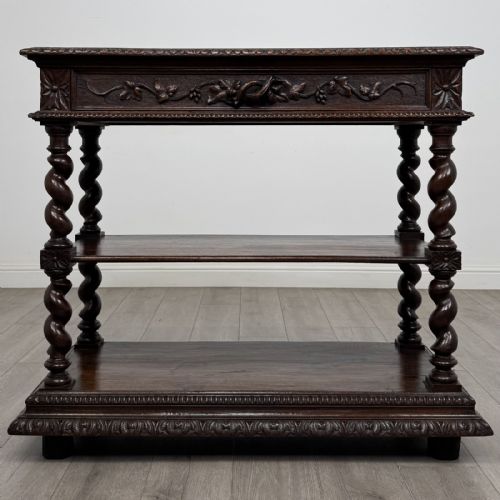
Joinery traditions range from straightforward country housing to deep relief carving executed during the Gothic and Renaissance revivals.
19th Century Oak Sideboard Retail Price Guide 2026
Typical asking prices for 19th century oak sideboard among the pieces listed under this phrase on Sellingantiques today, from the lower quarter to the upper quarter. They describe what is for sale here now, not the wider market.
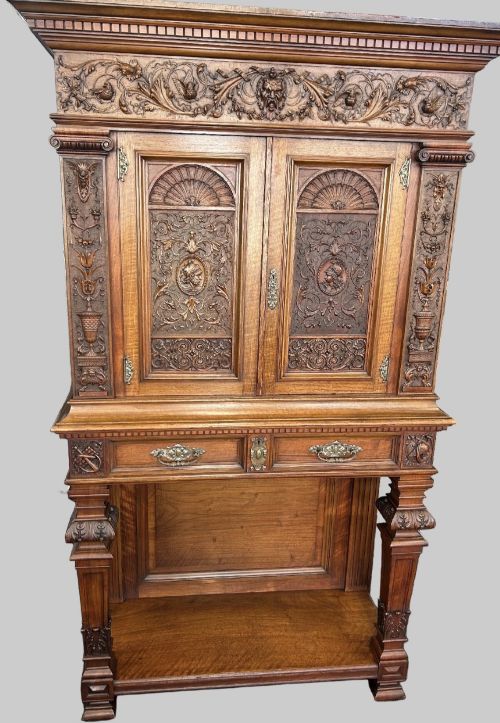
Several heavy nineteenth-century sideboards stare back at visitors through spirited carved Green Man masks hiding within the foliage.
Distinctions in execution and timber
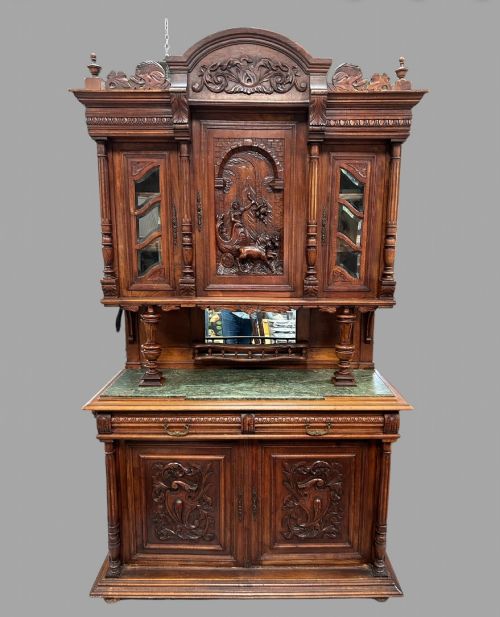
Depth and crispness of hand carving distinguish standard production from exceptional examples, particularly on heavily ornamented mirror back sideboards and hunting cabinets.
Selection of figured timber, such as pollard oak or matched grain panels, elevates the visual weight of a piece.
Proportion and scale dictate desirability, with narrow-profile dresser bases and well-balanced proportions holding greater architectural harmony.
James Simpson and Sons·Henry Woodyer·Christopher Pratt
The 19th Century Oak Sideboard Glossary
- Dresser base
- A lower cabinet structure featuring drawers and sometimes an open pot board beneath, omitting the upper plate rack.
- Pollard oak
- Timber taken from trees that were pollarded, creating a highly figured, mottled grain pattern prized for decorative panels.
- Pot board
- An open lower shelf built into a dresser base for storing kitchen pottery or serving vessels.
- Gothic Revival
- A nineteenth-century design style utilising pointed arches, tracery, and heavy medieval architectural motifs.
- Green Man
- A sculptural architectural ornament depicting a human face disgorged from foliage, common on Victorian carved furniture.
19th Century Oak Sideboard: Frequently Asked Questions
How do I care for antique oak surfaces?
Maintain the timber by applying traditional beeswax sparingly and buffing gently with a soft cloth to nourish the dry grain.
Keep these pieces away from direct heat sources and strong sunlight to prevent the solid oak from splitting or warping.
Where were these sideboards originally used?
Dining rooms and large halls served as the primary locations for housing silverware, linens, and serving dishes during meals.
Country houses and farmhouses also utilised dresser bases in kitchens and pantries for everyday food preparation storage.
How can I tell a Welsh dresser base apart?
Welsh examples frequently incorporate local vernacular details, such as pot boards and robust joined construction suited to domestic service.
Regional proportions and specific timber selections like regional oak help identify their geographic origins in British workshops.
What is a mirror back sideboard?
A mirror back sideboard integrates an upright wooden superstructure holding an inclined or flat mirror above the main serving surface.
This Victorian addition reflected dining room light and displayed decorative ceramics positioned on integrated shelves.