


19th Century Meissen Pair
These 19th century meissen pair items are decorative porcelain works shaped into birds, figures, and candelabra that bring classical European style to a room.
19th Century Meissen Pair
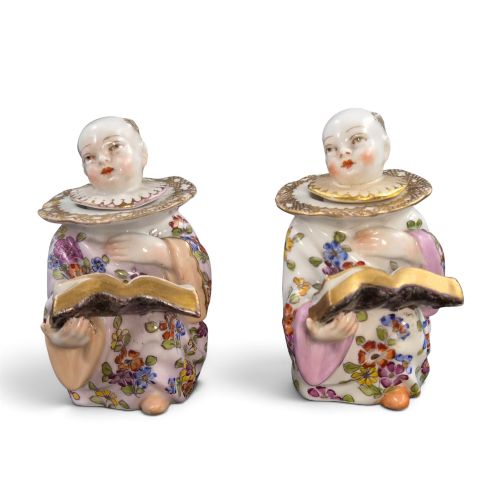
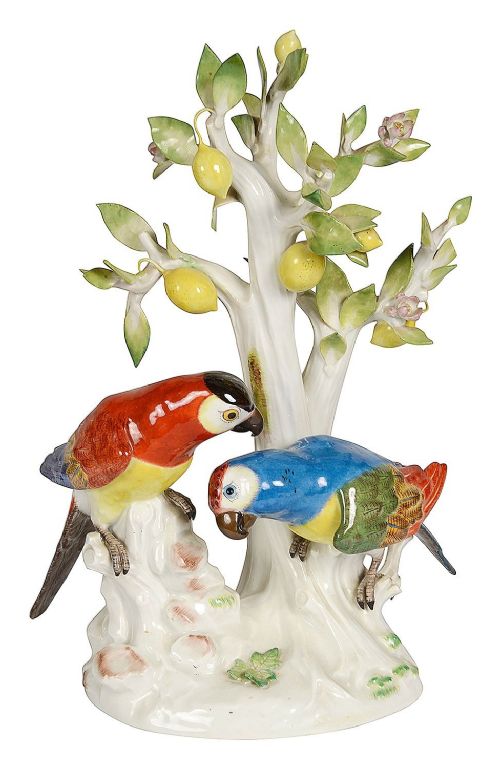
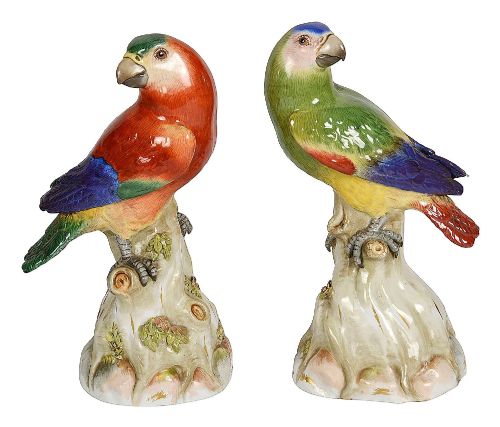
When you search for a 19th century meissen pair, you encounter matched sets of porcelain figures, candelabra, birds, and vases created in European workshops during the 1800s. These dual items often depict romantic groups, animals such as parrots and cockatoos, or figural oil lamps.
The most common versions on this page are figural groups and bird studies, including parrots under lemon trees and nodding pagodas. Alongside genuine Meissen works, the selection includes pieces by related makers adopting the same porcelain traditions.
How they were made
Makers shaped these pieces from hard-paste porcelain, firing the ceramic body at high temperatures to achieve a durable finish. Artisans then applied detailed overglaze enamel colours by hand to render feathers, garments, and naturalistic scenes.
Many items incorporate gold leaf and gilt highlights to accentuate moulded Rococo Revival scrolls and pierced details. Some porcelain figures are mounted in brass or ormolu mounts to form functional candelabra and inkwells.
Nodding pagodas feature counterweighted heads that bob gently when touched, amusing Victorian parlor guests.
What varies in quality
The distinction between ordinary and superior pieces lies in the precision of the modelling and the delicacy of the enamel painting. Finer examples display crisp facial expressions on figures and meticulously rendered plumage on birds rather than hasty brushwork.
Heavier ornamentation and complex forms, such as multi-tiered dessert stands or figural candelabra with intricate scrollwork, require greater technical skill in the kiln. The integration of metal mounts like ormolu also alters the character and execution of the piece.
Edmé Samson·Augustas Rex·Helena Wolfsohn
The 19th Century Meissen Pair Glossary
- Hard-paste porcelain
- A dense ceramic material composed of kaolin and petuntse, fired at high temperatures to create a vitreous, non-porous body. This substance forms the durable foundation for traditional European figures.
- Overglaze enamel
- Pigments applied over the fired porcelain glaze and fixed with a secondary, lower-temperature firing. This technique allows for a broad palette of bright colours on decorative surfaces.
- Ormolu
- Gilded bronze or brass used for decorative mounts and fittings on ceramics. It provides a bright metallic contrast to painted porcelain.
- Rococo Revival
- A 19th-century design style emulating the 18th-century Rococo movement with asymmetrical scrolls, shell motifs, and curving organic forms. It dominates the decorative shaping of many figures and vases.
- Chinoiserie
- European artistic interpretation of Chinese and East Asian decorative motifs. This aesthetic appears in figures like nodding pagodas and pictorial scenes.
19th Century Meissen Pair: Frequently Asked Questions
How do I identify a 19th century meissen pair?
Look closely at the modelling of the figures, the application of overglaze enamel colours, and the style of the base. Many pieces from this era reflect Rococo Revival curves or depict specific subjects like birds and romantic groups.
Compare the execution of the painting and the complexity of the form against known examples from the period. Weight, glaze texture, and decorative mounts also offer clues to origin and age.
Were these pairs made as lamps or candelabra initially?
Makers produced both dedicated lighting fixtures and decorative figures that were adapted later. Candelabra and oil lamps often integrated porcelain figures directly into the metalwork from the start.
Examine the mounting and wiring holes to determine if electrical fittings are modern additions. Many figures were originally modelled simply as ornamental displays.
What subjects are common in these porcelain pairs?
Common subjects include exotic birds such as parrots, cockatoos, and hoopoes perched on branches or near trees. Human figures range from romantic couples and street vendors to children and mythological characters.
Architectural and novelty forms also appear, including nodding pagodas and figural inkwells. These themes reflect the diverse output of 19th-century European porcelain kilns.
How should I clean porcelain figures and candelabra?
Dust these delicate items gently with a soft, dry brush to remove particles without disturbing the enamel surface. Avoid using chemical cleaners or immersing pieces with metal mounts or gilt highlights in water.
Take care around protruding fingers, leaves, and ormolu fittings. Regular, gentle maintenance preserves the overglaze decoration and gold leaf.