
19th Century Marble Urn
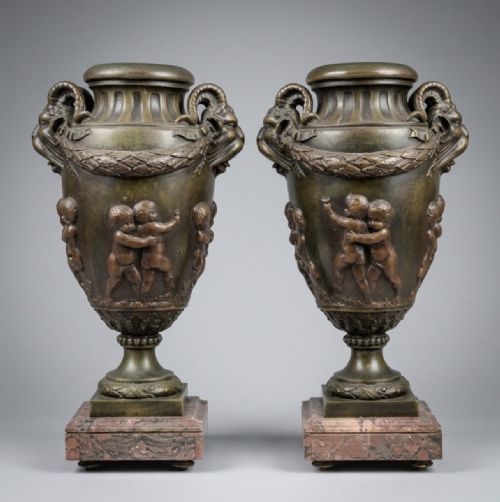
A 19th century marble urn brings classical proportion and substantial weight to an interior, combining carved stone with cast bronze mounts.
19th Century Marble Urn
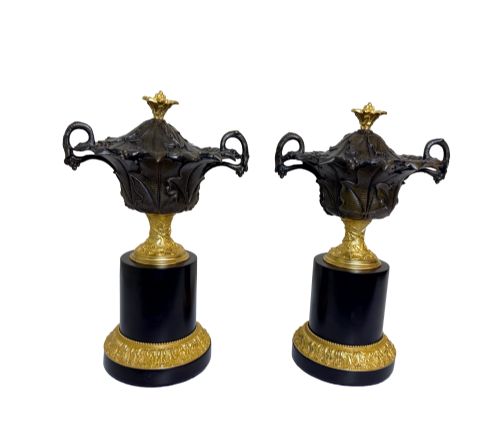
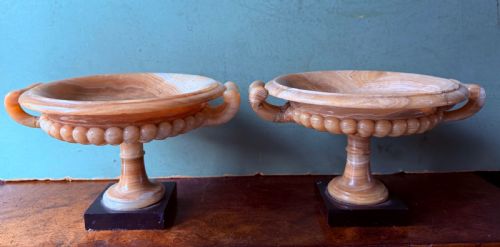
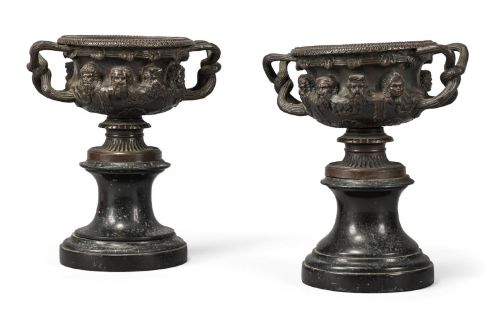
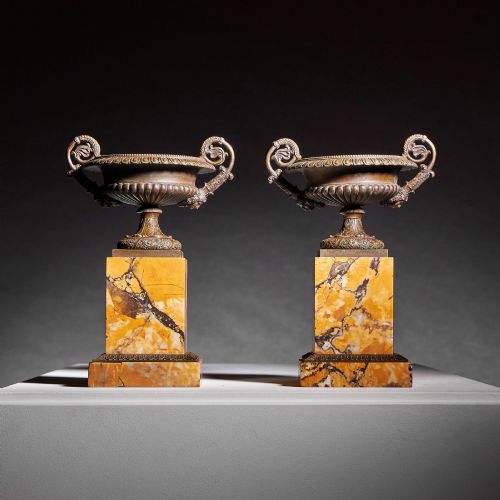
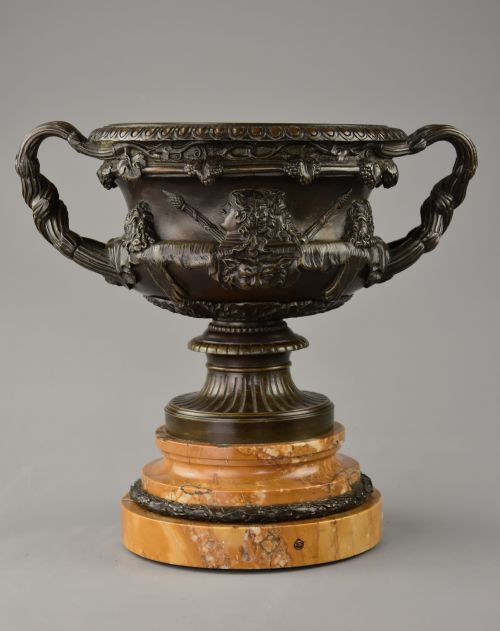
When you search for a 19th century marble urn, you encounter decorative vessels, tazze, and garnitures rooted in classical antiquity and the Grand Tour tradition. These objects served as ornamental focal points on mantelpieces, pedestals, and side tables in grand European residences.
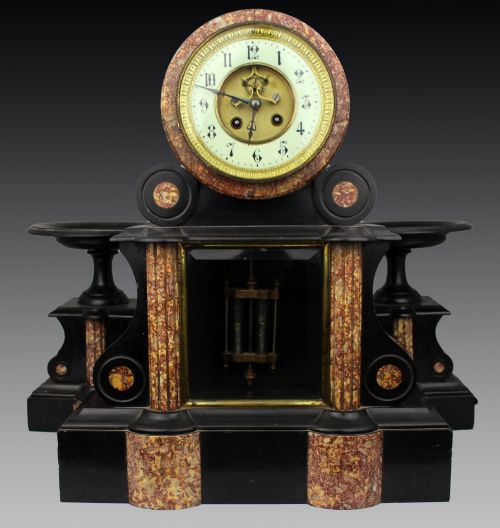
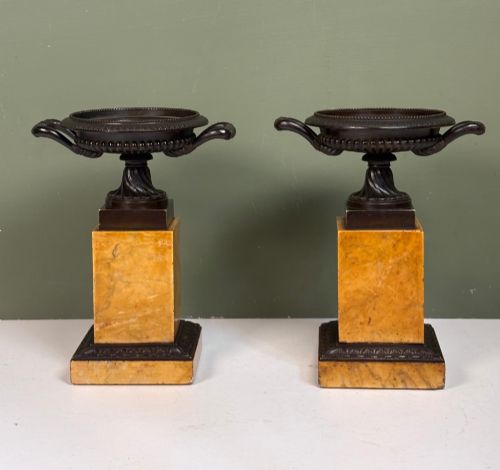
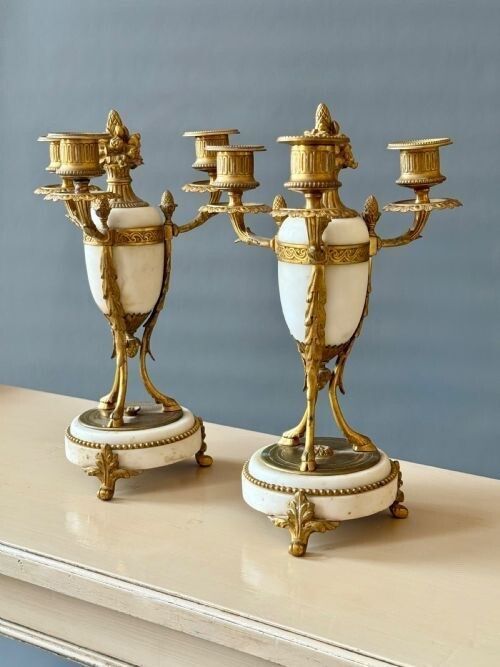
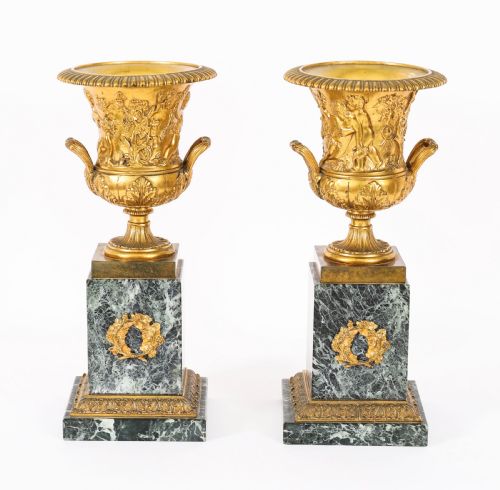
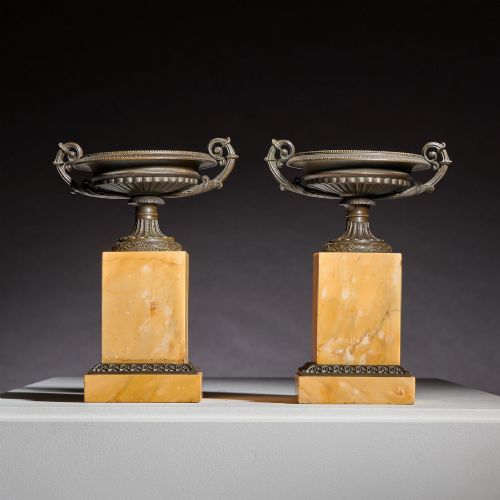
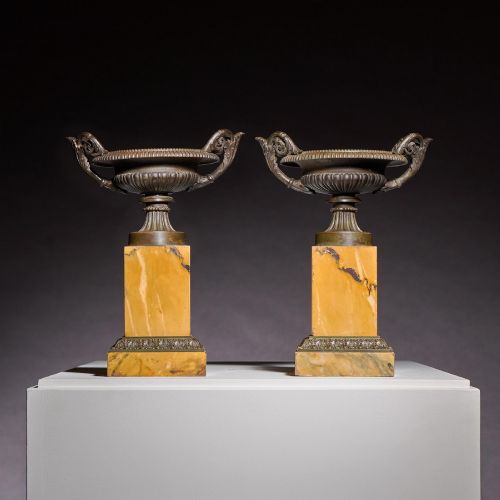
The most common examples on this page are French and Italian works from the Victorian era, frequently paired with gilt bronze, ormolu, or patinated bronze figures. Alongside traditional pedestal vases, the selection includes related forms like inkwells, clock garnitures, and lamps adapted from classical models.
Originating from periods influenced by Neoclassical, Louis XVI Revival, and French Empire styles, these pieces demonstrate a fascination with archaeological excavation and ancient design. Makers utilised various coloured marbles to emulate ruins discovered in Rome and Athens.
How they were made
Craftsmen shaped solid blocks of marble using lathes and hand-chiselling techniques to achieve smooth, symmetrical profiles for the bodies and bases of the vessels. Distinctive varieties such as Siena, Rosso Antico, and white marble were selected for their natural veining and colour.
Metal components like handles, collars, and plinths were produced using the lost-wax casting method for bronze, then finished with mercury gilding or patination. These metal mounts were meticulously fitted to the stone elements using threaded bolts and pins.
Listings feature 19th-century works in white marble, Siena marble, and ormolu, reflecting French and Italian Grand Tour production.
What varies in quality
The distinction between standard production and exceptional execution lies in the crispness of the bronze chasing and the complexity of the marble turning. Superior examples display sharply defined acanthus leaves, figural mounts with expressive detail, and stone selections with vibrant, uninterrupted figure.
Proportion and scale dictate the visual impact of the object, with well-balanced assemblies commanding greater presence. Heavy, tight integration between the metal mounts and the stone body indicates superior workshop standards.
Japy Frères·Benedetto Boschetti
The 19th Century Marble Urn Glossary
- Grand Tour
- A cultural journey undertaken by wealthy young Europeans through France and Italy to study classical antiquities, resulting in the acquisition of souvenirs like bronze and marble vases.
- Ormolu
- Gilt bronze created by applying a finely ground high-carat gold-mercury amalgam to a bronze object, which is then heated to drive off the mercury.
- Cassolette
- A decorative vase featuring a reversible lid that transforms the vessel from an urn into a burner for perfumes or potpourri.
- Campana urn
- A bell-shaped vessel modelled after ancient Roman garden vases, typically featuring flared rims and mounted loop handles.
19th Century Marble Urn: Frequently Asked Questions
How do I clean a marble urn?
Dust the stone and metal mounts gently with a soft, dry cloth to prevent the accumulation of grit in carved crevices.
Avoid using water, chemical solvents, or abrasive cleaners, as these substances can strip historical patination or etch the polished marble surface.
Were these urns used outdoors?
Nineteenth-century decorative urns were almost exclusively designed for interior display in libraries, entrance halls, and drawing rooms.
Exposing stone and gilt bronze components to weathering and frost would damage the delicate metal mounts and crack the marble.
What is Siena marble?
Siena marble is a distinctive yellow limestone quarried in Italy, characterised by rich ochre tones and dark grey or purple veining.
Its striking appearance made it a favourite material for nineteenth-century workshops producing Grand Tour souvenirs and mantel garnitures.