




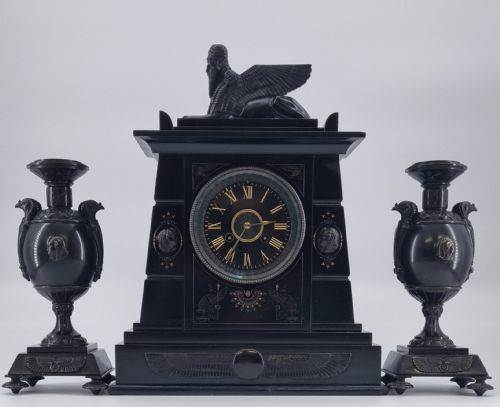
19th Century Marble Clock
When you search for a 19th century marble clock, you encounter substantial heavy timepieces framed in black, white, red, and green stone.
19th Century Marble Clock
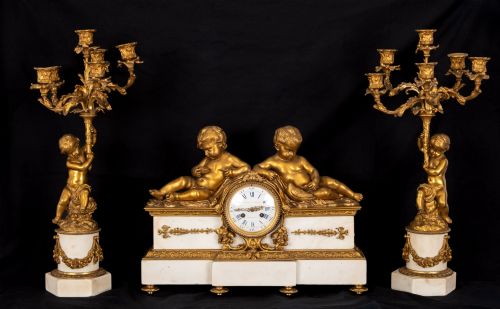
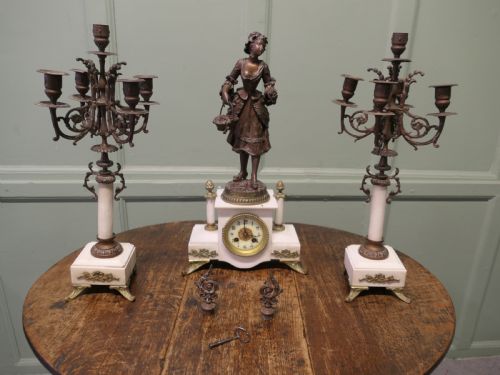
A 19th century marble clock is a heavy domestic timepiece designed for placement on a mantelpiece, often accompanied by matching garnitures forming a three-piece set. These objects combine substantial stone bodies with metallic ornamentation, originating predominantly from French workshops during the Victorian period.
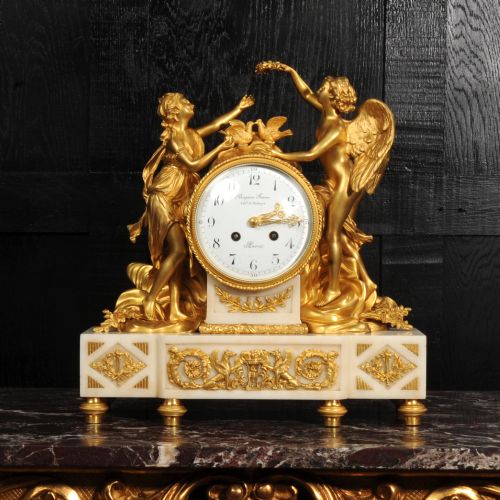
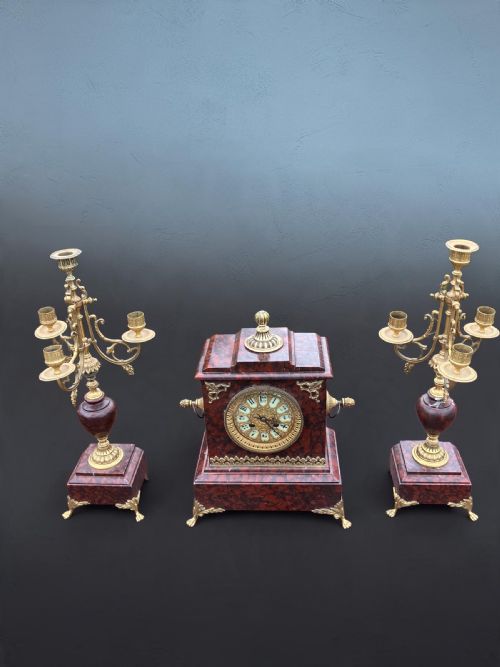
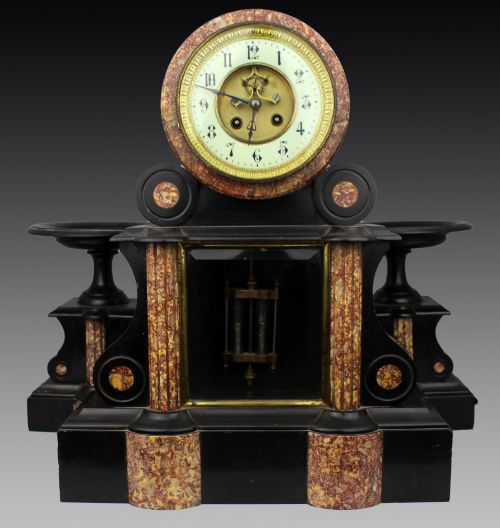
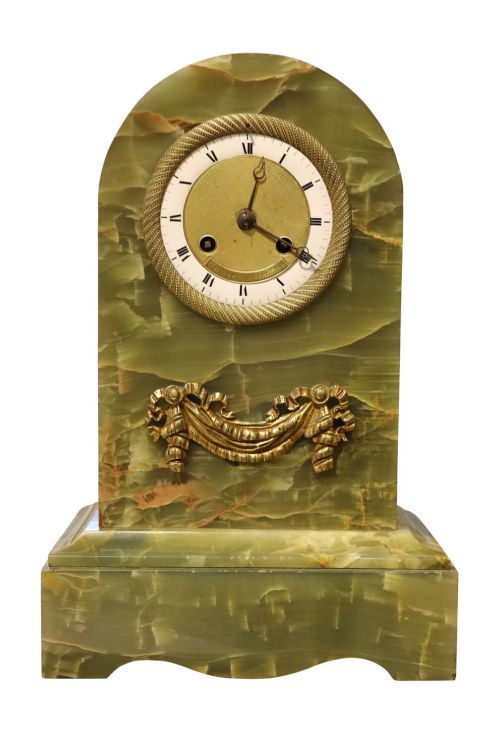
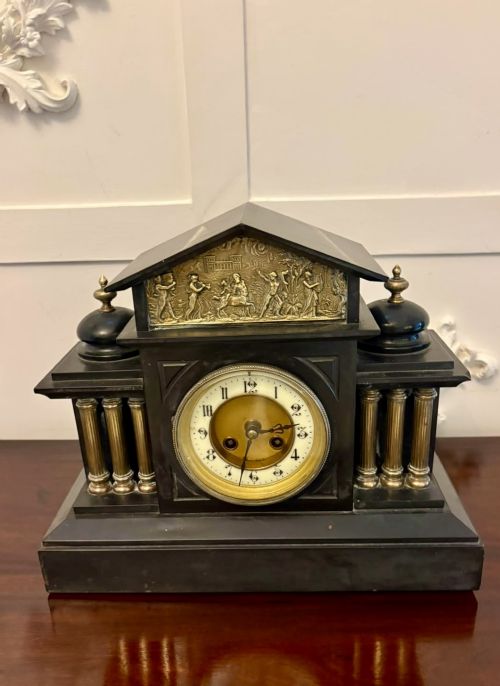
The versions most frequently met on this page include architectural black marble designs, white or green onyx models, and elaborate garniture sets featuring cast bronze or ormolu mounts. Makers utilised various regional stones, including rouge marble, sienna marble, and griotte, shaped into classical revival styles.
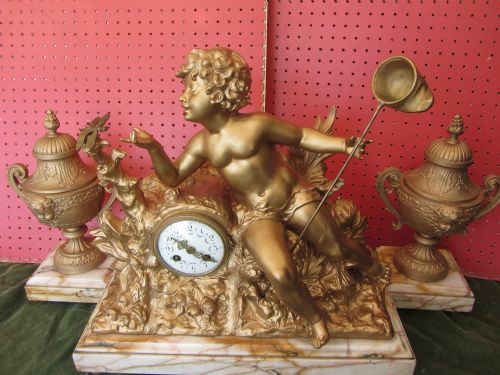
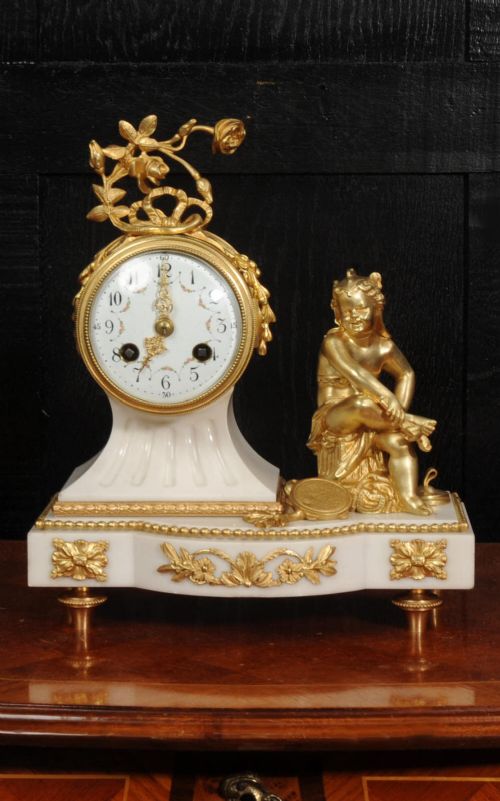
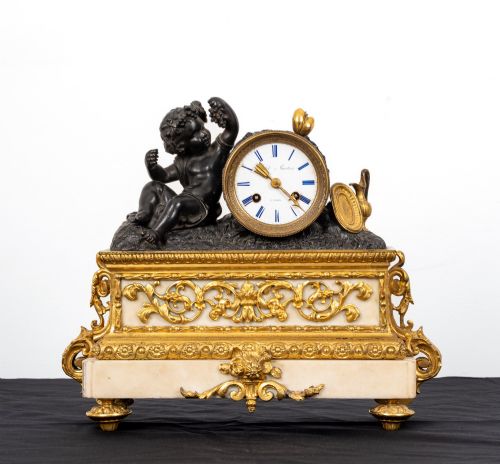
Forms range from simple portico clocks and figural sculptural pieces to large architectural cases incorporating enamel dials. Many surviving examples retain their original matching side pieces, such as urns or candelabra, creating a balanced display ensemble.
How they were made
The construction of these pieces relies on the combination of dense quarried stone and cast metallic elements. Stonemasons cut and polished blocks of marble into architectural or sculptural shapes, housing mechanical movements behind glass-covered enamel dials.
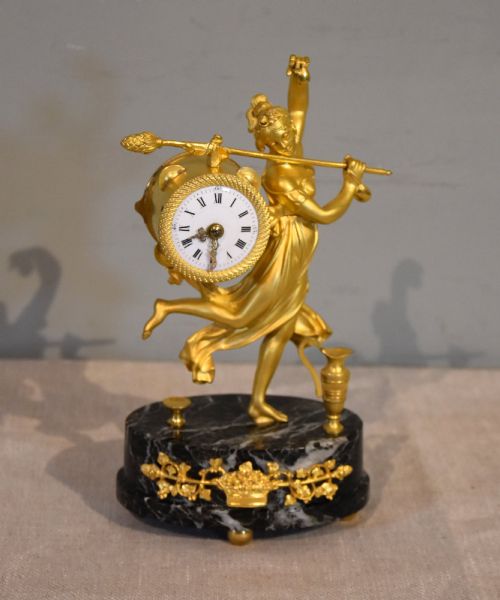
Foundries produced decorative mounts using bronze, brass, and ormolu, applying gilding or patination to enrich the stone bodies. These metal components were secured to the marble housings with pins and screws, often depicting classical figures, cherubs, or foliate scrolls.
19th Century Marble Clock Retail Price Guide 2026
Typical asking prices for 19th century marble clock among the pieces listed under this phrase on Sellingantiques today, from the lower quarter to the upper quarter. They describe what is for sale here now, not the wider market.
Listings feature works spanning the mid-19th century to the Edwardian era, incorporating Neoclassical and Louis XVI revival styles.
What varies in quality
Quality differences appear in the precision of the stone cutting, the weight and detail of the cast bronze mounts, and the complexity of the movement. Superior examples exhibit finely chiselled ormolu ornamentation and carefully selected coloured marbles rather than plain slate or generic cast substitutes.
Signed movements by known makers elevate a piece above standard workshop production, particularly when paired with matching multi-piece garnitures that maintain uniform patination and undamaged stone surfaces.
Japy Freres·Charles a Orleans·Siffel and Cartier·D Munsey·Ferdinand Barbedienne
The 19th Century Marble Clock Glossary
- Garniture
- A set of matching decorative objects, typically a central clock flanked by two matching side pieces like urns or candelabra. These sets were designed to display together on a mantelpiece.
- Ormolu
- Gilded bronze used extensively for decorative mounts and figures on French clocks. The technique involves applying a gold amalgam to heated bronze.
- Portico clock
- A distinct architectural clock style featuring a dial supported by four columns resembling a classical temple facade. This form often utilised contrasting white or coloured marbles.
- Enamel dial
- A clock face made by fusing powdered glass onto a metal base at high temperatures. These dials usually feature painted Roman numerals.
- Griotte marble
- A deep reddish-brown limestone characterised by distinctive fossil inclusions and varied veining. French makers utilised this stone for rich architectural clock cases.
19th Century Marble Clock: Frequently Asked Questions
What is a clock garniture?
A clock garniture consists of a central timepiece accompanied by matching side ornaments, such as decorative urns or candelabra. These sets were designed to create a balanced arrangement across a mantelpiece.
They share identical materials and decorative motifs, linking the stonework of the clock body with the metal mounts of the side pieces.
How do I identify French styles?
French styles of this period draw heavily on Neoclassical, Louis XVI, and Second Empire design vocabulary. Look for symmetrical architectural elements, classical columns, cast bronze urns, and figural mounts depicting cherubs or mythological subjects.
Maker signatures on the enamel dials or mechanical movements often confirm French origin, alongside characteristic brass numbering systems.
What marble types were used?
Makers utilised a wide variety of stones including dense black marble, white statuary marble, green onyx, sienna, and rouge marble. Each stone offered a distinct colour palette and veining pattern to suit different revival styles.
Some darker stones were actually prepared slate finished to resemble high-grade polished marble.
How should I maintain my clock?
Keep the clock away from direct sunlight, excessive moisture, and fluctuating temperatures to protect the delicate enamel dial and metal gilding. Dust the stone and bronze mounts gently with a soft dry cloth.
Mechanical movements require periodic professional servicing to ensure the gear trains and springs continue to function correctly.